What Is an Audio Splitter and How Does It Work in 2026?
Learn what an audio splitter is, how it works, and how Soundverse helps enhance music editing in 2026.
What Is an Audio Splitter?
In 2026, the demand for high-quality and convenient audio experiences has never been greater. Whether you’re a music lover wanting to share tunes with a friend, a professional editor working with multiple sound outputs, or a creator managing different devices, an audio splitter has become one of the most accessible and practical tools for enhancing your sound setup.
What exactly is an audio splitter in 2026?
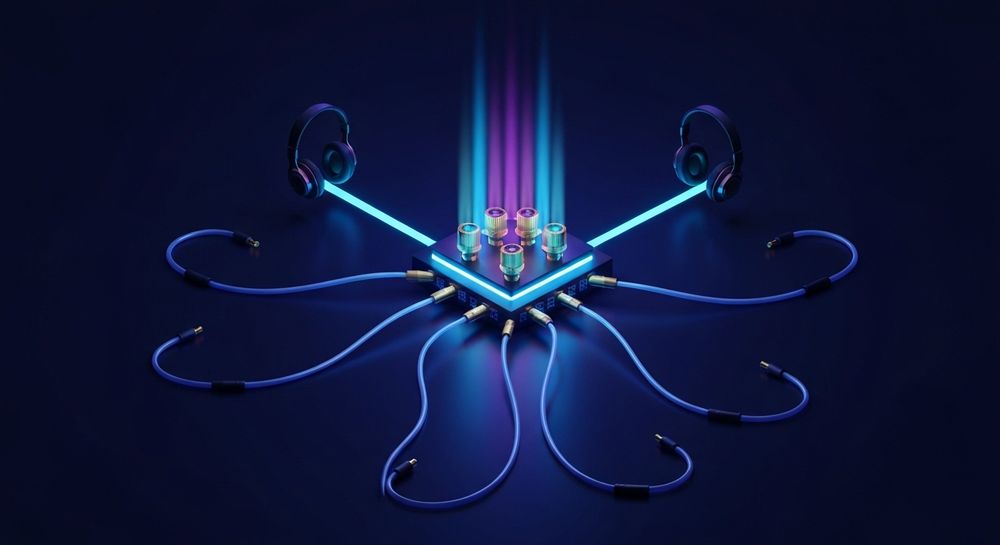
An audio splitter is a small electronic accessory that divides a single audio source into multiple outputs. In simpler terms, it allows you to connect more than one set of headphones or speakers to one audio device. This tool is vital for those who want to share their listening experience without compromising sound quality.
Audio splitters come in various types depending on your setup and needs. The most common configurations include 3.5mm headphone splitters, splitter cables, audio jack splitters, and dual headphone adapters. Each variant performs the same fundamental task — replicating the signal across two or more outputs.
In 2026, splitters are sleek, durable, and often feature improved shielding to reduce interference. Manufacturers have enhanced both build quality and signal balance for better audio performance, catering to advanced users working with multi-channel audio setups.
How does an audio splitter work?
An audio splitter functions by duplicating the electrical signal from your device’s audio port. When plugged into the audio output of a smartphone, laptop, or tablet, it divides that signal equally between connected devices.
Modern splitters are designed with impedance balancing in mind. This ensures that connecting multiple headphones doesn’t distort or reduce sound volume significantly — a frequent issue in early 2020s models. Today’s sound output splitters provide consistent volume and clarity even across two or more listening devices.
For high-fidelity users or those working in digital audio production, professional-grade splitters employ gold-plated connectors and high-quality cable insulation materials such as braided nylon or thermoplastic elastomer. This minimizes signal loss and guarantees pristine sound transmission.

What types of audio splitters are available?
While technology evolves rapidly, the audio splitter market remains diverse in 2026, offering several types suited for different users:
1. Headphone Splitter
A classic two-output connector allowing two listeners to plug in headphones into a single device. Great for sharing tracks while traveling or working collaboratively.
2. Audio Jack Splitter
This variant supports multiple outputs through the 3.5mm jack interface, ideal for connecting several playback devices simultaneously. Many use these for multi-headphone monitoring or conference setups.
3. Splitter Cable
Unlike rigid splitters, this cable offers flexibility in placement. Common among studio setups where spacing between devices matters.
4. Dual Headphone Adapter
Often compact and travel-friendly. Dual adapters have become popular accessories for mobile users who enjoy private yet shared listening experiences, such as during streaming or podcast sessions.
5. Sound Output Splitter (Professional Series)
These handle higher load and impedance balancing, making them suitable for musicians and audio engineers. They manage distinct left-right channel integrity to ensure recording environments maintain sound accuracy.
Why do you need an audio splitter?
An audio splitter can simplify daily audio experiences in countless scenarios:
- Collaborative Listening – Share playlists or movies without external speakers.
- Audio Editing and Mixing – Run simultaneous headphone monitors when reviewing multiple mixes.
- Podcast and Interview Recording – Allow guests to monitor conversations real-time.
- Gaming Sessions – Connect two gaming headsets to a single console for teamwork communication.
- Teaching and Learning – In classrooms or workshops, audio splitters help students analyze audio samples together.
Splitters also prove useful when working with external speakers, allowing integration between old and new sound systems. The technology’s convenience contributes significantly to modern entertainment and productivity setups.
For broader insights into evolving sound technology and AI music generation, you can explore Soundverse’s detailed discussions in music industry trends and AI music generator reviews.
How to choose the right audio splitter?
When selecting an audio splitter, consider these aspects:
- Connector Compatibility – Most devices use a 3.5mm jack, but newer models may require USB-C or Lightning connections.
- Cable Quality – Insulated cables reduce audio noise when transmitting signals.
- Number of Outputs – From simple dual adapters to multi-port hubs supporting up to 6 outputs.
- Signal Type – Stereo splitters support left and right channels, while mono variants handle single-channel signals.
- Portability – Compact splitters are excellent for travel, while robust cables suit professional studios.
Understanding these parameters ensures optimal performance whether for entertainment or creative production.
How audio splitters improved between 2024 and 2026
Between 2024 and 2026, the audio hardware market witnessed significant upgrades. While earlier splitters mainly focused on dual-output simplicity, current models integrate noise shielding and smart impedance adjustment, resulting in cleaner audio performance.
Moreover, with hybrid wireless solutions becoming mainstream, splitters now coexist alongside Bluetooth adapters. Some models even support mixed wireless-wired setups — perfect for both individual and collaborative listening experiences. You can learn more about the innovation front via Perfect Circuit’s NAMM 2026 coverage.
How to make advanced audio setups with Soundverse Stem Separator
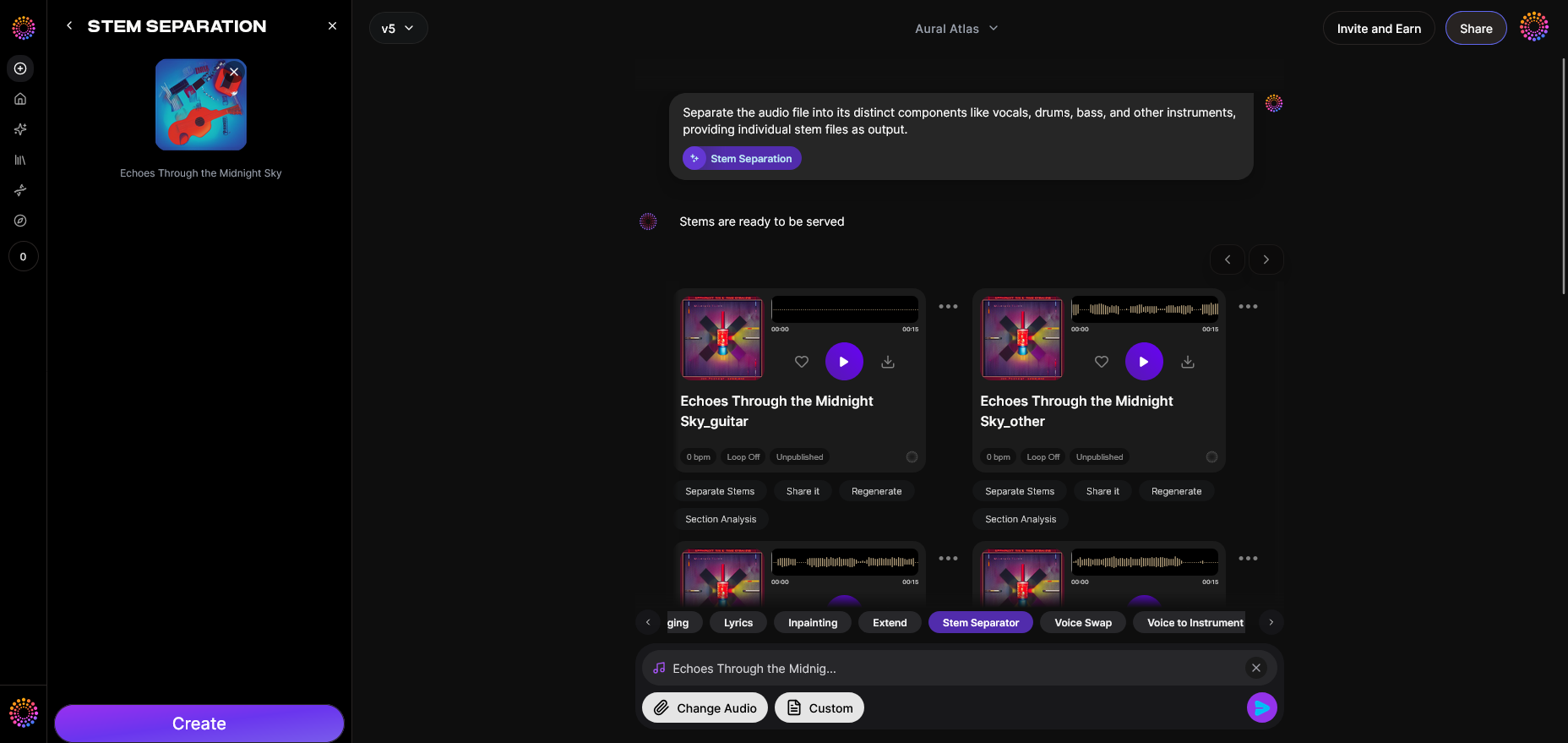
While traditional audio splitters deal with hardware signal division, Soundverse takes audio manipulation further with its Stem Separator feature. This AI-powered tool digitally dissects mixed audio into up to six editable stems — Vocals, Drums, Bass, Guitar, Accompaniment, and others, similar to BandLab’s Splitter technology.
Soundverse Stem Separator capabilities include:
- 6-stem separation ensuring precision across complex mixes.
- Compatibility with URL, File, and Recording inputs, providing flexibility for creators.
- High-quality isolation engine used for remixing, karaoke backtracks, or educational sound analysis.
With Soundverse, creators can upload or record audio, and the platform processes it asynchronously to deliver individual stems ready for download. This tool doesn’t merely split sound like a conventional cable — it intelligently unmasks layers within a track, essential for professionals who want to dissect or remix music.
For a deeper dive, watch our guide on creating Deep House music or check out “How to Make Music” tutorial on Soundverse’s YouTube channel.
You can learn more about this technology in Soundverse introduces Stem Separation AI Magic Tool or see how it complements genre-based creation as covered in How to Create EDM with Soundverse AI.
The separation feature aligns perfectly with Soundverse’s Section Analysis, which automatically marks intros, verses, and outros with accurate timestamps. Together, these tools redefine digital audio manipulation for creators in 2026.
How Soundverse helps beginners and professionals alike
Whether you’re a hobbyist or a studio artist, Soundverse provides a deeper understanding of how music elements interact. Beginners can visually explore song layers, while professionals can extract and remix stems to produce new compositions. This complements hardware tools like splitters, extending user creativity beyond basic physical audio division.
For example, once you’ve separated a song’s stems using Soundverse, you could route each stem through different playback devices using your audio splitter, achieving immersive multidimensional sound monitoring.
To explore other AI-assisted methods, check out Soundverse Assistant — your AI co-producer and Soundverse AI Magic Tools Create Content Quickly.
Experience Next-Gen Audio Creation with Soundverse
Transform your music projects using AI-powered tools that simplify editing, mixing, and sound design. Discover how Soundverse can help you create professional-grade tracks faster and smarter.
Related Articles
- Soundverse Introduces Stem Separation AI Magic Tool: Learn how Soundverse’s Stem Separation feature allows creators to isolate vocals, instruments, and beats effortlessly using AI.
- What Are Song Stems and Why Do You Need Them: Discover the fundamentals of song stems and how they empower producers to craft precise mixdowns and remixes.
- Enhancing YouTube Content with Royalty-Free and Copyright-Free Music Using Soundverse AI: Find out how to elevate your YouTube videos using high-quality, legal music generated by Soundverse AI.
- The Role of AI Music in Film and Television: Explore how AI-generated music is reshaping soundtracks and scoring in visual entertainment production.
Here's how to make AI Music with Soundverse
Video Guide
Here’s another long walkthrough of how to use Soundverse AI.
Text Guide
- To know more about AI Magic Tools, check here.
- To know more about Soundverse Assistant, check here.
- To know more about Arrangement Studio, check here.
Soundverse is an AI Assistant that allows content creators and music makers to create original content in a flash using Generative AI. With the help of Soundverse Assistant and AI Magic Tools, our users get an unfair advantage over other creators to create audio and music content quickly, easily and cheaply. Soundverse Assistant is your ultimate music companion. You simply speak to the assistant to get your stuff done. The more you speak to it, the more it starts understanding you and your goals. AI Magic Tools help convert your creative dreams into tangible music and audio. Use AI Magic Tools such as text to music, stem separation, or lyrics generation to realise your content dreams faster. Soundverse is here to take music production to the next level. We're not just a digital audio workstation (DAW) competing with Ableton or Logic, we're building a completely new paradigm of easy and conversational content creation.
TikTok: https://www.tiktok.com/@soundverse.ai
Twitter: https://twitter.com/soundverse_ai
Instagram: https://www.instagram.com/soundverse.ai
LinkedIn: https://www.linkedin.com/company/soundverseai
Youtube: https://www.youtube.com/@SoundverseAI
Facebook: https://www.facebook.com/profile.php?id=100095674445607
Join Soundverse for Free and make Viral AI Music

We are constantly building more product experiences. Keep checking our Blog to stay updated about them!