Why AI Music Sounds Generic — and How Advanced Tools Fix It
Discover why AI music often sounds generic and how new tools like Soundverse DNA bring true artistic realism to generative music in 2026.
Why AI Music Sounds Generic — and How Advanced Tools Fix It
Why Does AI Music Sound So Generic in 2026?
AI music has come a long way since the early text-to-music models of 2024 and 2025. Yet, even with the rise of increasingly advanced machine learning systems, a recurring criticism persists: much of AI-generated music still sounds generic. Whether you’re a music producer, sound designer, or content creator, you’ve likely heard tracks that feel one-dimensional — lacking the emotional nuance or sonic identity that defines great human compositions.
As we move deeper into 2026, artificial intelligence in music continues to evolve beyond simple algorithmic generation. The conversation is no longer just about speed and cost-efficiency — it’s about authenticity, realism, and style preservation. To understand why AI music often feels formulaic, we need to unravel the underlying technical and ethical challenges that early generative systems faced.
What Makes AI-Generated Music Sound Generic?
1. Overgeneralized Training Data
Traditional generative music models rely on enormous datasets scraped from the internet. These include diverse genres, instrumentations, and compositions — but they often lack context about the intent or emotional purpose of each song. This causes the AI to average out stylistic decisions, resulting in tracks that sound technically correct but artistically flat.
Without connections to artist identity or creative intent, early AI music often sounded like background music — clean but forgettable. Producers found that tracks lacked the imperfections, dynamics, and emotional triggers that define compelling pieces.
2. Missing Human Style DNA
Music isn’t just about melody, rhythm, and harmony. It’s also an expression of personality. Each artist has a unique sonic fingerprint — think rhythm choices, synth palettes, or microtiming nuances. When AI models ignore that identity, they create content without a soul.
Generative music systems before 2026 rarely included artist-specific information, leading to results that lacked individuality. As such, even advanced users couldn’t replicate signature sounds or evolve their unique aesthetic across multiple AI-generated pieces.
3. Ethical and Legal Constraints
A major reason for generic AI sound also lies in the controversy of training data. Many platforms faced backlash for using unlicensed audio, forcing them to narrow their datasets significantly. That meant models operated on smaller, safer datasets but at the expense of musical richness. Without diverse, high-quality, and legally licensed material, sound models couldn’t develop robust stylistic creativity. For example, The 2026 State of AI Music - Major Differences and Legal Peace highlights how new copyright frameworks are shaping ethical AI development.
4. Lack of Contextual Awareness
AI has struggled to understand compositional context — such as when to use a particular chord progression or how to evoke a specific mood. Most models operated as pattern-matchers, not communicators. They could mimic surface-level music structures but could not interpret creative direction in a deeper emotional or narrative sense.
This limitation meant outputs were often correct in form but wrong in feeling. For content creators needing soundtracks that emotionally match video or narrative themes, the lack of realism and responsiveness was a huge drawback.
How Are Advanced Tools Fixing AI Music’s Generic Nature in 2026?
2026 has seen a major transition in AI music production. Instead of merely analyzing data to generate “more of the same,” next-generation platforms focus on creative collaboration and ethical personalization. These tools are bridging the divide between artificial intelligence and authentic artistry.
1. Artist-Trained Models Bring Human Identity to the Forefront
The biggest leap forward comes from artist-trained AI models. Unlike crowd-trained systems that combine massive numbers of anonymous tracks, artist-trained models capture a single creator’s musical DNA. This allows users to generate music that authentically reflects a specific style — blending deep learning precision with human individuality.
For practical examples of this process, explore What Is the Best AI Song Generator in 2026? - Soundverse AI which compares modern artist-driven systems with traditional generators.
2. Licensed Data Solves Ethical Issues
Modern music creation tools emphasize transparency. Platforms built on ethical AI frameworks train models explicitly on licensed catalogs, which prevents unauthorized use and ensures fair compensation. This shift has helped rebuild trust between artists and AI developers, pushing the technology toward sustainable innovation. The trend is also reinforced by new evaluations in Best AI Music Generators in 2026: Create Professional Audio with AI, encouraging creators to explore ethical options.
3. Dynamic Parameters Enhance Realism
AI engines now integrate adjustable sensitivity controls. Users can select emotional intensity, era, or production techniques, giving far greater control over the model’s output. Instead of getting a single “best guess” from the AI, musicians can continuously tune parameters until the mix feels genuinely inspired — introducing the realism and imperfection that define human creativity.
For a deeper dive, watch our guide on creating Deep House music or tutorial on how to make music inside Soundverse.
4. DNA-Based Systems Enable Sonic Integrity
New technologies focus on “sonic identity” replication, letting creators generate new music that aligns consistently with their existing creative universe. This marks the first time that AI-generated tracks can function as part of a coherent artistic brand rather than unrelated experiments.
How to Make AI Music More Realistic in 2026
If you’re a producer or sound designer looking to achieve realism in generative music, consider rethinking your workflow. Treat artificial intelligence not as an automated composer but as a co-producer. Feed it the raw materials that define your sound — from chord libraries and vocal samples to specific mixing dynamics.
Here are practical steps to elevate your AI music production:
- Train on Curated Material: Use samples or datasets that reflect your desired sound direction, ensuring that the model learns signature patterns.
- Integrate Feedback Loops: Don’t rely on one-pass generation. Review, refine, and retrain to build a feedback cycle similar to traditional music production.
- Preserve Performance Dynamics: Small imperfections, velocity variations, or timing irregularities introduce humanity to AI tracks.
- Choose Ethical Tools: Always verify that your generator uses licensed materials and transparent attribution, preserving both integrity and creativity.
For examples of how diverse creators combine human artistry and advanced AI tools, check articles like How AI-Generated Music is Transforming the Music Industry and AI Music Generator and Human Composers: A Future Together.
How Soundverse DNA Fixes the Problem of Generic AI Music
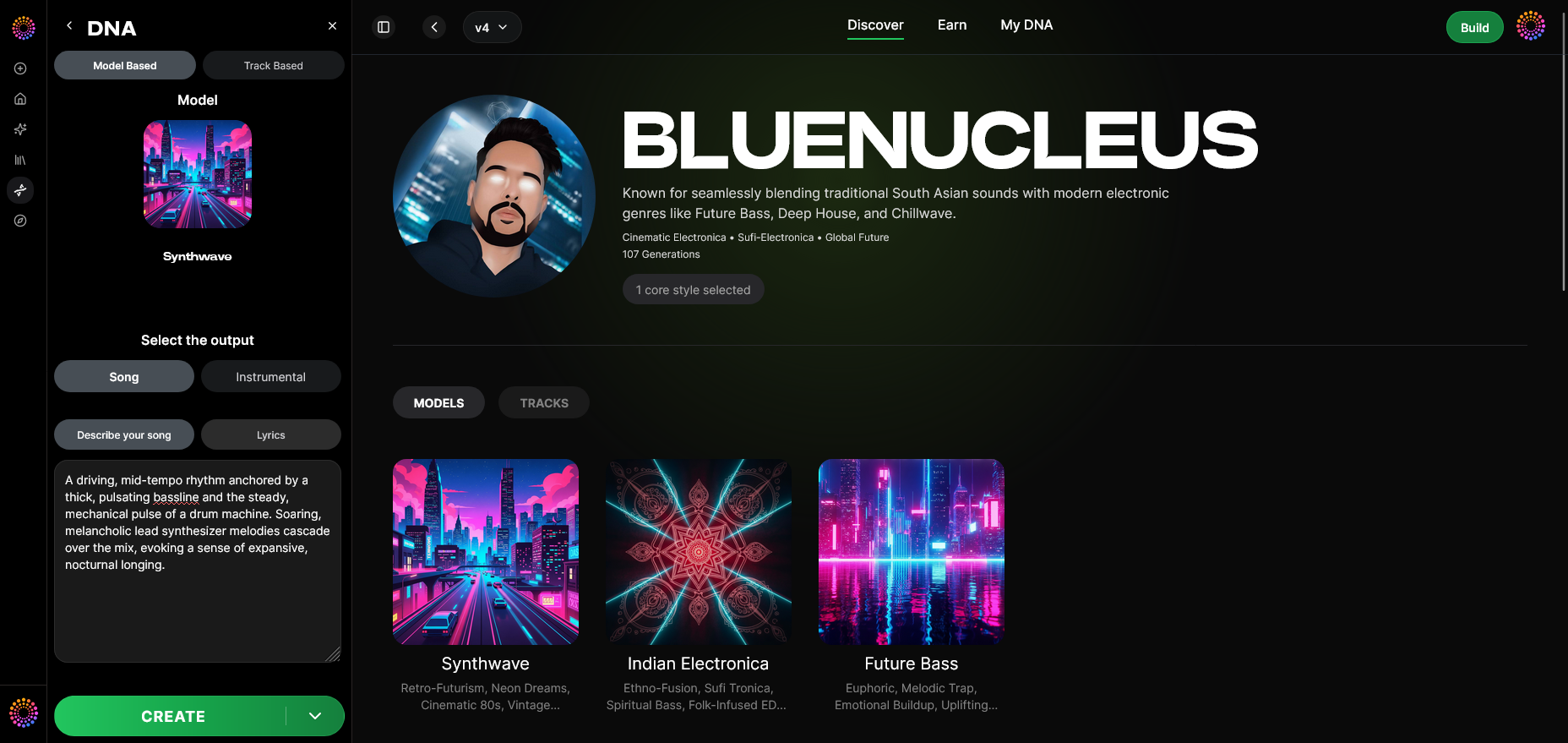
Soundverse DNA represents a redefinition of what AI music can achieve. Instead of generating random, decontextualized audio, it builds original compositions from deeply personal artist-trained models.
What Is Soundverse DNA?
Soundverse DNA is an artist-trained AI music generation system designed to create original music built on specific sonic identities. Its models are trained on licensed catalogs, ensuring that every generated piece remains ethically sourced and copyright-safe.
With Soundverse DNA, creators can:
- Monetize their own style through the DNA Marketplace.
- Maintain a consistent sound across content via Sonic Branding.
- Use custom models for Film/Game Scoring, producing legally sound cues.
- Accelerate Personal Workflows by generating tracks in their own recognizable artistic language.
Core Capabilities
- Full DNA: Generate both complete songs and instrumentals using your artistic identity.
- Voice DNA: Capture the tonal qualities and stylistic nuances of your voice.
- DNA Marketplace: License your style to fans or collaborators.
- Sensitivity Selector: Cluster your catalog into eras and adjust expressive depth.
- Private Mode: Securely co-create music in protected sessions.
Soundverse DNA is part of a broader ecosystem powered by the Ethical AI Music Framework, which ensures all AI music creation follows transparent consent, attribution, and compensation pipelines. Additionally, Soundverse Trace provides attribution and rights tracking across every stage of the AI music lifecycle, giving creators full control over usage.
Why It Sounds More Realistic
By mimicking human musical decision-making at a personalized level, Soundverse DNA eliminates the uniformity that plagues traditional AI models. Each generated track resonates with identifiable character, giving producers not just a tool, but a partner in creativity.
For more real-world use cases, see how creators apply this technology in Soundverse AI Revolutionizing Music Creation for New-Age Content Creators and explore music prompts in 100 Text-to-Music Prompts That Will Help You Create Viral Music.
Create Music That Stands Out with Soundverse AI
Tired of generic AI music? Soundverse empowers creators to produce original, high-quality tracks using advanced AI composition and editing tools. Explore endless possibilities for your next project.
Related Articles
- How AI-Generated Music is Transforming the Music Industry: Discover how AI tools are reshaping creativity and driving innovation in modern music production.
- The Benefits of Composing with an AI Music Generator: Explore how AI-powered composition tools boost productivity and unlock fresh creative ideas for musicians and producers.
- AI Music Generator and Human Composers: A Future Together: Learn how human artistry and AI intelligence can collaborate to produce groundbreaking music experiences.
- How an AI Music Generator Inspires Creative Fusion: See how advanced AI composition tools spark new musical styles and unexpected creative combinations.
Here's how to make AI Music with Soundverse
Video Guide

Here’s another long walkthrough of how to use Soundverse AI.
Text Guide
- To know more about AI Magic Tools, check here.
- To know more about Soundverse Assistant, check here.
- To know more about Arrangement Studio, check here.
Soundverse is an AI Assistant that allows content creators and music makers to create original content in a flash using Generative AI. With the help of Soundverse Assistant and AI Magic Tools, our users get an unfair advantage over other creators to create audio and music content quickly, easily and cheaply. Soundverse Assistant is your ultimate music companion. You simply speak to the assistant to get your stuff done. The more you speak to it, the more it starts understanding you and your goals. AI Magic Tools help convert your creative dreams into tangible music and audio. Use AI Magic Tools such as text to music, stem separation, or lyrics generation to realise your content dreams faster. Soundverse is here to take music production to the next level. We're not just a digital audio workstation (DAW) competing with Ableton or Logic, we're building a completely new paradigm of easy and conversational content creation. TikTok: https://www.tiktok.com/@soundverse.ai Twitter: https://twitter.com/soundverse_ai Instagram: https://www.instagram.com/soundverse.ai LinkedIn: https://www.linkedin.com/company/soundverseai Youtube: https://www.youtube.com/@SoundverseAI Facebook: https://www.facebook.com/profile.php?id=100095674445607
Join Soundverse for Free and make Viral AI Music

We are constantly building more product experiences. Keep checking our Blog to stay updated about them!