The Difference Between Royalty-Free Music and AI-Generated Music in 2026
Compare royalty-free and AI-generated music in 2026 to understand licensing, ethics, and creator rights.
The Difference Between Royalty-Free Music and AI-Generated Music
In 2026, the world of digital content creation continues to shift dramatically, with two key forms of accessible sound dominating the discussion: royalty-free music and AI-generated music. For content creators, marketers, and musicians, understanding the distinction between these two sources is critical when considering licensing, creative freedom, and compliance.
What is royalty-free music?
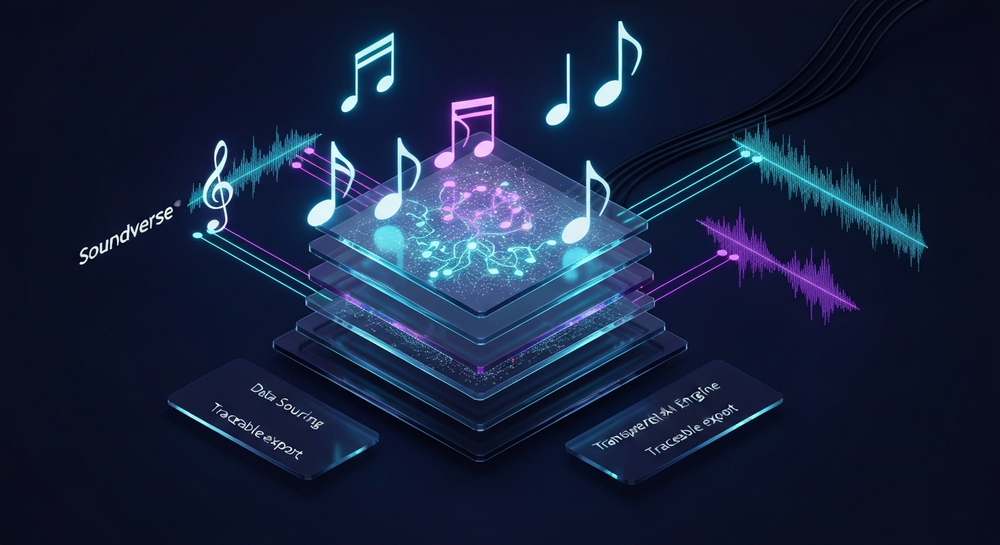
Royalty-free music refers to music tracks that can be licensed once and then reused multiple times without paying additional royalties per use. Users typically pay a one-time fee or subscribe to a platform to access a catalog of royalty-free soundtracks. Once licensed, creators can use the music across various media like YouTube videos, podcasts, ads, and films.
Royalty-free, however, does not mean cost-free. Many libraries still retain usage restrictions depending on the license type. For example, commercial broadcasts or streaming monetization might require extended terms or separate agreements.
For a deeper dive, watch our guide on making music step-by-step or check out Soundverse’s tutorials on creating Deep House tracks.
What is AI-generated music in 2026?

AI-generated music refers to tracks composed by artificial intelligence tools that analyze musical structure, genre patterns, and metadata to generate new compositions. In 2026, AI systems have become increasingly advanced, leveraging ethical frameworks and permission-based data sourcing. These tools allow creators to instantly generate unique soundtracks by inputting prompts, style preferences, and durations.
This technology has rapidly evolved since 2024, moving from generic, data-scraped outputs to ethically trained systems that ensure artist consent and attribution. Platforms such as Soundverse are now setting the standard with transparent AI pipelines that redefine how music is generated and licensed.
What are the key differences between royalty-free and AI-generated music?
The primary difference between royalty-free and AI-generated music lies in the source, licensing, and creative control.
1. Source of the music
Royalty-free music originates from human composers who upload music to a library in exchange for exposure or licensing fees. AI-generated tracks, on the other hand, are synthesized by algorithms trained on extensive music datasets, often with artist participation and ethical oversight.
2. Licensing and ownership
Royalty-free tracks come with predefined licenses. Each track typically includes terms for personal or commercial use, with restrictions based on distribution scale. AI-generated tracks, when produced ethically, can offer flexible and traceable ownership since the composition didn’t exist before generation.
For example, Soundverse allows creators to generate music with verified attribution under its Ethical AI Music Framework, ensuring both legal compliance and rights protection.
3. Creative customization
Royalty-free tracks offer limited customization. You can select from existing sound files, but you cannot alter the fundamental composition. AI-generated tracks, however, are fully customizable — allowing creators to define genre, mood, tempo, or instruments. This makes AI solutions ideal for personalized branding, podcasts, and marketing campaigns.
4. Copyright and attribution
AI music copyright remains one of the most debated topics. In 2026, frameworks like Soundverse’s Ethical AI Music Framework have advanced the field by ensuring transparent training data and artist attribution. Royalty-free models, while consistent, often lack robust transparency — creators rarely know who composed the track or whether it was ethically sourced.
To explore how AI is transforming the industry, read How AI-Generated Music is Transforming the Music Industry.
5. Cost and scalability
For large-scale production, royalty-free libraries can become expensive if varied licenses are needed. AI-generated music provides cost efficiency by enabling unlimited generation under one platform subscription. Moreover, AI music allows for instant production without long search times across libraries.
How do licensing models differ?
Royalty-Free Licensing
In royalty-free systems, music creators retain ownership but provide users with broad rights to reuse their work. Payments are typically managed through one-time purchases or membership models. However, the license conditions can become restrictive when adapting tracks for broader distribution.
AI Music Licensing
AI music licensing models, like those used in Soundverse’s ecosystem, establish transparent ownership. Each track generated carries metadata for traceability, ensuring that any stem or exported file is trackable to its origin and training process. This is part of the Traceable Export and Explainable Inference components of Soundverse’s Ethical AI Music Framework.
To learn how AI licensing affects creators, explore our article on AI Music in the USA.
How to ensure compliance and ethical music use in 2026
Ethical compliance has become central to music production. As regulators enforce stricter guidelines on AI training data, transparent sourcing is now mandatory. AI tools trained on scraped or unauthorized datasets risk producing derivative works that could breach copyright laws. Platforms like Soundverse proactively prevent such risks by limiting training to licensed and opt-in audio data.
For projects requiring strict compliance — for example, brand campaigns, film soundtracks, or corporate media — choosing ethically generated AI compositions has become the safest route. This ensures that every artist’s contribution is respected and traceable.
Why are creators shifting toward AI tools?
The shift toward AI music tools in 2026 is driven by speed, flexibility, and legal clarity. Content creators can generate custom soundtracks within minutes, experiment with genres, and instantly match music to visual content. Moreover, AI-generated audio allows teams to maintain consistent brand tones across multiple media channels.
To see creative applications of AI tools, check our article on Soundverse AI Magic Tools or watch the Explore Tab tutorial from Soundverse’s YouTube series.
How to make ethical and original AI music with Soundverse The Ethical AI Music Framework
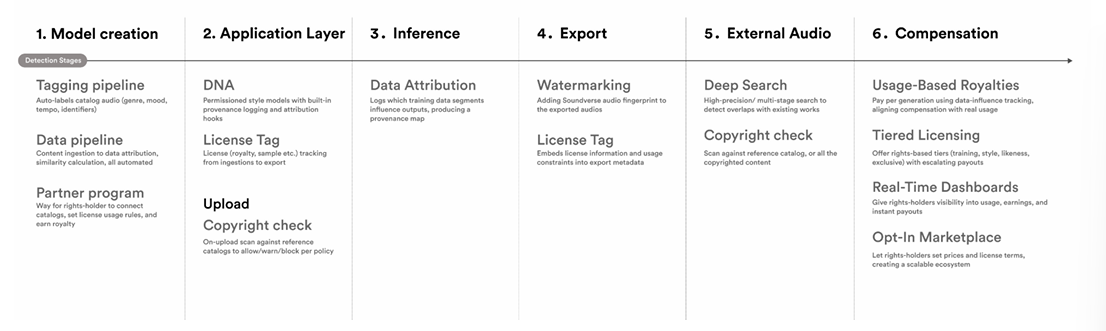
Soundverse’s Ethical AI Music Framework stands at the intersection of innovation and artist integrity. It provides an end-to-end infrastructure ensuring that every sound generated through AI upholds legal, ethical, and creative standards.
Key Features:
- Stage 1: Licensed Data Sourcing — All training data is consent-based, avoiding scraped or unauthorized content.
- Stage 2: Permissioned Models (DNA) — Artists and partners explicitly permit their work to be part of training datasets.
- Stage 3: Explainable Inference (Attribution) — Each generated track includes traceable attribution.
- Stage 4: Traceable Export (Watermarking) — Generated music embeds identifiers to verify source integrity.
- Stage 5: Deep Search (External Scanning) — Soundverse continuously scans external media to ensure compliance and detect improper reuse.
- Stage 6: Recurring Compensation (Partner Program) — Artists and rights-holders receive royalties through transparent usage-based metrics.
Soundverse’s infrastructure therefore solves one of the biggest problems in AI music — the lack of visibility and accountability. Creators can now generate AI music that is 100% compliant with artist ownership and licensing laws.
Explore the Soundverse Trace system to see how attribution is embedded throughout the music lifecycle.
Create Original AI Music Effortlessly with Soundverse
Generate high-quality, royalty-free tracks in seconds using AI. Perfect for creators, filmmakers, and producers looking for custom sound without licensing hassles.
Related Articles
- Navigating the World of Royalty-Free and Copyright-Free Music Using Soundverse AI — Discover how Soundverse helps creators find and produce royalty-free music seamlessly for any project.
- Enhancing YouTube Content with Royalty-Free and Copyright-Free Music Using Soundverse AI — Learn how to elevate your YouTube videos using AI-generated music without worrying about copyright issues.
- How AI-Generated Music is Transforming the Music Industry — Explore the ways AI innovation is reshaping production, creativity, and music business models worldwide.
- Copyright-Free vs Royalty-Free Music: What Creators Should Know — Understand the key differences between copyright-free and royalty-free music, and what each means for your content.
Here's how to make AI Music with Soundverse
Video Guide

Here’s another long walkthrough of how to use Soundverse AI.
Text Guide
- To know more about AI Magic Tools, check here.
- To know more about Soundverse Assistant, check here.
- To know more about Arrangement Studio, check here.
Soundverse is an AI Assistant that allows content creators and music makers to create original content in a flash using Generative AI. With the help of Soundverse Assistant and AI Magic Tools, our users get an unfair advantage over other creators to create audio and music content quickly, easily, and cost-effectively. Soundverse Assistant is your ultimate music companion. You simply speak to the assistant to get your stuff done. The more you speak to it, the more it starts understanding you and your goals. AI Magic Tools help convert your creative dreams into tangible music and audio. Use AI Magic Tools such as text to music, stem separation, or lyrics generation to realize your content dreams faster. Soundverse is here to take music production to the next level. We're not just a digital audio workstation (DAW) competing with Ableton or Logic — we're building a completely new paradigm of easy and conversational content creation.
TikTok: https://www.tiktok.com/@soundverse.ai
Twitter: https://twitter.com/soundverse_ai
Instagram: https://www.instagram.com/soundverse.ai
LinkedIn: https://www.linkedin.com/company/soundverseai
YouTube: https://www.youtube.com/@SoundverseAI
Facebook: https://www.facebook.com/profile.php?id=100095674445607
Join Soundverse for Free and make Viral AI Music

We are constantly building more product experiences. Keep checking our Blog to stay updated about them!