The Difference Between AI Music Models and AI Music Platforms
Discover the difference between AI music models and platforms in 2026 and how Soundverse DNA shapes the future of generative music technology.
The Difference Between AI Music Models and AI Music Platforms
Artificial intelligence has reshaped the music industry over the past few years, pushing creative boundaries and redefining how songs are composed, produced, and distributed. As we enter 2026, the conversation around AI music creation centers on two key concepts: AI music models and AI music platforms. Understanding their differences helps professionals—from digital producers to AI researchers—select the right technologies to suit their workflow and ethical standards.
What Are AI Music Models?
AI music models refer to the underlying systems trained on musical data that generate melodies, harmonies, rhythms, or even full compositions. These models form the core of generative music technology. They use machine learning to recognize musical patterns, styles, and genres, and can create new audio content based on user prompts or datasets.
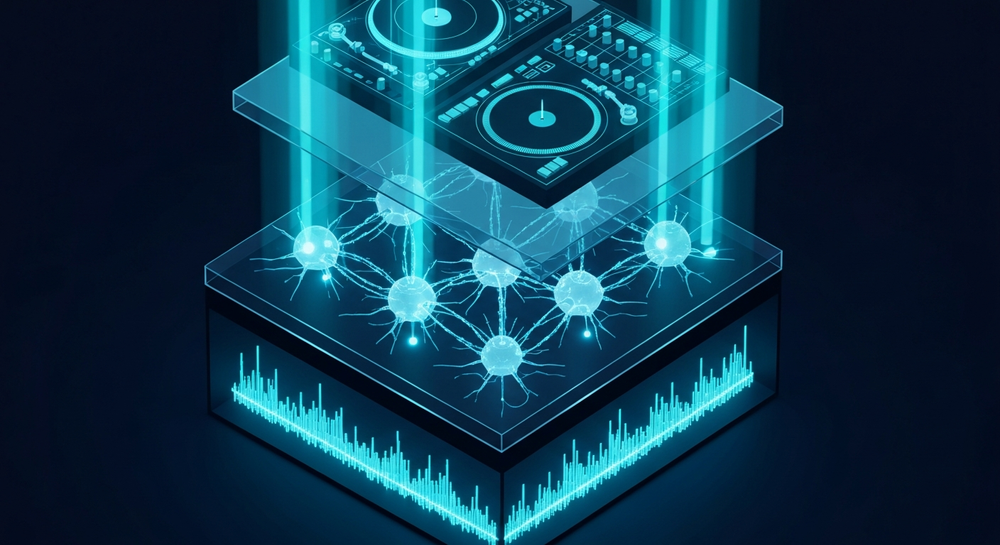
For example, a model might be trained on jazz recordings to generate new pieces with similar swing structures or chord progressions. This concept of "machine learning music generation" is not new, but in 2026, it has evolved heavily toward a more ethical and artist-centric approach. Unlike early systems (from 2024 or 2025) that relied on scraping public data, modern models now emphasize licensing, consent, and identity preservation.
These models operate at a deep neural level, learning from thousands of songs to extrapolate patterns without directly copying them. The outcome is a unique track—algorithmically generated yet inspired by specific artistic frameworks.
AI music models are often resource-intensive and require specialized training and data curation. Companies working at this layer typically target researchers or enterprise clients who want control over the base architecture rather than user-facing interfaces.
What Are AI Music Platforms?
AI music platforms sit one level above these models. They are the accessible interfaces or ecosystems that allow users—whether hobbyists or professional musicians—to interact with AI models without coding or technical expertise. In essence, platforms are "powered by" models.
An AI music platform provides tools, dashboards, APIs, and collaboration environments to compose music, refine generated tracks, and integrate AI outputs into the larger production workflow. These platforms abstract the complexity of AI training, focusing instead on usability, creativity, and legal compliance.
For instance, Soundverse’s own suite demonstrates how a well-structured platform can democratize generative composition. It offers modules for text-to-music generation, style replication, and AI-assisted production, helping producers generate ready-to-use output without learning about the underlying algorithms.
Why Is This Difference Critical in 2026?
In 2026, the music industry faces both opportunity and scrutiny. Innovations in generative music technology have unlocked new forms of creative expression but also raised complex copyright and ethical challenges. The distinction between AI models and AI platforms determines who controls the data, how the training occurs, and how outputs can be used.
Professionals should care about this separation because models define the rules, while platforms define the experience. A platform can integrate multiple models, each designed for a specific creative purpose—from film scoring to personalized branding. By contrast, a single AI music model might represent only a fragment of that capability.
Understanding “AI music models vs AI music platforms” also helps startups decide what they want to build. Founders choosing to develop models must focus on novel architectures and data ethics; those building platforms must hone interface design, creator tools, and monetization systems.
How AI Composition Tools Have Matured
AI composition tools have moved beyond simple beat generators into versatile co-creation environments. Modern systems can transform textual descriptions, mood prompts, and even reference audio into cohesive compositions. Tools like these now combine neural sound synthesis and reinforcement learning to match genre expectations, emotional tone, and tempo consistency.
This evolution is tied to the development of multi-modal models that understand not just musical structure but cultural contexts. Combined with cloud-integrated deployment, professional studios today use them for scoring films, background tracks, and sonic branding. Articles like how AI-generated music is transforming the music industry highlight how these technologies blend creative authenticity with computational precision. For a deeper dive, watch our guide on creating Deep House music or our tutorial on how to make music with Soundverse.
What Constitutes the Modern Music AI Stack?
The term "music AI stack" refers to the layered architecture that supports intelligent music production. It can include:
- Data Layer – Licensed or ethically sourced recordings used to train base models.
- Model Layer – Core AI models that learn musical features.
- Platform Layer – Tools like Soundverse that expose generative actions to users.
- Distribution Layer – APIs, export modules, and copyright-clear marketplaces.
This stack ensures scalability and compliance. As ethics and ownership dominate creative technology debates in 2026, having a transparent, multi-layered stack is vital. Products such as Soundverse’s Ethical AI Music Framework exemplify this structure—providing consent verification and fair attribution across every stage of generation.
Comparing AI Music Models vs AI Music Platforms
| Feature | AI Music Models | AI Music Platforms |
|---|---|---|
| Primary Function | Learn and generate music from data | Provide accessible tools and workflows to use models |
| User Base | Developers, AI researchers | Artists, producers, content creators |
| Customization Level | Highly technical and parameter-driven | Intuitive and prompt-based |
| Ethical Focus | Depends on training data treatment | Depends on how users interact with licensed models |
| Examples | Proprietary generative engines trained by companies | Services like Soundverse, Amper, or Boomy |
While these definitions sound distinct, the best platforms—like Soundverse—integrate artist-specific AI music models within user-friendly interfaces, creating hybrid experiences that combine depth and accessibility.
How Soundverse Aligns with the Evolution of AI Music
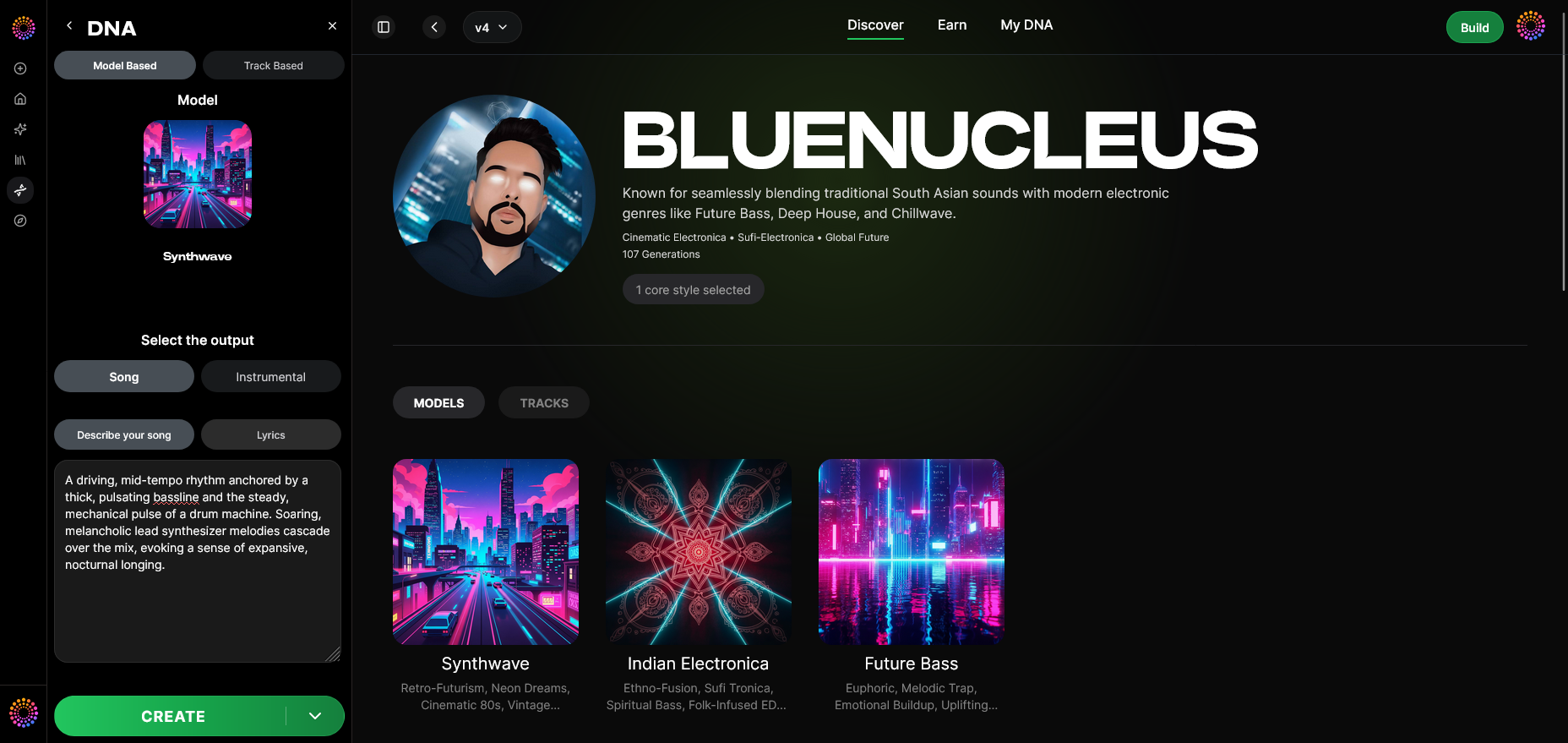
Soundverse bridges the gap between raw generative power and creative usability. It encapsulates both a robust AI model design and a versatile platform experience.
How to Make Music with Soundverse DNA
Soundverse DNA represents the artist-trained AI engine within the Soundverse ecosystem. It is designed to uphold ethics while enabling creative freedom. Unlike black-box models, Soundverse DNA operates within the Ethical AI Music Framework, ensuring consent-based training and recurring artist compensation.
Key capabilities include:
- Full DNA: Generates songs or instrumentals using an artist’s sonic identity.
- Voice DNA: Replicates vocal timbre and style ethically.
- DNA Marketplace: Allows artists to license their sound and monetize their influence.
- Sensitivity Selector: Enables users to target specific eras or stylistic clusters.
- Private Mode: Provides secure, invitation-only co-creation spaces.
This technology benefits multiple use cases—from film scoring to brand sound design. For example, marketers can maintain a consistent sonic identity across campaigns, while producers can use their own model to accelerate production cycles.
DNA’s training process reflects the structure of a well-governed music AI stack: data integrity first, model transparency next, and monetization compliance last. Combined with the Soundverse API, enterprises can extend these capabilities programmatically into larger production pipelines.
Creators curious about genre-based generation can also explore related articles like generate AI music with Soundverse text-to-music or how to create EDM with Soundverse AI for practical prompts. Or check out our Explore Tab tutorial for hands-on navigation tips.
The Ethical Impact of AI Music in 2026
The rise of commercial AI models between 2024 and 2025 brought misconceptions around ownership, leading to debates over artist rights. In response, 2026’s trend leans heavily toward transparency and shared monetization. Soundverse’s Ethical AI Music Framework embodies this shift, offering a six-stage pipeline that verifies consent, tracks attribution, and automates payment distribution.
Integrating systems such as Soundverse DNA ensures that generative tools promote fairness rather than replacement. Through marketplace licensing, artists retain control—and income—over how their signature styles evolve in the digital space.
Start Creating Music with AI Today
Experience how Soundverse transforms your creative process — generate, remix, and refine tracks with cutting-edge AI tools designed for musicians, producers, and creators of all levels.
Try Soundverse Free →
Related Articles
- How AI-Generated Music Is Transforming the Music Industry — Discover how AI is revolutionizing music production, distribution, and creativity across genres and professional fields.
- Soundverse AI Revolutionizing Music Creation for New Age Content Creators — Learn how Soundverse empowers content creators with AI-driven tools for fast, flexible, and professional-grade music creation.
- AI Music Generator and Human Composers: A Future Together — Explore how human creativity and AI innovation can harmoniously shape the future of music composition and performance.
- Best AI Music Generator: Top Picks and Review — Compare leading AI music generators and find the right tool for your creative goals and workflow.
Here's how to make AI Music with Soundverse
Video Guide

Here’s another long walkthrough of how to use Soundverse AI.
Text Guide
- To know more about AI Magic Tools, check here.
- To know more about Soundverse Assistant, check here.
- To know more about Arrangement Studio, check here.
Soundverse is an AI Assistant that allows content creators and music makers to create original content in a flash using Generative AI. With the help of Soundverse Assistant and AI Magic Tools, our users get an unfair advantage over other creators to create audio and music content quickly, easily and cheaply. Soundverse Assistant is your ultimate music companion. You simply speak to the assistant to get your stuff done. The more you speak to it, the more it starts understanding you and your goals. AI Magic Tools help convert your creative dreams into tangible music and audio. Use AI Magic Tools such as text to music, stem separation, or lyrics generation to realise your content dreams faster. Soundverse is here to take music production to the next level. We're not just a digital audio workstation (DAW) competing with Ableton or Logic, we're building a completely new paradigm of easy and conversational content creation.
TikTok: https://www.tiktok.com/@soundverse.ai
Twitter: https://twitter.com/soundverse_ai
Instagram: https://www.instagram.com/soundverse.ai
LinkedIn: https://www.linkedin.com/company/soundverseai
Youtube: https://www.youtube.com/@SoundverseAI
Facebook: https://www.facebook.com/profile.php?id=100095674445607
Join Soundverse for Free and make Viral AI Music

We are constantly building more product experiences. Keep checking our Blog to stay updated about them!