How to Apply for a Grammy as an Independent or DIY Artist
Step-by-step guide on Grammy eligibility for independent artists and DIY musicians in 2026. Learn how to apply for Grammy Awards easily.
How to Apply for a Grammy as an Independent or DIY Artist
Applying for the Grammy Awards as an independent or DIY artist may seem daunting, but in 2026 the Recording Academy has made notable strides toward inclusivity and fairness. Independent musicians now have clear pathways to recognition alongside major-label artists. This guide breaks down everything you need to know about grammy eligibility for independent artists, the grammy submission process, and practical strategies to increase your chances of being considered.
Why Grammys Matter for Independent Musicians
For many creators producing music outside traditional recording contracts, a Grammy nomination represents validation, visibility, and industry respect. In the era of streaming, social media virality, and digital-first production, independent releases often perform as well—or even better—than studio-backed albums. Grammy awards still serve as global benchmarks for artistic excellence, and the Recording Academy has expanded its definitions to include independent artists and AI-assisted compositions alike in 2026.

As more artists leverage technology such as Soundverse AI to create, mix, and distribute music, understanding grammy requirements for DIY musicians is not only vital but empowering. According to Symphonic Blog, independent artists get nominated and win Grammys every year through consistent creation and professional releases.
What Determines Grammy Eligibility for Independent Artists?
The Recording Academy’s eligibility rules remain consistent: music must be commercially released within the qualification year (October 1 of the previous year to September 30 of the current year) and be accessible via major digital platforms approved by the Academy.
Eligibility does not depend on label affiliation. What matters is compliance with the following:
- Release Format: Must be officially distributed—digital, physical CD, or vinyl—through public platforms like Spotify, Apple Music, or Bandcamp.
- Original Composition: Your work must be your own. Covers and remixes may qualify under specific categories but must clearly credit the original writers.
- Mastering and Metadata: Ensure your track’s metadata accurately reflects artist, producer, and songwriter details.
- Copyright Registration: Independent creators can register their masters, lyrics, and compositions via agencies such as the U.S. Copyright Office or recognized copyright managers.
These aspects remain central to grammy requirements for DIY musicians. The Recording Academy welcomes music that demonstrates creative originality and clear authorship tracking, a principle strengthened by music tech platforms.
How to Make Your Grammy Submission as a DIY Artist
Submitting to the Grammys requires organization and proof that your release meets eligibility. Here’s how the process typically unfolds:
Step 1: Confirm Your Release Eligibility
Before anything else, verify your release date and format. Only songs or albums officially distributed within the Grammy year (for 2026: between October 2024 and September 2025) qualify for submission. Independent artists can use distributors like DistroKid, TuneCore, or CD Baby to ensure releases enter recognized streaming catalogs.
Step 2: Get Registered with the Recording Academy
While anyone can submit eligible recordings for consideration, membership with the Recording Academy is necessary to vote or participate actively. Independent musicians can easily apply for Recording Academy membership, which, as of 2026, includes options for creators, technologists, and rights-holders working with AI-assisted content.
Membership also provides networking opportunities and access to mentoring programs tailored for self-produced artists. This plays a pivotal role in maintaining transparency throughout the grammy submission process.
Step 3: Submit During the Entry Period
The online submission portal opens each summer. You will provide your release links, credit details, format type, and category selections. Independent artists should review category lists carefully—from Best New Artist to genre-specific fields like Best Electronic Album or Best Traditional R&B Performance.
Ensure your credits accurately list songwriters, engineers, and featured collaborators. The Recording Academy reviews submissions with attention to artistic integrity and compliance with rights standards. For a deeper dive, watch our guide on how to make music and enrich your submission workflow.
Step 4: Verify Rights Attribution and Metadata
Proper rights attribution keeps your work eligible for awards and compensations. Independent musicians using AI tools must ensure generated elements comply with transparency requirements.
This is where modern creators rely on attribution ecosystems like Soundverse Trace.
How to Apply for a Grammy as an Independent Artist with Soundverse Trace
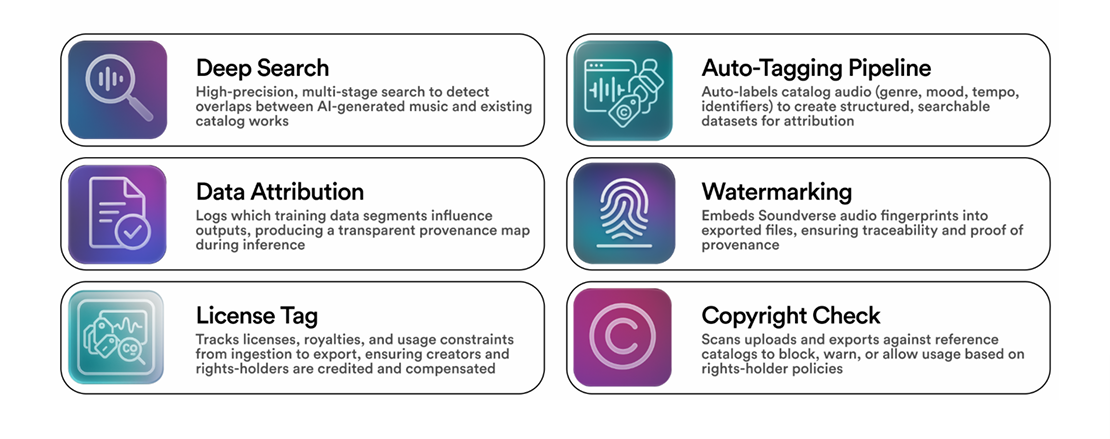
Soundverse Trace provides the ideal infrastructure to meet the Recording Academy’s growing emphasis on provenance and content integrity in 2026. AI-assisted compositions can now qualify for Grammy categories if creators clearly provide transparent authorship data, and Soundverse Trace enables that effortlessly.
Soundverse Trace is a comprehensive trust layer for AI music that ensures complete rights tracking. It embeds deep search capabilities, verifies attribution, and watermarks audio invisibly to document exactly how each sound source contributes to the final mix.
Core Capabilities Relevant to Grammy Submissions
- Deep Search: Conducts precise scans to detect overlaps between your production and referenced datasets, ensuring 100% originality compliance.
- Data Attribution: Logs which training data influenced your AI-generated output—vital if you use generative systems in your creative process.
- Audio Watermarking: Embeds inaudible fingerprints that help track ownership and prevent copyright infringement.
- License Tagging: Preserves rights metadata from ingestion to export, aligning directly with Grammy requirements for verifiable authorship.
Why Independent Artists Should Use Soundverse Trace
In 2026, many creators collaborate with AI for inspiration and arrangement while maintaining full artistic control. Soundverse Trace authenticates such hybrid workflows by preserving the recording’s lineage. Whether you create full compositions using AI or integrate it for production assistance (see how AI-generated music is transforming the music industry), you can prove your originality seamlessly. To understand Soundverse’s creative ecosystem, check the Explore tab guide from our tutorial series.
Moreover, if your participation in the Soundverse Content Partner Program provides audio contributions for AI training, Trace automatically logs attribution for future royalty payouts. This ensures your Grammy-eligible work also adheres to ethical AI frameworks, such as the Soundverse Ethical AI Music Framework, which protects artistic consent.
Pro Tips to Strengthen Your Grammy Application
As an independent artist, each submission must communicate professionalism. A few strategic actions will maximize your visibility:
- Maintain Consistent Branding: Cohesive artwork, proper credit listings, and clear genre definitions help Academy members recognize your identity.
- Reference Past Work and Collaborations: Demonstrate evolution. Linking milestones or chart success brings weight to your nomination.
- Document Creative Process: Keeping transparent logs of your recordings—especially if you use AI tools like Soundverse Arrangement Studio—helps confirm your authorship.
- Network Within the Academy: Engaging with panels, workshops, and peer groups amplifies your presence in nominee discussions.
- Leverage Technology: Platforms such as Soundverse Trace simplify accreditation so your submission aligns with ethical creation standards and copyright safety.
For example, you might combine Soundverse’s AI Magic Tools with Trace’s watermarking layer, ensuring you’re protected through composition and distribution phases.
For genre-based inspiration, watch our tutorial on making Deep House music with Soundverse to improve your production style before submitting.
How the Grammy Submission Process Has Evolved by 2026
The Recording Academy recognizes the shifting landscape of music production. DIY musicians now dominate nomination lists thanks to home studios, AI co-producers, and royalty-free licensing options. Innovations like generate AI music with Soundverse Text-to-Music prove that independent artists can achieve studio-quality results without major-label funding.
By integrating traceable metadata and digital rights management systems, the Grammys maintain fairness while embracing technological advances. In 2026, AI-assisted submissions are evaluated under the same standards of originality, composition quality, and rights transparency as traditional works. As covered by LSU Reveille, recent Grammy categories showcase the most diverse group of emerging independent nominees ever recorded.
Create Award-Worthy Music with Soundverse AI
Turn your musical ideas into professional-quality tracks effortlessly. Soundverse’s AI tools help independent artists produce, mix, and master songs ready for Grammy-level quality.
Related Articles
- How AI-Generated Music Is Transforming the Music Industry: Explore how artificial intelligence is reshaping music production, creativity, and opportunities for independent artists worldwide.
- Navigating the World of Royalty-Free and Copyright-Free Music Using Soundverse AI: Learn how to legally release your tracks using copyright-free compositions and ensure your music remains eligible for awards.
- The Role of AI Music in Film and Television: Discover how AI-generated compositions are making their way into major productions and how indie musicians can tap into these opportunities.
- Soundverse Assistant: Your AI Music Co-Producer: Meet your new creative partner—Soundverse Assistant helps you produce, arrange, and refine tracks with studio-level precision and efficiency.
Here's how to make AI Music with Soundverse
Video Guide

Here’s another long walkthrough of how to use Soundverse AI.
Text Guide
- To know more about AI Magic Tools, check here.
- To know more about Soundverse Assistant, check here.
- To know more about Arrangement Studio, check here.
Soundverse is an AI Assistant that allows content creators and music makers to create original content in a flash using Generative AI. With the help of Soundverse Assistant and AI Magic Tools, our users get an unfair advantage over other creators to create audio and music content quickly, easily and cheaply. Soundverse Assistant is your ultimate music companion. You simply speak to the assistant to get your stuff done. The more you speak to it, the more it starts understanding you and your goals. AI Magic Tools help convert your creative dreams into tangible music and audio. Use AI Magic Tools such as text to music, stem separation, or lyrics generation to realise your content dreams faster. Soundverse is here to take music production to the next level. We're not just a digital audio workstation (DAW) competing with Ableton or Logic, we're building a completely new paradigm of easy and conversational content creation.
TikTok: https://www.tiktok.com/@soundverse.ai
Twitter: https://twitter.com/soundverse_ai
Instagram: https://www.instagram.com/soundverse.ai
LinkedIn: https://www.linkedin.com/company/soundverseai
Youtube: https://www.youtube.com/@SoundverseAI
Facebook: https://www.facebook.com/profile.php?id=100095674445607
Join Soundverse for Free and make Viral AI Music

We are constantly building more product experiences. Keep checking our Blog to stay updated about them!