How Planetariums Use AI Space Music to Elevate Cosmic Experiences in 2026
Explore how planetariums in 2026 use AI space music to craft immersive cosmic soundscapes for astronomy exhibits and live shows.
How Planetariums Use AI Space Music
In 2026, planetariums are not just about visual journeys through galaxies—they’re becoming fully immersive sonic universes powered by AI space music. With artificial intelligence reimagining how we perceive sound in astronomy, planetariums across the globe are introducing dynamic, adaptive audio that resonates with celestial movements, cosmic events, and audience emotion.
Why Are Planetariums Turning to AI Space Music?
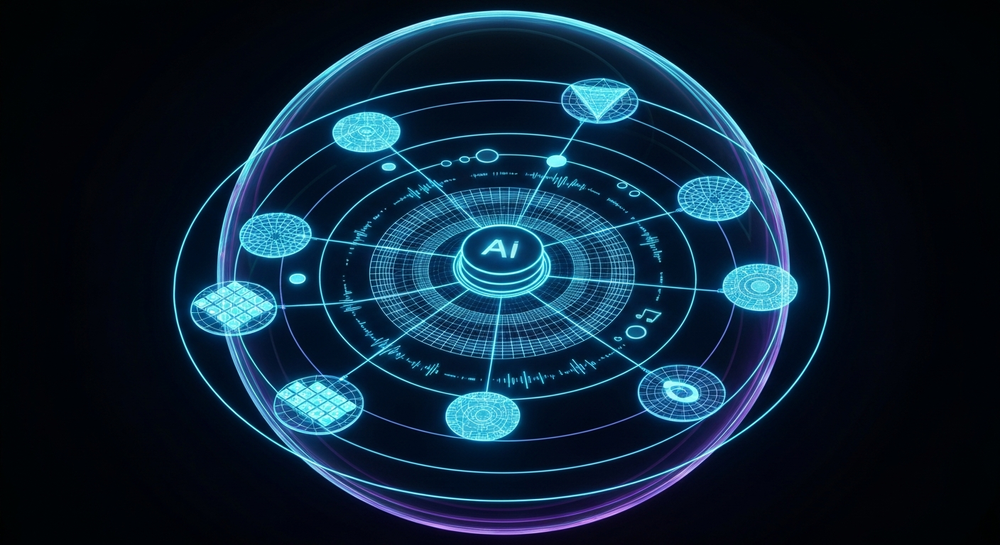
Planetariums have always aimed to replicate the awe of space exploration, merging science and art to transport audiences beyond Earth. Until recent years, the music accompanying these visual spectacles was manually composed or reused from classical and cinematic scores. However, with the rise of AI space music technologies, curators can now design soundscapes that respond to each visual moment with precision and fluidity.
AI space music brings personalization and creativity to astronomical experiences. Unlike static soundtracks, these intelligent soundscapes adapt to themes like the birth of stars, black hole simulations, or cosmic history timelines. When viewers explore a nebula or trace constellations, the music evolves—sometimes seamlessly looping, sometimes building dramatic crescendos—all generated by AI.
As planetariums update their infrastructure for digital projection and AI integration, space audio is now seen as the next frontier in immersive storytelling.
What Makes AI Space Music Distinct from Traditional Space Audio?
Unlike traditional compositions where human composers interpret scientific events artistically, AI space music translates text prompts or parameters into full instrumental arrangements. This system allows curators to specify genres, moods, and instrumentation for different sections of a planetarium show.
In older presentations, curators depended on orchestral or ambient tracks labeled as "space-themed." Now, they can type prompts such as “ambient drones representing solar winds” or “mystical tones for the Milky Way travel sequence,” and an AI Music Generator crafts precisely that—without vocals, yet rich with sonic texture.
Space audio today is becoming multidimensional. Thanks to loop modes and genre controls, planetarium soundscapes can extend indefinitely, adapting to audience pacing or educational narration. Discover more at AI Music Generators: A New Tool for Planetarians.
How Does AI Space Music Enhance Astronomy Education?
Planetariums are central to science communication, bringing astronomical concepts to students and the public. Incorporating AI-generated cosmic soundscapes makes these lessons more sensory and memorable.
For example, imagine a session explaining gravitational waves. Instead of monotonous lectures, curators can play a pulsating rhythm generated by AI to sonify the concept. The audience listens to space—a phenomenon once limited to visual representation—transformed into music.
This approach reinforces comprehension through multisensory engagement. The combination of astronomy visuals with dynamically generated space audio creates not just learning opportunities but emotional connections with celestial phenomena.
Educational writers and technologists are also exploring how AI enhances creativity in science exhibits. Articles such as how AI-generated music is transforming the music industry highlight how machine-generated composition bridges technology and art.
What Are the Key Components of Cosmic Soundscape Design in 2026?
Creating impactful planetary presentations now involves three integrated layers:
- Scientific Alignment: Music mirrors astronomical data, like mapping sound frequencies to radiation signals or representing star formation in ambient tones.
- Spatial Acoustics: AI-generated tracks are optimized to fill dome theaters with surround spatial effects, balancing frequencies for central narration and peripheral visual cues.
- Emotion Mapping: Planetariums use AI to ensure the soundtrack captures audience mood—from awe at celestial collisions to serenity during cosmic voyages.
Tools like Soundverse’s AI Music Generator are central to this process since they allow text-driven precision and repeatable loops, conducive for long immersive planetarium sessions. For a deeper dive, watch our guide on how to make music and Soundverse Tutorial Series - 10. Make Deep House Music.
How to Make Planetarium AI Space Music with Soundverse AI Music Generator
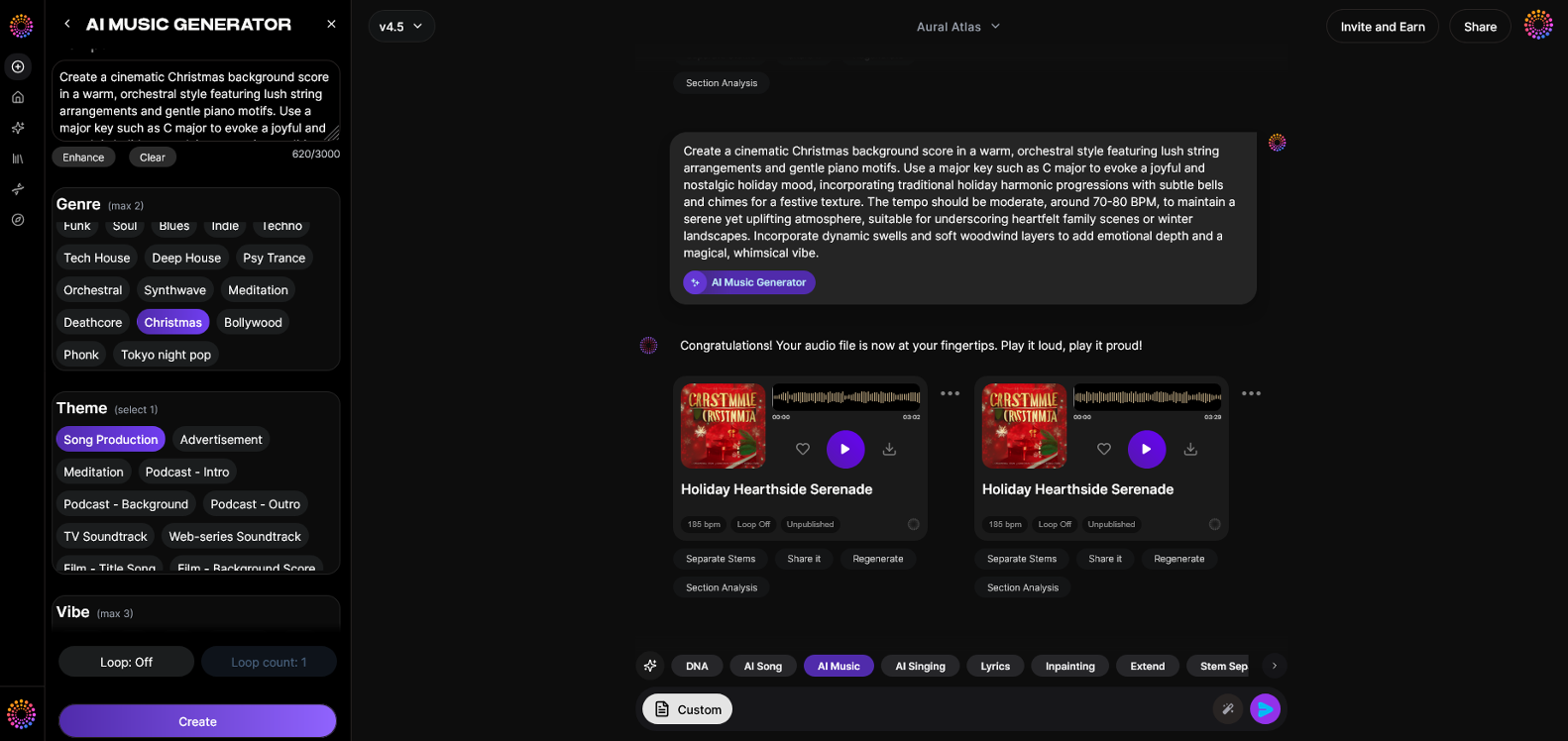
Soundverse offers powerful technology to create customized cosmic soundscapes effortlessly.
The AI Music Generator allows creators to produce fully instrumental tracks from text prompts. It specializes in background scores, beats, and soundscapes with seamless looping—perfect for continuous dome projection shows. The system’s detailed controls enable users to tailor genre, mood, and instrumentation to specific astronomical settings.
Planetarium curators can use the V4 and V5 Models to craft high-fidelity sound textures ranging from ambient to orchestral, aligning audio precisely with celestial imagery. Because the tool is text-to-music driven, users only need to describe the mood they want—such as “ethereal ambience reflecting interstellar travel”—and Soundverse processes the request asynchronously, returning professionally composed results.
For teams that rely on reference scores, the Similar Music Generator helps reproduce the emotional tone of approved demo tracks. Meanwhile, Soundverse DNA ensures ethical originality by generating compositions trained on licensed catalogs, keeping cosmic soundscapes copyright-safe.
Planetariums seeking automation can integrate these tools into their workflow to produce recurring sonic experiences identical in quality but unique in detail.
Learn more about related creative options like Soundverse AI Magic Tools and advanced features such as stem separation technology to refine background space audio segments separately.
How Are Planetariums Using AI Space Music in 2026?
In 2026, several real-world patterns have emerged:
- Customized Dome Experiences: Shows integrate live narrations with AI space music that changes tone based on narrative intensity.
- Interactive Cosmic Journeys: Visitors can control portions of the audio output by choosing destinations—Mars, Saturn’s rings, or deep interstellar zones.
- Collaborations with AI Musicians: Artists partner with science institutes to produce limited-edition cosmic soundscape themes, enhancing cultural interest.
- Adaptive Educational Modules: AI music synchronizes with touchscreen exhibits to teach planetary frequencies through auditory interaction.
This evolution signifies a shift from passive viewing to active cosmic immersion. Spaces once reserved for stargazing now resound with algorithmic harmony. As seen in Otsuka Ai: A Celestial Journey Through the Planetarium, artistic collaborations increasingly merge AI sound design and emotional storytelling.
What Future Trends Shape Cosmic Soundscapes and Space Audio Design?
By 2026, advanced AI models are learning the physics of cosmic frequencies. Researchers are experimenting with mapping real radio waves and electromagnetic data into harmonic conversion, effectively turning universe signals into aesthetic sound.
Expect upcoming updates where AI space music dynamically responds to real-time telescope input—translating data from observatories into live, adaptive instrumentals. Although Soundverse operates asynchronously, its Loop Mode ensures ongoing playback consistency for long-duration projections.
Articles such as Now Generate Music with Filters Like Genre, Theme, Instruments or Even Vibe demonstrate how genre-based filters support precise sonic customization—a feature planetariums can leverage.
How Soundverse Helps Planetariums Compose AI Space Music
Soundverse positions itself at the intersection of music technology and space education. The AI Music Generator precisely fulfills the needs of astronomy institutions that want adaptable, loopable sound with minimal manual composition. It eliminates costly scoring sessions by converting simple descriptive prompts into fully produced instrumentals.
Planetarium curators can focus on creative storytelling while Soundverse handles the background sonic architecture. Whether you’re designing a cosmic symphony or a meditative journey through interplanetary sound, Soundverse’s tools simplify the entire production pipeline.
For those exploring genre-specific compositions—from meditative ambient backgrounds to electronic galaxy voyages—helpful tutorials like How to Create Healing Meditation Music with Soundverse AI provide additional insight into crafting thematic music efficiently.
Create Your Own AI Space Soundtrack Today
Bring the cosmos to life with Soundverse’s powerful AI music tools. Generate immersive, royalty-free space-inspired soundscapes for your planetarium shows, videos, or relaxation projects in minutes.
Related Articles
- The Role of AI Music in Film and Television: Discover how AI-generated compositions are transforming scoring and sound production across film and TV.
- How an AI Music Generator Inspires Creative Fusion: Learn how creators blend technology and artistry to push the boundaries of musical expression.
- The Benefits of Composing with an AI Music Generator: Explore the key advantages of AI-assisted composition for both beginners and professionals.
- What AI Can Generate Songs: Find out which AI models and tools produce high-quality, genre-specific songs with minimal input.
Here's how to make AI Music with Soundverse
Video Guide

Here’s another long walkthrough of how to use Soundverse AI.
Text Guide
- To know more about AI Magic Tools, check here.
- To know more about Soundverse Assistant, check here.
- To know more about Arrangement Studio, check here.
Soundverse is an AI Assistant that allows content creators and music makers to create original content in a flash using Generative AI. With the help of Soundverse Assistant and AI Magic Tools, our users get an unfair advantage over other creators to create audio and music content quickly, easily and cheaply. Soundverse Assistant is your ultimate music companion. You simply speak to the assistant to get your stuff done. The more you speak to it, the more it starts understanding you and your goals. AI Magic Tools help convert your creative dreams into tangible music and audio. Use AI Magic Tools such as text to music, stem separation, or lyrics generation to realise your content dreams faster. Soundverse is here to take music production to the next level. We're not just a digital audio workstation (DAW) competing with Ableton or Logic, we're building a completely new paradigm of easy and conversational content creation.
TikTok: https://www.tiktok.com/@soundverse.ai
Twitter: https://twitter.com/soundverse_ai
Instagram: https://www.instagram.com/soundverse.ai
LinkedIn: https://www.linkedin.com/company/soundverseai
Youtube: https://www.youtube.com/@SoundverseAI
Facebook: https://www.facebook.com/profile.php?id=100095674445607
Join Soundverse for Free and make Viral AI Music

We are constantly building more product experiences. Keep checking our Blog to stay updated about them!