How Architecture Firms Use AI Music in Presentations (2026 Guide)
Learn how architecture firms use AI music in presentations to enhance design storytelling in 2026.
How Architecture Firms Use AI Music in Presentations
In 2026, the fusion of architecture and artificial intelligence has expanded beyond 3D modeling and design simulations to the sensory world of sound. One of the most intriguing developments is the growing use of AI music in architectural presentations, allowing architects and design studios to evoke emotion, context, and atmosphere through sound.
For many architecture firms, a presentation is not just about showcasing structural designs—it’s about communicating the essence of a space. From virtual walkthroughs of eco-resorts to mood-driven renderings for commercial towers, music has become a storytelling device that complements visuals and amplifies impact.
Why Is Music Becoming Essential in Architectural Design Presentations?

Music fundamentally influences how audiences perceive visuals. In architecture, it helps viewers feel the environment rather than just see it. A calming ambient track paired with a coastal villa concept, or an energetic instrumental piece synced with a modern office layout, can transform perception.
In 2026, architectural presentation standards have evolved. Clients expect immersive experiences that merge sight, sound, and sometimes even interaction. This trend mirrors broader movements seen in marketing and entertainment, where AI-generated music has redefined storytelling. Architects are now embracing similar techniques to strengthen their narrative during design reviews, competitions, and client pitches.
Before AI tools, firms had to rely on stock music or expensive custom compositions. These methods often came with licensing concerns or lacked contextual alignment. Now, AI music generators allow architects to produce tailor-made soundscapes that perfectly fit the tone of their design presentation—without legal or creative compromises.
What Makes AI Music Ideal for Architectural Firms in 2026?
- Customization at Scale: Firms can create unique soundtracks within minutes, matching different project moods such as futuristic, minimalist, organic, or urban-industrial.
- Cost and Time Efficiency: AI-produced music eliminates the need to license costly commercial tracks. It streamlines workflows and budgets, particularly for boutique studios.
- Emotional Precision: The right background music communicates a deeper level of design intent. AI tools offer advanced genre and mood controls to fine-tune these impressions.
- Looped Audio for Walkthroughs: Seamless looping allows architectural audio to flow continuously throughout flythrough videos or VR experiences without abrupt interruptions.
- Ethical and Copyright-Safe Output: As AI ethics mature, tools like Soundverse DNA ensure music is generated from licensed, monetized data—allowing firms to respect artists’ rights while creating professional-grade content.
How Are Firms Implementing AI Music in Design Presentations?
1. Virtual Reality Walkthroughs with Ambient Soundscapes
When presenting architectural concepts in VR or AR, environmental sound is crucial. Adding adaptive background music helps simulate the feel of the building’s intended atmosphere—be it a tranquil spa or a bustling hotel lobby.
2. Emotional Storytelling in Concept Videos
Many architecture competitions now include narrative-driven videos. AI-generated music enables firms to produce tailor-made emotional arcs—soft beginnings, crescendo points during reveal moments, and ambient closing tones for final renders.
3. Enhancing Material and Texture Studies
In physical or digital exhibitions, a firm might incorporate subtle sound loops to accompany visual boards or digital panels. For example, earthy tunes underscore sustainable architecture, while clean electronic tones accompany futuristic facades.
4. Client Review Sessions and Virtual Meetings
In 2026’s hybrid working era, presentations often happen online. Adding gently looped background tracks keeps meetings dynamic and focused, providing a calmer, more immersive experience for remote clients.
Firms adopting this approach combine creativity with technology, using tools such as the Soundverse AI Music Generator to streamline their sound design workflow.
How to Make AI Music in Architectural Presentations with Soundverse AI Music Generator
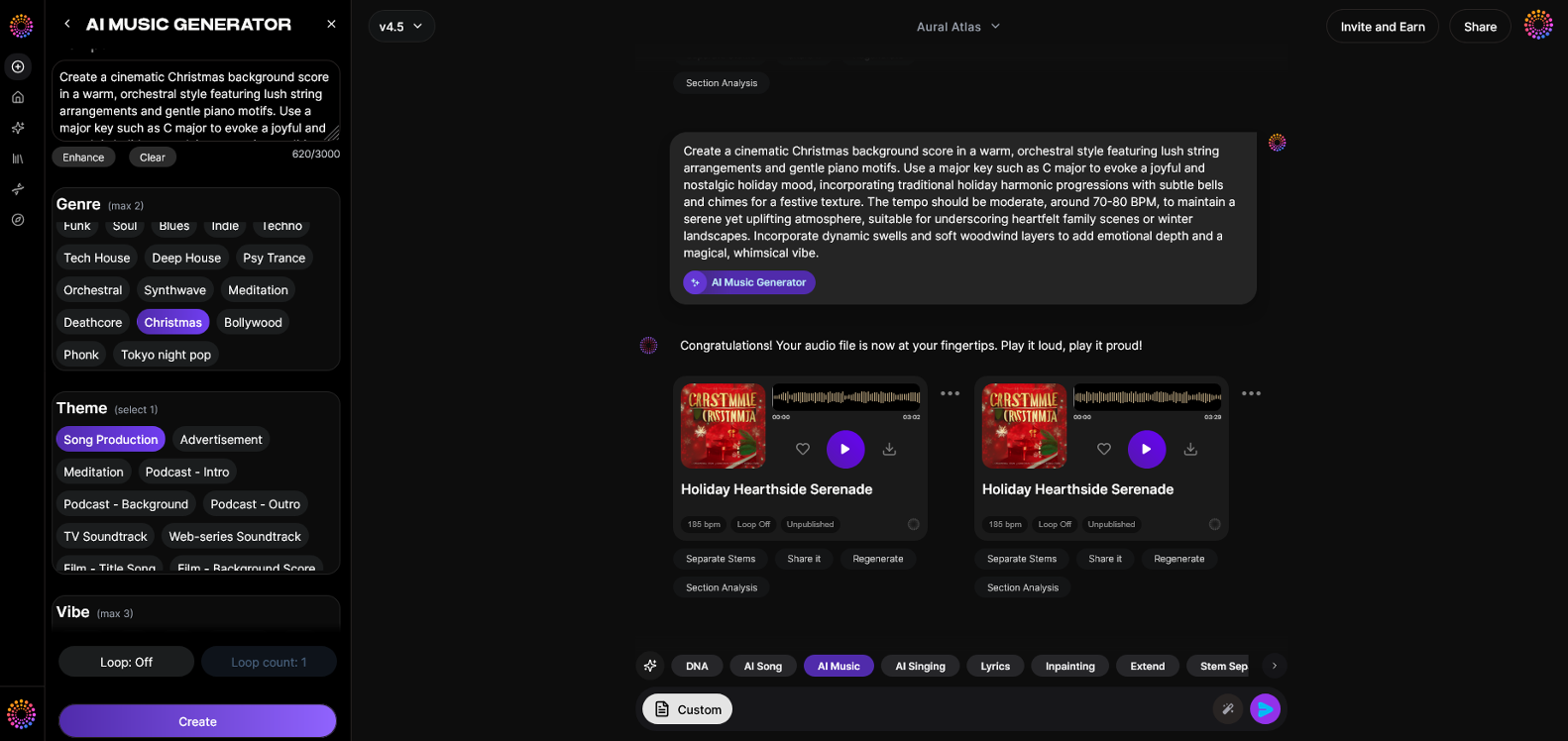
The Soundverse AI Music Generator empowers creative professionals, including architects, designers, and visual artists, to craft fully produced instrumental music from simple text prompts. It specializes in background tracks, beats, and immersive soundscapes—perfect for architectural applications.
Key Capabilities
- Text-to-Music: Type a descriptive phrase like “ambient electronic music for modern interior walkthrough” to generate music that fits the design mood.
- Loop Mode: Seamlessly repeat instrumental sections during long renderings or VR tours.
- Detailed Control: Adjust style, genre, duration, and instrumentation to complement your architectural tone—whether minimalistic piano or cinematic orchestration.
- Model Options: Use V4 or V5 for varying text-to-music performance and fidelity needs.
Soundverse also provides complementary tools:
- Similar Music Generator: Produces music inspired by reference tracks, ideal when seeking alignment with a mood board or client-approved temp score.
- Soundverse DNA: Uses licensed artist data to create personalized and copyright-safe compositions, making it valuable for client-facing projects requiring originality and compliance.
For even more insights into AI-powered music creation, explore related articles like Generate AI Music with Soundverse Text-to-Music or Soundverse AI Magic Tools for Quick Content Creation. For a deeper dive, watch our guide on creating Deep House music and tutorial on the Explore tab from Soundverse’s YouTube channel.
What Are the Best Practices for Using AI Music in Design Presentations?
- Match Music to Spatial Intent: If your design emphasizes open, airy environments, choose light, ambient tones. For urban or industrial designs, percussive, rhythmic soundscapes often fit better.
- Use Music as a Transition Device: Between different design segments—like exterior reveal to interior walkthrough—let the music shift dynamically to mirror visual transitions.
- Prioritize Subtlety: Avoid overpowering tracks that distract from visual focus. AI tools like Soundverse allow precise mood-level control.
- Test Feedback Loops: Present options with and without AI music to gauge client reactions. The contrast often emphasizes the power of sound.
- Ensure Consistency Across Media: Whether for a VR experience, a video render, or a slideshow, reuse similar musical motifs to strengthen brand identity.
The ability to experiment quickly with AI audio outputs helps architects deliver immersive storytelling in ways that were previously reserved for large studios with custom composing teams.
How Does This Reflect Broader Design and Technology Trends?
The adoption of AI music in architectural presentations mirrors trends in other creative industries. Film, advertising, and game design have already embraced adaptive sound. Architecture’s shift towards experiential storytelling means sound is now viewed as another design material—like light, texture, or form.
By 2026, sustainability-themed music, binaural sound design, and contextual audio mapping have become prominent. Tools like Soundverse Arrangement Studio allow deeper control in layering and music arrangement, complementing visual design concepts.
How Soundverse Helps Architecture Firms in 2026
Soundverse unites accessibility and sophistication. Instead of outsourcing sound design, firms can directly integrate music creation into their everyday workflow—reducing turnaround times and enhancing creative autonomy. Using Soundverse’s AI Music Generator, even non-musicians can craft bespoke tracks aligned perfectly with their models.
For forward-thinking studios, integrating AI-generated architectural audio is more than a novelty—it’s a branding advantage. Projects that pair visionary visuals with immersive soundscapes stand out in client reviews and juried exhibitions.
In essence, AI music in architectural presentations represents the next chapter in multisensory design communication. As 2026 progresses, the most memorable projects will be those that engage not just the eyes, but also the ears.
For more music innovation insights, check out AI Ranks Soundverse’s AI Singer #1 and How an AI Music Generator Inspires Creative Fusion. The intersection of audio and design continues to expand—and Soundverse remains at the forefront of this creative transformation.
Bring Your Architectural Vision to Life with AI Music
Enhance every design presentation with perfectly tailored, royalty-free AI music. Soundverse makes it easy to generate soundtracks that match your project’s mood, atmosphere, and story.
- The Role of AI Music in Film and Television — Discover how AI-generated music is reshaping storytelling in visual media through emotion-driven compositions.
- Navigating the World of Royalty-Free and Copyright-Free Music Using Soundverse AI — Learn how to find and create music that’s safe for commercial use with Soundverse AI’s intuitive tools.
- Enhancing YouTube Content with Royalty-Free and Copyright-Free Music Using Soundverse AI — Explore how creators can easily add professional-grade background music to videos while avoiding copyright issues.
- How an AI Music Generator Inspires Creative Fusion — Find out how AI tools are sparking innovation across creative industries, blending sound and visual art like never before.
Here's how to make AI Music with Soundverse
Video Guide

Here’s another long walkthrough of how to use Soundverse AI.
Text Guide
- To know more about AI Magic Tools, check here.
- To know more about Soundverse Assistant, check here.
- To know more about Arrangement Studio, check here.
Soundverse is an AI Assistant that allows content creators and music makers to create original content in a flash using Generative AI.
With the help of Soundverse Assistant and AI Magic Tools, our users get an unfair advantage over other creators to create audio and music content quickly, easily and cheaply.
Soundverse Assistant is your ultimate music companion. You simply speak to the assistant to get your stuff done. The more you speak to it, the more it starts understanding you and your goals.
AI Magic Tools help convert your creative dreams into tangible music and audio. Use AI Magic Tools such as text to music, stem separation, or lyrics generation to realise your content dreams faster.
Soundverse is here to take music production to the next level. We're not just a digital audio workstation (DAW) competing with Ableton or Logic, we're building a completely new paradigm of easy and conversational content creation.
TikTok: https://www.tiktok.com/@soundverse.ai
Twitter: https://twitter.com/soundverse_ai
Instagram: https://www.instagram.com/soundverse.ai
LinkedIn: https://www.linkedin.com/company/soundverseai
Youtube: https://www.youtube.com/@SoundverseAI
Facebook: https://www.facebook.com/profile.php?id=100095674445607
Join Soundverse for Free and make Viral AI Music

We are constantly building more product experiences. Keep checking our Blog to stay updated about them!