How AI Music Is Used in Mobile Apps and Product Experiences in 2026
Discover how AI music in mobile apps is reshaping UX and product experiences in 2026.
How AI Music Is Used in Mobile Apps and Product Experiences
In 2026, AI music has evolved far beyond novelty tracks and automated background loops. It has become the backbone of immersive mobile app design, reshaping how users interact with sound, emotion, and flow within digital experiences. From wellness apps that respond to heart rate and mood data to gaming platforms that generate adaptive audio on the fly, AI-generated soundtracks have become a key driver of personalization and engagement.
What makes AI music critical to modern mobile app experiences in 2026?
Mobile app user experience has become increasingly multidimensional. Users expect not only beautiful visuals and responsive interfaces but also meaningful sonic elements that adapt to their activities. AI music in mobile apps introduces dynamic sound environments that can shift tone, rhythm, and intensity in real time based on contextual signals—such as user motion, time of day, or emotional state.
Sound has always played an important role in UX sound design, but historically, creating individualized tracks or mood-based soundscapes required time-consuming manual production. Now, AI models—trained on licensed audio datasets—can instantly create instrumentals or full compositions tailored to specific use cases. This shift has made sound personalization at scale possible, which is revolutionizing how companies design immersive app experiences.
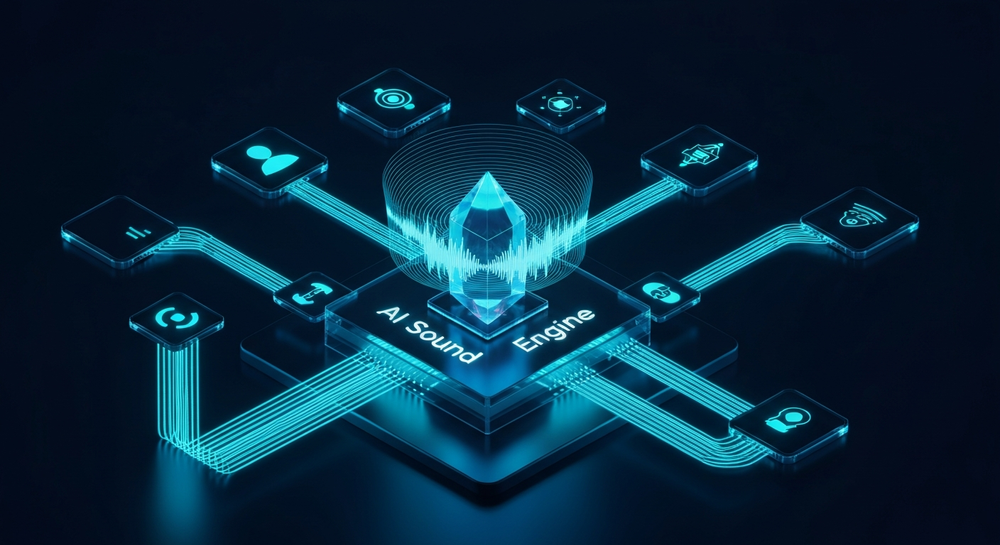
How are developers using AI-generated soundtracks to enhance UX and engagement?
Across industries, developers are leveraging AI-generated soundtracks to emotionally augment user journeys. Here are several examples of practical applications today:
- Fitness and Wellness Apps: Adaptive soundtracks respond to user pace, biometric data, and mood. For instance, relaxing soundscapes may play during meditation, while energetic beats accompany workouts.
- Gaming Platforms: Games now integrate AI music that adapts dynamically to gameplay intensity. As a player advances, the background composition evolves, creating tension and immersion.
- Productivity Tools: AI-generated ambient tracks enhance focus within productivity and note-taking apps. They use subtle variations to prevent fatigue and distraction.
- Social Media & Content Creation Apps: As creators engage with tools like short-form video or visual collages, intelligent music generation systems suggest soundtracks that match the content's tone and tempo.
- Retail & E-commerce: AI music can now be used to set brand mood or influence purchase behavior by creating emotionally resonant shopping experiences.
These implementations demonstrate that AI sound personalization is no longer a futuristic concept—it is an operational feature that increases user retention and brand distinctiveness. The growing market underscores this transformation, with the AI music market reaching $6.65 billion in 2025 and projected to hit $60.44 billion by 2034.

What are adaptive audio experiences and how do they work?
Adaptive audio experiences refer to sound systems that react intelligently to user behavior and environmental data. They utilize machine learning to adjust tempo, intensity, and sonic texture as conditions change. This technology might rely on data inputs such as movement sensors or contextual triggers (e.g., location, temperature, or device usage patterns).
In 2026, adaptive audio systems form the cornerstone of emotionally responsive design. They not only enhance usability but also foster deeper emotional connection with a product. For example, a wellness app could detect elevated stress indicators and generate calming ambient music using systems similar to Soundverse AI Magic Tools, while a travel app might compose soundscapes evoking desert landscapes using desert-inspired AI prompts.
Adaptive audio is also being integrated into voice assistants and AR/VR platforms, creating spatially aware experiences where music composition shifts based on user perspective. For a deeper dive, watch our guide on creating Deep House music and tutorial on AI music creation from the Soundverse Channel.
How does AI sound personalization improve product UX?
AI sound personalization allows each user to experience a unique auditory layer tailored to their preferences. Rather than relying on static sound loops, AI systems analyze behavioral data and interaction patterns to generate appropriate musical output. For UX designers and product managers, this means they can deliver asynchronous content generation that keeps sound fresh and contextually relevant without manual updates.
Music personalization is particularly effective in enhancing accessibility. Deaf and hard-of-hearing users may benefit from vibration-based adaptations linked to AI music tempo. Meanwhile, AI-assisted sound design ensures inclusivity by matching intensity to ambient noise levels.
Additionally, app developers can automate thematic audio alignment using AI tools. For instance, creators can generate royalty-free ambient tracks that fit brand identity by utilizing Soundverse AI Generator or explore ethically sourced collaborations through Soundverse DNA.
What challenges do developers face when integrating AI music?
While the rise of AI-driven sound introduces remarkable creativity, several implementation challenges emerge:
- Latency & Asynchronous Workflows: Unlike live instruments, AI music generation typically occurs asynchronously. Mobile apps must design seamless loading flows while tracks are processed.
- Licensing & Copyright: Ethical AI composition relies on systems trained on properly licensed catalogs. Developers must ensure integrations follow copyright-safe policies.
- Consistency in Branding: Automatically generated music must retain coherence across sessions and environments. This requires careful tuning of AI parameters and sound identity modeling.
- Resource Utilization: Generating and storing multiple versions of audio tracks can impact app performance and bandwidth usage if not optimized.
What role does Soundverse play in enabling AI music integration?
How to make AI music in mobile apps with Soundverse API
Soundverse provides an enterprise-grade solution that streamlines the delivery of intelligent music capabilities across mobile ecosystems. Its Soundverse API enables programmatic access to Soundverse’s suite of generation and modification tools, allowing developers to integrate DNA-based personalization and automated soundtrack creation into their apps.
Soundverse API supports REST endpoints and batch processing workflows, making it ideal for large-scale mobile applications that require consistent, efficient music generation. Through DNA integration, it allows app creators to link sound identities with brand or artist styles, ensuring every generated track aligns ethically and aesthetically.
Primary use cases include:
- Third-party app integration for adaptive background music.
- Platform-level deployment across fitness, gaming, or productivity apps.
- Automated content generation for streaming or creator ecosystems.
By embedding Soundverse API into mobile infrastructure, developers can deliver AI-generated soundtracks with minimal overhead. The process is straightforward—apps send a generation request, the API processes it asynchronously, and returns the finished result ready for playback or storage.
For creators who want deeper artistic control, complementary tools like the AI Song Generator and AI Music Generator enhance creative freedom. Each solution aligns with UX design principles, offering responsive sound layers without technical complexity. You can also explore Soundverse’s “Explore” tab tutorial for integration insights.
What are the future trends shaping AI music in mobile app UX beyond 2026?
By 2026, the next wave of innovation focuses on multimodal synthesis—integrating music generation with voice, gesture, and environmental contexts. Several key trajectories signal continued growth:
- Emotion-driven AI Composition: AI systems will increasingly connect with biometric data to generate emotionally synchronized music.
- Spatial Audio Experiences: With AR-driven apps, spatial sound will bring realism to digital environments, expanding immersion.
- Ethical AI Training: Licensed DNA models will continue to solve copyright issues, ensuring artists are compensated for their sonic identities.
- Cross-platform Personalization: Users might carry their unique AI-generated soundtrack profile across devices and apps.
These movements parallel what has been discussed in broader industry trends outlined in AI Music in the USA and Music Industry Trends. Each evolution reinforces the central idea—AI music is not simply background sound; it is an interactive, evolving layer shaping the emotional narrative of digital life.
Start Creating AI Music for Your Apps Today
Transform your mobile app experience by integrating intelligent, royalty-free music generated effortlessly with Soundverse AI. Discover how easy it is to bring emotion and personalization to every user interaction.
Related Articles
- How AI-Generated Music Is Transforming the Music Industry — Explore how artificial intelligence is changing the way music is created, distributed, and experienced across multiple platforms.
- The Role of AI Music in Film and Television — Learn how filmmakers and producers are using AI-generated compositions to enhance storytelling and production workflows.
- Enhancing YouTube Content with Royalty-Free and Copyright-Free Music Using Soundverse AI — Discover how YouTube creators can elevate their content with customizable, royalty-free soundtracks created by Soundverse AI.
- Soundverse AI Revolutionizing Music Creation for New-Age Content Creators — Find out how Soundverse is helping modern creators redefine music production and integration through next-gen AI tools.
Here's how to make AI Music with Soundverse
Video Guide

Here’s another long walkthrough of how to use Soundverse AI.
Text Guide
- To know more about AI Magic Tools, check here.
- To know more about Soundverse Assistant, check here.
- To know more about Arrangement Studio, check here.
Soundverse is an AI Assistant that allows content creators and music makers to create original content in a flash using Generative AI.
With the help of Soundverse Assistant and AI Magic Tools, our users get an unfair advantage over other creators to create audio and music content quickly, easily and cheaply.
Soundverse Assistant is your ultimate music companion. You simply speak to the assistant to get your stuff done. The more you speak to it, the more it starts understanding you and your goals.
AI Magic Tools help convert your creative dreams into tangible music and audio. Use AI Magic Tools such as text to music, stem separation, or lyrics generation to realise your content dreams faster.
Soundverse is here to take music production to the next level. We're not just a digital audio workstation (DAW) competing with Ableton or Logic, we're building a completely new paradigm of easy and conversational content creation.
TikTok: https://www.tiktok.com/@soundverse.ai
Twitter: https://twitter.com/soundverse_ai
Instagram: https://www.instagram.com/soundverse.ai
LinkedIn: https://www.linkedin.com/company/soundverseai
Youtube: https://www.youtube.com/@SoundverseAI
Facebook: https://www.facebook.com/profile.php?id=100095674445607
Join Soundverse for Free and make Viral AI Music

We are constantly building more product experiences. Keep checking our Blog to stay updated about them!
Image Steps: []