Environmental Impact of AI Music NFTs: Can Blockchain Sound Green in 2026?
Explore the environmental impact of AI music NFTs, carbon footprint, and sustainable blockchain models in 2026.
Environmental Impact of AI Music NFTs
In 2026, the conversation around artificial intelligence (AI), music creation, and blockchain technology has expanded beyond innovation—it now deeply intertwines with sustainability and environmental awareness. As musicians, producers, and collectors explore AI-generated sounds minted as NFTs, a pressing question emerges: what is the environmental impact of AI music NFTs?
What is the environmental impact of AI music NFTs?
AI music NFTs combine two high-tech fields—AI music generation and blockchain authentication. Each step, from training large machine learning models to minting tokens on decentralized networks, contributes to the ecosystem’s carbon footprint. While this convergence fosters artistic freedom and new forms of music monetization, it also raises concerns about energy consumption and long-term eco impact.
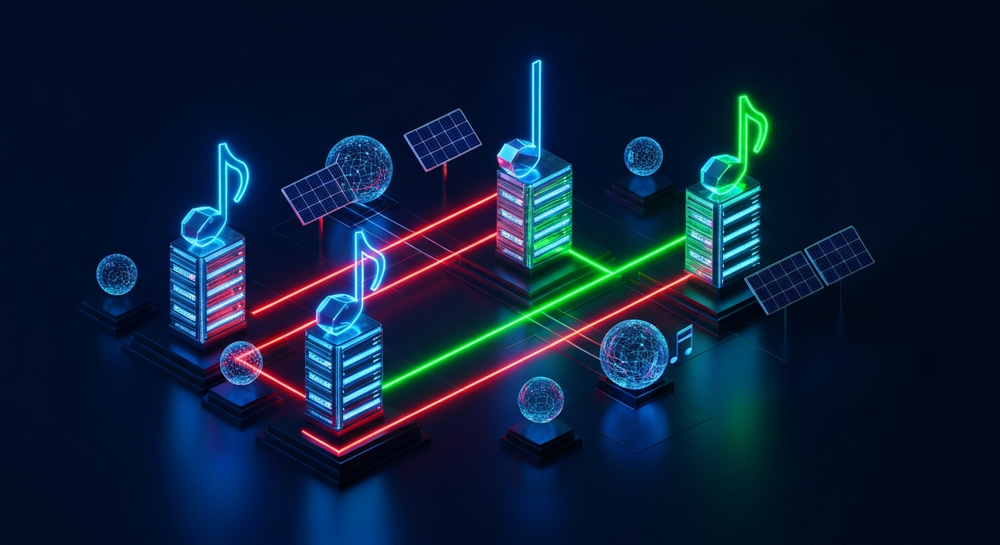
In 2024 and 2025, debates surrounding the carbon intensity of Ethereum and other proof-of-work networks prompted fast adaptation toward greener solutions. By 2026, blockchain builders and AI developers are adopting proof-of-stake protocols and sustainable data methods to drastically reduce emissions.
How do blockchain networks affect the carbon footprint of AI music NFTs?
Minting a music NFT historically required considerable computational power. The past reliance on proof-of-work consensus made each minting process equivalent to running energy-intensive mining operations. Now, with proof-of-stake, the eco impact has dropped to nearly 99% less energy compared to 2025 metrics.
However, sustainability advocates emphasize that the conversation cannot end at blockchain efficiency alone. AI model training—particularly for generative music—remains computationally demanding. Large generative audio models require extensive GPU use, resulting in significant CO₂ emissions unless balanced by renewable energy sources or carbon offsets. Are NFTs bad for the environment? covers the technical aspects behind carbon generation and energy use of blockchain minting.
How are creators addressing sustainability in AI-generated music?
In 2026, many digital artists and music professionals are integrating sustainability directly into their production pipelines. AI music generators, such as those compared in this Soundverse blog, now factor in data transparency, ethical sourcing, and eco-conscious infrastructure. Instead of using scraped or pirated datasets, sustainable tools prioritize licensed and consent-based inputs.
Artists can choose platforms that promote green training environments or use metadata tagging to track carbon-neutral NFT creation. The move toward traceable and responsible creation processes allows eco impact measurement on a per-song or per-NFT basis. Some blockchain platforms like Polygon and fxhash enable eco-friendly minting with minimal emissions—explore examples in NFTs Go Green: Eco-Friendly Drops That Don't Trash the Planet.
What are the sustainability challenges for AI and blockchain in the music industry?
Despite progress, challenges remain. First, generating music via deep neural networks often involves energy-intensive model scales. Second, the storage and exchange of NFT metadata across distributed ledgers increase data traffic and resource demands.
Moreover, sustainability is not just about technical efficiency—it includes ethical transparency. Many artists demand visibility into how their data is used in model training and compensation cycles. This issue of rights and environmental accountability led to frameworks like Soundverse’s Ethical AI Music Framework. The emerging regulations including The Impact of the AI Music Ban on Independent Artists in 2026 mark critical shifts in ethical usage of data and AI models.
How to make environmental impact of AI music NFTs more positive in 2026?
Optimizing the eco balance requires changing infrastructure and mindset. Here are four major strategies being used in 2026:
- Switching to proof-of-stake protocols: Platforms migrating to energy-efficient blockchains such as Ethereum 2.0 or Polygon help mitigate massive energy use.
- Using licensed datasets: Training AI models with authorized, rights-cleared music avoids the ethical and wasteful cost of web scraping large data volumes.
- Implementing carbon accounting: Creators can analyze every minting activity and power demand to record carbon usage precisely.
- Partnering with eco-conscious programs: By joining transparent AI music licensing initiatives, artists contribute to sustainability both environmentally and ethically.
To understand how using clean energy sources benefits blockchain operations, read The Environmental Impact Of NFTs - Gunung Capital.
How to make environmentally responsible AI music NFTs with Soundverse The Ethical AI Music Framework
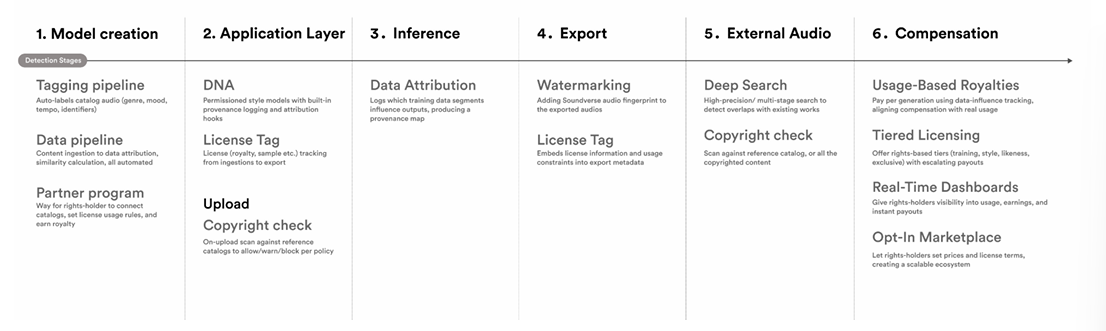
Soundverse introduces The Ethical AI Music Framework, a pioneering model aligning innovation with artist integrity and sustainability. It replaces opaque black-box models with a transparent six-stage pipeline structured for rights protection and eco balance:
- Stage 1: Licensed Data Sourcing – Only approved and licensed content forms the training foundation, preventing unethical or duplicated data use.
- Stage 2: Permissioned Models (DNA) – Each model carries metadata identifying usage limits and rights, removing ambiguity in creative ownership.
- Stage 3: Explainable Inference (Attribution) – When AI generates music, attribution details clarify inspiration sources, maintaining accountability.
- Stage 4: Traceable Export (Watermarking) – All outputs include invisible watermark identifiers that support tracking and sustainable auditing.
- Stage 5: Deep Search (External Scanning) – Through the Soundverse Trace system, any match or misuse across the web can be detected.
- Stage 6: Recurring Compensation (Partner Program) – This ensures ongoing royalty payments, helping rights-holders benefit without relying on energy-heavy re-minting cycles.
For a deeper dive into creative AI workflows, watch our Soundverse Tutorial - How to Make Music on YouTube.
This framework supports sustainable monetization while promoting a clean, legally compliant AI music ecosystem. It bridges technological innovation and ethical responsibility, appealing to both music industry professionals and sustainability advocates.
By integrating explainable AI and transparent blockchain principles, Soundverse decreases unnecessary duplication in model training, optimizing the eco impact of each generated piece. When coupled with its Content Partner Program, the system allows artists to participate directly in profit-sharing while limiting redundant data consumption.
Can AI and blockchain music coexist sustainably?
Yes. Today’s AI music NFT platforms increasingly adopt green AI design and low-energy blockchain operations. In fact, 2026 showcases the first generation of carbon-aware NFT minting tools, where creators check the sustainability score before distribution.
Soundverse plays a pivotal role in this transition. Its traceable export watermarking aids researchers and rights-holders in reducing the need for multiple verification passes—a quiet yet significant cut in digital carbon emissions.
Furthermore, when paired with AI music generation tutorials such as how to create country music with Soundverse AI or how to generate AI music with text-to-music, musicians can produce innovative sounds using optimized, permissioned models instead of massive retraining cycles. For hands-on creation, check out the Soundverse Tutorial Series - Make Deep House Music.
How does eco impact shape the future of creative blockchain in 2026?
In 2026, sustainability is not an optional checkbox—it defines artistic credibility. Record labels and indie musicians increasingly integrate carbon reporting tools directly into the NFT minting interface. Eco-conscious collectors prioritize green certificate NFTs, and AI developers publish transparent energy audit documents. AI Acts at 2026 Festivals: Futuristic Showstoppers or Novelty Gimmick? also highlights how sustainability considerations extend to live performances.
The biggest transformation within the music-tech ecosystem lies in merging environmental accountability with creative rights. Platforms like Soundverse have established prototypes for balanced innovation: creative freedom that respects both artists and the planet.
Sustainability leaders predict that by 2027, every major AI music NFT marketplace will include eco rating badges. From a professional standpoint, adopting frameworks like Soundverse’s Ethical AI Music Framework today gives music businesses a competitive sustainability edge by 2026 standards.
Create Sustainable AI Music with Soundverse
Join Soundverse and explore how AI can empower your music creation while minimizing environmental impact. Start generating stunning tracks in seconds with advanced AI tools designed for modern creators.
Related Articles
- How AI-Generated Music Is Transforming the Music Industry — Discover how AI is reshaping music production, distribution, and creativity for artists worldwide.
- The Role of AI Music in Film and Television — Learn how AI-generated compositions are changing the soundscape of modern entertainment and storytelling.
- The Benefits of Composing with AI Music Generator — Explore the creative and practical advantages of blending AI with human talent in music production.
- AI Music Generator and Human Composers: A Future Together — Understand how AI and human musicians can collaborate to create innovative and meaningful music experiences.
Here's how to make AI Music with Soundverse
Video Guide

Here’s another long walkthrough of how to use Soundverse AI.
Text Guide
- To know more about AI Magic Tools, check here.
- To know more about Soundverse Assistant, check here.
- To know more about Arrangement Studio, check here.
Soundverse is an AI Assistant that allows content creators and music makers to create original content in a flash using Generative AI. With the help of Soundverse Assistant and AI Magic Tools, our users get an unfair advantage over other creators to create audio and music content quickly, easily and cheaply. Soundverse Assistant is your ultimate music companion. You simply speak to the assistant to get your stuff done. The more you speak to it, the more it starts understanding you and your goals. AI Magic Tools help convert your creative dreams into tangible music and audio. Use AI Magic Tools such as text to music, stem separation, or lyrics generation to realise your content dreams faster. Soundverse is here to take music production to the next level. We're not just a digital audio workstation (DAW) competing with Ableton or Logic, we're building a completely new paradigm of easy and conversational content creation.
TikTok: https://www.tiktok.com/@soundverse.ai
Twitter: https://twitter.com/soundverse_ai
Instagram: https://www.instagram.com/soundverse.ai
LinkedIn: https://www.linkedin.com/company/soundverseai
Youtube: https://www.youtube.com/@SoundverseAI
Facebook: https://www.facebook.com/profile.php?id=100095674445607
Join Soundverse for Free and make Viral AI Music

We are constantly building more product experiences. Keep checking our Blog to stay updated about them!