Cross-Media Music Integration in Gaming: How Soundtracks Shape Interactive Worlds
Explore how video game soundtracks drive cross-media music integration and immersive gaming in 2026.
Cross-Media Music Integration in Gaming: How Soundtracks Shape Interactive Worlds
Introduction
In 2026, cross-media music integration in gaming has become a defining characteristic of immersive interactive design. Music no longer simply accompanies gameplay — it is a central force driving narrative, emotional impact, and brand identity. From adaptive orchestral scores in open-world adventures to licensed pop tracks synchronizing with esports broadcasts, the fusion of audio and gameplay has evolved into an essential storytelling medium.
For gaming professionals, composers, and sound designers, understanding how video game soundtracks influence interactive experiences is vital to shaping the future of entertainment. This article explores how cross-media music integration in gaming transforms player engagement, highlights emerging audio innovations, and shows how platforms like Soundverse empower creators to build dynamic soundscapes seamlessly.
What is cross-media music integration in gaming?
Cross-media music integration in gaming refers to the strategic convergence of music and gameplay across multiple media platforms — from games and streaming to film, social content, and virtual events. It blurs the boundaries between linear and interactive experiences, ensuring that a game’s audio identity transcends the screen.

For example, in the past decade, franchises like Cyberpunk 2077 and Fortnite showed how music partnerships can turn a game into a global stage. Artists debut in-game performances, and soundtracks spill over into playlists, radio, and even cinema trailers. In 2026, this synergy is reinforced by AI-driven adaptive composition and real-time music licensing systems that simplify collaboration between music producers and studios.
How do video game soundtracks shape player experience?
A game’s soundtrack operates as more than background music — it guides emotional response and interactivity. The tempo, key changes, and dynamic layers of sound evolve based on a player’s choices, creating a living narrative.
In action titles, intense percussion and rapid electronic sequences can amplify adrenaline during combat. In narrative adventures, subtle ambient drones might underscore moments of reflection. This interactivity deepens immersion, contributing to what many designers call “emotional coding.”
The success of this approach depends on principles of interactive music design, where composition is modular. Instead of static recordings, tracks are divided into loops and stems that respond to player behavior — a technique widely discussed in Soundverse’s article on how AI-generated music is transforming the music industry. Additionally, research from Emotion in Video Game Soundtracking supports the strong link between adaptive sound and a player’s emotional engagement.

What are current trends in interactive music design in 2026?
As of 2026, three clear trends define the future of cross-media music integration in gaming:
- AI-assisted composition and adaptive layering
Game engines now integrate generative AI tools to design adaptive scores in real time. Instead of relying on massive pre-recorded libraries, developers use algorithmic cues that adapt seamlessly to in-game states. - Cross-platform licensing models
The complexity of music licensing for games has historically slowed development cycles. Today, blockchain verification and automated clearance systems facilitate faster cross-platform synchronization, allowing soundtrack rights to span games, streaming, and social apps. - Immersive sound worlds in XR and metaverse environments
As immersive media blurs boundaries between virtual and physical space, sound design becomes a storytelling element across mediums — a technique often discussed in creative workflow blogs such as Soundverse’s guide to AI-driven content creation.
These trends underline that the line between composer and sound designer is dissolving. Artists now code interactivity directly into their compositions. For a demonstration of how this applies in music creation, watch our guide on creating Deep House music or explore the tutorial on the “Explore” tab from Soundverse’s official channel.
How does music licensing influence cross-media synergy?
Music licensing for games traditionally focused on acquiring rights for use within a single product. In 2026, this model has expanded. Developers now embrace multi-platform licensing agreements that include usage rights for trailers, esports broadcasts, and user-generated content. This shift ensures that a game’s sound identity remains consistent across marketing and fan creations.
Platforms that specialize in managing licensing automation empower studios to maximize creative control. Meanwhile, independent musicians can collaborate with developers without lengthy legal overhead. The fusion of licensing agility and AI production tools opens the door for global music and gaming synergy.
For creators exploring the technical aspect of legal sound use, additional insights can be found in Soundverse’s post on navigating royalty-free and copyright-free music. Studies such as Why Is Music In Video Games So Important? reaffirm that music enhances player emotion, identity, and memory.
What drives the music and gaming synergy in 2026?
The most significant driver of synergy is interactivity powered by adaptive audio. Audiences in 2026 expect continuity between gaming, streaming, and music platforms. When a player unlocks a soundtrack in a game, they might also find it automatically synced to their preferred streaming playlist — a reflection of converged ecosystems.
Hybrid production models further allow artists to compose directly for interactive environments. AI-powered engines tailor the tempo, instrumentation, and intensity according to user interaction. This trend reshapes both sound production and user engagement metrics, emphasizing player agency as an artistic input.
How to make cross-media music integration in gaming with Soundverse AI Music Generator
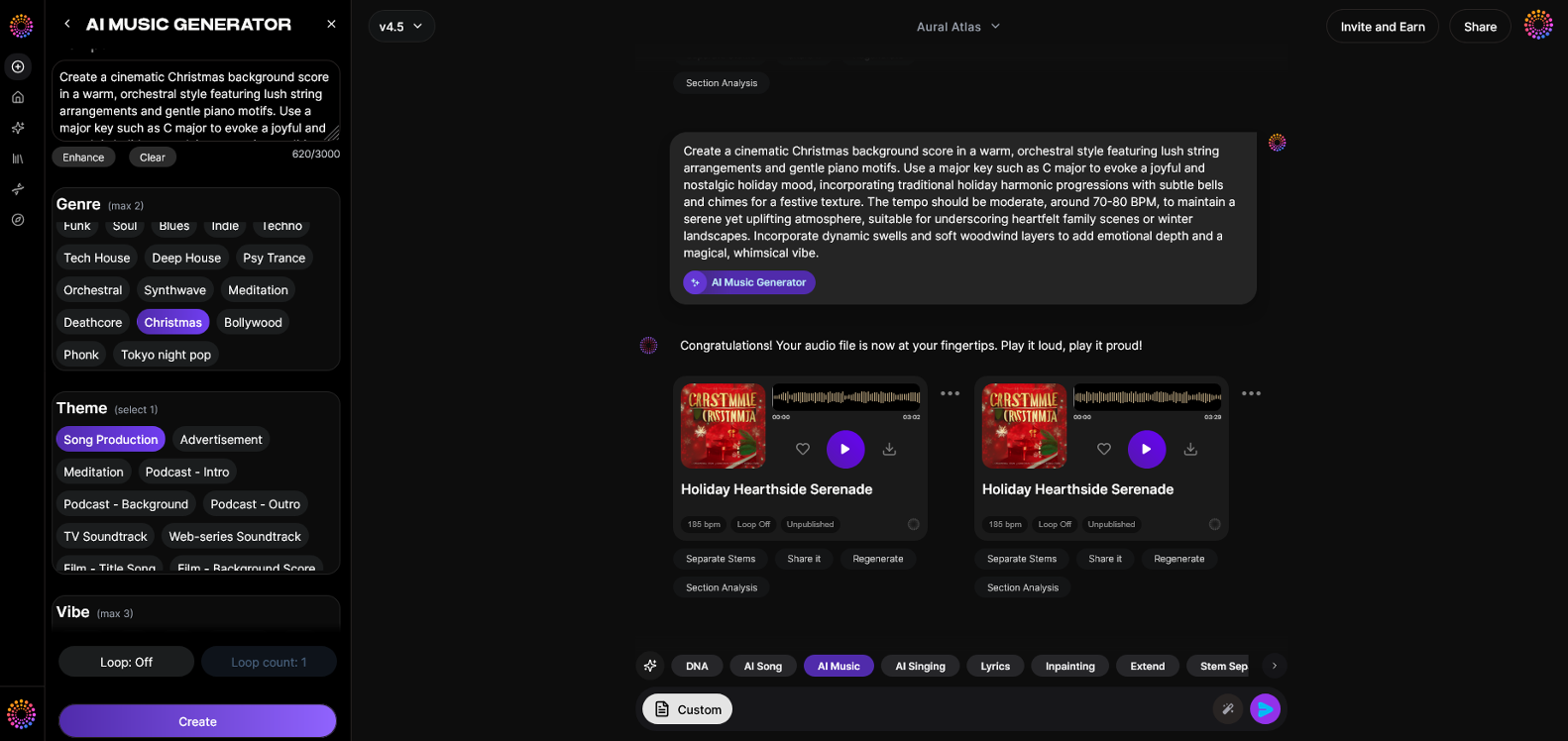
Soundverse’s AI Music Generator stands at the forefront of this evolution. It allows studios, sound producers, and developers to compose high-quality instrumental tracks directly from text prompts, ideal for adaptive game audio pipelines.
Core capabilities include:
- Text-to-music generation: Describe your desired theme (e.g., “futuristic synthwave exploration loop”), and Soundverse generates tailored instrumentals.
- Loop Mode: Create seamless loops perfect for background music and gameplay transitions.
- Genre and mood control: Fine-tune instruments, tempo, and emotion to match in-game environments.
- Model options: Choose between V4 and V5 models to balance performance quality and creative flexibility.
Primary use cases for gaming professionals:
- Designing video background music and dynamic loops
- Creating adaptive soundscapes for open-world exploration
- Producing unique tracks for trailers and in-game menus
- Supporting cross-media brand campaigns with consistent audio identity
Soundverse’s accompanying tools — Similar Music Generator, Extend Music, and the Soundverse API — further expand creative workflows. The API enables developers to integrate music generation directly into production pipelines, while Extend Music lengthens existing game tracks to match cinematic or open-ended gameplay segments.
For a deeper dive into the ecosystem, see the detailed walkthrough in Generate AI Music with Soundverse Text-to-Music. You can also explore related material in Soundverse’s How to Make Music tutorial on YouTube.
Why Soundverse is the ultimate partner for game audio innovation
Cross-media integration depends on flexibility, scalability, and artistic depth. Soundverse’s infrastructure supports all three by delivering an AI-driven composition workflow that enhances — not replaces — human creativity. Its loop-based and style-controllable outputs align with dynamic gameplay, giving sound teams total control over auditory storytelling.
Game developers adopting Soundverse tools report faster prototyping, more cohesive sonic branding, and fewer licensing bottlenecks. As the interactive entertainment industry heads toward richer sensory engagement, the ability to implement intelligent, adaptive soundscapes will be key to retaining user immersion.
Create Immersive Game Soundtracks with Soundverse AI
Bring your game worlds to life with dynamic, AI-generated soundtracks that adapt to every moment of gameplay. Unlock creativity without limits and craft an unforgettable player experience.
Start Creating Music
Related Articles
- The Role of AI Music in Film and Television: Discover how AI-generated music is changing the way soundtracks enhance visual storytelling across movies and shows.
- AI Music Generator and Human Composers: A Future Together: Explore how human creativity and AI composition can collaborate to produce emotionally rich and adaptive musical experiences.
- How an AI Music Generator Inspires Creative Fusion: Learn how AI tools spark innovation and enable creators to integrate music seamlessly across platforms and media formats.
- Navigating the World of Royalty-Free and Copyright-Free Music Using Soundverse AI: Understand how royalty-free AI music expands possibilities for game developers and multimedia creators.
Here's how to make AI Music with Soundverse
Video Guide

Here’s another long walkthrough of how to use Soundverse AI.
Text Guide
- To know more about AI Magic Tools, check here.
- To know more about Soundverse Assistant, check here.
- To know more about Arrangement Studio, check here.
Soundverse is an AI Assistant that allows content creators and music makers to create original content in a flash using Generative AI. With the help of Soundverse Assistant and AI Magic Tools, our users get an unfair advantage over other creators to create audio and music content quickly, easily and cheaply. Soundverse Assistant is your ultimate music companion. You simply speak to the assistant to get your stuff done. The more you speak to it, the more it starts understanding you and your goals. AI Magic Tools help convert your creative dreams into tangible music and audio. Use AI Magic Tools such as text to music, stem separation, or lyrics generation to realise your content dreams faster. Soundverse is here to take music production to the next level. We're not just a digital audio workstation (DAW) competing with Ableton or Logic, we're building a completely new paradigm of easy and conversational content creation.
TikTok: https://www.tiktok.com/@soundverse.ai
Twitter: https://twitter.com/soundverse_ai
Instagram: https://www.instagram.com/soundverse.ai
LinkedIn: https://www.linkedin.com/company/soundverseai
Youtube: https://www.youtube.com/@SoundverseAI
Facebook: https://www.facebook.com/profile.php?id=100095674445607
Join Soundverse for Free and make Viral AI Music
 We are constantly building more product experiences. Keep checking our Blog to stay updated about them!