AI Music vs Stock Music: Which Is Better for Creators in 2026?
Explore the difference between AI music and stock music in 2026. Learn which is better for creators in this royalty-free comparison.
AI Music vs Stock Music: Which Is Better?
In 2026, the debate between AI music vs stock music has become one of the most interesting conversations in the creative industry. With content creation soaring across platforms like YouTube, TikTok, and corporate media, the need for royalty-free music continues to grow. Both AI-generated music and traditional stock music libraries offer solutions, but which one truly empowers modern creators, digital marketers, and filmmakers to stay competitive while keeping costs down?
What is the difference between AI music and stock music?
The distinction between AI music and stock music starts with how each is made. Stock music is pre-produced and licensed for reuse. It’s created by human composers and sold through stock audio libraries. You browse, license, and download. AI-generated music, however, is composed entirely by artificial intelligence systems that can create new tracks on demand based on text prompts or style preferences.
While stock audio gives you immediate access to polished tracks, AI music gives you limitless flexibility—no two compositions have to sound the same. For content creators who need music aligned with specific moods or branding, AI music generation is increasingly appealing.
How has the landscape of royalty-free music evolved by 2026?
After 2024 and 2025 saw explosive growth in AI creativity tools, 2026 has firmly established AI music as a mainstream option. Major production studios and independent creators alike use AI to generate background music for advertisements, games, and film projects. Industry reports suggest that the use of AI in sound design is projected to double by 2027.

Stock libraries still hold significance—they serve as a repository of familiar, standardized tracks for corporate or broadcast use. However, with rising demand for originality in video and podcast production, many creators are turning to generative AI systems to build tailor-made soundtracks.
For deeper insight into these shifts, explore Soundverse’s analysis of music industry trends, which breaks down how AI technology continues to reshape licensing and rights management across the creative world.
What are the key benefits of AI-generated music?
AI-generated music platforms like Soundverse have evolved far beyond simple beat makers. They offer granular control over style, tempo, and instrumentation. Let’s look at why AI music tools are gaining ground:
- Unlimited originality: Unlike stock tracks, AI music creates original compositions every time you generate. This eliminates duplication risks where multiple brands unknowingly use the same music.
- Fast customization: You can input a text prompt like “uplifting synthwave background for travel vlog” and get a track within minutes.
- Scalable licensing: AI-generated tracks often come with transparent ownership—once generated, the user can apply music licensing terms without recurring fees.
- Consistent branding: AI can help creators maintain a sonic identity across campaigns, producing tracks aligned with their social media or commercial tone.
- Looping and duration control: With loop and duration options, you can fine-tune compositions for intros, ad segments, or gaming environments.
For instance, creators making long-form YouTube videos can develop backing scores that seamlessly loop through Soundverse AI’s Loop Mode—an advantage over traditional stock tracks that may not fit perfectly in length or tone. For a deeper dive into this topic, watch our guide on creating Deep House music and how to make music tutorials on the Soundverse YouTube channel.
How does stock music still hold its value in 2026?
Although AI music is advancing quickly, stock music libraries haven’t disappeared. They remain valuable for those requiring proven, radio-ready production quality and recognizable genres.
Stock sites like AudioJungle, Pond5, or Epidemic Sound offer curated catalogs where creators can instantly find a mood or genre. Additionally, professional broadcasters often prefer pre-cleared, fixed-licensed music for compliance reasons.
However, licensing restrictions can be tricky. Depending on the library, you may face usage limitations—certain tracks might require commercial extensions or annual renewals. Comparatively, generated AI tracks tend to come with a one-time usage model.
What should creators know about music licensing and royalty-free comparison?
Music licensing terms differ between AI-generated and stock content. In stock audio, the composer retains partial rights while buyers obtain a limited license. In contrast, AI platforms often grant users broader reuse rights upon download. This has made the royalty-free comparison an essential factor for budgeting.
When comparing royalty-free options, remember:
- Royalty-free doesn’t mean free: It means you pay once for continuous usage without ongoing royalties.
- AI-generated tracks simplify rights: Many AI systems create from scratch, removing dependency on third-party rights.
- Stock tracks may repeat across projects: Because thousands of people can license the same song, duplication risk is higher.
For a creator building branded assets, avoiding overused tracks ensures audience engagement and content distinction.
How do quality and emotional impact compare between AI and stock music?
One common misconception is that AI music lacks human warmth. But by 2026, AI composition models have become far more expressive. Sound modeling improvements allow AI systems to produce delicate instrument variations, realistic dynamics, and genre-accurate soundscapes.
Still, stock music retains a certain authenticity since human composers inject emotional nuance that some creators may prefer for storytelling-heavy projects. The decision largely depends on your use case: background ambience vs emotional scoring.
If you’re exploring creative emotional direction, check out how AI-generated music is transforming the music industry, which traces how musicians integrate human and machine composition for enhanced emotional depth.
Cost efficiency: which is more affordable for small creators?
Stock audio can range from $10 per song to $500 or more for extended licenses. Subscription plans make it cheaper, but they still limit exclusivity.
AI platforms usually follow a generation-based model: you pay per track or under a monthly subscription that allows unlimited creation. Considering the customization potential, AI options are cost-efficient—it’s the difference between renting a song and creating one tailored for you on demand.
How do integration and workflow differ?
Most stock audio libraries require manual searching, previewing, and trimming. AI music solutions can slot directly into creative workflows. For instance, marketers using AI video editors can connect to text-to-music generators for instant background track creation tied to campaign copy.
As collaborative tools become standard, AI fits seamlessly in the creator economy ecosystem. You can see more about integration approaches in Soundverse AI Magic Tools, which showcase how content teams accelerate video production through unified music generation workflows. Also, explore our Explore Tab walkthrough for streamlined content management.
How to make AI music vs stock music work together?
Many professionals now blend both options. For example, a YouTuber might use AI to generate intro or outro stingers and rely on stock libraries for high-intensity cinematic cues. Others use AI to create variations of a licensed stock theme for social media adaptations.
AI isn’t replacing human composers—it extends creative control. As noted in Soundverse’s comparison of Mubert alternatives, the future lies in collaboration rather than substitution.
How to make better background music with Soundverse AI Music Generator
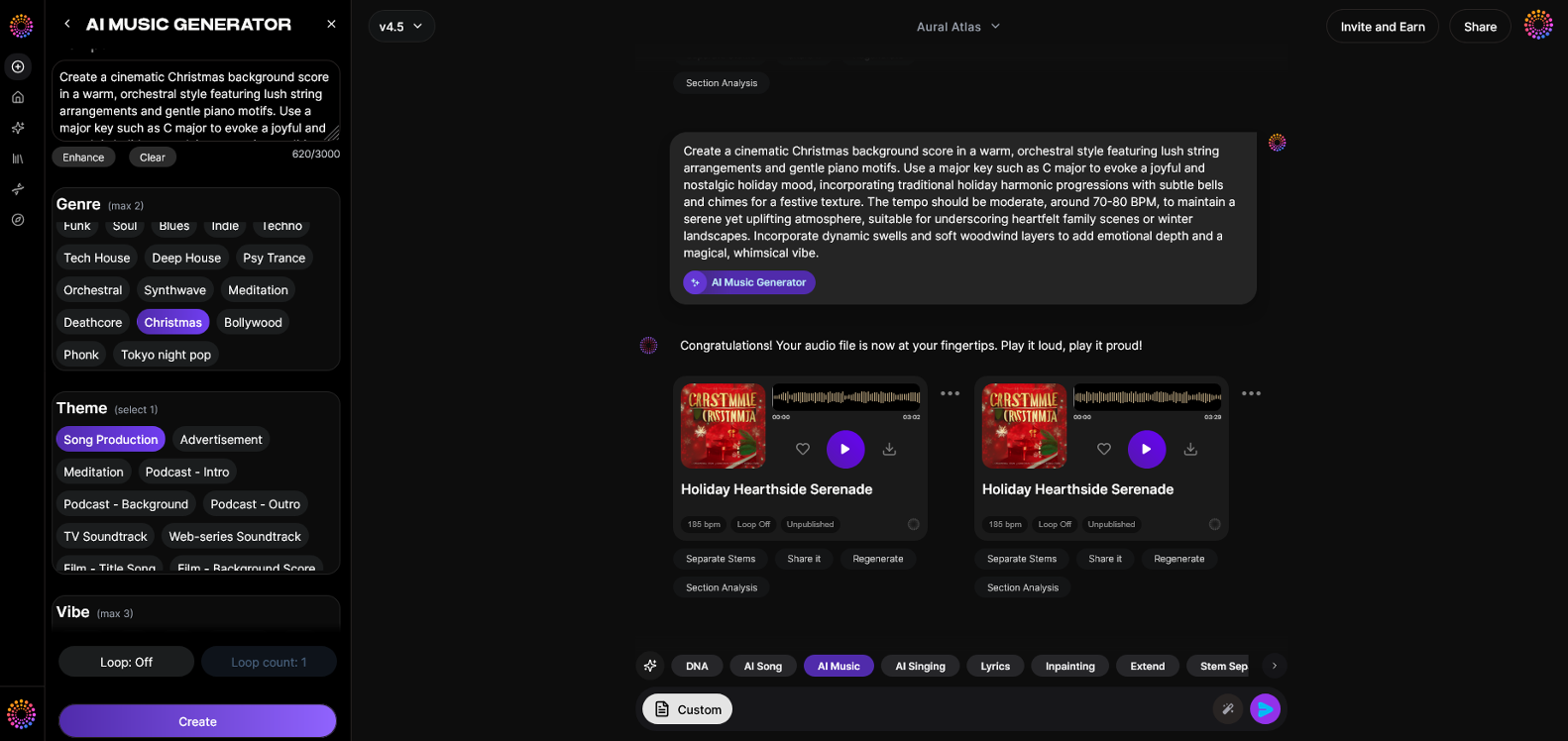
Soundverse’s AI Music Generator is designed specifically for creators wanting originality and simplicity. It creates fully produced instrumental music from text prompts. Whether you need background tracks, beats, or evolving soundscapes, the tool delivers results without any licensing complexity.
Key capabilities include:
- Text-to-music: Simply type a mood or genre such as “ambient lofi track” or “upbeat corporate pop.”
- Loop Mode: Generate seamless loops—perfect for ads, podcasts, or meditation playlists.
- Detailed genre and mood controls: Choose specific instrumentation and tone.
- Model Versions (V4 and V5): Each version supports nuanced sound customization for precision-tailored results.
Use cases:
- Video background music production
- Game and app sound loops
- Meditation and wellness tracks
- Advertising or commercial scoring
For those seeking a specific sonic reference, Soundverse’s Similar Music Generator allows users to upload a reference track for AI to emulate the same emotional or stylistic energy—ideal for directors who rely on temp scores. Additionally, Soundverse Trace ensures all AI outputs come with attribution and transparent rights tracking.
To get started building your own AI-driven tracks, you can explore how to generate AI music with text prompts or experiment with genre-focused guides like How to Create Jazz Music with Soundverse AI.
Create Your Own AI Music Today
Experience the power of Soundverse's AI music tools to compose original tracks instantly. Whether you’re producing content, podcasts, or videos, our AI ensures professional-quality music without licensing hassles.
Related Articles
- How AI-Generated Music Is Transforming the Music Industry: Discover how AI is revolutionizing everything from music production to artist collaboration, shaping the next era of the industry.
- The Role of AI Music in Film and Television: Explore how AI-generated compositions are redefining background scoring and creative workflows for filmmakers and producers.
- Copyright-Free vs Royalty-Free Music: What Creators Should Know: Learn the key differences between copyright-free and royalty-free music, and how to choose the best option for your projects.
- Navigating the World of Royalty-Free and Copyright-Free Music Using Soundverse AI: Master how to find and generate risk-free music for your content with Soundverse’s innovative AI tools.
Here's how to make AI Music with Soundverse
Video Guide

Here’s another long walkthrough of how to use Soundverse AI.
Text Guide
- To know more about AI Magic Tools, check here.
- To know more about Soundverse Assistant, check here.
- To know more about Arrangement Studio, check here.
Soundverse is an AI Assistant that allows content creators and music makers to create original content in a flash using Generative AI.
With the help of Soundverse Assistant and AI Magic Tools, our users get an unfair advantage over other creators to create audio and music content quickly, easily and cheaply.
Soundverse Assistant is your ultimate music companion. You simply speak to the assistant to get your stuff done. The more you speak to it, the more it starts understanding you and your goals.
AI Magic Tools help convert your creative dreams into tangible music and audio. Use AI Magic Tools such as text to music, stem separation, or lyrics generation to realise your content dreams faster.
Soundverse is here to take music production to the next level. We're not just a digital audio workstation (DAW) competing with Ableton or Logic, we're building a completely new paradigm of easy and conversational content creation.
TikTok: https://www.tiktok.com/@soundverse.ai
Twitter: https://twitter.com/soundverse_ai
Instagram: https://www.instagram.com/soundverse.ai
LinkedIn: https://www.linkedin.com/company/soundverseai
Youtube: https://www.youtube.com/@SoundverseAI
Facebook: https://www.facebook.com/profile.php?id=100095674445607
Join Soundverse for Free and make Viral AI Music

We are constantly building more product experiences. Keep checking our Blog to stay updated about them!