AI Music for Short Films: Transforming Indie Filmmaking in 2026
Learn how AI music for short films powers creative scoring and soundtrack production in 2026.
AI Music for Short Films
In 2026, the line between traditional film scoring and artificial intelligence-driven soundtrack creation has all but disappeared. Independent filmmakers around the world now rely on AI music for short films to design emotionally resonant, cinematic scores that once required entire production studios and months of manual composition. This transformation has fundamentally changed how visual stories are told — making high-quality music accessible, affordable, and tailor-fit to every scene’s mood.
Why is AI music becoming essential for short film creators in 2026?
Short films demand tight creative control and efficiency. With limited budgets and compressed timelines, creators can’t always hire full orchestras or professional composers. AI music for short films bridges that gap. Machine learning music composition models now analyze tempo, key, and sentiment in motion sequences, allowing directors to sync soundtracks instantly with visual cues.
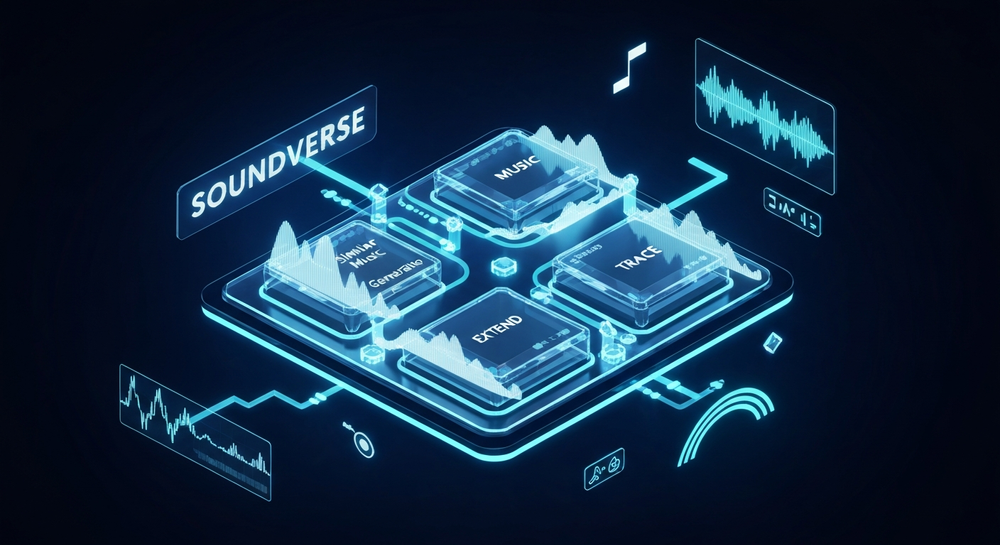
Film festivals in 2026 spotlight AI-assisted works more than ever. Projects that leverage film scoring AI exhibit sonic diversity, combining hybrid orchestral scores, electronic motifs, and ambient textures that precisely fit each narrative beat. The technology’s refinement also means AI soundtrack production can now mimic or evolve from existing musical references without copyright concerns — a major leap for creative freedom. For broader trends and insights into how AI shapes media production, check out the AI Media Trends Hub and McKinsey’s analysis on what AI could mean for film and TV production.
How does AI soundtrack production enhance cinematic storytelling?

AI-generated soundtracks no longer feel synthetic or repetitive. Using deep neural networks trained on vast musical datasets, filmmakers can blend genres and emotions effortlessly. For instance, an AI score can transition from eerie suspense into emotional catharsis by referencing harmonic shifts found in similar compositions. This creates a cohesive audio journey that heightens viewer immersion.
Machine learning music composition doesn’t replace artistry—it amplifies it. Directors still dictate tone, structure, and pacing, while AI executes the musical equivalent of their vision. By intelligently analyzing video timing and narrative flow, AI tools for filmmakers have turned soundtrack production into a collaborative, data-driven art form. You can watch our tutorial on creating music or explore the “Explore” Tab walkthrough on Soundverse’s YouTube channel for deeper insight.
How filmmakers are using AI tools for film scoring in 2026
Here’s how modern creators integrate AI technologies across different production stages:
- Pre-Production Mood Boards – Directors use AI music generators to explore sonic ideas before filming. Ambient mockups, jazz interpretations, or electronic sketches can define scenes early.
- Temp Scoring Replacement – AI replaces provisional music tracks with polished, original instrumentals that maintain the same atmosphere but avoid licensing obstacles.
- Scene Synchronization – Machine learning algorithms identify emotional peaks and automatically match generated loops or crescendos to visual transitions.
- Soundtrack Customization – With tools like Soundverse, creators personalize compositions based on tempo, key, and intensity, achieving seamless integration between score and story.
These capabilities were experimental in 2024 and matured during 2025, but 2026 marks their mass adoption period. AI platforms like Soundverse empower creative independence, letting small teams produce soundscapes that rival professional studio results. Analyzing broader AI music markets, AI Music NFT Sales Data & Market Trends in 2026 highlights this evolution in the digital space.
How to make AI music for short films with Soundverse Similar Music Generator
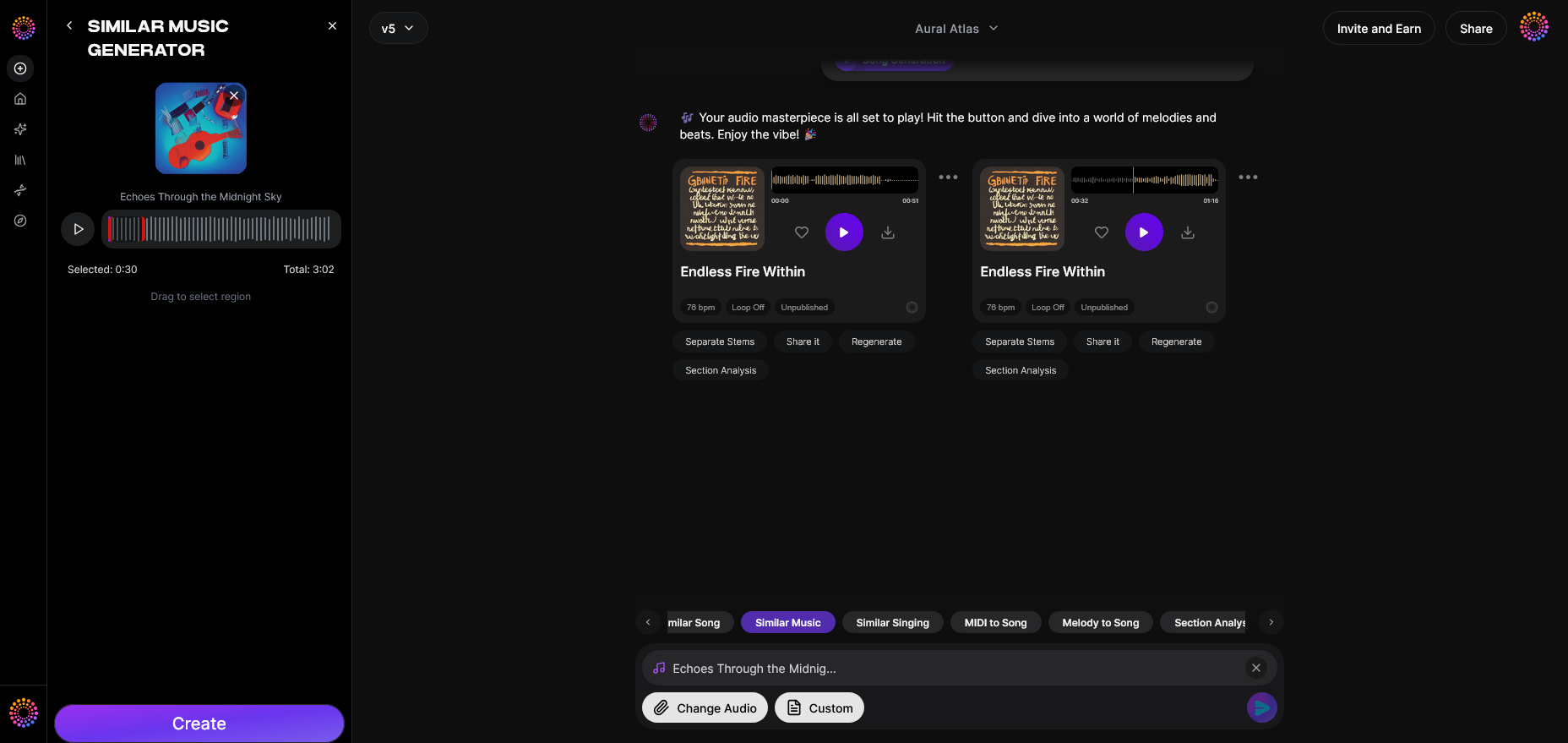
Soundverse offers a specialized tool designed specifically for film and television scoring: the Similar Music Generator. It produces original instrumental compositions inspired by a reference track — perfect for filmmakers who already have a director-approved temp score and want music with the same emotional cadence.
Core capabilities include:
- Instrumental style transfer: Replicates the mood and rhythm of an existing track without copying it literally.
- Detailed musical analysis: Examines tempo, key, and mood to ensure compatibility with your footage.
- Reference-based loop creation: Generates looping sections ideal for dialog underlays or cinematic transitions.
Primary use cases:
- Film and TV scoring to replace temporary music.
- Game and environment themes for interactive storytelling.
- Podcast intros/outros and digital narrative soundscapes.
Within Soundverse’s workflow, filmmakers upload their reference track, allow the AI to process musical features, and receive an entirely new instrumental built in that same style. The result preserves creative intent while delivering originality.
For extended scenes, creators can enhance these compositions using Extend Music, another Soundverse tool that lengthens tracks seamlessly while maintaining tempo and emotional consistency. The entire system is supported by Soundverse Trace, a trust layer embedding rights protection and dataset attribution — vital when working with commercial short films.
What are the advantages of AI music generators over traditional scoring?
Traditional scoring demands not only composers but instrument recording, editing, and mastering. AI simplifies this chain dramatically:
- Speed: What previously took weeks now takes minutes.
- Cost Efficiency: Producing suitable background music costs far less than hiring musicians.
- Stylistic Versatility: Creators can request orchestral, ambient, lo-fi, cinematic electronic, or acoustic tones within one platform.
- Creative Freedom: With asynchronous generation workflows, filmmakers experiment until they find the perfect vibe — no constraints on time or personnel.
This flexibility pushes visual storytelling forward. Filmmakers can iterate rapidly, testing multiple tone variations before finalizing a scene’s audio identity. Learn practical steps through our guide on making Deep House music for creative mixing workflows.
What are current trends in AI music composition and film scoring?
In 2026, several observable trends define the landscape:
- Cross-Genre Fusion: AI soundtracks mix classical motifs with synth-based elements to achieve emotional range.
- Personalized Adaptive Scores: Real-time generation for interactive or VR short films that adapt to viewer emotions.
- Ethical Credit Attribution: Through solutions like Soundverse Trace, projects maintain transparent dataset usage and fair creator acknowledgement.
- Collaborative AI Workflows: AI acts as an assistant rather than a replacement, allowing human editors to refine results for artistic intent.
- Expansion into Streaming Platforms: More short films distributed on services like YouTube and Vimeo prioritize AI-driven soundtracks due to their royalty-free nature.
For further insights on the broader transformation of the music sector, visit How AI-Generated Music is Transforming the Music Industry and The Role of AI Music in Film and Television.
How Soundverse empowers filmmakers to stay creative
Soundverse is more than an AI composition tool — it’s an ecosystem tailored for creators. Independent directors can transition from concept to full-score execution using AI without losing artistic nuance. With unmatched precision in musical analysis and style transfer, Soundverse keeps creative focus intact while eliminating technical barriers.
Filmmakers exploring AI-driven workflows can also check:
- Music Industry Trends
- Soundverse AI Magic Tools: Create Content Quickly with AI
- Soundverse Assistant: Your AI Music Co-Producer
By leveraging its technology stack — Similar Music Generator, Extend Music, and Trace — creators can produce emotionally aligned scores, expand them to fit varying scene lengths, and ensure proper rights attribution in post-production.
Create Stunning AI Music for Your Short Film Today
Bring your cinematic vision to life with Soundverse’s AI-powered tools—generate tailored soundtracks that match your film’s emotion, theme, and pacing in just minutes.
Related Articles
- The Role of AI Music in Film and Television: Discover how artificial intelligence is reshaping music composition for all types of visual media, from short films to major networks.
- Enhancing YouTube Content with Royalty-Free and Copyright-Free Music Using Soundverse AI: Learn how creators use Soundverse to add copyright-free AI music to their YouTube videos effortlessly.
- Navigating the World of Royalty-Free and Copyright-Free Music Using Soundverse AI: Understand the difference between royalty-free and copyright-free music and how Soundverse helps filmmakers stay compliant.
- AI Music Generator and Human Composers: A Future Together: Explore how AI music generators collaborate with human creators to craft unique, emotive pieces for storytelling.
Here's how to make AI Music with Soundverse
Video Guide

Here’s another long walkthrough of how to use Soundverse AI.
Text Guide
- To know more about AI Magic Tools, check here.
- To know more about Soundverse Assistant, check here.
- To know more about Arrangement Studio, check here.
Soundverse is an AI Assistant that allows content creators and music makers to create original content in a flash using Generative AI. With the help of Soundverse Assistant and AI Magic Tools, our users get an unfair advantage over other creators to create audio and music content quickly, easily and cheaply. Soundverse Assistant is your ultimate music companion. You simply speak to the assistant to get your stuff done. The more you speak to it, the more it starts understanding you and your goals. AI Magic Tools help convert your creative dreams into tangible music and audio. Use AI Magic Tools such as text to music, stem separation, or lyrics generation to realise your content dreams faster. Soundverse is here to take music production to the next level. We're not just a digital audio workstation (DAW) competing with Ableton or Logic, we're building a completely new paradigm of easy and conversational content creation.
TikTok: https://www.tiktok.com/@soundverse.ai
Twitter: https://twitter.com/soundverse_ai
Instagram: https://www.instagram.com/soundverse.ai
LinkedIn: https://www.linkedin.com/company/soundverseai
Youtube: https://www.youtube.com/@SoundverseAI
Facebook: https://www.facebook.com/profile.php?id=100095674445607
Join Soundverse for Free and make Viral AI Music

We are constantly building more product experiences. Keep checking our Blog to stay updated about them!