AI Music and the Rise of Audio-First Experiences in 2026
Explore how AI music drives audio-first experiences and shapes 2026 music trends.
AI Music and the Rise of Audio-First Experiences
In 2026, digital creativity is taking an audio-first turn. Music, podcasts, soundscapes, and immersive sonic branding have become central to how creators communicate online. The rise of AI music and advanced sound technologies is redefining production workflows and audience engagement. Whether you’re a content creator, a game developer, or a marketer, understanding how artificial intelligence in music is shaping today’s landscape is key to staying ahead.
What is driving the growth of AI music in 2026?
AI-driven music generation has evolved rapidly since 2024. What was once an experimental tool for generating melodies is now a full-scale music production solution. The demand for customized, on-demand music has continued to skyrocket due to the explosion of video content, short-form media, and podcasts. In 2026, creators are no longer limited by expensive studio access or copyright restrictions—they can now generate original, royalty-free tracks tailored to specific moods and genres in minutes.
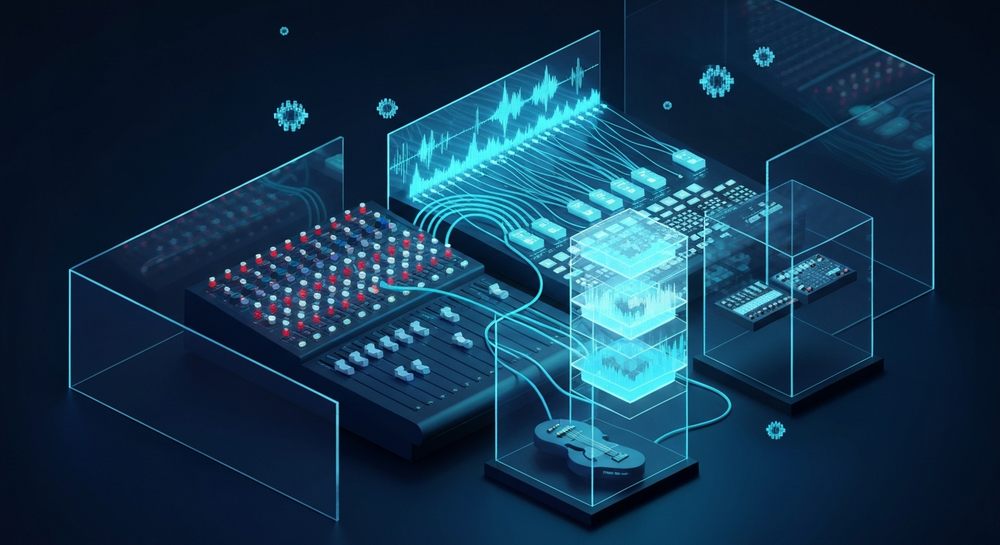
The rise of AI music has also been fueled by advancements in transformer-based models, deep generative audio networks, and ethically-sourced training data. Companies like Soundverse have pioneered systems capable of understanding text prompts and translating them into coherent, musically expressive compositions. Market analyses such as the AI Music Generation Software Market 2026–2036 and Global Generative AI in Music Market Outlook indicate that the industry is expanding at CAGR rates above 20%, projecting substantial economic growth for creative AI tools.
Why are audio-first experiences dominating digital media?
Audiences want more immersive and emotional interactions. While visual-first platforms once ruled, today’s users favor multi-sensory experiences. Smart speakers, voice-first interfaces, and immersive environments like metaverse-style spaces have normalized "listening interactions."
Audio-first content enables creators to engage audiences even when screens aren’t involved. From branded podcasts and sonic logos to meditation apps and ambient generative soundscapes, the audio-first experience redefines how users perceive brand identity and storytelling online.
For instance, Spotify and Apple’s algorithmic music curation led the way for dynamic personalization. Now, AI audio creation lets individuals generate personalized background soundtracks, matching tone and tempo to a given narrative or emotion. For a practical example, watch our tutorial on making Deep House music or guide on how to make music from the Soundverse YouTube channel.
How is artificial intelligence transforming music production?
The integration of artificial intelligence in music has brought several distinct advantages:
- Faster production cycles: Composers and producers can draft finished music ideas in minutes.
- Cost efficiency: AI music eliminates studio overhead for creators producing large volumes of music for content.
- Creative freedom: Artists can experiment with new audio textures, hybrid genres, and nontraditional sound palettes.
- Ethical sampling: Systems using licensed training data avoid infringement concerns, a major problem in earlier AI music models.
This acceleration of creativity has blurred the borders between technologists and traditional musicians. A YouTuber, for example, can now produce soundtracks for each episode using AI tools with zero prior experience in music theory.
To see this shift in context, check out how AI sound design tools are changing production workflows in this detailed look at music industry trends.
What are the key music technology trends in 2026?
Here are the dominant music technology trends shaping this year:
- Audio-first branding: Brands are investing heavily in bespoke sonic identities rather than visual logos alone.
- Ethical data models: Increasing scrutiny on fair licensing has pushed AI developers to adopt transparent training datasets.
- Loop-based content design: Platforms like YouTube Shorts, TikTok, and Instagram Reels favor short, looping background music.
- Voice-personalization tools: AI-generated singers and vocalizers are enabling brands to maintain personalized “voices” across campaigns.
- Cross-platform composability: Music generated through AI can now adapt its structure automatically for games, VR, and mobile.
- AI-assisted composers: Human creators are partnering with AI tools for idea generation, not replacement—an idea recently explored in AI music generator and human composers: a future together.
The Generative AI in Music 2026–2034 Market Analysis supports this momentum, forecasting growth of over 30% CAGR across industries such as entertainment, gaming, and advertising. Platforms also show how AI integration drives new applications—Deezer, for instance, reportedly received 50,000 AI-generated tracks daily by late 2025 according to State of the Music Industry 2026: Trends & Predictions.
How does AI audio creation empower new types of creators?
2026 has seen a flourishing of creators who identify primarily as “audio technologists.” These individuals merge technology, art, and entrepreneurship using tools that simplify production. AI audio creation democratizes access to studio-quality sound without the barriers of technical know-how.
For digital marketers, the benefit is clear—AI-produced jingles can be customized to evoke moods like luxury, calmness, or excitement in seconds. Game developers and app designers can generate ambient loops that scale dynamically based on gameplay or user activity.
Similarly, podcasters and social media content developers rely heavily on tailored sound backdrops made by text-to-music technology. Those exploring niche genres such as lofi beats, chillwave, or cinematic ambience can access hyper-specific generative templates, as discussed in 100 text-to-music prompts that will help you create viral music.
For further exploration, check our “Explore” tab tutorial on the Soundverse YouTube channel.
How to make AI music with Soundverse AI Music Generator
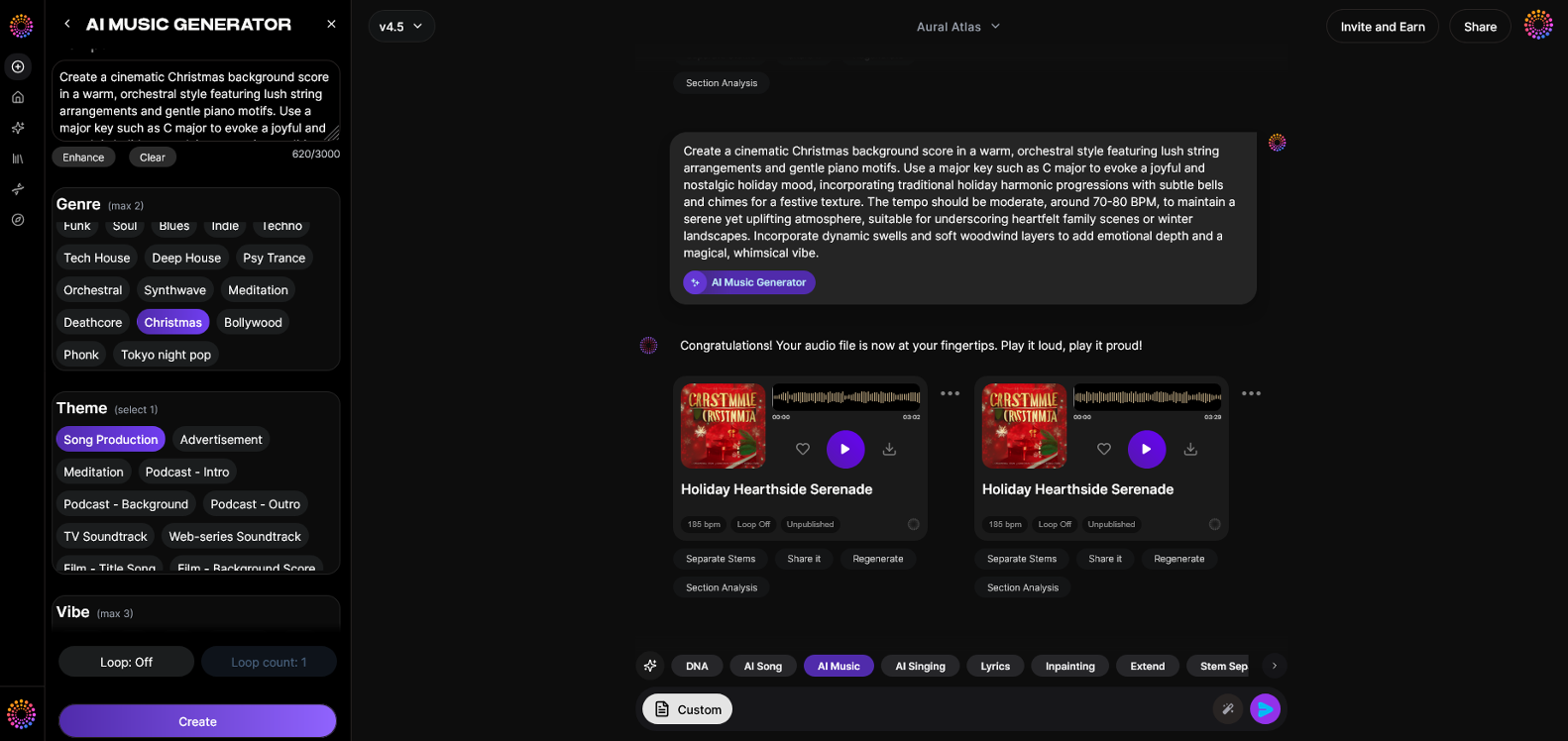
At the heart of this transformation is the Soundverse AI Music Generator—a powerful tool designed to create fully produced instrumental music from simple text prompts.
What makes Soundverse stand out?
Soundverse’s AI Music Generator specializes in background tracks, beats, and soundscapes without vocals. Users can describe a mood, genre, or emotion, and receive loopable, production-quality music in minutes. Key capabilities include:
- Text-to-Music generation: Describe your track in natural language to create custom music outputs.
- Loop Mode: Ideal for applications like games or meditation where seamless repetition is crucial.
- Genre/Mood/Instrument Control: Tailor each track by specifying detailed parameters—such as “uplifting pop riff with acoustic guitar and light percussion.”
- V4 and V5 Model Options: Choose between models optimized for speed or fidelity.
Ideal Use Cases
The AI Music Generator was built for diverse audio-first workflows, including:
- Video background music for YouTube, short-form videos, and cinematic intros.
- Game soundtracks requiring ambient or loopable background textures.
- Meditation and wellness tracks using smooth tonal layering and duration-based modulation.
- Advertising and commercial scoring with mood-matched compositions.
By combining AI music with ethical licensing frameworks such as Soundverse DNA, users can produce original works while ensuring transparency and fair compensation to source artists.
To see how this integration plays out in real creative setups, check out how AI-generated music is transforming the music industry.
What does the future of music production look like beyond 2026?
The future of music production will continue towards automation blended with human creativity. AI will serve as a collaborator that empowers deeper emotion-driven composition. Expect tighter integration with visual editors, interactive storytelling platforms, and neuroadaptive music systems that adjust to a listener’s environment or biometrics.
By 2027, expect advances in generative realism, where AI audio evolves in real time to accompany spatial experiences like AR concerts or voice-based immersive advertising.
Start Creating AI Music Today
Transform your creative vision into studio-quality sound using Soundverse’s AI-powered tools. Generate, edit, and publish your own audio-first experiences in minutes.
Try Soundverse Free
Related Articles
- How AI-Generated Music Is Transforming the Music Industry — Discover how AI music platforms are reshaping how artists produce, distribute, and engage with audiences.
- AI Music Generator and Human Composers: A Future Together — Explore the collaboration between human creativity and AI innovation in modern music production.
- The Role of AI Music in Film and Television — Learn how AI-generated soundtracks are revolutionizing background scoring for visual storytelling.
- AI Music Generator: Top Picks and Review — Compare the best AI music tools available and find the right generator for your creative needs.
Here's how to make AI Music with Soundverse
Video Guide

Here’s another long walkthrough of how to use Soundverse AI.
Text Guide
- To know more about AI Magic Tools, check here.
- To know more about Soundverse Assistant, check here.
- To know more about Arrangement Studio, check here.
Soundverse is an AI Assistant that allows content creators and music makers to create original content in a flash using Generative AI. With the help of Soundverse Assistant and AI Magic Tools, our users get an unfair advantage over other creators to create audio and music content quickly, easily and cheaply. Soundverse Assistant is your ultimate music companion. You simply speak to the assistant to get your stuff done. The more you speak to it, the more it starts understanding you and your goals. AI Magic Tools help convert your creative dreams into tangible music and audio. Use AI Magic Tools such as text to music, stem separation, or lyrics generation to realise your content dreams faster. Soundverse is here to take music production to the next level. We're not just a digital audio workstation (DAW) competing with Ableton or Logic, we're building a completely new paradigm of easy and conversational content creation.
TikTok: https://www.tiktok.com/@soundverse.ai
Twitter: https://twitter.com/soundverse_ai
Instagram: https://www.instagram.com/soundverse.ai
LinkedIn: https://www.linkedin.com/company/soundverseai
Youtube: https://www.youtube.com/@SoundverseAI
Facebook: https://www.facebook.com/profile.php?id=100095674445607
Join Soundverse for Free and make Viral AI Music

We are constantly building more product experiences. Keep checking our Blog to stay updated about them!