Why Does AI Metal Sound Fake? Technical Analysis
Explore why AI metal music sounds fake and how Soundverse DNA tackles authenticity and metal quality issues.
Why Does AI Metal Sound Fake? Technical Analysis
In 2026, AI-generated music has advanced dramatically, shaping how producers, engineers, and fans interact with sound creation. Yet, despite innovation, one genre remains notoriously difficult for artificial intelligence to master — metal. The question that intrigues both technologists and musicians alike is: why does AI metal sound fake? This article dives into the technical nuances behind AI metal music authenticity, exploring why metal resists machine realism and how Soundverse DNA provides a new approach to solving these authenticity problems.
What makes AI metal sound fake compared to other genres?
AI music models have grown competent at producing ambient, pop, or electronic soundscapes. These rely on predictable textures and quantized rhythms, well-suited to pattern processing. Metal, however, thrives on human imperfection, emotional dynamics, and chaotic intensity. The genre’s realism depends on nuanced rhythmic irregularities, complex timbre profiles, and subtle pressure variations during instrumental performance.
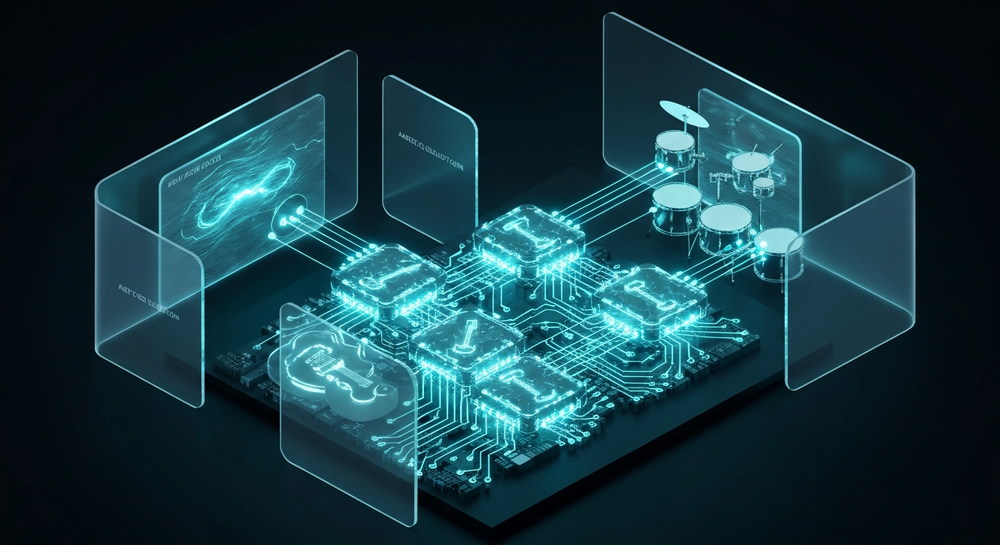
The fake-sounding nature of AI metal mainly stems from four technical factors:
- Data limitations and sonic variability: AI models trained predominantly on compressed, overprocessed datasets lack access to raw guitar amp signals, analog distortion textures, and drum room acoustics unique to live metal recordings.
- Missing expression layers: Metal relies on expressive transcription — palm mutes, string scrapes, cymbal spill, and feedback loops aren’t easily modeled by simple waveform synthesis.
- Complex rhythmic signatures: Metal’s tempo shifts (blast beats, breakdowns, polymetrics) challenge AI timing engines built around static tempo maps.
- Emotion-vs-algorithm imbalance: Guitar phrasing and vocal aggression convey emotion that current generative models, trained by pattern recognition rather than intention, struggle to emulate convincingly.
These causes create what engineers call metal quality issues — unclear instrument separation, inconsistent distortion, and lack of dynamic drive. When an AI model tries to simulate the visceral essence of metal, it often reproduces correct frequencies but misses the human touch that makes the genre authentic.
How do genre limitations affect AI metal production?
In the wider AI music industry, genre limitations are increasingly acknowledged. Metal exemplifies genre complexity due to its dependency on organic distortion, microphone interaction, and live energy transfer. Unlike pop or EDM, metal’s sonic signature is nonlinear — amplifiers, pedals, and drummers interact with physics-based unpredictability.
AI developers typically use spectral decomposition or tokenized waveform models. These models excel at symmetry but fail when signal chaos defines quality. Guitar tone generation demands harmonic irregularities that deep learning algorithms usually smooth out. The result? Tonal uniformity mistaken for precision, erasing what musicians call grittiness or authenticity.
Another limitation appears in vocal generation. Modern AI systems handle clean singing well, yet metal’s growls and screams expose algorithmic oversimplification. These vocal tones depend on airflow turbulence and distortion saturation, phenomena difficult to recreate without detailed biophysical modeling.
Similar struggles occur in drum generation. Double kick patterns often lose velocity realism, and cymbal decay frequently sounds clipped. These anomalies contribute to what listeners perceive as AI metal sounding fake — a polished surface missing real-world depth. You can explore more of this technical realism analysis in Is AI Metal? Exploring the Rise of Artificial Intelligence in Heavy Music.
Why do metal enthusiasts notice authenticity problems more sharply?
Metal fans tend to have advanced auditory expectations. Their engagement lies not just in melody but in sonic authenticity — the ability to feel an artist’s conviction through tone. When AI-generated tracks mimic stylistic features but lack internal tension, listeners immediately recognize something off. The genre’s emotion depends on compression artifacts, mic bleed, and physical interaction — all hard to replicate digitally.
For audio engineers, authenticity problems arise when mixing AI-generated stems that exhibit phase randomness or unnatural equalization. Real distortion interacts with analog equipment, while digital representations often flatten crucial subtleties. Music producers in 2026 are developing hybrid workflows where human-recorded guitar tracks feed into AI models to maintain realism, bridging the gap between computational perfection and live soul.
How Soundverse DNA brings realism to AI metal generation
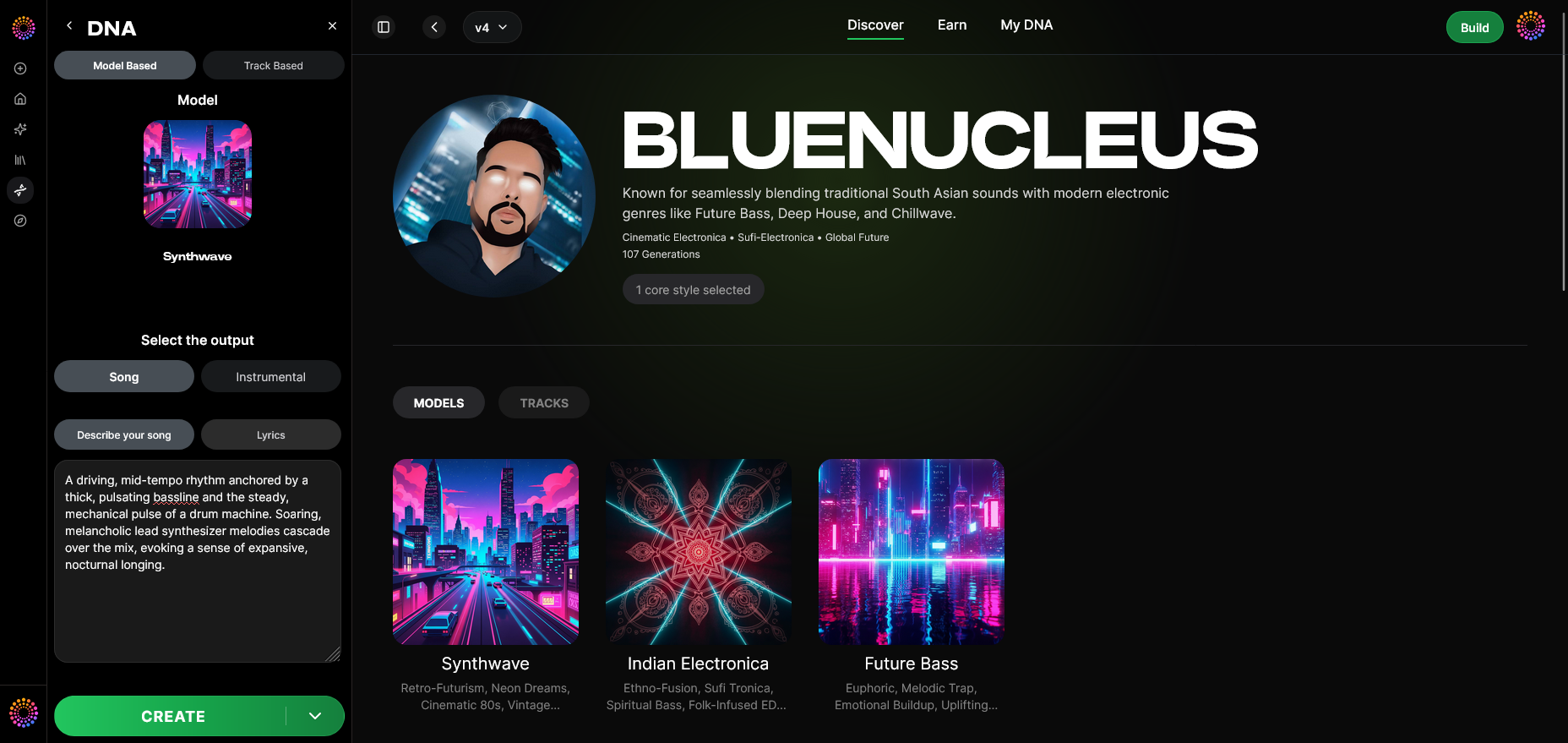
While many generative platforms fail to capture the chaos of metal, Soundverse has introduced technology that reshapes authenticity through artist-trained AI systems.
What is Soundverse DNA?
Soundverse DNA is a proprietary artist-trained AI music generation system that synthesizes original tracks grounded in specific sonic identities. It handles ethical and creative concerns by training exclusively on licensed catalogs. This allows artists to monetize their unique sound while users generate consistent, copyright-safe compositions.
Soundverse DNA enables creators to replicate and expand authentic metal textures through these core capabilities:
- Full DNA (Songs/Instrumentals): Generate high-quality instrumentals that preserve tonal realism for heavy genres.
- Voice DNA (Vocal timbre/style): Apply artist-specific vocal models that maintain genre-appropriate vocal aggression.
- DNA Marketplace: Artists license their metal-oriented models, allowing fans and producers to use authentic tonal DNA legally.
- Sensitivity Selector: Cluster catalog data into eras—from classic thrash to modern djent—for targeted sound replication.
- Private Mode: Secure co-creation environment for label or producer collaborations.
Through these elements, AI developers can align data authenticity with real-world physics, improving how machine learning systems interpret distortion and dynamic expression.
To understand foundational AI music approaches better, explore the Soundverse Tutorial Series - How to Make Music.
How Soundverse DNA technically solves metal quality issues
Soundverse DNA doesn’t rely solely on pattern replication. It integrates physics-sensitive sampling during model training, ensuring distortion responds like analog gear. When a user generates a metal track inside the Soundverse ecosystem, the model references artist DNA layers, maintaining variability across live dynamics rather than symmetrical tone mapping.
The Sensitivity Selector’s capacity to isolate sonic eras helps correct genre limitations. It prevents AI confusion between stylistically diverse subgenres like doom or death metal by mapping frequency and saturation profiles separately. Additionally, Voice DNA preserves the harsh tonality of growl and melodic screaming through distinct algorithmic clusters, avoiding the ‘plastic’ vocal timbre often associated with generative outputs.
In practice, Soundverse DNA positions itself as a bridge between raw emotion and computational design. Metal producers can fine-tune how aggressive guitar tones or drum compression react within their session, creating output that feels live instead of synthetic.
Learn more about research in listener perception in Between the AI and Me: Analysing Listeners' Perspectives on AI and cultural analysis at The Rise of AI Metal Bands: Where Technology Meets Heavy Metal.
What can music producers and AI engineers learn from AI metal’s authenticity problems?
For producers and AI developers, the difficulties in AI metal demonstrate key lessons in sound synthesis design:
- Human error is sonic texture: Controlled imperfection enhances authenticity.
- Analog simulation matters: True realism requires emulating nonlinear responses from hardware chains.
- Artist involvement strengthens datasets: Training directly on artist-approved catalogs guarantees stylistic truth.
- Right metadata improves generation: Using accurate tags across datasets—enabled by systems like Soundverse Trace—clarifies stylistic rendering.
Understanding these principles accelerates innovation across generative systems. As AI metal evolves, engineers now integrate emotional data modeling and microtiming deviation synthesis to tackle complexity beyond mathematical structure.
How Soundverse complements broader AI music creation tools
Soundverse offers complementary tools alongside DNA. The Similar Music Generator allows producers to create unique instrumentals inspired by reference tracks, helping refine generative cues before applying DNA-based metal models. Meanwhile, Soundverse Trace embeds attribution and rights protection, maintaining transparency for creators generating or distributing metal tracks.
To explore AI tools transforming the creative process in 2026, you may also read related discussions at Soundverse Introduces Stem Separation AI Magic Tool, or find how AI-generated music is transforming the music industry. For genre expansion insights, see Create Metal Music with AI or Music Industry Trends.
Create Authentic Metal Tracks with AI Now
Unleash your creativity using Soundverse’s intelligent music tools designed to capture the raw power and dynamics of real metal. Generate riffs, vocals, and arrangements that sound truly human.
Related Articles
- Create Metal Music with AI: Discover how Soundverse lets you craft heavy metal tracks that retain expressive intensity while leveraging AI innovation.
- AI Music Generator and Human Composers: A Future Together: Learn how AI-generated music can complement human artistry and redefine the creative process for modern musicians.
- How AI-Generated Music Is Transforming the Music Industry: A deep dive into how AI is reshaping composition, production, and collaboration across the music ecosystem.
- Soundverse Assistant: Your AI Music Co-Producer: Meet Soundverse Assistant, the smart co-producer that helps artists generate, arrange, and refine tracks effortlessly.
Here's how to make AI Music with Soundverse
Video Guide
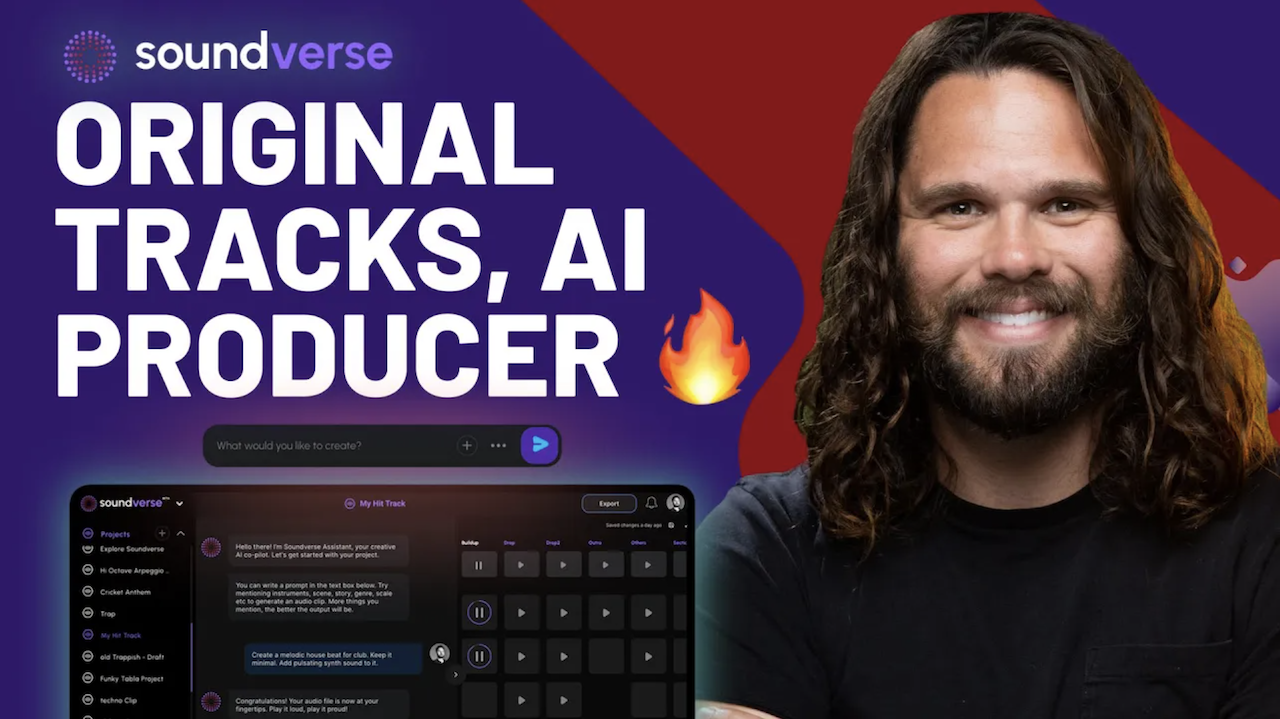
Here’s another long walkthrough of how to use Soundverse AI.
Text Guide
- To know more about AI Magic Tools, check here.
- To know more about Soundverse Assistant, check here.
- To know more about Arrangement Studio, check here.
Soundverse is an AI Assistant that allows content creators and music makers to create original content in a flash using Generative AI.
With the help of Soundverse Assistant and AI Magic Tools, our users get an unfair advantage over other creators to create audio and music content quickly, easily and cheaply.
Soundverse Assistant is your ultimate music companion. You simply speak to the assistant to get your stuff done. The more you speak to it, the more it starts understanding you and your goals.
AI Magic Tools help convert your creative dreams into tangible music and audio. Use AI Magic Tools such as text to music, stem separation, or lyrics generation to realise your content dreams faster.
Soundverse is here to take music production to the next level. We're not just a digital audio workstation (DAW) competing with Ableton or Logic, we're building a completely new paradigm of easy and conversational content creation.
TikTok: https://www.tiktok.com/@soundverse.ai Twitter: https://twitter.com/soundverse_ai Instagram: https://www.instagram.com/soundverse.ai LinkedIn: https://www.linkedin.com/company/soundverseai Youtube: https://www.youtube.com/@SoundverseAI Facebook: https://www.facebook.com/profile.php?id=100095674445607
Join Soundverse for Free and make Viral AI Music

We are constantly building more product experiences. Keep checking our Blog to stay updated about them!