AI Classical Music: Orchestration Quality in 2026
Explore how AI transforms classical orchestration and instrument balance in 2026.
AI Classical Music: Orchestration Quality
Artificial intelligence has steadily reshaped how music is composed, arranged, and produced. In 2026, one of the most academically and artistically fascinating applications of AI is in classical music orchestration. The term AI classical music orchestration quality now encapsulates a field where algorithms are not only generating melodies but also replicating human-level understanding of timbre, instrument balance, and symphonic cohesion.
What defines orchestration quality in AI classical music?
In traditional orchestration, composers decide how individual instruments interact within an ensemble, ensuring tonal balance and emotional impact. For AI systems to emulate this process, they must interpret both the structure and intent behind musical text or prompts. This includes determining which instruments carry melody versus harmony, balancing dynamic ranges, and maintaining stylistic authenticity across classical forms such as symphonies, concertos, and chamber music.
In 2026, advances in machine learning have improved models that understand historical orchestral practices and music theory rules. AI models trained on vast datasets of classical scores can generate fully orchestrated works that display proper instrument layering—from delicate woodwind passages to powerful brass climaxes. However, the AI classical music orchestration quality ultimately depends on how well these models manage complexity while preserving organic expression.
How has orchestration evolved from earlier AI compositions?
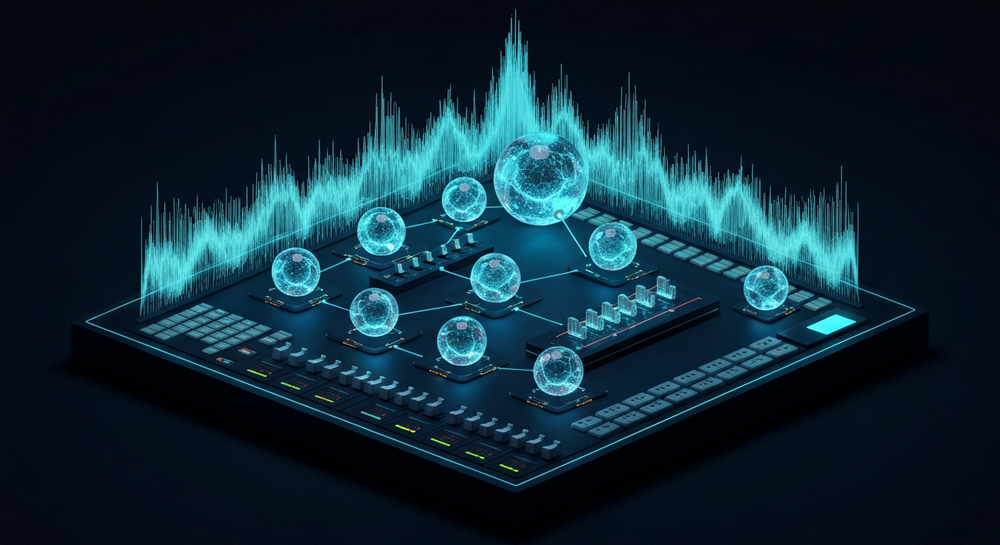
Looking back, AI-generated music from 2024 and 2025 often faced criticism for sounding mechanical or lacking depth. By contrast, new systems now achieve improved classical AI sound realism through neural audio synthesis and dynamic spectral processing. These methods allow for greater tonal richness and natural reverb replication—vital for simulating live orchestra acoustics.
Where previous algorithms struggled with instrument balance, 2026 tools can analyze orchestral frequencies in multi-channel layers. This advancement ensures strings do not drown out woodwinds and that percussion remains rhythmic rather than obtrusive. The orchestration process has transitioned from linear arrangement to intelligent coordination, where AI understands orchestral hierarchy similar to a conductor interpreting a score.

Why is symphony generation significant in 2026?
Symphony generation represents one of the most challenging aspects of classical composition. A symphony demands thematic development, emotional progression, and instrumentation that evolves across movements. For AI, it implies not only generating notes but architecting an unfolding sonic narrative. In 2026, symphony generation is reaching professional-grade levels, producing outputs suitable for film scores, academic study, and digital performance environments.
This progress aligns with broader music industry changes discussed in Music Industry Trends, where originality and adaptive creativity define competitive success. AI symphony engines can now simulate historical styles—baroque counterpoint, romantic dynamics, or impressionist harmonies—by embedding contextual genre data from text prompts.
How do technologists evaluate AI orchestration accuracy?
Music technologists and orchestral arrangers use multiple evaluation layers to measure AI classical music orchestration quality. Key metrics include:
- Tonal Authenticity: How closely timbre and resonance match physical instruments.
- Instrument Balance: Whether frequencies across orchestral sections produce harmonious integration.
- Dynamic Expression: The degree to which the generated music feels responsive and alive rather than static.
- Stylistic Coherence: Consistency with historical or genre-specific conventions.
In professional workflows, these criteria are applied during test projects combining AI-generated symphonic cues with live musician overlays. This hybrid approach ensures the AI output complements human artistry without overshadowing it.
What role does AI play in modern orchestral collaboration?
In 2026's studio environment, digital sound engineers frequently collaborate with AI systems during pre-production stages. AI can quickly produce orchestral sketches, serving as templates for composers to refine. Platforms integrating orchestration tools seamlessly into Arrangement Studio environments allow editors to rearrange sections, fine-tune balance, and maintain musical narrative integrity.
Furthermore, section detection technologies like Section Analysis facilitate workflow optimization by labeling symphonic transitions—intro, exposition, development, recapitulation, and coda. These analytical insights enable faster editing and deeper understanding of composition structure, without requiring manual annotation.
For artists exploring cross-genre classical fusion, reading How an AI Music Generator Inspires Creative Fusion reveals how orchestral principles integrate into electronic and cinematic soundscapes. The convergence between classic and contemporary sound formats is one of the most inspiring developments of this year.
For a deeper exploration of generative techniques, watch our Soundverse Tutorial Series - 9. How to Make Music and Soundverse Tutorial Series - 8. "Explore" Tab which demonstrate creative orchestral adaptation workflows.
How to make AI classical music with Soundverse AI Music Generator
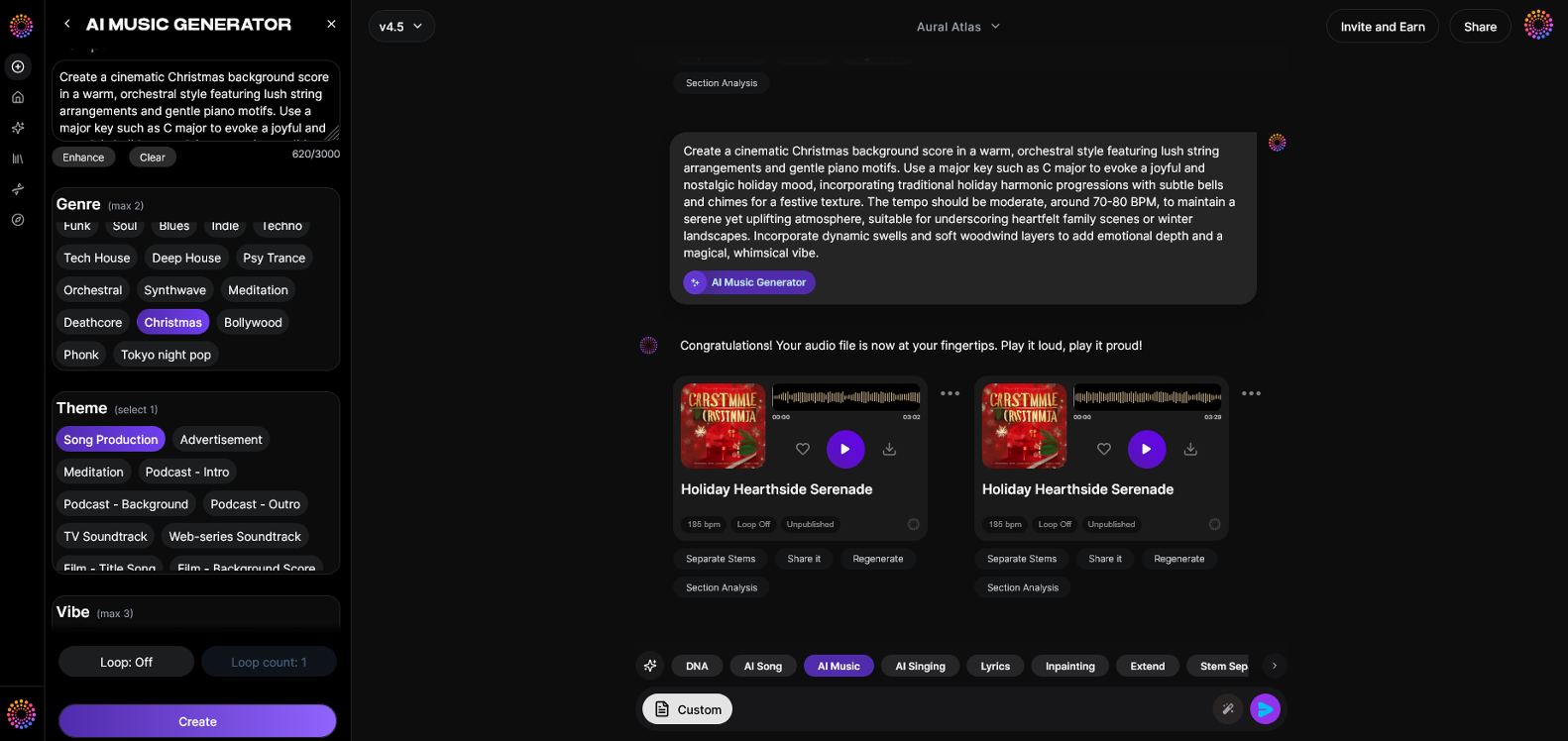
The Soundverse AI Music Generator provides a practical method for experimenting with orchestral compositions through text prompts. It creates fully produced instrumental music that can serve as a symphonic base or atmospheric score. Users describe desired musical emotion or style—such as ‘romantic chamber symphony’ or ‘baroque-inspired string quartet’—and Soundverse generates a complete instrumental output.
Its core capabilities include text-to-music generation, loop mode for seamless playback, and precise control over genre, mood, and instrument selection. The generator supports advanced versions (V4 and V5 models) optimized for more detailed harmonic structures and realistic orchestral simulations.
Composers can use this system for multiple purposes beyond pure classical composition: video scoring, game soundtracks, meditation backgrounds, or commercial soundscapes. Those seeking to compare solutions may review the Best AI Music Generator Top Picks and Review to explore market benchmarks.
The same orchestration produced using Soundverse can be later re-edited in Arrangement Studio or cross-analyzed for section labeling, providing composers with practical workflow continuity.
To understand how text-driven music creation works across genres, explore Generate AI Music with Soundverse Text-to-Music, which explains prompt design and parameter customization techniques pivotal for classical output refinement.
For hands-on demonstration of music creation principles, watch the Soundverse Tutorial Series - 10. Make Deep House Music video, which covers text-to-music generation fundamentals applicable for orchestrations.
Why Soundverse defines orchestration precision in 2026
Soundverse stands out for its ability to allow users to fine-tune instrumental choices during generation, from specifying woodwinds or brass to determining tempo and emotional intensity. When producing orchestral scenes, this yields greater creative control over instrument balance, ensuring subtle melody lines are not lost beneath dominating textures.
For orchestral producers and composers, this precision translates directly into higher AI classical music orchestration quality—an attribute increasingly sought after in media productions and digital concerts. The platform’s versatile design also integrates with similar tools like Similar Music Generator, which matches predefined reference tracks, helping film composers align with director-approved ‘temp scores’.
Using Soundverse in orchestral settings simulates working with a digital assistant fluent in music theory, capable of translating conceptual prompts into harmonically stable symphonies. As professionals adopt such workflows, the result is an expanding frontier of symphonic generation that democratizes classical music production.
The future outlook for AI classical orchestration
As algorithmic intelligence continues refining its understanding of musical aesthetics, 2026 marks a crucial period of maturity for the field. Orchestration quality is becoming a recognized benchmark in evaluating generative composition platforms. Tools like Soundverse reflect a shift from simple background music generation toward intricate score creation suitable for high-caliber performance contexts.
In academic circles, AI-driven orchestration analysis contributes to pedagogy, enabling students to visualize instrument roles dynamically. Meanwhile, digital content creators integrate classical elements in hybrid genres, benefiting from instant generation capabilities that balance innovation and tradition.
By combining AI’s computational efficiency with classical theory insight, composers today can achieve an orchestral expressiveness once limited to large human ensembles. Whether designing a minimalist chamber piece or an epic cinematic symphony, the measurable impact lies in precise AI classical music orchestration quality, where technological sophistication meets timeless musical elegance.
Create Your Own AI-Orchestrated Symphony Today
Experience the refined orchestration quality of Soundverse AI and compose music that echoes the grandeur of classical masterpieces. Elevate your creativity with intelligent tools made for composers and creators alike.
Start Composing with Soundverse AI
- The Role of AI Music in Film and Television — Discover how AI-driven orchestration enhances cinematic experiences through emotionally resonant soundtracks.
- AI Music Generator and Human Composers: A Future Together — Explore how AI tools blend with human creativity to elevate music production and orchestral quality.
- How an AI Music Generator Inspires Creative Fusion — Learn how AI inspires new forms of musical artistry across genres, including classical compositions.
- Soundverse AI Revolutionizing Music Creation for New-Age Content Creators — Uncover how Soundverse is transforming the way artists and creators craft music using intelligent orchestration technology.
Here's how to make AI Music with Soundverse
Video Guide
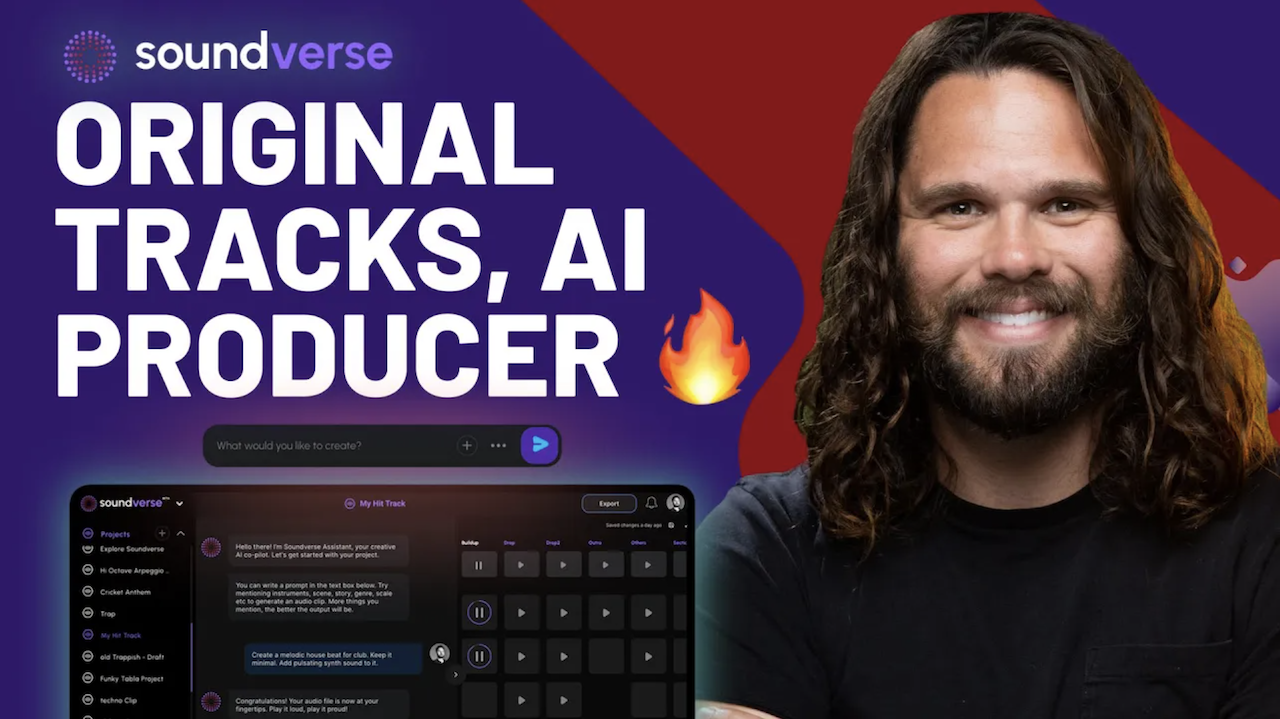
Here’s another long walkthrough of how to use Soundverse AI.
Text Guide
- To know more about AI Magic Tools, check here.
- To know more about Soundverse Assistant, check here.
- To know more about Arrangement Studio, check here.
Soundverse is an AI Assistant that allows content creators and music makers to create original content in a flash using Generative AI.
With the help of Soundverse Assistant and AI Magic Tools, our users get an unfair advantage over other creators to create audio and music content quickly, easily and cheaply.
Soundverse Assistant is your ultimate music companion. You simply speak to the assistant to get your stuff done. The more you speak to it, the more it starts understanding you and your goals.
AI Magic Tools help convert your creative dreams into tangible music and audio. Use AI Magic Tools such as text to music, stem separation, or lyrics generation to realise your content dreams faster.
Soundverse is here to take music production to the next level. We're not just a digital audio workstation (DAW) competing with Ableton or Logic, we're building a completely new paradigm of easy and conversational content creation.
TikTok: https://www.tiktok.com/@soundverse.ai
Twitter: https://twitter.com/soundverse_ai
Instagram: https://www.instagram.com/soundverse.ai
LinkedIn: https://www.linkedin.com/company/soundverseai
Youtube: https://www.youtube.com/@SoundverseAI
Facebook: https://www.facebook.com/profile.php?id=100095674445607
Join Soundverse for Free and make Viral AI Music

We are constantly building more product experiences. Keep checking our Blog to stay updated about them!