Why AI Music Needs Governance, Not Just Innovation
Explore why AI music governance is essential for ethical, sustainable innovation in the music industry in 2026.
Why AI Music Needs Governance, Not Just Innovation
Artificial intelligence (AI) has reshaped the creative fabric of the music industry. From composing complex symphonies to generating chart-ready pop tracks, AI music tools have empowered creators to explore previously unimaginable sonic territories. Yet, as 2026 continues a rapid acceleration of AI-driven creativity, an unsettling truth has emerged: innovation without governance risks undermining the very artistry and ethics the music world depends on.
Why is AI music governance critical in 2026?
AI music governance is no longer a theoretical discussion—it’s a practical necessity. The music industry learned between 2024 and 2025 that uncontrolled use of AI models trained on copyrighted material could lead to disputes, artist boycotts, and policy battles. In 2026, these issues persist, but with growing pressure to implement frameworks that balance technological progress with ethical accountability.
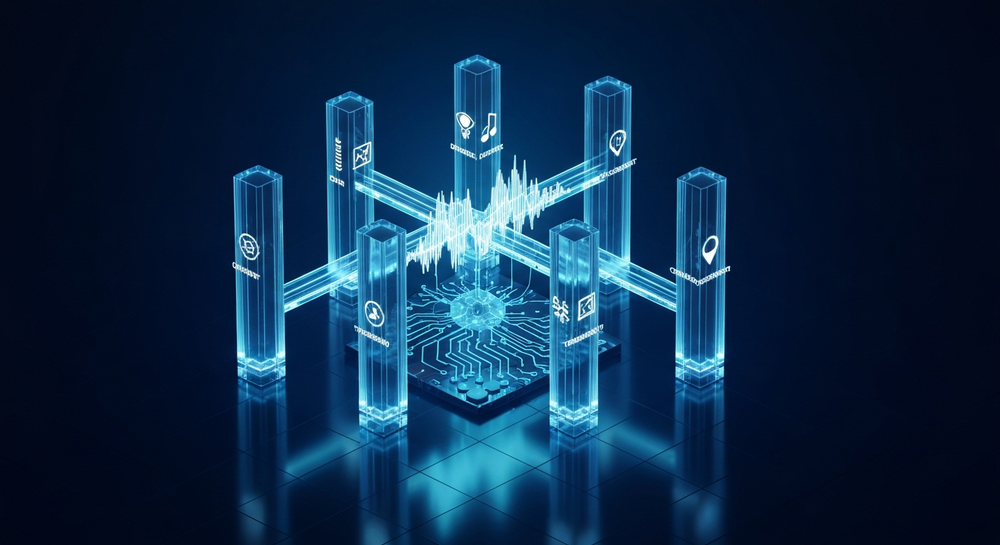
Governance means setting guardrails. It ensures the ethical use of artificial intelligence in music creation by establishing transparency, consent, and fair compensation. True innovation is most sustainable when built on trust—something only strong governance can provide.
AI algorithms now compose thousands of tracks per day, and without clear traceability, it becomes difficult to know whose data was used or what rights apply. Governance fills that gap, defining standards for attribution and ensuring every contributor benefits from their creative legacy.
What are the main ethical challenges of artificial intelligence in music?
Ethical AI in music faces unique challenges compared to other creative fields. Three issues dominate industry discussions in 2026:

- Data sourcing and consent: Many early AI models scraped public music libraries, often using copyrighted works without explicit permissions. This blurred the line between inspiration and infringement. Governance enforces licensed data sourcing, ensuring artists knowingly contribute.
- Attribution and ownership: Traditional copyrights protect human composers, but who owns an AI-composed track? Governance introduces attribution frameworks that trace the lineage of creation back to source datasets and contributors.
- Fair compensation: In prior years, AI-generated tracks often bypassed payment altogether. Today, recurring compensation models ensure that rights-holders earn royalties whenever AI mechanisms use their material.
Ethical oversight provides continuity in the revenue ecosystem, offering artists a reason to participate instead of resist.
How has the lack of AI creativity regulation affected the music industry?
Innovation without guardrails initially produced excitement—and chaos. Labels rushed to deploy AI composers to cut costs and speed up production. However, the absence of AI creativity regulation led to multiple controversies:
- Data misuse scandals damaged public trust.
- Unregulated music clones flooded streaming platforms.
- Artists protested the unauthorized replication of their vocal identities.
The Music and AI: 2025's developments that will shape 2026's disputes analysis highlights how governance now provides necessary structure to protect original art forms. The lesson by 2026 is clear: regulation shapes innovation into something sustainable. Creative freedom can coexist with ethical responsibility. When policies around licensed data, transparency, and recurring royalties are enforced, AI becomes a partner rather than a threat.
What does sustainable music industry innovation look like in 2026?
In 2026, sustainability in music innovation means designing technology that uplifts artists. Instead of disruptive transformation, leading companies are embracing cooperation models, offering artists licensing control while still enabling AI systems to evolve creatively.
Key components of sustainable innovation include:
- Transparent datasets: Only using music acquired through licensed partnerships.
- Accountable AI outputs: Building explainable models that identify creative sources.
- Long-term artist engagement: Integrating compensation flows tied to AI usage metrics.
Frameworks enforcing these principles ensure that artificial intelligence in music remains a tool of empowerment, not exploitation.
For professionals navigating 2026’s evolving technological landscape, understanding AI governance provides a roadmap to ethical growth. Articles like How AI-Generated Music Is Transforming the Music Industry or Music Industry Trends demonstrate how governance now defines success metrics in creative platforms.
How Soundverse enables ethical AI music governance
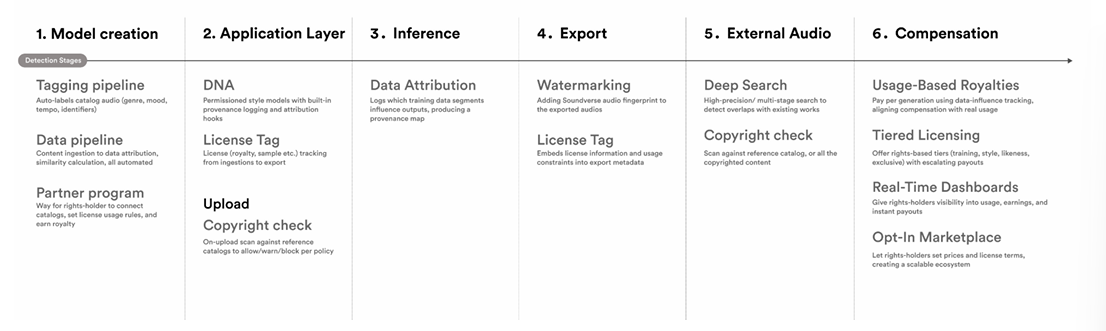
Soundverse stands at the intersection of technology and artistry by introducing The Ethical AI Music Framework—a transparent infrastructure that shapes a responsible future for AI-generated sound.
The Ethical AI Music Framework overview
This comprehensive end-to-end system bridges the gap between innovation and artist integrity. It replaces opaque black-box models with a six-stage pipeline ensuring consent, attribution, and recurring compensation.
Its core stages include:
- Licensed Data Sourcing: Music data originates only from authorized, consented sources—no scraping or violation of intellectual property.
- Permissioned Models (DNA): Creators choose whether their musical DNA participates in training, giving full control over usage.
- Explainable Inference: Every AI output can trace its creative derivatives, eliminating unaudited black-box generation.
- Traceable Export: Transparent watermarking ensures track authenticity across digital platforms.
- Deep Search: External scanning technologies detect unauthorized reuse and ensure compliance continuity.
- Recurring Compensation: Through the Soundverse Content Partner Program, rights-holders earn royalties when their licensed sounds power new compositions.
Enterprise clients benefit from legal compliance and transparency. Independent musicians gain peace of mind, knowing governance safeguards their contributions.
For a deeper dive, watch our guide on creating Deep House music or learn how to make music step-by-step from Soundverse tutorials.
Tools like Soundverse Trace provide attribution layering and audit trails that enrich accountability. The Soundverse ecosystem exemplifies how governance and innovation can align gracefully.
How does AI governance redefine creativity?
Some fear governance may stifle innovation, but the opposite is true. By defining boundaries, creators can experiment without legal uncertainty. Transparent frameworks promote cross-industry collaboration and accelerate acceptance among artists who previously resisted AI involvement.
AI music governance doesn’t impose restriction—it enables legitimacy. It’s about translating creativity into compliant, ethical practice. Developers focusing on regulation-aware systems can safely deploy machine creativity without reputational risk.
For example, companies exploring AI music generation inspired by genre-based filters—like those described in Generate AI Music with Soundverse Text-to-Music—benefit directly from clear governance. It ensures every sample and pattern adheres to ethical criteria while maintaining sonic diversity.
What role will policymakers play in shaping ethical AI in music?
Policymakers in 2026 act as mediators between creators and technologists. Their task is translating artistic ethics into practical frameworks. Legislative momentum is increasing, with discussions around standardized consent mechanisms, attribution documentation, and royalty automation. The Dean, Moran Introduce Bipartisan Bill to Protect Creators begins to define pathways toward court enforceability in creator rights.
Governance frameworks will soon define certification labels for compliant AI models, similar to sustainability ratings in other industries. By embedding traceability protocols, platforms like Soundverse demonstrate readiness for future regulation.
Professionals building or adopting AI systems can learn from AI Music in the USA, which examines the intersection of federal copyright and algorithmic transparency standards.
Shape the Future of Ethical AI Music Creation
Join Soundverse to explore powerful AI music generation tools crafted for creators who value ethics, control, and originality. Start creating responsibly and innovatively today.
- How AI-Generated Music Is Transforming the Music Industry — Discover how AI is reshaping music creation, distribution, and the roles of artists across the world.
- AI Music Generator and Human Composers: A Future Together — Explore how AI tools and human creativity can collaborate to develop music that’s both original and emotionally resonant.
- Copyright-Free vs. Royalty-Free Music: What Creators Should Know — Understand the critical differences between copyright-free and royalty-free music in the age of AI creators.
- Navigating the World of Royalty-Free and Copyright-Free Music Using Soundverse AI — Get practical insights on creating and using AI-generated music legally and ethically for your projects.
Here's how to make AI Music with Soundverse
Video Guide

Here’s another long walkthrough of how to use Soundverse AI.
Text Guide
- To know more about AI Magic Tools, check here.
- To know more about Soundverse Assistant, check here.
- To know more about Arrangement Studio, check here.
Soundverse is an AI Assistant that allows content creators and music makers to create original content in a flash using Generative AI. With the help of Soundverse Assistant and AI Magic Tools, our users get an unfair advantage over other creators to create audio and music content quickly, easily and cheaply. Soundverse Assistant is your ultimate music companion. You simply speak to the assistant to get your stuff done. The more you speak to it, the more it starts understanding you and your goals. AI Magic Tools help convert your creative dreams into tangible music and audio. Use AI Magic Tools such as text to music, stem separation, or lyrics generation to realise your content dreams faster. Soundverse is here to take music production to the next level. We're not just a digital audio workstation (DAW) competing with Ableton or Logic, we're building a completely new paradigm of easy and conversational content creation.
TikTok: https://www.tiktok.com/@soundverse.ai
Twitter: https://twitter.com/soundverse_ai
Instagram: https://www.instagram.com/soundverse.ai
LinkedIn: https://www.linkedin.com/company/soundverseai
Youtube: https://www.youtube.com/@SoundverseAI
Facebook: https://www.facebook.com/profile.php?id=100095674445607
Join Soundverse for Free and make Viral AI Music

We are constantly building more product experiences. Keep checking our Blog to stay updated about them!