What to Look for in an AI Music Platform’s Licensing Model
Learn what makes a strong AI music licensing model and how Soundverse ensures ethical royalties and transparent agreements.
What to Look for in an AI Music Platform’s Licensing Model
In 2026, AI-driven music creation has moved from novelty to necessity. Musicians, producers, and content creators now rely on artificial intelligence to generate high-quality compositions for streaming, advertising, film, and social media. But as AI-generated sound becomes an everyday tool, one vital question arises: what should you look for in an AI music platform’s licensing model?
Understanding how platforms handle music rights, royalties, and ethical use is now essential for any creative professional. This deep dive explores the key elements shaping the best AI music licensing models—and why they directly impact both artistic integrity and commercial opportunity.
Why do AI music licensing models matter in 2026?
AI music platforms have grown exponentially since 2024. As models trained on vast datasets generate melodies and instrumentals at scale, rights management has become complex. The question is no longer just about ownership—it’s about consent, attribution, and compensation. In short, an AI music licensing model determines how value flows back to artists, how clients can legally use generated tracks, and how ethical the underlying technology is.

For businesses and creators, a strong licensing model ensures that generated music is royalty-free for commercial use, but ethically sourced from original datasets. For rights-holders, it’s the difference between transparent participation and exploitation.
What defines a strong AI music licensing model?
Modern AI music licensing models fall under two core philosophies: open (royalty-free AI music libraries) and participatory (rights-holder partnerships). A healthy model balances innovation with legal compliance, offering:
- Transparent Data Usage – Artists need visibility into what training data was used and where.
- Ethical Dataset Curation – Music used for training must be contributed with consent.
- Clear Commercial Rights – Users should know precisely what they can and cannot do with AI-generated outputs.
- Royalty Distribution Mechanisms – Rights-holders deserve compensation based on model usage and attribution.
- Opt-in Participation – Platforms that let artists decide whether to share materials for AI learning respect creative freedom.

These aspects are particularly vital as governments and publishers continue drafting legislation around AI-generated music rights.
What licensing challenges exist in current AI music platforms?
From 2024 to 2025, most AI music tools offered simple “royalty-free” agreements that allowed commercial use but lacked traceability. Many musicians raised concerns that their works were being used in training without consent. Several regulators proposed frameworks to ensure AI datasets are built ethically.
Today, leading AI platforms must overcome three key challenges:
- Attribution Accuracy – Identifying the influence of source material in AI outputs.
- Fair Royalty Structures – Designing usage-based compensation models rather than one-time payments.
- Cross-Platform Consistency – Ensuring license terms remain valid across exports, streaming, and resale channels.
Platforms that ignore these gaps may deliver short-term flexibility but create long-term legal risk for users. For a detailed overview of how industry leaders are tackling this, see AI Music and the Law in 2026: What Creators Can and Cannot Do.
How have licensing models evolved by 2026?
By 2026, the trend is toward hybrid frameworks combining royalty-free usage rights for creators with ethical monetization paths for rights-holders. This means users can generate songs freely while the artists whose works contribute to training datasets receive recurring payments based on model utilization. Major developments, such as the Universal Music Group and Udio licensing platform announcement, signal this shift toward structured participation.
This evolution mirrors what happened in visual AI generation—where transparency, opt-in participation, and attribution tracking became standard. Music licensing for AI tools now focuses on protecting rights-holders while enabling widespread creative access.
For creators exploring AI composition, understanding terms like “Tiered Licensing” and “Usage-Based Royalties” is crucial, since these define both your legal protection and your earning potential. You can explore more comparisons in Best AI Music Generators in 2026: Create Professional Audio with AI.
What should musicians, producers, and creators look for?
When choosing an AI music platform in 2026, evaluate its licensing model through four critical questions:
- Does it offer consent-based data training? Ethical AI depends on rights-holders volunteering their music for model use.
- Are royalties recurring or one-off? Systems tied to model usage allow artists to earn perpetually as AI generates new content.
- Can you track music attribution? Quality platforms provide dashboards showing when and how a dataset’s content influenced generated outputs.
- Is the license commercially clear? For professional use, confirm whether the generated music is royalty-free AI music suitable for film, advertising, or social media.
Transparent terms reduce risk and build trust between creators and platforms.
For additional workflows and examples, watch our Soundverse Tutorial Series - 9. How to Make Music or explore the Soundverse Explore Tab guide for dataset transparency insights.
What types of music licensing agreements apply to AI?
AI-generated music rights fall under several licensing agreement types:
- Royalty-Free Licensing – The user pays once or subscribes for access to unlimited tracks without future royalties.
- Usage-Based Licensing – Royalties accumulate based on how often generated music replicates or draws from licensed datasets.
- Creative Commons Licensing – Allows free use under attribution requirements but rarely suits commercial projects.
- Custom Enterprise Contracts – Tailored agreements for agencies, studios, and record labels integrating AI music tools.
Evaluating these ensures you select the right balance between creative freedom and ethical participation. For more insight into evolving trends in AI music, explore Soundverse's analysis of music industry trends or learn about how AI-generated music is transforming the industry.
How to make better licensing decisions with transparency
Transparency is no longer optional. Platforms that provide dashboards showing data contribution, royalty accumulation, and attribution clarity are winning trust across the music economy. These real-time transparency reports empower musicians and producers to understand the impact of their materials without guesswork.
Traceable datasets also simplify copyright verification—users can confirm that the AI model’s training aligns with legal frameworks. Tools like Soundverse Trace embed exactly this kind of trust layer across every file generated.
How to make ethical and profitable licensing with Soundverse Content Partner Program
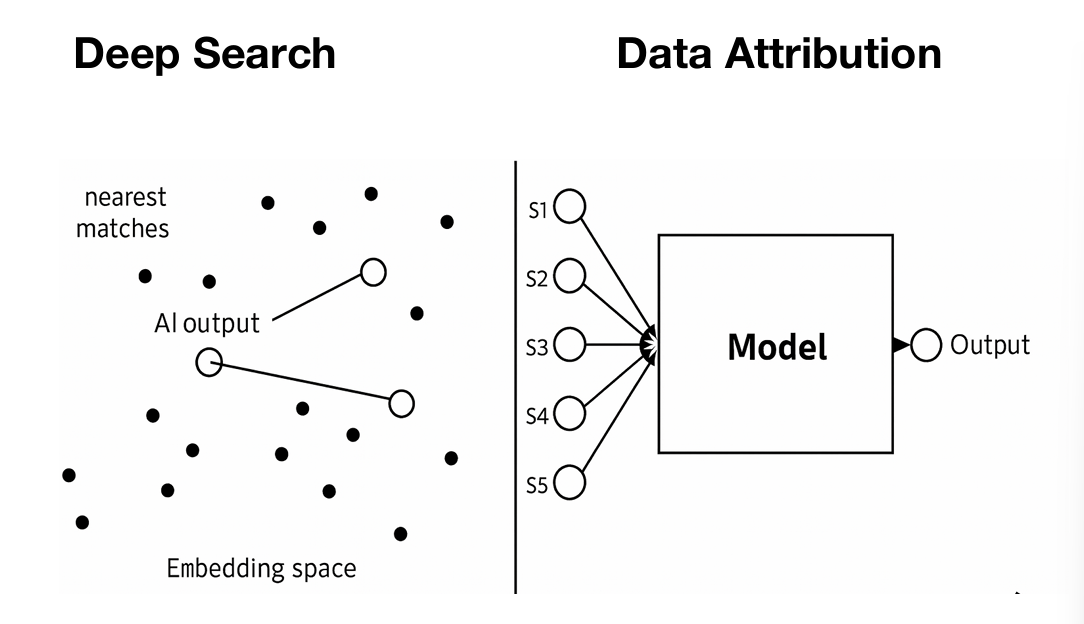
Soundverse’s Content Partner Program stands out as a model for ethical AI licensing. It provides an opt-in framework where rights-holders contribute their audio catalogs for AI training and receive recurring, usage-based royalties driven by attribution.
Core Capabilities
- Influence-Based Payouts (Pay per Generation): Artists earn royalties every time their data influences a generated track.
- Tiered Licensing (Tiers 1–6): Different tiers offer scalable earning potential based on dataset depth, usage level, and commercial reach.
- Real-Time Dashboards: Participants monitor earnings and dataset impact transparently.
- Transparency Reports: Detailed insights reveal how contributions are used in model development and generation.
This structure offers rights-holders protection while giving AI platforms legitimate data sources. It also supports creators generating royalty-free AI music ethically—combining innovation with sustainability.
Soundverse’s approach aligns seamlessly with its broader Ethical AI Music Framework, which ensures consent, attribution, and recurring compensation across all stages of AI music creation. For creators exploring composition tools, this architecture guarantees both freedom and fairness.
Why Soundverse leads in 2026
Soundverse’s infrastructure, anchored by transparency and attribution, represents how music licensing agreements should work in the current AI era. While other AI platforms have struggled with copyright challenges, Soundverse delivers a balanced methodology blending technology and trust.
If you’re transitioning from platforms like Mubert alternatives or evaluating tools similar to Soundraw, Soundverse offers a compliant, future-ready model that supports both creative professionals and rights-holders.
By joining the Content Partner Program, musicians can monetize back catalogs and ensure their work contributes to AI ethically. Creators using Soundverse’s AI music generator tools benefit from royalty-free usage while supporting a transparent royalty ecosystem.
Start Creating Legally-Safe AI Music with Soundverse
Avoid licensing headaches and unlock full creative freedom with Soundverse’s transparent AI music licensing model. Create, download, and monetize your AI-generated tracks worry-free today.
Explore Soundverse Licensing Plans
Related Articles
- Copyright-Free vs Royalty-Free Music: What Creators Should Know — Understand the key differences between copyright-free and royalty-free music before using it in your content or projects.
- Navigating the World of Royalty-Free and Copyright-Free Music Using Soundverse AI — Learn how Soundverse AI helps you create and manage royalty-free music with complete licensing transparency.
- Enhancing YouTube Content with Royalty-Free and Copyright-Free Music Using Soundverse AI — Discover how to enhance YouTube videos with properly licensed AI-generated tracks that protect your channel from copyright issues.
- How AI-Generated Music is Transforming the Music Industry — Explore how AI is reshaping music creation and the new opportunities it offers to both artists and producers.
Here's how to make AI Music with Soundverse
Video Guide

Here’s another long walkthrough of how to use Soundverse AI.
Text Guide
- To know more about AI Magic Tools, check here.
- To know more about Soundverse Assistant, check here.
- To know more about Arrangement Studio, check here.
Soundverse is an AI Assistant that allows content creators and music makers to create original content in a flash using Generative AI. With the help of Soundverse Assistant and AI Magic Tools, our users get an unfair advantage over other creators to create audio and music content quickly, easily and cheaply. Soundverse Assistant is your ultimate music companion. You simply speak to the assistant to get your stuff done. The more you speak to it, the more it starts understanding you and your goals. AI Magic Tools help convert your creative dreams into tangible music and audio. Use AI Magic Tools such as text to music, stem separation, or lyrics generation to realise your content dreams faster. Soundverse is here to take music production to the next level. We're not just a digital audio workstation (DAW) competing with Ableton or Logic, we're building a completely new paradigm of easy and conversational content creation.
TikTok: https://www.tiktok.com/@soundverse.ai
Twitter: https://twitter.com/soundverse_ai
Instagram: https://www.instagram.com/soundverse.ai
LinkedIn: https://www.linkedin.com/company/soundverseai
Youtube: https://www.youtube.com/@SoundverseAI
Facebook: https://www.facebook.com/profile.php?id=100095674445607
Join Soundverse for Free and make Viral AI Music

We are constantly building more product experiences. Keep checking our Blog to stay updated about them!
Image Steps: []