What Makes AI Music Sound Human in 2026?
Explore how AI music mimics human emotion in 2026 with Soundverse DNA and machine learning in music production.
What Makes AI Music Sound Human?
Artificial intelligence has transformed how we create, listen to, and feel music. As of 2026, AI music has become nearly indistinguishable from human compositions — capable of evoking deep emotion, dynamic expression, and authentic artistic style. But what exactly makes AI music sound so human? Why do listeners connect to these machine-generated melodies as if they were made by people? In this article, we’ll break down the science, creativity, and technology behind realistic AI audio, explore the evolution of human-like AI music, and reveal how Soundverse DNA leads this revolution.
Why does AI music sound more human in 2026 than ever before?
AI music in 2026 has moved beyond simple loops and algorithmic melodies. It’s now driven by neural networks able to understand human emotion and musical context. Thanks to advances in machine learning in music production, AI models can mimic timing imperfections, tonal warmth, and expressive phrasing that once defined only human performance.
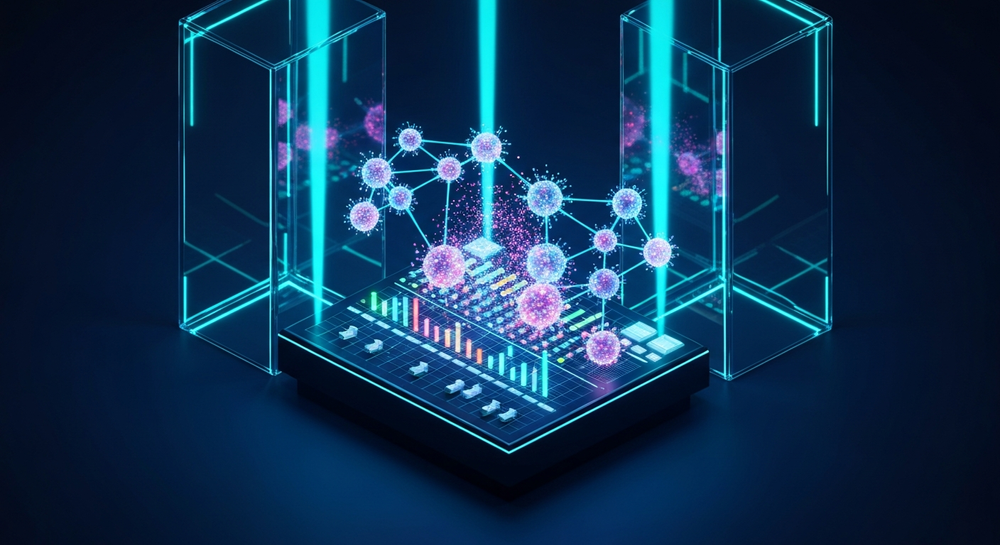
Several key innovations have enabled this transformation:
- Emotional mapping: AI now learns the emotional weight of chord progressions and performance gestures, making output feel intentional rather than mechanical.
- Cultural context modeling: Systems can identify stylistic nuances in multiple genres — from the rhythmic sensitivity of Afrobeat to the harmonic progressions of jazz — leading to compositions that feel context-aware.
- Voice synthesis breakthroughs: Through deep learning, AI voice synthesis models understand micro-details like breath patterns, vibrato, and lyrical emphasis, contributing to realistic singing and spoken performance.
- Artist-trained databases: Ethical licensing platforms have produced systems trained not on generic datasets but on curated, artist-approved catalogs. This shift made AI-generated music feel authentic, emotionally complex, and copyright-safe.
How does machine learning contribute to human-like AI music?
Human musicians combine learned theory with instinctual expression. Replicating that combination in machines required AI to understand not just notes, but intent. Modern AI music generation uses reinforcement learning and transformer architectures to analyze thousands of performance parameters simultaneously.
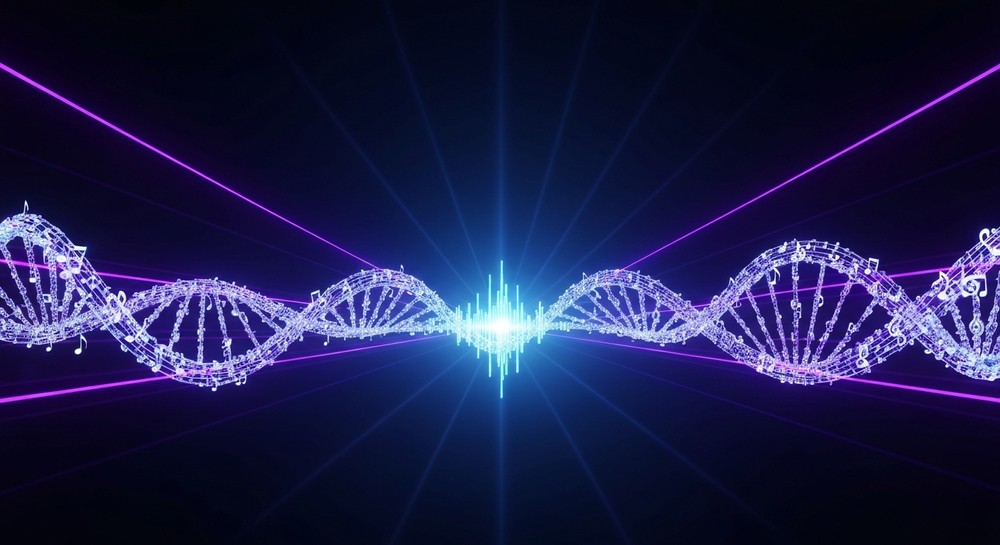
Machine learning in music production involves layers of perception:
- Pitch and harmony prediction: Neural nets anticipate melodic direction similar to how a composer feels their way through progressions.
- Dynamic shaping: Volume and velocity fluctuations are modeled after real human touch — the pressure of a pianist’s fingers or a singer’s emotional crescendos.
- Temporal deviation: Slight timing offsets emulate the natural flow of live musicians rather than metronomic precision.
- Expressive clusters: AI systems categorize tone color palettes used by individual artists, bringing signature sonic fingerprints into generated tracks.
This is why when listeners play modern AI tracks, they perceive life, movement, and imperfection — the qualities that define real music.
For example, platforms like Soundverse use such deep network architectures to build music DNA models that represent artists’ creative styles authentically. These systems transform machine imitation into genuine human collaboration.
For a deeper look at genre workflows, watch our tutorial on how to make music or the guide on creating Deep House music from the Soundverse Tutorial Series.
What role does AI voice synthesis play in making music sound human?
Voice synthesis used to sound robotic and flat. By 2026, however, AI singing tools have reached remarkable realism. Through voice DNA models, these systems capture an artist’s tone, phrasing, and breathing techniques so accurately that generated vocals can sound indistinguishable from an actual performance.
Each voice synthesis layer contributes unique expressive quality:
- Timbre modeling: Captures the warmth, grit, or purity unique to each performer.
- Pitch fluidity: Generates lifelike pitch transitions, not linear tone jumps.
- Emotion control: Adjusts parameters like sadness, excitement, or intimacy in a singer’s voice.
Tools such as Soundverse’s AI Singing Generator and Similar Singing Generator now let musicians craft personalized vocal performances directly from lyrics — offering flexibility that respects artistic personality and copyright. Learn more about how text-to-music workflows evolve in 2026 by checking this guide.
Why do listeners emotionally connect to realistic AI audio?
Music inherently triggers emotional responses. When AI models simulate imperfections and expressive uncertainty — qualities humans use subconsciously — audiences instinctively connect. Realistic AI audio resonates because:
- It mirrors emotional energy rather than simply recreating sonic texture.
- It can emphasize lyrical meaning by varying tone and timing.
- It integrates the unpredictability that keeps human music engaging.
For creators, this means AI no longer only accelerates production but becomes an emotional extension of artistry. Producers can now combine algorithmic ideas with personal style, achieving results as moving as any human composition.
To see how AI reshapes creative expression, explore music industry trends shaping 2026’s sonic landscape.
How Soundverse DNA makes AI music sound human
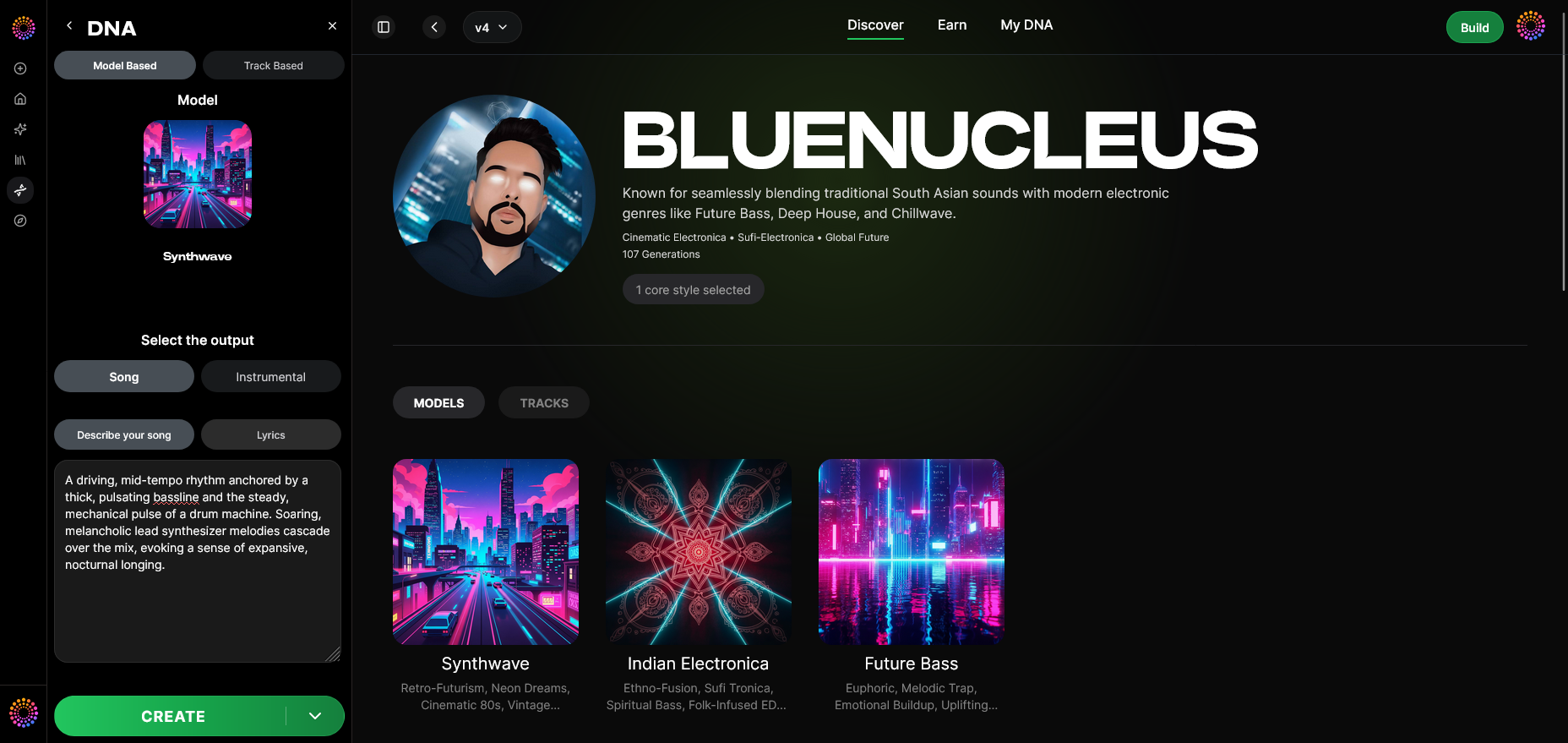
Soundverse DNA stands out as a central technology powering this shift. Its artist-trained AI music generation system produces original, copyright-safe music defined by authentic sonic identities. Let’s explore what makes it special.
Official Feature Overview:
- Soundverse DNA is built around the concept of musical genetics — the DNA of sound. Every artist’s catalog becomes a trainable signature model.
- It solves ethical concerns by using licensed catalogs, allowing creators to monetize their unique styles while users legally generate in-brand music.
- The ecosystem includes:
- Full DNA (Songs/Instrumentals): for whole-song generation.
- Voice DNA (Vocal timbre/style): capturing singing nuances.
- DNA Marketplace: where artists license their sound DNA to fans.
- Sensitivity Selector: clustering catalogs into eras or moods.
- Private Mode: for secure collaboration and personal production.
Use Cases Include:
- Artist Monetization: Earn revenue when your DNA model is used.
- Sonic Branding: Maintain consistent brand sound across campaigns.
- Film/Game Scoring: Generate legally compliant, style-matched cues.
- Personal Workflow: Accelerate creation using your own sonic identity.
Compared to other AI platforms like Soundraw or Mubert, Soundverse DNA uniquely respects creative ownership. The model’s ethical backbone — training only on authorized material — ensures that every generated melody carries the artistic personality of real musicians.
Watch how to generate songs, instrumentals & vocals using Full DNA in the official tutorial.
What makes Soundverse DNA distinct in 2026’s AI music landscape?
While many AI music systems rely on wide, unclaimed datasets, Soundverse DNA prioritizes authenticity and artist consent. This has positioned Soundverse as a solution bridging human emotion and machine precision.
Here’s why artists and producers consider it revolutionary:
- Real emotional depth: DNA models capture performance intent, not just sound.
- Legal clarity: Every generated track is copyright-safe, simplifying publishing and branding.
- Creative identity preservation: Users maintain consistent voice or sound signature across projects.
- Collaborative potential: Through Private Mode, artists can co-create music safely with their AI models.
For musicians seeking practical applications, learning how to use DNA for genre generation — from EDM production to country music — showcases how Soundverse enables style continuity while maintaining artistic uniqueness.
Is AI music generation replacing human creativity?
Rather than replacing composers or singers, 2026 marks the era of co-creation. AI assists rather than dominates. Humans define intent; machines expand possibility. Soundverse’s DNA structure empowers creators to experiment without losing authorship.
In collaborative workflows:
- Artists supply reference recordings and approved samples.
- DNA training learns these stylistic characteristics.
- The AI then produces variations consistent with the original tone and personality.
This partnership blurs the line between technology and art, producing human-like AI music that complements creativity instead of competing with it.
Create Your Own Human-Sounding AI Music Today
Experience the next generation of music creation with Soundverse. Craft expressive, lifelike tracks in minutes using AI that understands emotion, tone, and creativity.
Start Making Music with Soundverse
Related Articles
- AI Music Generator and Human Composers: A Future Together — Discover how human creativity and AI innovation can harmonize to shape the future of music production.
- How an AI Music Generator Inspires Creative Fusion — See how AI tools encourage new genres and collaborations by blending machine intelligence with artistic intuition.
- The Role of AI Music in Film and Television — Learn how AI-generated compositions are transforming soundtracks and helping creators produce cinematic-quality scores effortlessly.
- The Benefits of Composing with an AI Music Generator — Uncover how AI music tools save time, enhance creativity, and empower artists at every skill level.
Here's how to make AI Music with Soundverse
Video Guide

Here’s another long walkthrough of how to use Soundverse AI.
Text Guide
- To know more about AI Magic Tools, check here.
- To know more about Soundverse Assistant, check here.
- To know more about Arrangement Studio, check here.
Soundverse is an AI Assistant that allows content creators and music makers to create original content in a flash using Generative AI. With the help of Soundverse Assistant and AI Magic Tools, our users get an unfair advantage over other creators to create audio and music content quickly, easily and cheaply. Soundverse Assistant is your ultimate music companion. You simply speak to the assistant to get your stuff done. The more you speak to it, the more it starts understanding you and your goals. AI Magic Tools help convert your creative dreams into tangible music and audio. Use AI Magic Tools such as text to music, stem separation, or lyrics generation to realise your content dreams faster. Soundverse is here to take music production to the next level. We're not just a digital audio workstation (DAW) competing with Ableton or Logic, we're building a completely new paradigm of easy and conversational content creation.
TikTok: https://www.tiktok.com/@soundverse.ai
Twitter: https://twitter.com/soundverse_ai
Instagram: https://www.instagram.com/soundverse.ai
LinkedIn: https://www.linkedin.com/company/soundverseai
Youtube: https://www.youtube.com/@SoundverseAI
Facebook: https://www.facebook.com/profile.php?id=100095674445607
Join Soundverse for Free and make Viral AI Music

We are constantly building more product experiences. Keep checking our Blog to stay updated about them!