Voice Cloning for Creator-Owned Vocal Assets: Building Ethical AI Voices in 2026
Learn how creators in 2026 use ethical voice cloning and owned AI voices to protect and monetize digital vocal identities.
Voice Cloning for Creator-Owned Vocal Assets
In 2026, voice cloning is no longer a futuristic novelty—it has become a foundational part of the creator economy. As AI-driven content creation tools expand, musicians, podcasters, and digital storytellers are seeking ways to own and protect their synthesized vocal identities. This movement has given rise to the era of creator-owned vocal assets, where voice cloning and digital ownership converge to empower artists ethically.
What is voice cloning and why does it matter in 2026?
Voice cloning refers to using AI voice technology to replicate a person’s vocal characteristics—tone, pitch, emotion, and style. Over the last two years, the technology has evolved from basic imitation to high-fidelity realism, with applications across music production, narration, film, and digital branding. In 2026, creators are viewing synthetic vocal assets as part of their personal brand—something as valuable and protectable as a logo or musical composition.
The increasing popularity of AI voice technology has raised key ethical and legal questions. Who owns a cloned voice? Can someone use another person’s vocal model without consent? The answers lie in the development of systems that encourage consent-based voice cloning and creator voice licensing—frameworks that give artists both control and compensation.
How is digital voice ownership transforming the creator economy?
In previous years, AI-generated vocals were a gray area in copyright and licensing. However, the creator economy in 2026 has matured. Digital voice ownership ensures that creators who train voice models retain rights over usage, distribution, and monetization.
With creator-owned AI voices, artists can build a portfolio of synthetic assets that represent their vocal identity. These models can be licensed to collaborators, fans, or brands under transparent terms. This ensures consistent creative control while providing new revenue streams—especially vital for content creators whose voices define their brand identity.
Examples of creator applications include:
- Musicians licensing their unique tone for remix collaborations or branded soundtracks.
- Podcasters scaling production with AI-generated voiceovers that match their own vocal performance.
- Voice actors creating digital stand-ins for virtual content or game dialogue.
- Influencers using synthetic vocal assets for multi-language content.
Digital voice ownership has become a frontier of creative rights in 2026. It merges the technical precision of AI with the legal protection of creative property.
What challenges does voice cloning face today?
Despite advancements, voice cloning still faces challenges in ethics, security, and authenticity.
- Ethical use: Unauthorized voice duplication continues to be a pressing concern. Ethical frameworks now focus on informed consent and transparent data sourcing.
- Data licensing: Artists must ensure that all source material for voice training is properly licensed—especially for commercial use.
- Authenticity vs. deepfakes: AI-generated voices can easily be mistaken for human recordings. Establishing verifiable creator-backed voice IDs is essential for maintaining public trust.
These challenges gave rise to responsible AI ecosystems—platforms that prioritize permission-based voice training. One of the leaders in this movement is Soundverse.
You can learn more about industry developments in ethical AI voice technology from sources like The Next Billion-Dollar Opportunity in Voice AI Just Unlocked and AI Voiceover Tools Market May See a Big Move: Major Giants Google.
How Soundverse DNA enables creator-owned voice cloning ethically
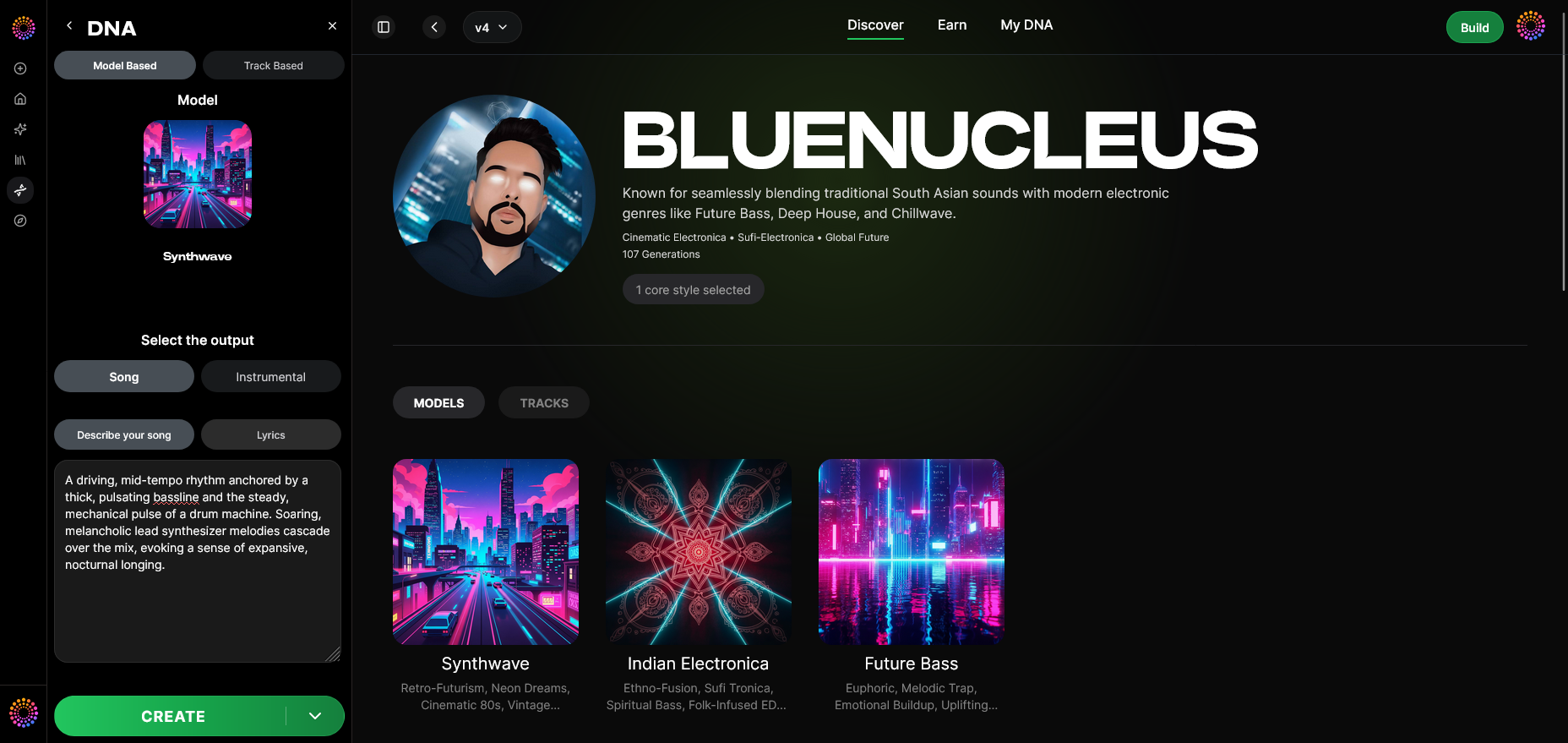
Soundverse’s DNA system is built to solve the ethical challenges of AI voice technology. It uses licensed, artist-trained models to generate original music and vocals aligned with specific sonic identities. The platform empowers creators to transform their voice into a secure, licensable digital asset.
Key features of Soundverse DNA:
- Voice DNA: Captures a creator’s unique timbre and vocal style, turning it into a reusable AI model.
- Full DNA: Extends the model to entire compositions, including melody, rhythm, and production aesthetics.
- DNA Marketplace: Enables creators to license their style or voice to fans and collaborators—generating royalties each time it’s used.
- Sensitivity Selector: Lets creators cluster models into different creative eras or stylistic moods (for example, “2024 acoustic era” or “2026 electro-pop revival”).
- Private Mode: Provides a secure, permission-only co-creation environment.
Soundverse DNA addresses one of the industry’s biggest pain points: ethical sourcing. Instead of scraping voices from public data (a common issue with unlicensed AI tools), Soundverse only trains on licensed catalogs or opt-in creator data. The result is a permission-based voice cloning framework built for artists, by artists.
For a deeper dive into creating music and vocals with Soundverse, watch our guide on creating Deep House music and our Soundverse tutorial on making music.
This makes Soundverse DNA an ideal solution for creators looking to build an owned AI voice—without sacrificing trust or creative control.
Why creator voice licensing is the next big step for digital media professionals
Creator voice licensing allows individuals to manage how their AI-generated voices are used. With platforms like Soundverse’s DNA Marketplace, creators can set usage permissions, charge for commercial licensing, and receive royalties every time their synthetic voice appears in new content.
For digital media professionals, this shift has major implications:
- Monetization: AI voice models become passive income generators.
- Scalability: Content can be produced in multiple languages and styles without losing vocal consistency.
- Authenticity: Each usage is traceable and credited to the rightful owner.
Creator voice licensing in 2026 represents a blend of artistry and business—empowering voices to become protected, monetizable assets in the age of synthetic creativity.
For example, AI Voice Cloning for Creators: Market and Ideas outlines how creators monetize their cloned voices for audiobooks, translations, and branded content—projecting billions of value by 2026 (How to Generate Human-Like AI Voices with Emotions).
What is the role of synthetic vocal assets in brand identity?
Synthetic vocal assets are becoming essential for sonic branding. With owned AI voices, brands can craft unique sound signatures, ensuring consistent vocal presence across podcasts, advertisements, and social videos.
An owned AI voice can represent a brand persona just as a visual logo represents its design identity. For example, an animation studio might maintain a consistent voice style across language versions of content. A musician might collaborate with global producers using their Voice DNA model to maintain stylistic coherence.
By integrating synthetic vocal assets into their creative workflows, creators establish deeper brand connection and longevity.
How to make voice cloning for creator-owned assets with Soundverse DNA
Using Soundverse DNA, creators can train their own AI vocal models and retain full ownership throughout the process. The workflow is straightforward:
- Upload your licensed vocal recordings to train a Voice DNA model. Ensure that all source material is rights-owned.
- Set Sensitivity parameters to define stylistic clusters across different periods or moods.
- Publish your model securely via Private Mode or list it on the DNA Marketplace for licensed use.
- Generate AI vocals using your Voice DNA for future tracks, streams, or multimedia projects.
This process ensures that AI voice generation remains artist-centered, offering both creative flexibility and ethical control. Creators are encouraged to explore extensions such as Voice Swap—to test different vocal identities—or the Similar Singing Generator for character-based consistency.
Those looking to expand their knowledge of AI music generation can explore other learning resources such as Generate AI Music with Soundverse Text-to-Music, How AI-Generated Music is Transforming the Music Industry, and Soundverse AI Revolutionizing Music Creation for New Age Content Creators.
The future of owned AI voices and creator licensing
In 2026, voice cloning has evolved into a system of empowerment rather than imitation. As AI voice technology becomes a central creative tool, ownership and transparency remain non-negotiable. Platforms like Soundverse DNA set a precedent for ethical co-creation—ensuring that creators maintain the right to define how their digital voice lives, performs, and earns.
Looking ahead, the boundaries between human and synthetic artistry will continue to blur. But with creator-led tools and licensing ecosystems, the next generation of musicians, podcasters, and digital media professionals will not just create content—they will own their sound.
Start Cloning Your Voice with Soundverse AI
Create your own vocal identity today with Soundverse’s advanced voice cloning technology. Transform how you produce and license your voice while maintaining full creative ownership.
Related Articles
- Soundverse SAAR: AI Voice Assistant: Discover how Soundverse SAAR helps creators build personalized voice experiences powered by cutting-edge AI.
- AI Ranks Soundverse’s AI Singer #1: The Ultimate AI Singing Platform Dominating 2025: Learn why Soundverse’s AI Singer is revolutionizing vocal creation for artists and content creators worldwide.
- Soundverse Assistant: Your AI Music Co-Producer: Find out how Soundverse Assistant streamlines music and vocal production, turning your ideas into polished creations.
- How AI-Generated Music Is Transforming the Music Industry: Explore the broader impact of AI-generated music on creation, rights, and the future of the music ecosystem.
Here's how to make AI Music with Soundverse
Video Guide

Here’s another long walkthrough of how to use Soundverse AI.
Text Guide
- To know more about AI Magic Tools, check here.
- To know more about Soundverse Assistant, check here.
- To know more about Arrangement Studio, check here.
Soundverse is an AI Assistant that allows content creators and music makers to create original content in a flash using Generative AI. With the help of Soundverse Assistant and AI Magic Tools, our users get an unfair advantage over other creators to create audio and music content quickly, easily and cheaply. Soundverse Assistant is your ultimate music companion. You simply speak to the assistant to get your stuff done. The more you speak to it, the more it starts understanding you and your goals. AI Magic Tools help convert your creative dreams into tangible music and audio. Use AI Magic Tools such as text to music, stem separation, or lyrics generation to realise your content dreams faster. Soundverse is here to take music production to the next level. We're not just a digital audio workstation (DAW) competing with Ableton or Logic, we're building a completely new paradigm of easy and conversational content creation.
TikTok: https://www.tiktok.com/@soundverse.ai
Twitter: https://twitter.com/soundverse_ai
Instagram: https://www.instagram.com/soundverse.ai
LinkedIn: https://www.linkedin.com/company/soundverseai
Youtube: https://www.youtube.com/@SoundverseAI
Facebook: https://www.facebook.com/profile.php?id=100095674445607
Join Soundverse for Free and make Viral AI Music

We are constantly building more product experiences. Keep checking our Blog to stay updated about them!