Multilingual AI Music SEO: How Global Algorithms Are Shaping the Future of Music Discovery
Discover how global algorithms & multilingual AI shape music discovery in 2026.
Multilingual AI Music SEO: How Global Algorithms Are Shaping the Future of Music Discovery
In 2026, multilingual AI music SEO has become a defining factor in how songs are discovered and ranked on global platforms. As streaming services and social networks expand cross-border music reach, AI-driven multilingual optimization ensures creators and listeners connect beyond language barriers.
What is AI music SEO in 2026?
AI music SEO refers to the application of artificial intelligence to optimize how music is indexed and discovered across digital platforms. Traditional SEO focused on keywords and metadata, but AI music SEO integrates audio fingerprints, linguistic context, and regional relevance. In 2026, algorithms from platforms like Spotify, YouTube Music, and emerging AI-native services evaluate not only tags and lyrics but also sentiment, genre diversity, and multilingual compatibility.

Modern musical discovery now involves machine listening, where AI systems analyze rhythm, structure, and emotion. These insights help global engines rank not just the text—like song titles or descriptions—but also the sonic elements themselves. Through multilingual optimization, an AI-optimized track in Spanish or Korean can trend simultaneously in English-speaking countries.
How do global algorithms reshape music discovery?
Music discovery used to depend on manual playlists and language-specific recommendations. Today, multilingual AI systems analyze billions of tracks and infer meaning from lyrics translation, vocal tone, and audience retention metrics. Algorithms are trained on diverse cultural datasets, enabling them to recommend Japanese city pop to Latin audiences or South African Amapiano to European listeners.
Global music algorithms now evaluate content in cross-language contexts. When someone searches for “upbeat summer music,” AI systems detect regional synonyms and equivalents—such as “verano caliente” or “été joyeux”—and return multilingual results. This cross-language music ranking establishes a new, inclusive standard for discoverability.
What role does multilingual music optimization play?
Multilingual music optimization goes beyond simply translating lyrics. It encompasses metadata adaptation, lyric contextualization, and phonetic understanding. Artists in 2026 employ AI tools to generate and localize tracks for multiple audiences in a single creative workflow.
For example, a creator might use AI to generate the same song in English, Portuguese, and Indonesian, each adjusted to match local musical scales, vocal style, and production aesthetics. This process ensures that discovery systems rank the song appropriately in each territory.
Regional AI music optimization thus influences both how playlists are formed and how listeners are targeted. Between 2024 and 2025, the industry transitioned from passive tagging to active cultural mapping. In 2026, multilingual music optimization represents a full semantic connection between music, culture, and AI learning.
What are the key trends driving AI music discovery in 2026?
Several trends define this year’s evolution of AI music discovery:
- Cross-language indexing models – Platforms now embed multilingual embeddings that understand lyrical meaning without direct translation.
- Ethical data frameworks – Transparency initiatives such as The Ethical AI Music Framework ensure consent-based data collection for training multilingual models.
- Regional personalization – Algorithms adapt suggestions based on regional dialects, instrumentation preferences, and emotional sentiment analysis.
- Voice diversity and experimental sound – AI Singing Generators create unique vocal identities for multilingual songs, enhancing discoverability.
- Cultural trend mapping – AI systems replicate trending regional patterns, supporting predictive distribution across global streaming networks.
The convergence of these trends ensures that music discovery is no longer confined to language boundaries. Instead, creativity and visibility are amplified by multilingual data synthesis.
Why does music localization SEO matter for creators?
Music localization SEO ensures that artists remain visible in diverse territories. In multilingual discovery systems, localized metadata—lyrics, theme, rhythm patterns, and even tempo descriptors—contribute to algorithmic ranking.
If a Brazilian artist uploads a Samba-inspired track targeting Japanese listeners, localized SEO helps ensure that algorithms recognize the rhythm patterns tied to ‘matsuri’ festivals and suggest the Samba song alongside Japanese cultural tracks. The benefit extends beyond exposure; it establishes authentic cross-cultural resonance.
The same holds true for emerging AI music creators leveraging Soundverse AI Magic Tools. These creators use multilingual text prompts and sonic adaptation to align with local trends while supporting accurate cross-language ranking.
How AI and SEO strategies intersect for regional AI music performance
In multilingual regions like India or Europe, AI-driven SEO uses localized ontology mapping to link linguistic keywords with genre identifiers. For example, a Hindi ballad labeled with “romantic songs” also ranks under “Bollywood love tracks.” Systems use interconnected SEO matrices that connect cultural sentiment, instrument choice, and lyric language.
Regional AI music discovery thus depends on data harmonization—aligning multiple language clusters under unified recognition networks. In 2026, these mechanisms are augmented by deep learning applied to multilingual lyrics structures, improving recall and relevancy metrics.
Creators must adapt by using multilingual tagging and voice-based cues. This ensures that even AI-generated instrumental tracks are properly indexed under non-verbal cultural descriptors. Integrating advanced strategy insights from Music Industry Trends improves content reach and performance benchmarks.
How cross-language music ranking works
Cross-language music ranking leverages semantic vectorization. Each song is embedded in a space where its lyrical meaning, mood, and instrumentation form a multilingual cluster. Algorithms then measure similarity across boundaries—identifying, for instance, that an Arabic electronic track may align with French electro-pop or Latin reggaeton.
When combined with multilingual metadata optimization, these clusters enable platforms to surface transnational hits. An artist producing multilingual AI music can reach audiences across continents simultaneously.
In 2026, this cross-language ranking effect drives the evolution of viral content. AI systems measure digital resonance—likes, shares, saves—independent of native language. Thus, multilingual SEO is not just linguistic; it’s algorithmic accessibility. For a deeper dive, watch our guide on creating Deep House music.
How to make multilingual AI music SEO work for your strategy
The first step is integrating AI-driven metadata generation into your workflow. When composing with AI, ensure each element—title, lyric, description—is optimized in multiple languages. Second, analyze regional keyword performance by syncing with localized analytics, focusing on engagement metrics per language domain.
Third, leverage ethical AI infrastructures like Soundverse Trace for rights and attribution management. This promotes transparent cross-language recognition. Finally, update your submission methods on streaming platforms to align with multilingual algorithms.
These methods ensure maximum ranking precision when targeting international music discovery platforms. For more insights, check out our guide on how to make music or explore the Soundverse “Explore” tab tutorial.
How to make Multilingual AI Music SEO with Soundverse AI Song Generator
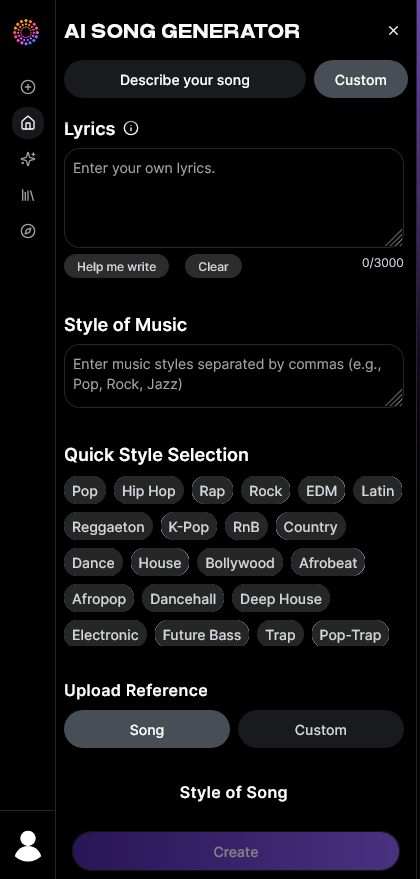
Now that you understand how multilingual optimization influences music discovery, here is how to create it instantly using Soundverse.
The Soundverse AI Song Generator allows you to turn lyrics or descriptive prompts into complete multilingual songs. Its multi-stage pipeline handles lyrics interpretation, melody generation, arrangement, and mixing with AI vocals and instrumental backing.
Soundverse supports multilingual content creation in 10+ languages, including English, Spanish, Hindi, Japanese, Korean, and French, ensuring seamless cross-language discoverability.
Key Capabilities:
- Describe Your Song mode: Enter prompt-based ideas in any language.
- Custom mode: Input full multilingual lyrics and configure generation settings.
- Reference Audio Support: Upload a vocal or instrumental sample to replicate multilingual phrasing.
- Quick Style Selection: Choose from Pop, EDM, Rock, and other universal genres for language-neutral resonance.
Primary Use Cases: Songwriting demos, vocal prototyping, global content creation, and personalized cross-cultural music experiences.
For creators looking to penetrate diverse markets, Soundverse integrates multilingual optimization natively. Combined with Soundverse Trace and The Ethical AI Music Framework, it ensures verified attribution, dataset transparency, and responsible multilingual expansion.
Explore examples and creative possibilities in related guides such as How to Create EDM with Soundverse AI or How to Make Good Rap Lyrics, which showcase genre-specific multilingual enhancement.
Start Creating Global AI Music Today
Leverage Soundverse’s advanced AI tools to produce music that resonates across languages and cultures, optimizing for international algorithms and audiences. Experience the future of music discovery with intelligent creation made easy.
Related Articles
- How AI-Generated Music Is Transforming the Music Industry: Explore how AI composition tools are redefining creativity and reshaping the global music business.
- The Role of AI Music in Film and Television: Discover how AI-generated soundtracks and compositions are revolutionizing media production worldwide.
- AI Music Generator and Human Composers: A Future Together: Learn how collaboration between AI tools and human artists is shaping innovative music creation for the future.
- AI Music in the USA: Understand how AI-powered music platforms are influencing listener habits and creative trends in the United States.
Here's how to make AI Music with Soundverse
Video Guide
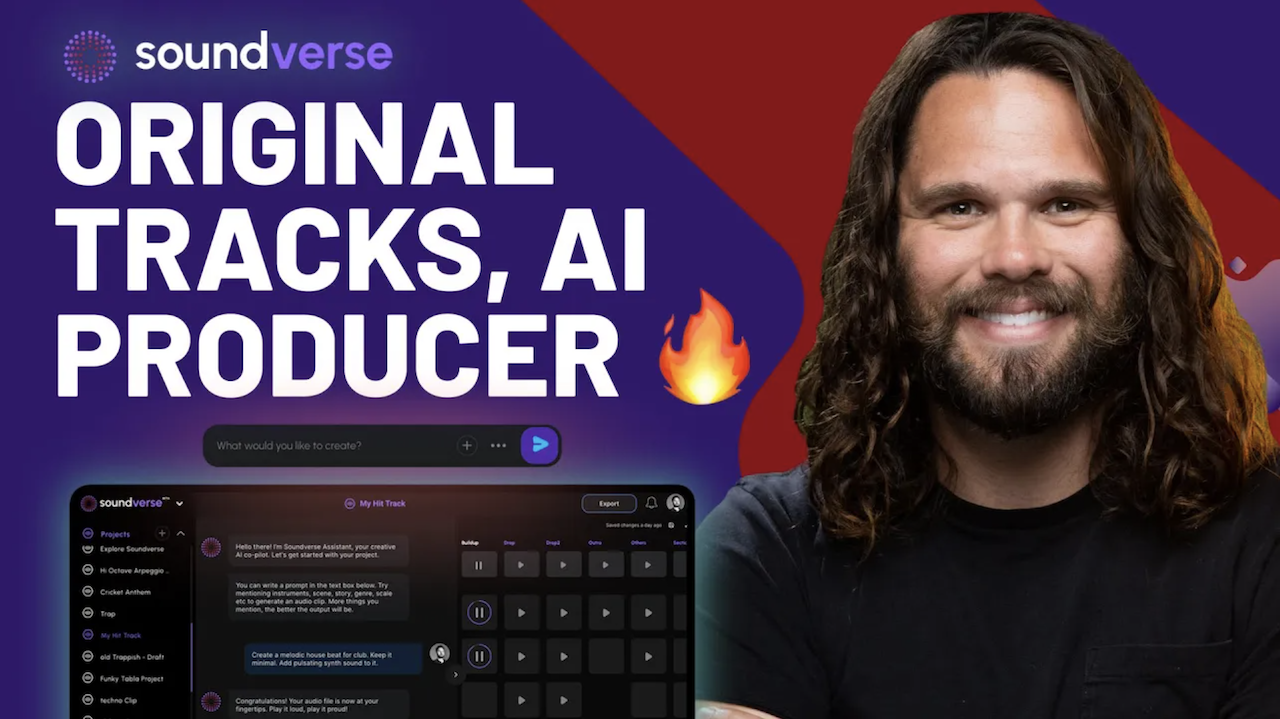
Here’s another long walkthrough of how to use Soundverse AI.
Text Guide
- To know more about AI Magic Tools, check here.
- To know more about Soundverse Assistant, check here.
- To know more about Arrangement Studio, check here.
Soundverse is an AI Assistant that allows content creators and music makers to create original content in a flash using Generative AI. With the help of Soundverse Assistant and AI Magic Tools, our users get an unfair advantage over other creators to create audio and music content quickly, easily and cheaply. Soundverse Assistant is your ultimate music companion. You simply speak to the assistant to get your stuff done. The more you speak to it, the more it starts understanding you and your goals. AI Magic Tools help convert your creative dreams into tangible music and audio. Use AI Magic Tools such as text to music, stem separation, or lyrics generation to realise your content dreams faster. Soundverse is here to take music production to the next level. We're not just a digital audio workstation (DAW) competing with Ableton or Logic, we're building a completely new paradigm of easy and conversational content creation.
TikTok: https://www.tiktok.com/@soundverse.ai
Twitter: https://twitter.com/soundverse_ai
Instagram: https://www.instagram.com/soundverse.ai
LinkedIn: https://www.linkedin.com/company/soundverseai
Youtube: https://www.youtube.com/@SoundverseAI
Facebook: https://www.facebook.com/profile.php?id=100095674445607
Join Soundverse for Free and make Viral AI Music

We are constantly building more product experiences. Keep checking our Blog to stay updated about them!