Best AI Music Search Terms to Know in 2026: A Complete Guide
Discover the best AI music search terms and trending keywords shaping music discovery in 2026.
Best AI Music Search Terms
In 2026, the intersection of artificial intelligence and music has evolved from a novelty to a cornerstone of music creation, discovery, and monetization. As digital marketers, artists, and music-tech professionals explore the creative potential of AI, understanding the right AI music search terms has become essential for navigating content visibility and optimizing discovery across platforms.
What is AI music search?
AI music search refers to the process of using artificial intelligence to locate, categorize, and identify songs, sounds, or datasets generated or influenced by machine learning models. In practical terms, it’s how users find relevant AI-generated songs, audio samples, or inspiration within a growing sea of synthetic and hybrid compositions. Unlike traditional search algorithms that rely on keywords or metadata, AI music search leverages audio fingerprinting, natural language models, and deep-scan technologies to match patterns within music data.
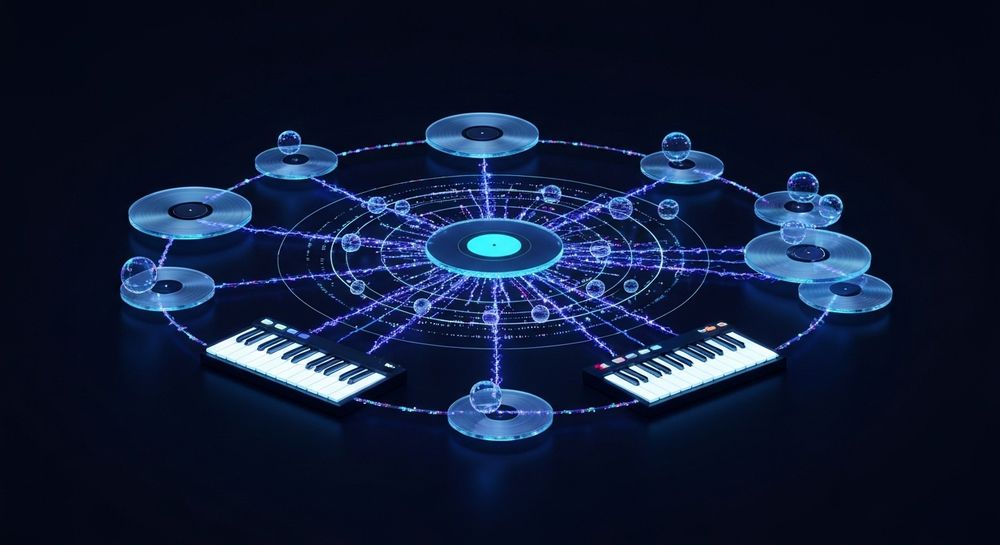
This advancement reflects how artificial intelligence in music isn’t only producing songs—it’s also reshaping how we find and track them. AI music discovery has become a strategic component for streaming services, SEO professionals, and rights managers seeking better content attribution and visibility.
What are the most trending AI music search terms in 2026?
Search data shows that users searching for AI music have become more refined and trend-aware. Instead of generic keywords like “AI music,” people now use long-tail phrases and industry-specific queries. Here are the most relevant categories and terms:
- AI-generated songs – Used by creators and marketers to locate fully or partially AI-produced music samples.
- AI music platforms – A high-volume keyword searched by those comparing tools such as Soundverse, Suno, and Mubert.
- Music discovery tools – Common among marketing professionals seeking AI-assisted curation systems.
- Royalty-free AI music – A keyword emphasizing legal safety and monetization.
- Generative sound design AI – Popular with sound designers and video editors in film and media.
- AI remix detection – Emerging in 2026 for rights holders tracking derivative AI works.
- Ethical AI music frameworks – Used by artists and tech enthusiasts advocating transparency and attribution.
- AI composer credits – A sign of recognition in 2026’s rights-conscious environment.
- Text-to-music generators – Still dominant due to rapid adoption by marketing teams and YouTube creators.
- Deep search audio fingerprinting – A technical yet essential search phrase among music data experts.
For creators using AI generators like Soundverse or exploring alternatives such as Mubert, Soundraw, or Udio, these terms help target the right audiences and tools. Moreover, they improve search discoverability whether you're distributing music through blogs, marketplaces, or streaming platforms.
Why do AI music search terms matter for SEO and digital marketing?
For SEO professionals and digital marketers, the rise of AI-generated content has introduced new metadata challenges. Traditional sound tags often fail to capture the complexity of synthetic music. Now, AI search optimization involves:
- Embedding descriptive AI metadata: Proper labeling allows discovery engines like Soundverse Trace’s deep search to identify origins and influences.
- Mapping queries to content purpose: Example – pairing “AI music for ads” with video templates or social clips.
- Enhancing trust through attribution frameworks: 2026 has seen stricter search ranking for verified AI works with known data lineage.
By integrating searchable and ethically compliant metadata, marketers ensure their campaigns align with transparency-focused platforms such as Soundverse. For an in-depth demo of how this process works, watch our guide on creating Deep House music or tutorial on how to make music.
What are the top AI music trends shaping search behavior in 2026?
Understanding trending AI music search terms requires recognizing the broader ecosystem shaping digital sound production. Several major trends define how creators and platforms index AI content today.
1. The rise of dataset-aware discovery
AI platforms now highlight the importance of traceable datasets. Musicians and producers want to know which source material influenced their generated compositions, making search tools that support attribution more valuable, as seen with AI Music Analysis 2026: Descriptive AI, Auto-Tagging & Benchmark.
2. Regulatory emphasis on rights protection
Countries have adopted new frameworks ensuring artists are credited if their data informs training models. This influences keyword usage—searches for “AI music license tagging” or “ethical dataset sharing” increased dramatically in 2026.
3. Expanded creative search filters
Platforms like Soundverse introduced AI music filtering options (genre, emotion, vibe). Creators now query prompts like “lofi AI music with desert vibes” or “instrumental meditation AI sounds.” For examples of such contextual generation, explore the articles How to Create Healing Meditation Music with Soundverse AI and Generate AI Music with Soundverse Text-to-Music. Watch also our Explore Tab overview for interactive search references.
4. Attribution-based royalty ecosystems
Because artists now earn royalties based on AI usage attribution, search engines prioritize accurate tracking keywords—such as “provenance-based payouts” or “AI royalty trace systems.” This aligns with innovations described in The Best AI Music Generators for 2026 - Curious Refuge and Best AI Music Generators in 2026.
5. Hybrid human-AI composition discovery
Audiences increasingly search for “AI-assisted songwriting” or “human-AI duet compositions.” This reinforces how creators rely on ethical frameworks that combine innovation with artist integrity, explained in How AI-Generated Music Is Transforming the Music Industry.
How can artists and marketers refine their keyword strategies for AI music search?
Optimizing your use of AI music keywords means combining creative insight with data-driven SEO tactics:
- Use semantic variations: Include both technical (e.g., “AI music attribution”) and creative (e.g., “text-to-song AI generator”) terms to capture broader intent.
- Focus on rights-secure discovery: As ethical AI frameworks gain traction, use keywords emphasizing transparency, not just automation.
- Leverage search personalization: Platforms in 2026 index mood, genre, and licensing preferences, so descriptive modifiers (“happy AI music for vlog”) outperform generic tags.
- Update older 2024–2025 keyword mappings: Search algorithms now prioritize 2026’s transparency-first language and compliance markers.
How to make AI music search ethical and accurate with Soundverse Trace
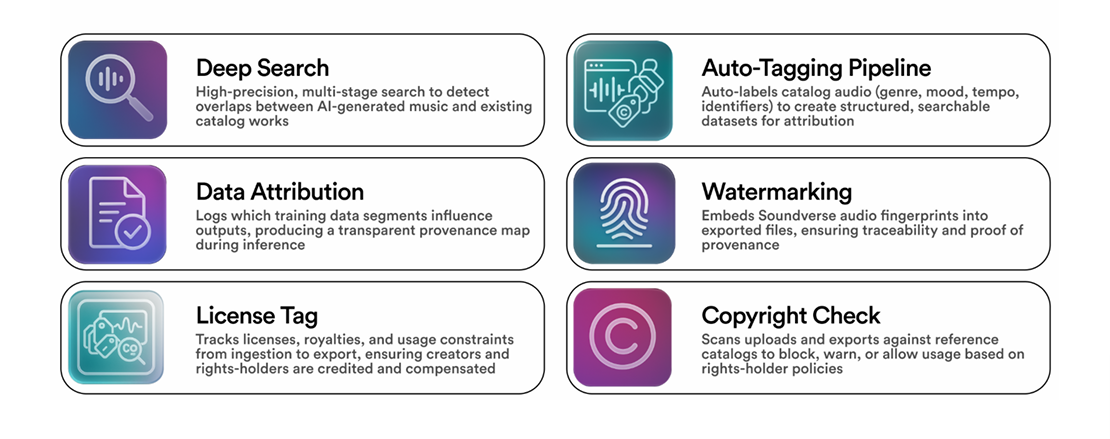
Now that you understand the landscape and significance of AI music search, here is how Soundverse enables deep, sustainable search mechanisms for rights-safe music discovery.
What is Soundverse Trace?
Soundverse Trace is a comprehensive trust layer for AI music. It embeds attribution, deep search, and rights protection across the lifecycle—from dataset creation to final export. This means every generated or ingested audio file within the Soundverse ecosystem carries invisible yet verifiable metadata detailing how it was trained, processed, and distributed.
Core capabilities powering ethical AI music discovery:
- Deep Search: High-precision scanning (1:1, 1:N) detects overlaps and relationships within massive catalogues, ensuring accurate content identification.
- Data Attribution: Tracks which training datasets influenced outputs, allowing transparent provenance reporting.
- Audio Watermarking: Embeds robust, inaudible fingerprints to authenticate ownership without altering sonic quality.
- License Tagging: Preserves rights metadata from ingestion through export, enabling compliant reuse and monetization.
Why it matters in AI search ecosystems
For digital marketers and music platforms, these capabilities ensure every AI music search yields trustworthy results. Attribution-backed audio searches not only help trace influence but also automate licensing workflows—streamlining payouts and takedowns for rights-holders globally. In 2026, this transparency becomes not merely a technical advantage but a competitive necessity.
Soundverse Trace complements programs like the Content Partner Program, an opt-in framework where rights-holders receive recurring royalties based on usage-driven attribution. With the Ethical AI Music Framework, Soundverse reinforces artist consent, dataset clarity, and traceable compensation within all AI-generated outputs.
If you’re exploring the future of AI-assisted composition, studying new royalty paradigms, or analyzing the ethical side of machine-generated creativity, Soundverse Trace serves as the foundation of responsible and SEO-optimized AI music search.
Start Creating AI Music Instantly with Soundverse
Discover how Soundverse’s AI music generator helps you craft unique tracks with simple text prompts. Explore genres, moods, and styles effortlessly—perfect for creators and producers alike.
Related Articles
- Best AI Music Generator: Top Picks and Review — Compare the leading AI music generators and find the best tool for your creative process.
- Generate AI Music with Soundverse Text-to-Music — Learn how to turn your words into full musical compositions using Soundverse’s text-to-music technology.
- How AI-Generated Music is Transforming the Music Industry — Explore how AI-driven sound creation is reshaping production workflows and industry trends.
- AI Music Generator and Human Composers: A Future Together — Understand the emerging harmony between human creativity and machine-powered composition.
Here's how to make AI Music with Soundverse
Video Guide
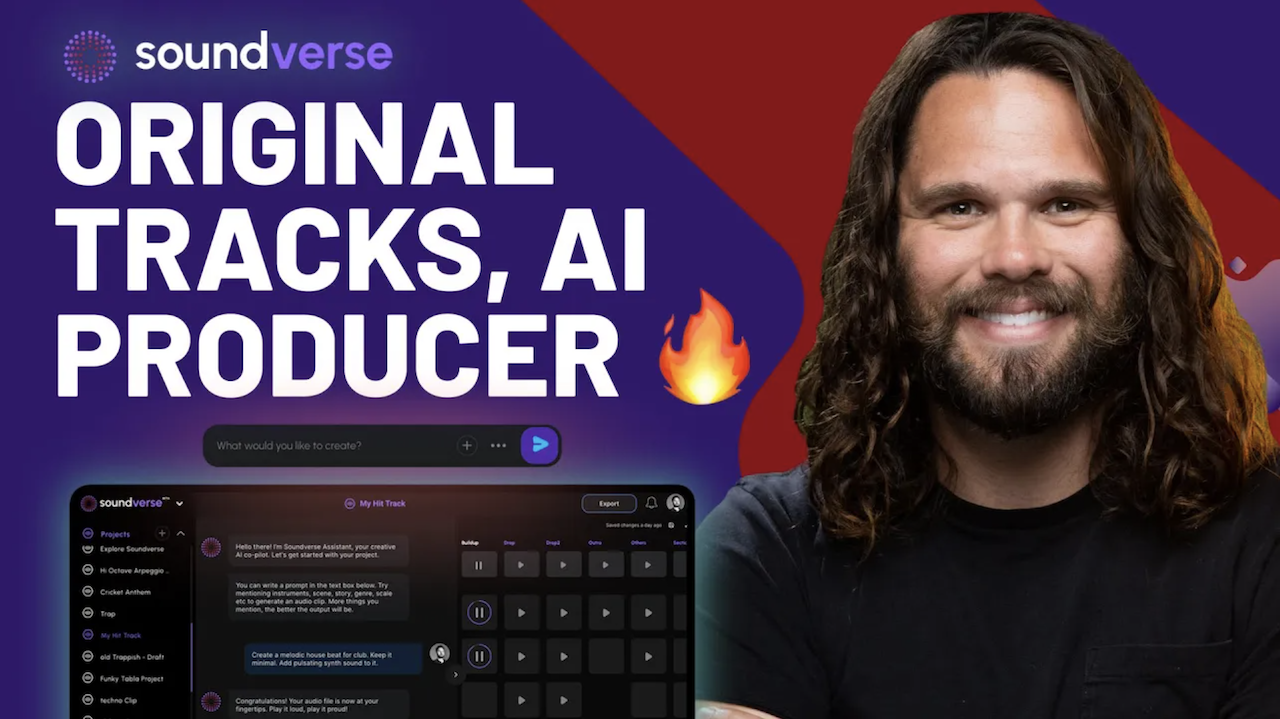
Here’s another long walkthrough of how to use Soundverse AI.
Text Guide
- To know more about AI Magic Tools, check here.
- To know more about Soundverse Assistant, check here.
- To know more about Arrangement Studio, check here.
Soundverse is an AI Assistant that allows content creators and music makers to create original content in a flash using Generative AI. With the help of Soundverse Assistant and AI Magic Tools, our users get an unfair advantage over other creators to create audio and music content quickly, easily and cheaply. Soundverse Assistant is your ultimate music companion. You simply speak to the assistant to get your stuff done. The more you speak to it, the more it starts understanding you and your goals. AI Magic Tools help convert your creative dreams into tangible music and audio. Use AI Magic Tools such as text to music, stem separation, or lyrics generation to realise your content dreams faster. Soundverse is here to take music production to the next level. We're not just a digital audio workstation (DAW) competing with Ableton or Logic, we're building a completely new paradigm of easy and conversational content creation.
TikTok: https://www.tiktok.com/@soundverse.ai
Twitter: https://twitter.com/soundverse_ai
Instagram: https://www.instagram.com/soundverse.ai
LinkedIn: https://www.linkedin.com/company/soundverseai
Youtube: https://www.youtube.com/@SoundverseAI
Facebook: https://www.facebook.com/profile.php?id=100095674445607
Join Soundverse for Free and make Viral AI Music

We are constantly building more product experiences. Keep checking our Blog to stay updated about them!