How Voice Swap Is Used in AI Music Production
Discover how voice swap in AI music production transforms vocals and sound design in 2026.
How Voice Swap Is Used in AI Music Production
Voice swap in AI music production has become one of the most influential innovations driving the evolution of sound in 2026. As music producers and AI developers push boundaries, tools that manipulate vocal identity without losing emotional nuance are redefining what’s creatively possible. From film studios to indie artists on streaming platforms, vocal transformation technology is changing how music is made, shared, and experienced.
What is voice swap in AI music production?
Voice swap refers to a process that replaces the vocal identity in an existing audio track with another voice model—whether that’s a celebrity tone, an animated character, or a custom-designed vocal DNA. Unlike traditional pitch-shifting or modulation, voice swap preserves the singer’s timing, expression, and emotion while changing the sound signature itself. This makes it a powerful asset for music creators who want to experiment with different vocal styles or create highly realistic demos.
In 2026, with the increasing use of AI-generated music, virtual singers, and synthetic sound design, voice swap has gained mainstream traction partly because of rising demand for flexibility in vocal production. Producers now seek to audition multiple voices on a single melody, develop unique vocal brands, or integrate character voices into gaming or storytelling projects—all with minimal technical friction.
Why voice swap has become essential for modern creators
AI-based voice technologies have matured rapidly since 2024. Producers have moved from basic vocal synthesis to neural-based models that can emulate the subtleties of tone and phrasing. Voice swap sits at the crossroads of this transformation, offering a simple yet highly effective workflow for reimagining how voices fit into music.
Here are some reasons why it’s indispensable in 2026:
- Creative flexibility: Musicians can now adapt vocals to fit different genres without needing to re-record or hire new singers.
- Efficiency in production: Time-saving becomes crucial when content creators need multiple vocal versions for different languages, moods, or musical directions.
- Ethical and legal safety: With licensed DNA voice models, AI-generated vocals respect copyright boundaries and artist rights.
- Personalized sound identity: Independent creators can develop and monetize unique voice models, making their sound truly recognizable.
These benefits have made voice swap one of the most requested capabilities among tools in the professional AI production ecosystem, especially alongside platforms offering AI stem separation or AI text-to-music generation like Soundverse.
How voice swap works technically
Voice swap is rooted in advanced deep learning principles. It requires analyzing a source vocal’s patterns—pitch contour, timing, vibrato, breath, and phrasing—and then re-synthesizing it through a target AI voice model. Essentially, the technology decouples performance from identity. That means you could record vocals in your voice and transform them into a celebrity model, or even a completely fictional one, all while keeping your performance’s integrity intact.
The processing is asynchronous: you upload your audio or record a vocal clip, and the AI model then computes and outputs the transformed vocals. This ensures precision and eliminates the need for real-time monitoring or live filtering. For a deeper dive, watch our guide on creating Deep House music and explore how AI integrates into modern vocal workflows.
Use cases: Where voice swap shines in AI music production
Voice swap isn’t just a novelty tool; it’s shaping professional workflows. By 2026, several domains rely heavily on AI vocal transformations:
- Demo production: Producers can generate multiple guide vocals for comparison before inviting human singers to record.
- Character voice creation: Animation, gaming, and interactive storytelling use AI voice swapping to give unique timbres to characters.
- Parody and entertainment content: Creators leveraging platforms like Soundverse use voice swap for fun, ethical remix culture.
- Testing vocal styles: Writers can quickly test how different voice textures affect emotional resonance.
These applications highlight how AI music vocals are not replacing human creativity but enhancing it through new layers of experimentation and personalization.
How to make voice swap in AI music production with Soundverse Voice Swap
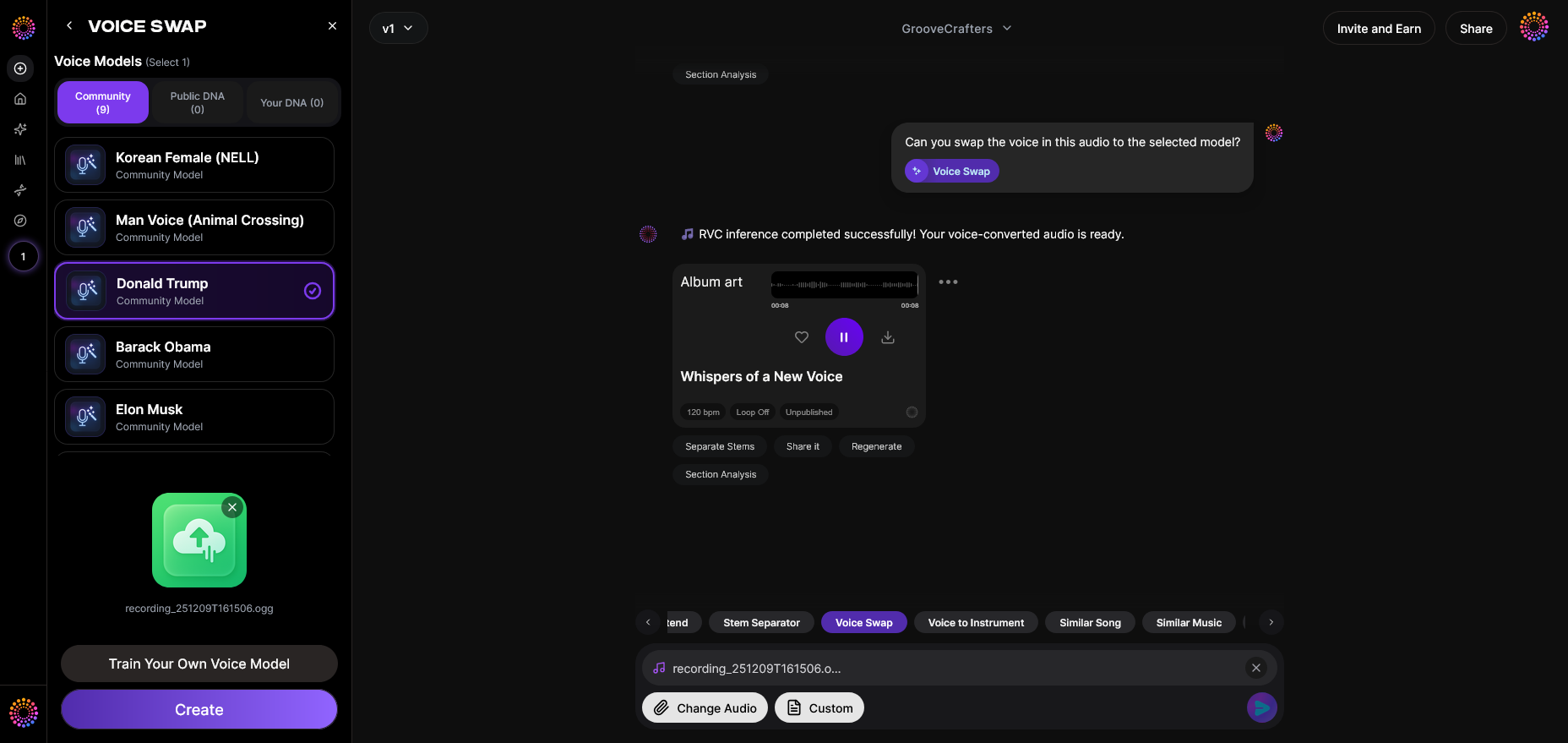
Soundverse’s Voice Swap tool brings all the above concepts into a seamless creative environment designed for professionals. Let’s look at how it works:
Official Description: Voice Swap replaces the vocal identity in an audio track with a different voice model—whether celebrity, character, or custom DNA—while preserving performance nuances, timing, and expression.
Step 1: Feature Overview
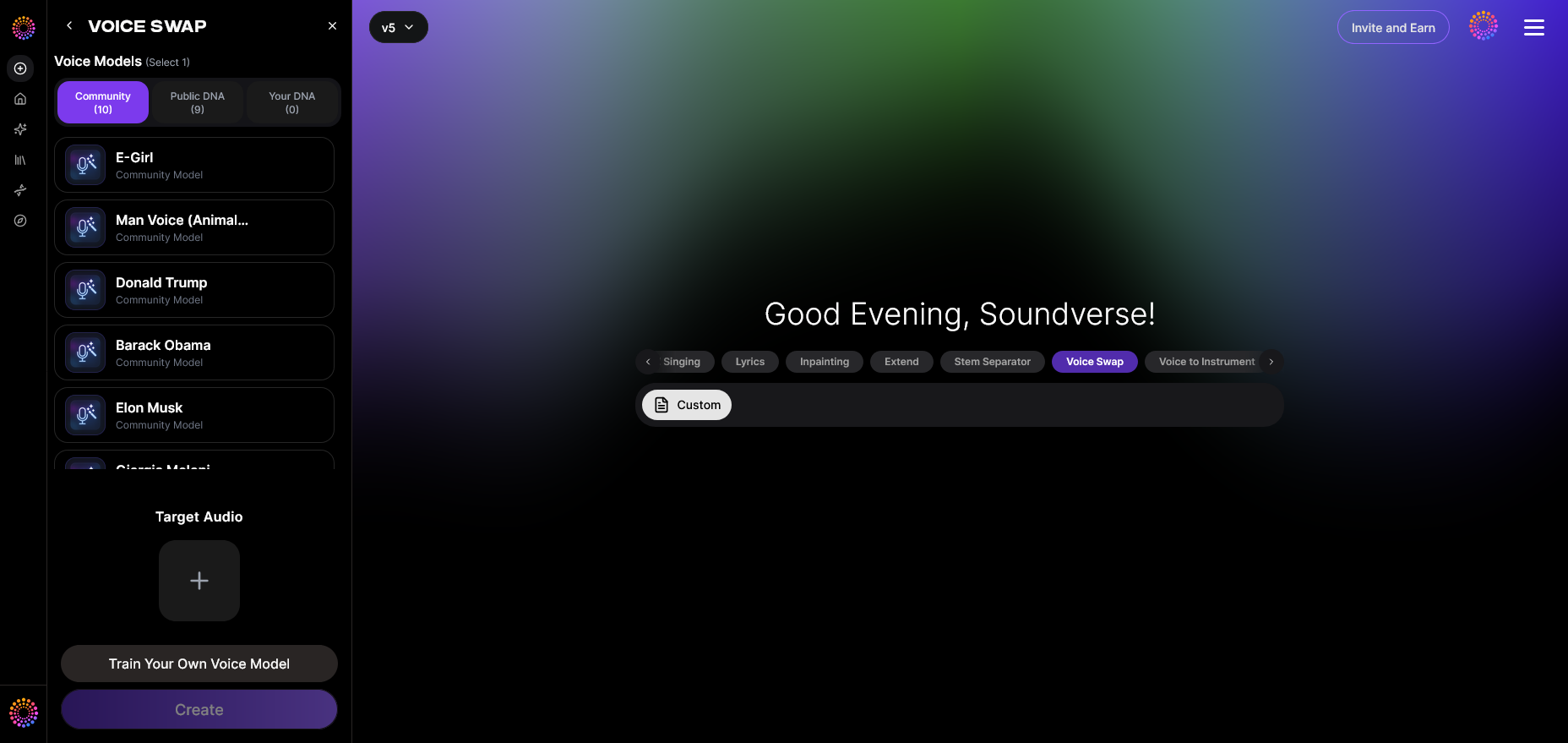
Access the Voice Swap tool from the Soundverse dashboard. It’s part of a suite of AI Magic Tools that focus on making sound manipulation intuitive for creators. For more on Soundverse’s integrated tools, explore how the platform supports advanced workflows through its stem separation AI Magic Tool.
Step 2: Upload Audio

Upload the vocal track that you want to transform. This could be a demo recording, a spoken line for animation, or even a reference guide vocal. The system identifies the performance aspects to preserve.
Step 3: Target Voice Selection
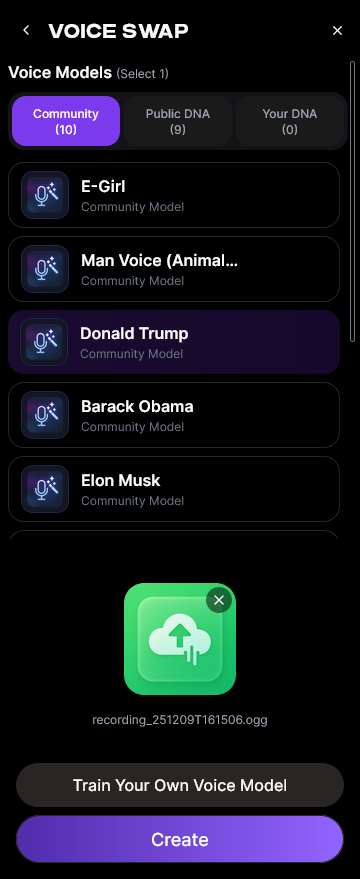
Choose from Community Voices (celebrity or character styles), Public DNA models (artist-trained voices that are ethically licensed), or your own Personal DNA voice that represents your unique vocal identity. If you’re learning how to generate different genre styles, review practical guides like How to Create Country Music with Soundverse AI.
Step 4: Generation
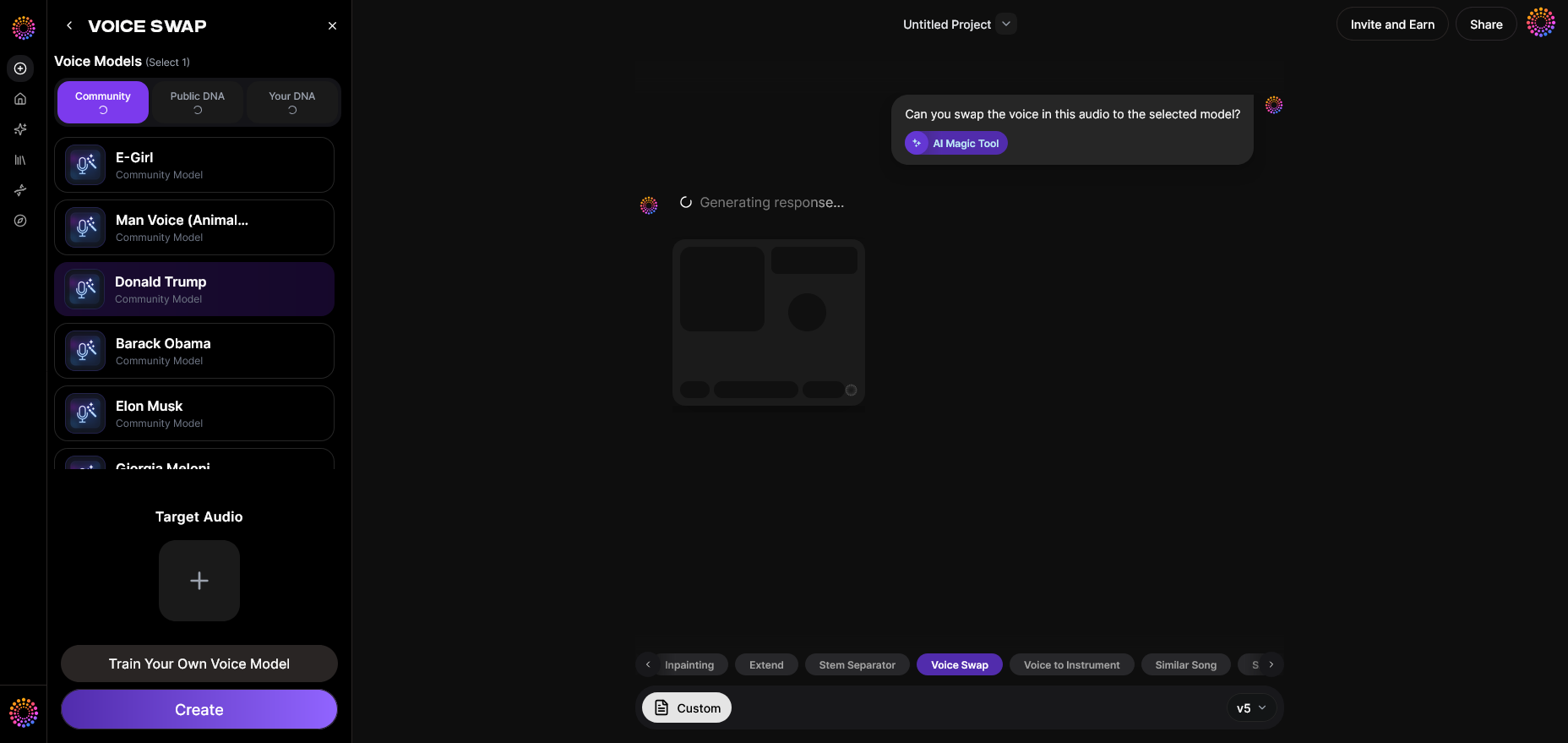
Once you select the target voice, the AI applies the swap transformation. The system re-renders the vocal with the chosen identity while keeping timing and emotion consistent. This phase represents the core of vocal transformation technology.
Step 5: Download Result
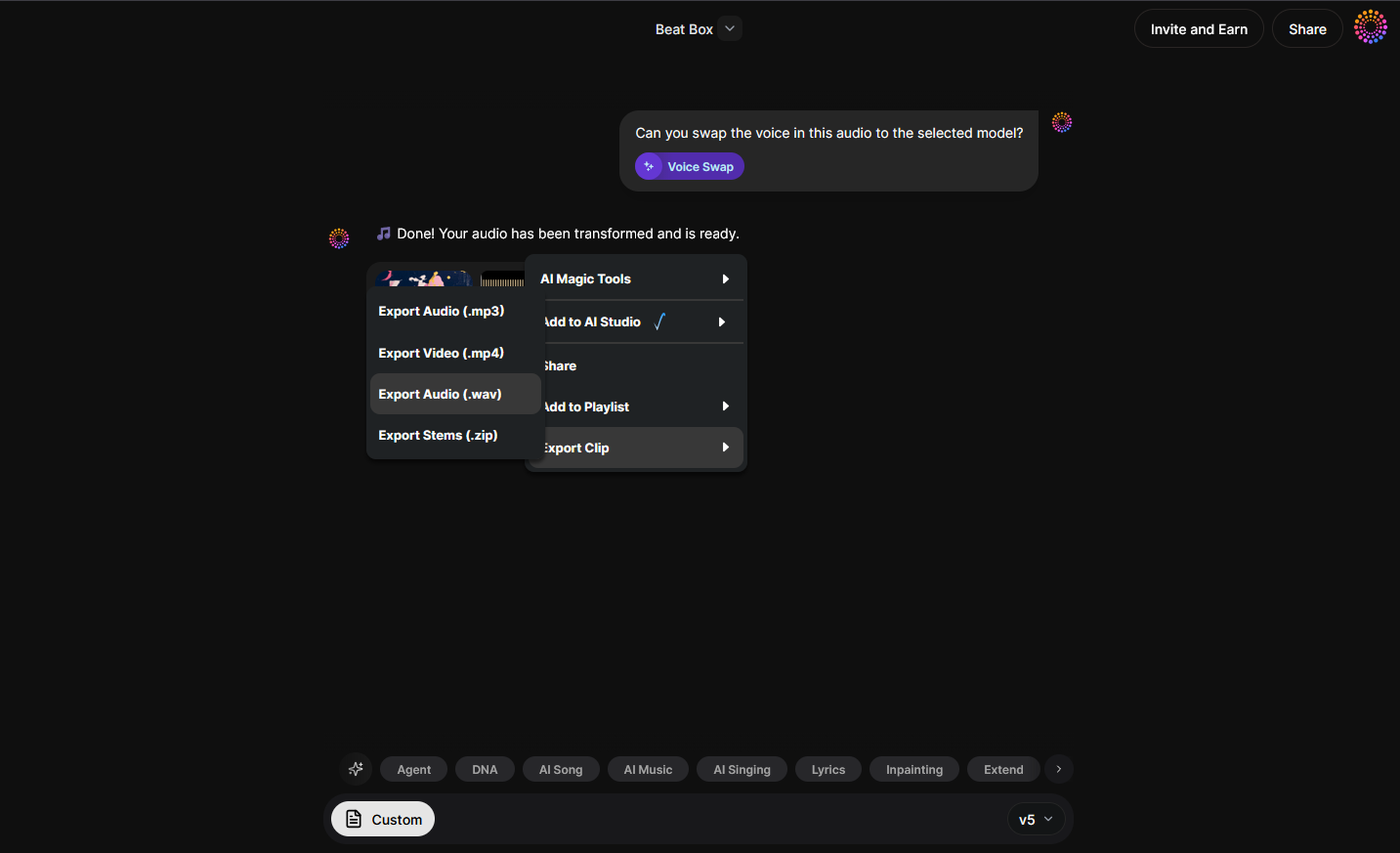
After processing is complete, download the new voice-swapped audio. You can integrate it directly into your mix or continue editing with other creation features such as Soundverse Arrangement Studio.
Pro tips for effective voice swapping
To maximize results:
- Record clean vocals without heavy effects or reverb.
- Use the same pitch range as your target model for natural blending.
- Experiment with Public DNA voices for discovering unique tonal identities.
- Integrate voice swap with Soundverse’s Similar Singing Generator to create perfectly matched harmonies or alternate versions.
- Apply swapped vocals to different genres using prompts featured in AI Music Generation Guides.
Ethical considerations in vocal transformation technology
By 2026, ethics remain central to AI music development. Tools like Soundverse DNA address potential misuse by ensuring artist-trained models are properly licensed and monetized. Instead of replicating artists unlawfully, producers can collaborate safely and even pay royalties through AI model usage.
This ethical foundation is critical as celebrity voice replication becomes more accessible. Transparent model attribution ensures trust between users, creators, and rights holders.
The future of AI music vocals and virtual singers
With virtual singers becoming icons of streaming culture and brand marketing, voice swap contributes to an emerging fusion of AI and artistry. Virtual performers created entirely through AI voice models already perform at digital festivals or provide soundtrack vocals. In 2026, we’re witnessing AI music production evolve into a multidimensional creative ecosystem rather than a novelty act.
Furthermore, AI voice swapping allows global accessibility—letting creators express music across languages and identities. It’s a democratization of voice, comparable to how early DAWs democratized recording.
Bring Your Music Visions to Life with AI Voice Swap
Transform vocals, experiment with new styles, and produce professional-quality sound using Soundverse's powerful AI tools. Start creating, mixing, and swapping voices effortlessly today.
Start Creating Music Free →
Related Articles
- Soundverse Introduces Stem Separation AI Magic Tool: Discover how Soundverse’s cutting-edge stem separation tool lets you isolate vocals and instruments with precision for ultimate creative freedom.
- Soundverse Assistant: Your AI Music Co-Producer: Learn how Soundverse Assistant simplifies music production by automatically selecting the perfect AI tools for your creative goals.
- AI Ranks Soundverse’s AI Singer #1: The Ultimate AI Singing Platform Dominating 2025: Explore how Soundverse’s AI Singer is redefining vocal performance in AI-generated music, leading the industry in realism and creative control.
- How AI-Generated Music Is Transforming the Music Industry: Uncover the impact of AI-generated music and how it’s empowering creators to redefine originality and efficiency in modern production.
Here's how to make AI Music with Soundverse
Video Guide

Here’s another long walkthrough of how to use Soundverse AI.
Text Guide
- To know more about AI Magic Tools, check here.
- To know more about Soundverse Assistant, check here.
- To know more about Arrangement Studio, check here.
Soundverse is an AI Assistant that allows content creators and music makers to create original content in a flash using Generative AI.
With the help of Soundverse Assistant and AI Magic Tools, our users get an unfair advantage over other creators to create audio and music content quickly, easily and cheaply.
Soundverse Assistant is your ultimate music companion. You simply speak to the assistant to get your stuff done. The more you speak to it, the more it starts understanding you and your goals.
AI Magic Tools help convert your creative dreams into tangible music and audio. Use AI Magic Tools such as text to music, stem separation, or lyrics generation to realise your content dreams faster.
Soundverse is here to take music production to the next level. We're not just a digital audio workstation (DAW) competing with Ableton or Logic, we're building a completely new paradigm of easy and conversational content creation.
TikTok: https://www.tiktok.com/@soundverse.ai
Twitter: https://twitter.com/soundverse_ai
Instagram: https://www.instagram.com/soundverse.ai
LinkedIn: https://www.linkedin.com/company/soundverseai
Youtube: https://www.youtube.com/@SoundverseAI
Facebook: https://www.facebook.com/profile.php?id=100095674445607
Join Soundverse for Free and make Viral AI Music

We are constantly building more product experiences. Keep checking our Blog to stay updated about them!