How Voice Cloning Is Used in AI Covers and Adaptations
Discover how voice cloning in AI music powers covers and adaptations in 2026.
How Voice Cloning Is Used in AI Covers and Adaptations
Introduction
Voice cloning in AI music has become one of the most transformative forces in the global music ecosystem by 2026. What started as simple voice filters in 2024 has evolved into advanced models capable of replicating vocal tones, accents, and emotional expression with near-human realism. As AI music covers and adaptations gain popularity across streaming platforms, this technology is reshaping creativity, ethics, and production workflows. From digital artists testing new vocal aesthetics to AI developers training deepfake music systems, everyone in the industry is taking notice.
This guide explores how voice cloning in AI music is being used for creative, educational, and production purposes — and how platforms like Soundverse are leading this revolution with tools like Voice Swap, Similar Singing Generator, and Soundverse DNA.
What is Voice Cloning in AI Music?
Voice cloning in AI music refers to the process of digitally replicating a singer’s vocal timbre and characteristics using machine learning models trained on voice data. The technology analyzes recordings to understand pitch patterns, articulation, tone, and emotion so it can synthesize new audio that mimics the same identity. Unlike early text-to-speech or robotic vocal models, today’s AI systems preserve the natural dynamics of human performance.
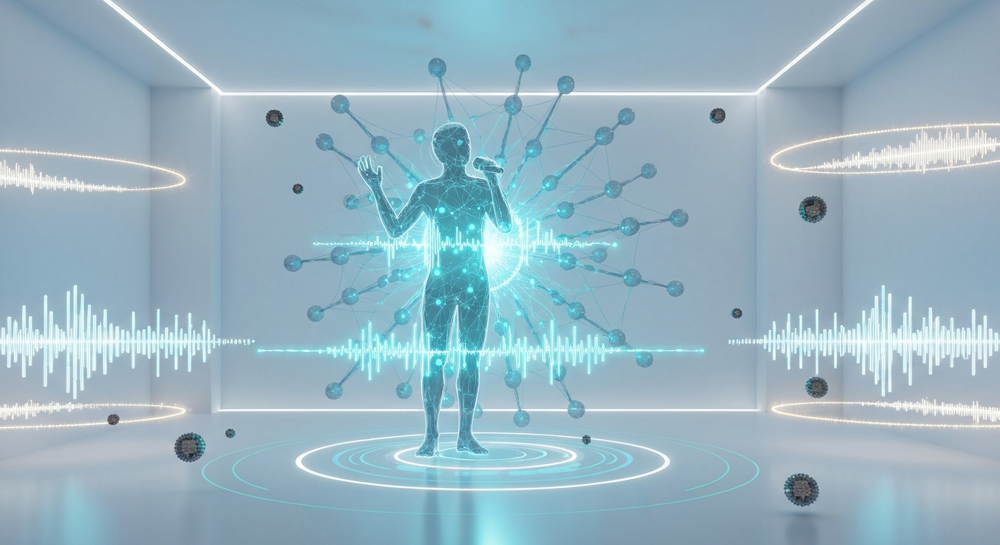
In the context of AI music covers and AI song adaptation, voice cloning is used to reproduce how a particular artist might perform another track. For example, AI can generate a cover of a pop song sung as if by a jazz vocalist, or transform a songwriter's demo into multiple stylistic versions for testing production ideas.
As deepfake music gained media attention in 2025, regulations and ethical standards around voice cloning became essential. In 2026, most leading AI platforms rely on transparent voice licensing or synthetic creations to ensure ethical compliance.
How Are AI Music Covers Created Using Voice Cloning?
AI music covers leverage voice cloning to replicate an artist’s sonic signature on a new song. The system first separates the instrumental and vocal components of the original recording, processes the vocal reference, and then re-synthesizes it using a different voice identity. The result is a highly convincing rendition that feels original while maintaining the structure and timing of the source audio.
Creators typically use these covers for:
- Genre experiments: turning ballads into trap or future bass.
- Parody content: reinterpreting popular tunes through creative vocal swaps.
- Virtual performances: where fans experience classic songs performed by digitalized voices.
Producers and developers who understand how to ethically integrate voice cloning can create innovative hybrid compositions without violating copyright terms. To see practical production workflows, check out our tutorial on how to make music with Soundverse.
What Are the Main Techniques Behind AI Voice Synthesis?
AI voice synthesis relies on deep neural networks trained to model the acoustic patterns of speech and singing. The three most common technical approaches include:
- Voice-to-Voice Conversion: transforming one recorded voice into another while retaining rhythm, dynamics, and phrasing.
- Text-to-Speech (TTS) Singing Models: generating synthetic vocals from lyrics and melody inputs using timbre-controlled models.
- Personal DNA Systems: allowing individual artists to train AI models on their licensed material, making the system capable of replicating their styles safely.
These methods have advanced drastically in the past two years, enabling extremely natural-sounding AI voices that maintain emotional expressiveness — something once thought impossible in purely synthetic performances.
To learn how voice cloning integrates into wider AI production, check out related insights on AI music trends and industry transformations and AI music generators that shape creative workflows.
For a deeper dive, watch our Soundverse Tutorial Series - 8. "Explore" Tab.
What Are AI Song Adaptations and How Do They Work?
AI song adaptation is the process of tailoring songs for different contexts, genres, or target audiences using artificial intelligence. Unlike direct covers, adaptations involve modifying key attributes such as tempo, instrumentation, emotional tone, or vocal delivery style. Voice cloning enhances these adaptations by ensuring the vocal performance fits seamlessly with each arrangement.
For instance, a producer might adapt a pop track for a cinematic soundtrack by altering its speed and using a cloned voice model trained for ambient or orchestral tones. Similarly, digital creators can use synthetic vocals to localize songs for different languages or cultural markets.
In professional studio workflows, AI song adaptation assists with demo production, remixing, and brand identity testing without requiring multiple vocalists. This efficiency has made it a top trend in music industry innovation in 2026.
What Are the Ethical Implications of Deepfake Music?
Deepfake music — a term encompassing AI-generated voices mimicking real performers — remains controversial. On one hand, it demonstrates technological brilliance; on the other, it raises ethical questions regarding consent and intellectual property.
By 2026, regulations and industry standards focus on three key principles:
- Consent: using voice models only with permission from the original artist or through licensed datasets.
- Disclosure: labeling cloned or synthetic performances clearly when published.
- Compensation: ensuring fair revenue distribution when an artist's identity contributes to monetized outcomes.
AI developers have adopted transparent training pipelines to prevent misuse. Platforms like Soundverse incorporate safeguards, favoring ethically trained voice DNA rather than scraping unlicensed data — setting a quality benchmark for others to follow. Explore safe AI cloning practices for a practical viewpoint.
How to Make AI Covers and Adaptations with Soundverse Voice Swap
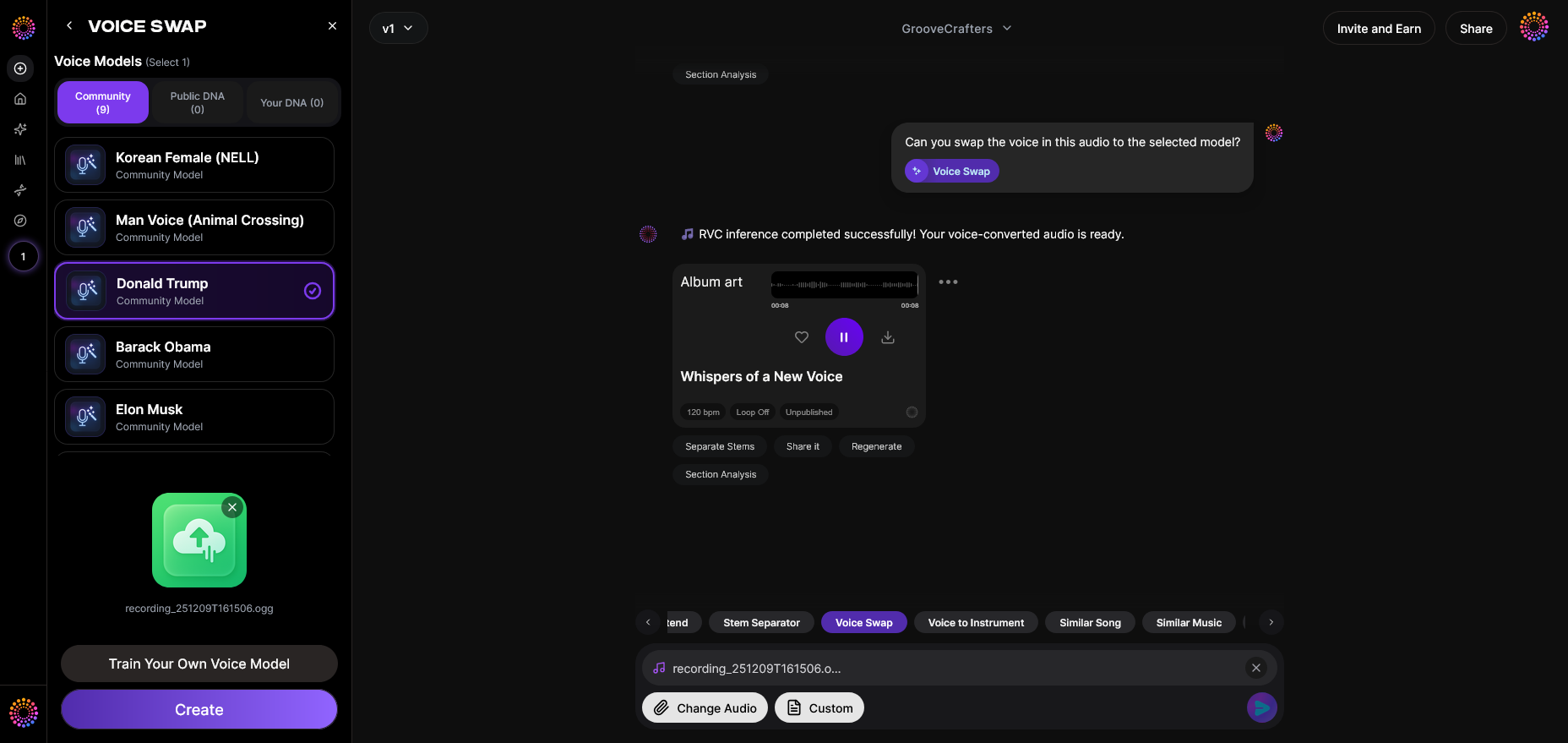
Soundverse’s Voice Swap tool stands out as an advanced and ethically sound way to explore voice cloning in AI music. It replaces the vocal identity in any uploaded track with a different voice model — celebrity, character, or custom DNA — while preserving the performance’s expressive detail and timing.
Key Capabilities of Voice Swap:
- Community Voices: a library of creative, stylized voice models for diverse projects.
- Voice-to-Voice Conversion: transforming recorded performances into alternate vocal identities.
- Public and Personal DNA: supporting both open voice banks and private, artist-owned datasets for ethical production.
Core Use Cases:
- Creating guide vocals for demos or songwriting prototypes.
- Producing character voices for animation, gaming, and film.
- Generating parody or entertainment content within legal limits.
- Experimenting with stylistic variations on existing recordings.
Soundverse processes audio asynchronously — meaning users upload or record their input first, and the system then performs the voice swap transformation. This ensures consistent quality without requiring real-time preview or live microphone filtering.
To expand creative possibilities, Soundverse also offers the Similar Singing Generator, which generates new performances that mimic the emotional and tonal delivery of your target reference, and Soundverse DNA, which provides licensed, royalty-safe training data for artists who wish to monetize their authentic vocal style.
Watch our step-by-step Soundverse Deep House tutorial to see these systems in action.
Learn more about AI-based music creation with tools like Soundverse by exploring articles such as Generating AI music with Soundverse Text-to-Music or How to Create Jazz Music with Soundverse AI.
Why 2026 Is the Year of Synthetic Vocals and AI Collaboration
The growing realism of synthetic vocals has shifted public opinion from skepticism to fascination. In 2026, hybrid projects featuring human-AI collaboration dominate playlists. Vocalists use cloned tones to enhance range or create experimental layers, while producers design entirely new characters through synthetic expression.
Brands have also entered the space, commissioning virtual ambassadors with uniquely cloned voices to narrate ads or perform jingles. The boundary between creator and instrument is dissolving — and voice cloning in AI music sits at the heart of that transformation.
Discover more about AI voice cloning tools and creative uses.
Start Creating with AI-Powered Voice Cloning Today
Bring your musical ideas to life with Soundverse’s advanced AI tools. Clone voices, adapt songs, and produce professional-grade music effortlessly, whether you’re a creator, producer, or hobbyist.
Get Started Free
Related Articles
- Soundverse Introduces Stem Separation AI Magic Tool — Learn how Soundverse’s new AI Magic Tool lets creators isolate and remix stems for cleaner, more versatile production.
- AI Music Generator and Human Composers: A Future Together — Explore how AI and human creativity can harmoniously coexist to define the next wave of music composition.
- How an AI Music Generator Inspires Creative Fusion — Discover how AI tools inspire unique genre-blending and creative experimentation in music production.
- Soundverse Assistant: Your AI Music Co-Producer — Meet Soundverse Assistant, the AI collaborator that helps you refine mixes, structure arrangements, and boost your creativity.
Here's how to make AI Music with Soundverse
Video Guide

Here’s another long walkthrough of how to use Soundverse AI.
Text Guide
- To know more about AI Magic Tools, check here.
- To know more about Soundverse Assistant, check here.
- To know more about Arrangement Studio, check here.
Soundverse is an AI Assistant that allows content creators and music makers to create original content in a flash using Generative AI.
With the help of Soundverse Assistant and AI Magic Tools, our users get an unfair advantage over other creators to create audio and music content quickly, easily and cheaply.
Soundverse Assistant is your ultimate music companion. You simply speak to the assistant to get your stuff done. The more you speak to it, the more it starts understanding you and your goals.
AI Magic Tools help convert your creative dreams into tangible music and audio. Use AI Magic Tools such as text to music, stem separation, or lyrics generation to realise your content dreams faster.
Soundverse is here to take music production to the next level. We're not just a digital audio workstation (DAW) competing with Ableton or Logic, we're building a completely new paradigm of easy and conversational content creation.
TikTok: https://www.tiktok.com/@soundverse.ai
Twitter: https://twitter.com/soundverse_ai
Instagram: https://www.instagram.com/soundverse.ai
LinkedIn: https://www.linkedin.com/company/soundverseai
Youtube: https://www.youtube.com/@SoundverseAI
Facebook: https://www.facebook.com/profile.php?id=100095674445607
Join Soundverse for Free and make Viral AI Music

We are constantly building more product experiences. Keep checking our Blog to stay updated about them!