How to Prepare Your Music for Grammy Consideration: The Complete 2026 Grammy Submission Guide
Learn how to prepare your music for Grammy consideration and meet eligibility requirements in 2026.
How to Prepare Your Music for Grammy Consideration
Preparing your music for Grammy consideration in 2026 requires more than talent and great production—it demands strategy, timing, and compliance with Grammy eligibility requirements. As the music industry evolves, independent musicians and producers are increasingly taking control of their Grammy entries, leveraging technology and ethical frameworks to ensure their submissions meet professional standards.
In this comprehensive Grammy submission guide, we’ll walk through everything you need to know for the 2026 Grammy Awards—from verifying eligibility and crafting standout entries to safeguarding your rights with Soundverse Trace.
How to make your Grammy submission prep easier with Soundverse Trace
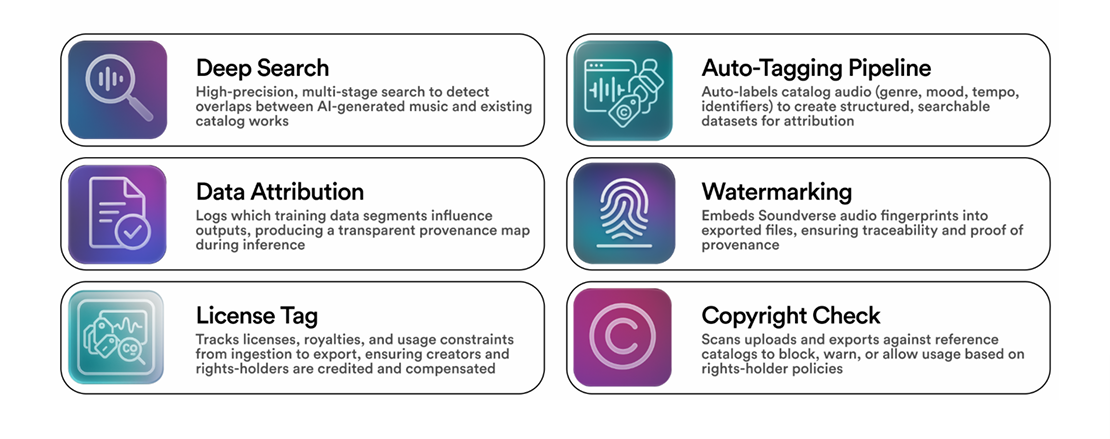

Before diving into the official Grammy nomination process, it’s crucial to secure your music’s integrity. This is where Soundverse Trace becomes an essential ally for modern creators. Soundverse Trace is a comprehensive trust layer for AI music that embeds attribution, deep search, and rights protection across the entire music lifecycle—from dataset creation to the final export.
Its deep search capability performs precise 1:1 and 1:N scans to detect potential overlapping samples or AI-generated audio fragments that could raise copyright concerns. The data attribution module transparently logs which datasets influenced your tracks, ensuring full disclosure and compliance with Grammy standards around authorship and originality.
Soundverse Trace also employs audio watermarking, embedding inaudible fingerprints into your music to verify provenance. Finally, license tagging preserves rights metadata from ingestion to export, helping independent creators track catalog usage, automate royalty payouts, and protect their submissions from misuse.
For musicians developing Grammy-worthy projects, Soundverse Trace ensures their creative work maintains ethical and legal integrity, aligning perfectly with the Recording Academy's growing emphasis on attribution transparency.
Step 1: Understand Grammy Eligibility Requirements
Grammy eligibility requirements define who can submit and which works qualify. To be eligible for the 2026 Grammy Awards, your music must have been commercially released between October 1, 2025, and September 30, 2026. The release must be widely accessible through recognized distribution platforms (like streaming services, physical sales, or digital downloads).
Ensure that your recording meets technical and artistic standards expected of professional releases. Masters must be properly mixed and mastered, with metadata and ISRC codes accurately attached. If your piece involves artificial intelligence generation, proof of human authorship and creative control is now required under updated Recording Academy AI guidelines.
This shift reflects trends discussed in AI music in the USA, where ethical frameworks and attribution verification are becoming decisive eligibility factors.
According to the 68th Grammy Awards Rule & Guidelines and the Recording Academy entry process overview, following these eligibility parameters is crucial before submission.
Step 2: Register Your Work and Rights
Before submission, register your music with your country’s copyright office and performing rights organization (PRO) such as ASCAP, BMI, or SOCAN. This ensures official recognition of authorship and facilitates royalty tracking.
To strengthen rights attribution, Soundverse Trace helps verify provenance through fingerprint-based watermarking and data tagging. Such verification steps can prevent disputes during Grammy review processes that increasingly scrutinize AI-assisted tracks. Leveraging Trace makes it easier for independent artists to protect their catalog while complying with Grammy submission integrity metrics.
For practical workflow support, you can also check the Soundverse Tutorial Series - 9. How to Make Music for step-by-step recording and production guidance.
Step 3: Choose the Correct Grammy Categories
The Grammy Awards feature dozens of categories covering genres, formats, and emerging fields. Your selection should reflect both the core sound and cultural impact of your project.
For example, if you’ve developed a fusion track combining jazz and electronic influences, check out How to Create Jazz Music with Soundverse AI to understand stylistic structuring. For EDM projects, refer to How to Create EDM with Soundverse AI, which explores energetic arrangement patterns.
Identify whether your submission fits a performance-based, production-based, or songwriting-based award. Misclassification can reduce your chances of nomination, as each category has distinct evaluation criteria.
Step 4: Prepare Submission Materials
Your Grammy submission routine must include the official track version, artist statement, credits, liner notes, and proof of release. Pay attention to how you represent creative contributions—especially when collaborating with AI tools or co-producers.
Soundverse Trace supports data attribution, logging which training datasets or algorithmic influences shaped any AI-generated elements. This transparency ensures compliance with the Grammy’s 2026 standards on authenticity.
Include accurate metadata in all files. The metadata must list artists, composers, producers, and label information. If your label uses AI optimization tools, consider exploring Soundverse Assistant: Your AI Music Co-Producer for workflow automation that maintains proper crediting and documentation.
Step 5: Submit Before the Deadline
Deadlines matter. The submission window for the 2026 Grammys typically opens in mid-July and closes by September 30, 2026. Late entries are not accepted, so schedule your release carefully.
When you submit, ensure all supplementary materials—including songwriting credits, lyric sheets (if applicable), and compositional explanations—are uploaded. The Grammy submission portal validates your work against eligibility and authenticity requirements.
As mentioned in 2026 Grammy Submissions: For Your Consideration Full List, nominees will be announced on November 7, 2025, and the ceremony will occur on February 1, 2026.
Step 6: Promote Ethically and Build Industry Recognition
Winning or even being nominated requires visibility. Promote your track ethically through press releases, live performances, and streaming campaigns. Avoid inflated claims or unverified AI origin stories—Grammy panels value transparency.
As outlined in How AI-generated music is transforming the music industry, artist credibility now depends on proven authenticity. Using Soundverse Trace demonstrates commitment to ethical creation and precise rights tracking—two pillars that increasingly influence Grammy judges in 2026.
For inspiration and practical techniques, watch our Deep House Music tutorial or the Explore Tab walkthrough on Soundverse’s YouTube channel.
Pro Tips for Successful Grammy Submission Prep
- Collaborate Strategically: Pair your creative vision with experienced engineers familiar with Grammy-level production and mastering workflows.
- Document Creative Control: Keep thorough logs showing which portions of your music were human-created versus AI-assisted.
- Optimize Timing: Align your release calendar with Grammy eligibility windows for maximum visibility.
- Network with Recording Academy Members: Relationships matter—engage with fellow musicians, producers, and voters.
- Leverage Ethical AI Frameworks: Integrate Soundverse’s Ethical AI Music Framework for end-to-end transparency and consent-based data usage.
Why Compliance and Attribution Will Define Grammy Success in 2026
In 2026, AI involvement in music production has become mainstream. However, Grammy voters increasingly value attribution clarity. Works processed through transparent AI systems like Soundverse Trace offer verifiable originality—helping independent artists compete fairly.
Grammy panels now expect creators to declare AI influence and provide attribution evidence. With Soundverse Trace’s license tagging and watermarking features, you can instantly verify which datasets shaped your tracks, minimizing risk during review.
By combining these tools with the Content Partner Program, rights-holders can also earn recurring royalties tied to AI dataset usage—a synergistic benefit for musicians submitting high-quality works.
Submit Your Best Work with the Right Tools
Level up your Grammy submission strategy by perfecting your tracks with AI-powered music creation and mastering tools. Start your journey toward award-ready music today.
Start Creating with Soundverse
Related Articles
- How AI-Generated Music Is Transforming the Music Industry: Discover how AI tools are reshaping music production and helping artists reach new creative heights.
- The Role of AI Music in Film and Television: Explore how artificial intelligence is revolutionizing soundtracks and background scores for visual media.
- Navigating the World of Royalty-Free and Copyright-Free Music Using Soundverse AI: Learn how to find compliant music for your projects using AI tools that ensure worry-free licensing.
- The Benefits of Composing with AI Music Generator: Uncover how modern artists use AI-powered generators to save time and boost creativity in composition.
Here's how to make AI Music with Soundverse
Video Guide

Here’s another long walkthrough of how to use Soundverse AI.
Text Guide
- To know more about AI Magic Tools, check here.
- To know more about Soundverse Assistant, check here.
- To know more about Arrangement Studio, check here.
Soundverse is an AI Assistant that allows content creators and music makers to create original content in a flash using Generative AI. With the help of Soundverse Assistant and AI Magic Tools, our users get an unfair advantage over other creators to create audio and music content quickly, easily and cheaply. Soundverse Assistant is your ultimate music companion. You simply speak to the assistant to get your stuff done. The more you speak to it, the more it starts understanding you and your goals. AI Magic Tools help convert your creative dreams into tangible music and audio. Use AI Magic Tools such as text to music, stem separation, or lyrics generation to realise your content dreams faster. Soundverse is here to take music production to the next level. We're not just a digital audio workstation (DAW) competing with Ableton or Logic, we're building a completely new paradigm of easy and conversational content creation.
TikTok: https://www.tiktok.com/@soundverse.ai
Twitter: https://twitter.com/soundverse_ai
Instagram: https://www.instagram.com/soundverse.ai
LinkedIn: https://www.linkedin.com/company/soundverseai
Youtube: https://www.youtube.com/@SoundverseAI
Facebook: https://www.facebook.com/profile.php?id=100095674445607
Join Soundverse for Free and make Viral AI Music

We are constantly building more product experiences. Keep checking our Blog to stay updated about them!
Image Steps: []