How to Create AI Songs That Respect Cultural Nuance
Learn how to create AI songs that respect cultural nuance using ethical AI music creation techniques in 2026.
How to Create AI Songs That Respect Cultural Nuance
Introduction
In 2026, AI music creation has evolved from a novel experiment into an essential part of modern production. But as algorithms gain influence over sound and story, questions of cultural sensitivity and respect have become more urgent than ever. Musicians, producers, AI developers, and ethicists are asking: How do we ensure that AI-generated songs don’t appropriate, misrepresent, or flatten cultural expression?
Creating AI songs that respect cultural nuance is not just about technical precision—it’s about ethics, empathy, and mindful innovation. While past years saw debates around AI models trained on unlicensed data, 2026 signals a turning point toward more transparent and responsible music AI tools.
In this guide, we’ll explore how to develop culturally-aware AI-generated songs, why ethical AI music frameworks matter, and how Soundverse’s Ethical AI Music Framework enables creators to balance technological innovation with artistic integrity.
How to make AI music creation culturally sensitive with Soundverse The Ethical AI Music Framework
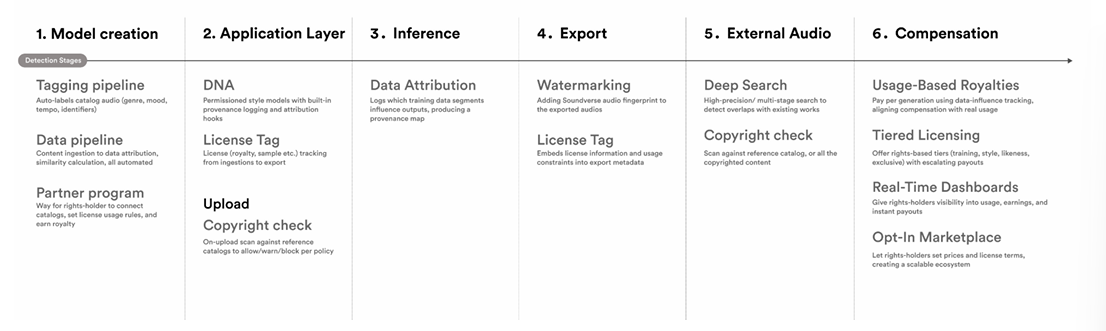

Soundverse’s Ethical AI Music Framework provides a foundation for building respectful and sustainable AI-driven music systems. Rather than treating cultural sounds as data points, it embeds accountability at every stage of the creation pipeline.
Understanding the Framework
The Ethical AI Music Framework is a comprehensive, end-to-end infrastructure that bridges the gap between innovation and artist integrity. Unlike black-box AI models, it uses a six-stage pipeline focused on consent, attribution, and recurring compensation:
- Licensed Data Sourcing (No scraping) – AI models are trained exclusively on legally licensed and ethically sourced audio to ensure cultural and artistic consent.
- Permissioned Models (DNA) – Every model is permissioned, using DNA-style identifiers to track creative influence.
- Explainable Inference (Attribution) – Each generated output includes transparent links to contributing styles or artists.
- Traceable Export (Watermarking) – Watermarks ensure that generated tracks can be traced back for verification.
- Deep Search (External Scanning) – AI continuously scans the web to verify originality and prevent infringement.
- Recurring Compensation (Partner Program) – Artists and rights-holders receive usage-based royalties every time their creative DNA is used.
These capabilities transform AI music creation into a responsible collaboration rather than exploitation. For example, a producer generating African-inspired percussion can ensure the rhythms come from licensed, attributed datasets—rewarding the artists who built those sounds.
Soundverse’s broader ecosystem, including Soundverse DNA and the Content Partner Program, reinforces these ethics. DNA ensures models are built on artist-approved material, while the Partner Program compensates contributors when their style directly informs a user’s AI-generated output.
This approach not only strengthens ethical standards but also redefines cultural ownership for the AI era.
Why is cultural sensitivity important in AI music creation?

As AI models synthesize global influences, they risk blurring cultural boundaries in problematic ways. Traditional music often holds deep social, spiritual, and historical meaning—it can’t be replicated without understanding its roots.
For instance, a generative model producing indigenous chants without permission isn’t just an aesthetic issue—it’s an ethical violation. In 2026, as AI-generated songs become central to commercial releases and cross-disciplinary projects, cultural respect is a non-negotiable standard.
Ethical AI music requires creators to:
- Seek contextual understanding of the musical traditions they reference.
- Build datasets with explicit permissions and cultural representation.
- Offer transparency about AI's training material and creative lineage.
These principles prevent cultural flattening while celebrating authentic expression across genres—from Middle Eastern folk scales to Latin percussion frameworks or Asian tonal systems.
What are best practices for culturally aware AI-generated songs?
Creating respectful AI-generated songs involves both technological and human judgment. Here are some actionable guidelines:
- Engage cultural experts early: Collaborate with ethnomusicologists or culture bearers to ensure accurate representation.
- Use licensed datasets: Avoid scraped or unverified data. Ethical sourcing ensures fairness and protection.
- Respect sacred or ceremonial music: Some sound forms are not intended for commercial replication. Understand the distinction.
- Implement transparency layers: Make AI inference explanations accessible to end users, so they know the creative lineage.
- Compensate and credit appropriately: Use systems like Soundverse’s Partner Program to ensure ongoing recognition.
- Test for bias: Regularly evaluate outputs for cultural bias or misrepresentation.
By combining these human-centered practices with advanced frameworks like Soundverse’s, developers and artists can avoid cultural missteps.
How does cross-cultural music creativity thrive with AI?
AI has the potential to bring unprecedented cross-cultural collaboration. Through ethically trained tools, artists can discover synergies across continents—bridging Afrobeats with electronic pop, or traditional Indian ragas with orchestral synth arrangements.
The key lies in mutual respect and consent-based creativity. When AI tools are designed with embedded consent and attribution systems, cultural expression becomes a shared dialogue rather than exploitation. This trend has been rising since 2025, and in 2026 we’re seeing more labels and creators consciously co-develop AI-enabled fusion projects that celebrate diversity responsibly.
You can explore similar discussions in AI music industry trends, where cross-genre collaboration is listed as one of the strongest movements of the year.
How can AI developers ensure ethical AI music design?
For developers building next-generation music generation systems, responsibility starts in the architecture. Ethical AI music development includes:
- Transparent pipelines: Make data sources accessible and traceable.
- Community collaboration: Allow cultural stakeholders to review datasets.
- Attribution and auditing tools: Empower both users and artists to verify where creative inputs come from.
Soundverse’s design philosophy aligns with these principles—embedding traceability through watermarking and deep search verification. These mechanisms ensure any dataset source or inspiration remains properly credited and discoverable.
Moreover, ethical compliance isn’t just moral; it’s strategic. Transparent systems are more likely to gain adoption by professional studios, record labels, and AI researchers. Platforms like Soundverse’s stem separation AI Magic Tool demonstrate how explainable AI models can also enhance creative flexibility without compromising rights.
For a deeper dive, watch our guide on creating Deep House music and explore our tutorial on the Soundverse “Explore” tab to understand how to safely discover and blend diverse sounds.
How musicians can use AI responsibly in 2026
Musicians are at the center of this ethical shift. When generating music with AI, they should consider:
- Choosing platforms that respect artist rights and consent.
- Using ethical AI music tools that ensure proper data attribution.
- Sharing knowledge about responsible usage within creative communities.
Many producers are turning to solutions like Soundverse to guarantee compliance while exploring new sonic territories. For example, creators developing culturally inspired projects can use AI to experiment safely without infringing original works—something older systems failed to ensure.
If you’re interested in how AI can help you craft regionally inspired compositions, check out guides like How to Create Country Music with Soundverse AI and How to Create Jazz Music with Soundverse AI.
For interactive learning, watch Soundverse’s How to Make Music tutorial on YouTube to see practical examples of AI-guided composition.
Why Soundverse leads the future of responsible AI music creation
Soundverse has positioned itself at the forefront of ethical AI music innovation by making transparency a feature—not an afterthought. Its system’s backbone, The Ethical AI Music Framework, ensures everyone from data contributors to end-users participates in a fair, traceable, and culturally aware creative ecosystem.
In contrast to unchecked AI tools, Soundverse’s explainable infrastructure fosters trust between human artists and machine partners. By embedding consent-driven mechanics, traceable exports, and recurring compensation programs, Soundverse is reshaping how the music industry in 2026 views AI collaboration.
If you want to dive deeper into evolving standards for responsible creativity, see AI music generator and human composers: a future together, which explores how co-creation models could define the next decade of music innovation.
Create Music That Honors Every Culture with Soundverse AI
Turn your ideas into songs that celebrate diversity with Soundverse’s advanced AI music creation tools. Craft sounds that respect cultural nuance and authenticity—no musical training required.
Start Creating with AI
Related Articles
- How an AI Music Generator Inspires Creative Fusion: Discover how AI bridges artistic boundaries to create new, culturally inspired soundscapes.
- The Role of AI Music in Film and Television: Explore how AI-generated music enhances storytelling and cultural depth in modern media productions.
- AI Music Generator and Human Composers: A Future Together: Learn how AI music technology complements human creativity, preserving authenticity across genres and cultures.
- AI Music in the USA: Understand how AI music tools are shaping cultural identity and creativity in the American music landscape.
Here's how to make AI Music with Soundverse
Video Guide

Here’s another long walkthrough of how to use Soundverse AI.
Text Guide
- To know more about AI Magic Tools, check here.
- To know more about Soundverse Assistant, check here.
- To know more about Arrangement Studio, check here.
Soundverse is an AI Assistant that allows content creators and music makers to create original content in a flash using Generative AI. With the help of Soundverse Assistant and AI Magic Tools, our users get an unfair advantage over other creators to create audio and music content quickly, easily and cheaply. Soundverse Assistant is your ultimate music companion. You simply speak to the assistant to get your stuff done. The more you speak to it, the more it starts understanding you and your goals. AI Magic Tools help convert your creative dreams into tangible music and audio. Use AI Magic Tools such as text to music, stem separation, or lyrics generation to realise your content dreams faster. Soundverse is here to take music production to the next level. We're not just a digital audio workstation (DAW) competing with Ableton or Logic, we're building a completely new paradigm of easy and conversational content creation.
TikTok: https://www.tiktok.com/@soundverse.ai
Twitter: https://twitter.com/soundverse_ai
Instagram: https://www.instagram.com/soundverse.ai
LinkedIn: https://www.linkedin.com/company/soundverseai
Youtube: https://www.youtube.com/@SoundverseAI
Facebook: https://www.facebook.com/profile.php?id=100095674445607
Join Soundverse for Free and make Viral AI Music
 We are constantly building more product experiences. Keep checking our Blog to stay updated about them!