How Listener Habits Influence AI Music Creation in 2026
Explore how listener behavior and user data shape AI music creation in 2026.
How Listener Habits Influence AI Music Creation
Artificial intelligence has already transformed how music is created, shared, and consumed, but 2026 marks a deeper evolution — the era where listener habits directly influence AI music creation. With streaming platforms collecting ever more refined user data, the feedback loop between audience behavior and generative music models has become essential to producing songs that resonate emotionally and commercially.
Why listener behavior matters in AI music creation
Music listening is no longer a passive act. Each stream, skip, playlist addition, and replay forms a behavioral signal that AI systems interpret to track engagement patterns. When millions of listeners interact with songs daily, this aggregated data forms the foundation for algorithms to learn what musical structures, vocal tones, and emotional progressions work best for specific demographics.
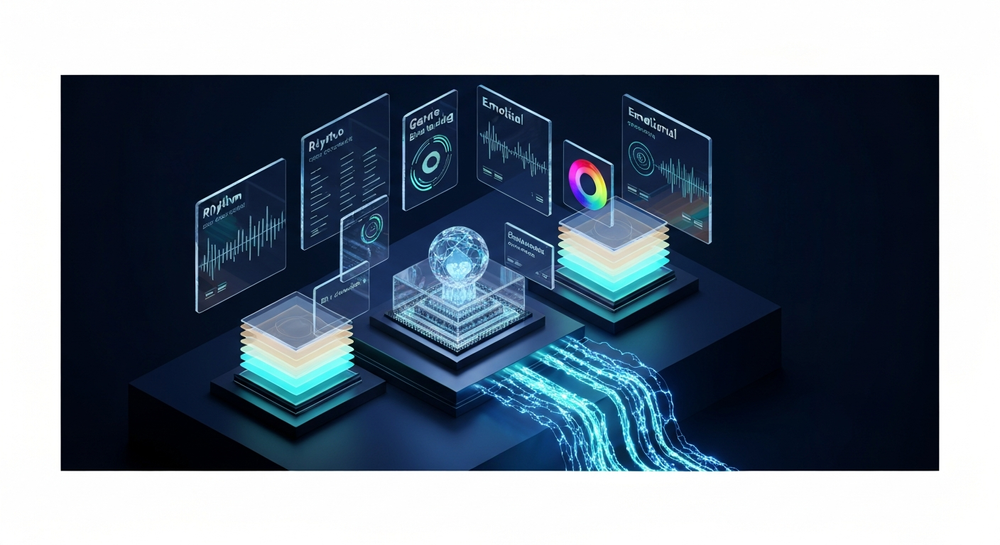
AI music creation today relies heavily on this user behavior analysis, often referred to as behavioral sound mapping. Through data signals like listening duration, preferred instruments, and vibe choices, machine learning models identify what drives emotional response. This feedback becomes the creative DNA for AI-generated tracks.
In 2024 and 2025, platforms mostly used genre-based recommendations. By 2026, personalization has shifted from genre-centric to experience-centric — meaning the AI learns from how users listen, not just what they listen to. This is supported by research showing that nearly every music streaming platform increasingly relies on AI-driven algorithms designed to analyze listening habits.
How user data music defines creative direction
User data music refers to music created or adapted based on listener data. This trend, now foundational in AI music creation, enables algorithms to adapt sonic textures, tempo fluctuations, and lyrical emotions to match real-time trends.

Streaming services and AI platforms now analyze:
- Time-of-day listening patterns – determining what energy level suits morning or late-night audiences.
- Genre blending tendencies – identifying when users shift between styles like lofi, jazz, and EDM within one playlist.
- Mood-specific engagement – using sentiment analysis to infer emotional alignment between user activity and soundscapes.
These datasets enrich model training. They allow developers to design generative engines that reflect actual auditory preferences rather than speculative trends. This sophisticated adaptation ensures that music rendered by AI tools stays culturally relevant. It aligns with findings that in 2026, these systems train themselves using millions of sound samples and real-world listening habits.
For professionals studying this space, the emerging discipline is not only about generating music but understanding why listeners respond to it. Articles like How AI-generated music is transforming the music industry highlight how feedback loops are redefining creativity boundaries. For a deeper dive into practical applications, watch our guide on creating Deep House music.
What behavior analysis means for generative music systems
Behavior analysis goes beyond click metrics. Today, it encompasses biometric feedback, sentiment recognition, and device usage trends. When aggregated ethically, this data helps AI systems emulate human-like emotional intelligence in music composition.
Data-centric models can:
- Adapt rhythmic patterns based on user region and cultural context.
- Modify harmonic progressions depending on listener sentiment profiles.
- Generate branding music that matches user context, such as video themes or ad soundscapes.
This is where behavior analysis meets sound identity — moving from broad personalization to micro-level adaptation. For creators, videos like How to Make Music from the Soundverse Tutorial Series provide an accessible introduction to designing behavior-aware tracks.
Platforms that invest in this approach tend to outperform others in engagement retention. For example, specialized analysis can identify when users skip intros, allowing generative models to create shorter, more immediate hooks.
How streaming trends in 2026 reshape AI music models
In 2026, streaming platforms continue to dominate global music discovery. But instead of curating playlists manually, many rely on adaptive AI trained on past listener actions. This shift means AI-generated tracks are optimized not only for sonic quality but for engagement probability.
Some major trends shaping AI models in 2026 include:
- Short-form resonance – 10–30 second musical hooks optimized for vertical video formats.
- Genre fluidity – models capable of hybrid creation like ambient EDM or jazz-hip-hop blends influenced by listener crossover.
- Sonic identity commerce – personalized brand sounds built through artist-trained DNA models.
- Ethical consumption – growth of copyright-safe generation using licensed data sets.
For those exploring how modern generative models function, related pieces like Soundverse introduces Stem Separation AI Magic Tool and Soundverse Assistant: Your AI music co-producer provide valuable insight into workflow integration. As highlighted by AI Musicians vs. Machines: AI Disruption in the Music Industry, platform posture and creator comfort play critical roles in defining the industry's evolution.
How listener-driven data supports ethical innovation
While personalization unlocks creative potential, it also raises questions about artist rights and data consent. Unchecked behavioral tracking risks compromising creative authenticity. Ethical frameworks — such as transparent data licensing — have become central to responsible AI music creation.
That’s why modern systems emphasize licensed training datasets, giving artists credit and compensation when their styles influence new compositions. This aligns with public preference: listeners now expect the music they enjoy to be ethically sourced. Studies show that 60% of 18- to 29-year-olds listen to AI music for an average of three hours weekly, reflecting generational openness to data-driven yet ethical music experiences.
How Soundverse DNA empowers listener-influenced creation
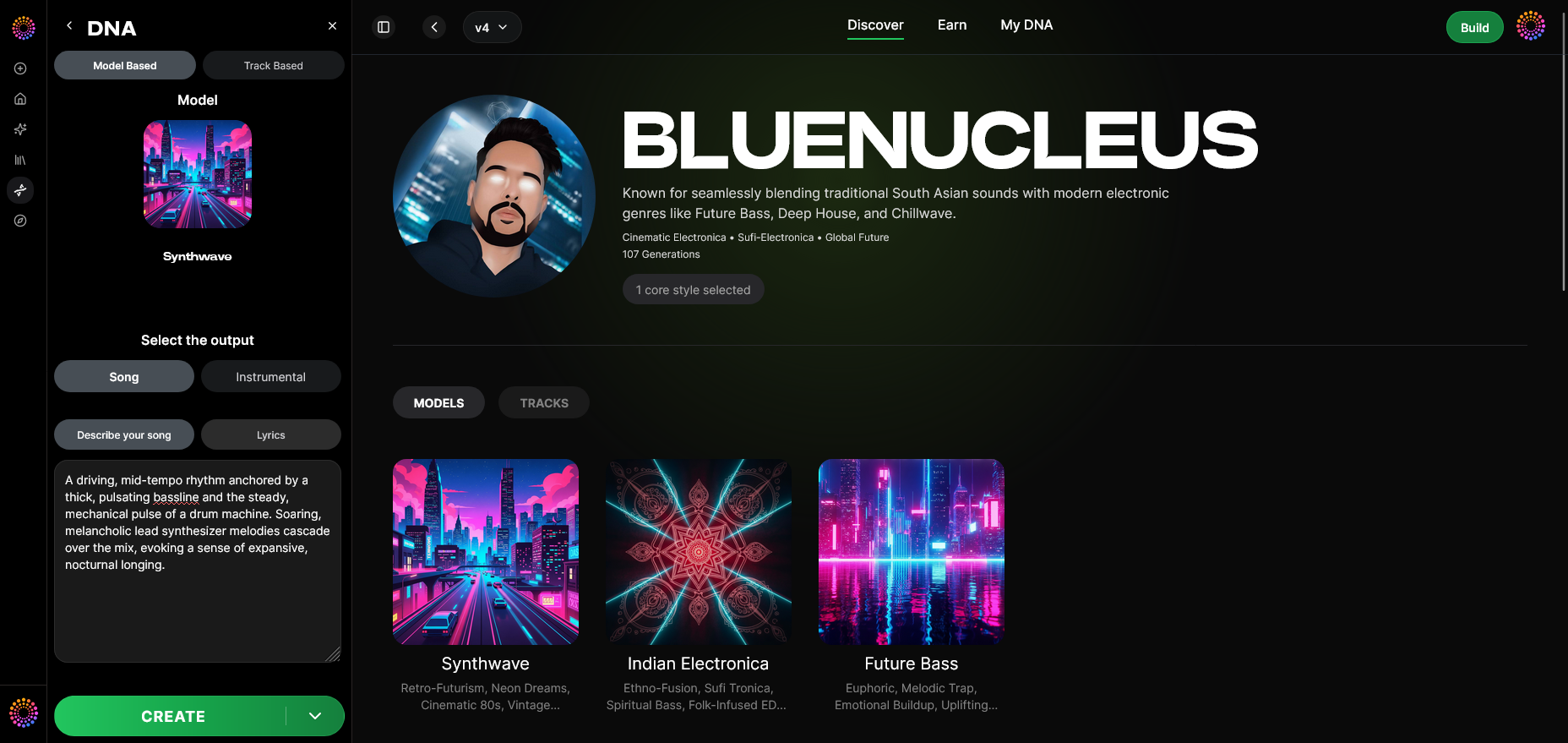
How to make listener-driven AI music with Soundverse DNA
Soundverse DNA is at the forefront of ethical AI music creation in 2026. It is an artist-trained generation system that builds original music based on recognizable sonic identities while solving copyright and consent concerns.
Core Capabilities:
- Full DNA enables creation of complete songs or instrumentals grounded in specific artist styles.
- Voice DNA replicates licensed vocal characteristics without infringing copyrights.
- DNA Marketplace lets artists monetize their models, while fans and creators generate fresh tracks safely.
- Sensitivity Selector helps categorize content into eras or emotional ranges for precision control.
- Private Mode ensures secure co-creation, making collaborative sessions both ethical and creative.
Soundverse DNA thus connects artist intent with listener preference. When audience behavior shifts — whether toward deeper emotional textures or minimalistic compositions — creators can update their DNA profiles accordingly. This creates a two-way creative relationship between art and audience.
Connected tools like The Ethical AI Music Framework strengthen transparency by verifying consent at every training stage, and the Content Partner Program ensures rights-holders are compensated.
For developers or strategists designing data-responsive music pipelines, Soundverse DNA’s modular approach provides the most practical foundation for incorporating listener insights. For an in-depth look at how personalization works, check out our Explore Tab tutorial.
Those exploring genre-specific adaptation can read How to Create Jazz Music with Soundverse AI or Generate AI Music with Soundverse Text-to-Music to see applied examples of DNA-based creation.
How listener insight shapes the next generation of music personalization
As listener data continues to guide AI sound generation, personalization will deepen further in 2026 and beyond. Rather than relying solely on historical patterns, future models may learn dynamically as listeners evolve emotionally — enabling adaptive creation for every mood, context, or moment.
For streaming strategists and researchers, this signifies a shift toward feedback-first creativity: a model where the audience becomes a co-composer through behavioral signals. Ultimately, the relationship between listener habits and AI music creation is reciprocal. Users influence what AI learns; AI, in turn, refines what users hear. Platforms that harness this synergy responsibly will define the sonic mainstream in 2026.
Start Creating AI-Powered Music Today
Unlock the future of sound with Soundverse’s advanced AI music creation tools. Instantly turn your ideas into professional compositions inspired by listener preferences and cutting-edge technology.
Related Articles
- How AI-Generated Music Is Transforming the Music Industry — Explore how artificial intelligence is reshaping production, creativity, and collaboration across the modern music landscape.
- AI Music Generator and Human Composers: A Future Together — Discover how AI tools empower artists to co-create music in a harmonious blend of human creativity and machine intelligence.
- The Role of AI Music in Film and Television — Learn how AI-generated compositions are shaping the emotional and creative depth of soundtracks for visual media.
- The Benefits of Composing with AI Music Generator — Find out how AI composition accelerates creativity and helps musicians produce high-quality tracks at scale.
Here's how to make AI Music with Soundverse
Video Guide

Here’s another long walkthrough of how to use Soundverse AI.
Text Guide
- To know more about AI Magic Tools, check here.
- To know more about Soundverse Assistant, check here.
- To know more about Arrangement Studio, check here.
Soundverse is an AI Assistant that allows content creators and music makers to create original content in a flash using Generative AI. With the help of Soundverse Assistant and AI Magic Tools, our users get an unfair advantage over other creators to create audio and music content quickly, easily and cheaply. Soundverse Assistant is your ultimate music companion. You simply speak to the assistant to get your stuff done. The more you speak to it, the more it starts understanding you and your goals. AI Magic Tools help convert your creative dreams into tangible music and audio. Use AI Magic Tools such as text to music, stem separation, or lyrics generation to realise your content dreams faster. Soundverse is here to take music production to the next level. We're not just a digital audio workstation (DAW) competing with Ableton or Logic, we're building a completely new paradigm of easy and conversational content creation.
TikTok: https://www.tiktok.com/@soundverse.ai
Twitter: https://twitter.com/soundverse_ai
Instagram: https://www.instagram.com/soundverse.ai
LinkedIn: https://www.linkedin.com/company/soundverseai
Youtube: https://www.youtube.com/@SoundverseAI
Facebook: https://www.facebook.com/profile.php?id=100095674445607
Join Soundverse for Free and make Viral AI Music

We are constantly building more product experiences. Keep checking our Blog to stay updated about them!