Grammy Submission Process Explained for First-Time Artists (2026 Guide)
Learn how to submit music for the Grammys, eligibility, and the full Grammy submission process explained for first-time artists.
Grammy Submission Process Explained for First-Time Artists
For many independent musicians, the dream of seeing their name on a Grammy ballot feels distant—but in 2026, that path is more open than ever. Whether you're an emerging singer, a self-produced beatmaker, or a first-time songwriter releasing through streaming platforms, understanding the Grammy submission process is the first major step toward recognition from the Recording Academy.
In this guide, we'll break down every aspect of how to enter the Grammys—from Grammy eligibility requirements to submission categories—and explain how ethical AI tools like Soundverse's Ethical AI Music Framework can help you prepare professional, rights-protected submissions that stand out.
What is the Grammy Submission Process?
The Grammy submission process is the official method by which artists, producers, and labels submit their eligible works for consideration in the annual Grammy Awards. Every entry is evaluated according to Recording Academy rules that ensure artistic integrity, release legitimacy, and classification into the correct award categories.
For independent artists, the process generally starts with confirming eligibility, registering an Academy account, choosing categories, and uploading the proper materials (audio, metadata, and credits). Once submissions close, the Academy’s voting members review entries, nominate finalists, and ultimately vote for winners in each category. For additional guidance, the 68th GRAMMY Online Entry Process walkthrough provides an inside look into the official submission procedure.
The key thing to remember in 2026 is that the Submission Portal has fully transitioned to a secure digital system with built-in metadata validation. This means ensuring that your track details, songwriter credits, and publishing rights align perfectly before submission.
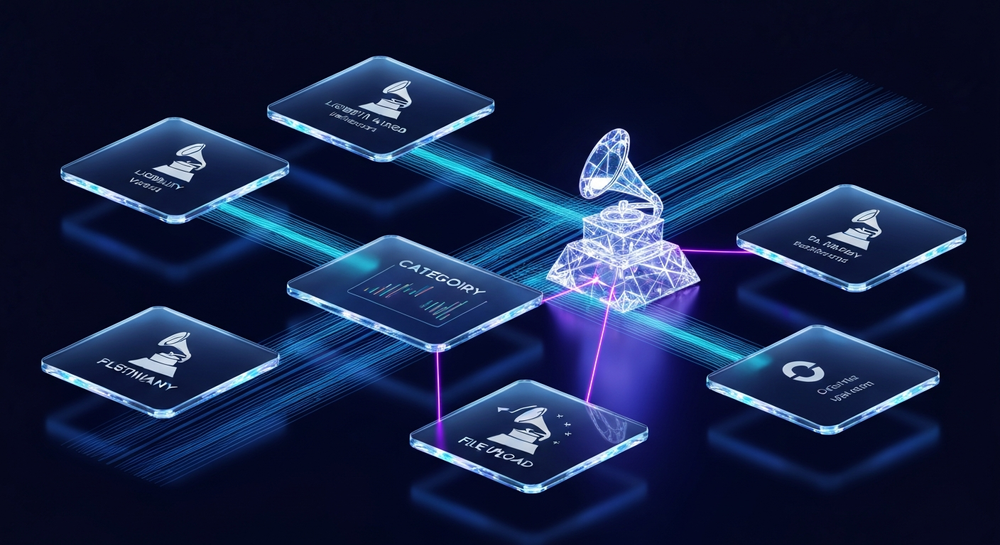
What Are the Grammy Eligibility Requirements in 2026?
Before you submit music to the Grammys, confirm your work meets the eligibility window and format requirements set by the Recording Academy. These rules protect the fairness and integrity of the awards process.
Primary Grammy eligibility requirements include:
- Release Date Window: Typically, eligible recordings must have been commercially released within the 12-month cycle defined by the Academy (for example, October 1, 2024 – September 30, 2025 for the 2026 Awards).
- Commercial Availability: The recording must be available on major streaming platforms or as a physical release accessible to the public in the United States.
- Originality: Works must be original; covers are only eligible in performance categories if properly credited.
- Format Compliance: Acceptable recordings include singles, EPs, albums, or long-form videos, depending on category.
- Proper Credits: Songwriters, performing artists, producers, and engineers should be properly listed in metadata and submission materials.
Maintaining correct metadata is vital. Using platforms like Soundverse can greatly enhance your preparation, ensuring track integrity, verified authorship, and traceable attribution—essential for protecting your intellectual property. For a practical workflow demonstration, watch the Soundverse Tutorial Series - How to Make Music.

How Do You Enter the Grammys as a First-Time Artist?
For newcomers wondering how to enter the Grammys, the process involves several administrative steps. Here’s a simple overview:
- Become a Recording Academy Member or Work With One: While independent artists can submit, an official member or registered media company typically initiates the process.
- Verify Eligibility: Check your track’s release date and distribution format against official guidelines.
- Register on the Submission Portal: Create an account on the Recording Academy’s online platform. Use verified credentials and correct contact details.
- Choose the Correct Category: Place your submission in an appropriate category—e.g., Best New Artist, Best Pop Solo Performance, Best Rap Album, or Best Music Video.
- Upload Materials: This includes your final track, artwork, credits, and release documentation.
- Submit Before the Deadline: Late entries are not accepted. In 2026, digital submissions close earlier due to automated eligibility verification.
Pro tip: Before submitting, use an AI-assisted production tool such as Soundverse to generate professional-quality masters and verify your authorship metadata. This ensures legal clarity and transparency if your music involves digital collaboration or AI elements.
How to Make a Grammy-Ready Submission with Soundverse The Ethical AI Music Framework
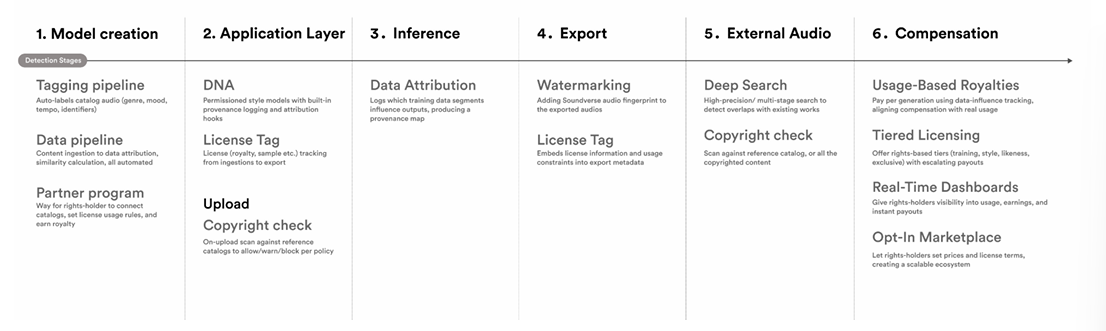
Soundverse empowers both independent creators and studios to align their creative workflow with industry ethics and eligibility standards. The Ethical AI Music Framework addresses one of the biggest modern challenges: combining innovation with artist integrity.
Overview of the Ethical AI Music Framework
The Ethical AI Music Framework is a transparent, six-stage pipeline designed to protect artist rights while promoting creative freedom. Instead of using opaque black-box AI systems, Soundverse implements traceable consent, attribution, and compensation mechanisms across the entire music lifecycle.
Core Capabilities include:
- Stage 1: Licensed Data Sourcing (No Scraping) – Ensures only authorized data is used to train AI models.
- Stage 2: Permissioned Models (DNA) – Embeds digital DNA to track permissions at the source-level.
- Stage 3: Explainable Inference (Attribution) – Guarantees your creative contribution remains identifiable.
- Stage 4: Traceable Export (Watermarking) – Adds invisible watermarks linking the output to rightful owners.
- Stage 5: Deep Search (External Scanning) – Detects unauthorized use across the web.
- Stage 6: Recurring Compensation (Partner Program) – Automates fair ongoing royalties.
When independent artists use Soundverse during the creative process, this framework functions like a built-in compliance shield—everything from your track’s credits to the AI data foundations can be audited transparently. This makes it easier to meet Grammy eligibility requirements, particularly when your recording involves synthesized or AI-generated components.
Soundverse’s companion tools—Soundverse Trace and the Content Partner Program—further enhance metadata accuracy, author attribution, and royalty tracking, all key factors that help strengthen your Grammy application. For example, you can use Soundverse Trace to validate that your stems and samples are properly licensed before completing your entry. Learn more about AI-assisted music preparation in the article Generate AI Music with Soundverse Text-to-Music.
For another helpful video insight, explore the Soundverse Tutorial Series - Explore Tab and see how discovery features can refine your creative workflow.
Pro Tips for First-Time Artists Submitting to the Grammys
If you’re new to the process, here are expert tips that can make your submission smoother and more professional:
- Plan Early: Don’t wait until the window opens. Have your finished masters, release metadata, and ISRC codes ready beforehand.
- Align Your Music Branding: Consistent artwork, credits, and audio quality across your platforms help Academy voters take your submission seriously.
- Double-Check Metadata: Errors in song titles or contributor names can disqualify entries. Tools like Soundverse Assistant help ensure this information is accurate.
- Pick the Right Category: Misclassification can weaken your submission. Study past nominations in similar genres for guidance.
- Leverage Technology Ethically: Using Soundverse’s Ethical AI Music Framework gives your submission credibility—by demonstrating responsible innovation.
- Study Industry Trends: Reading insights like Music Industry Trends 2026 can help you understand what styles and production approaches are resonating with voters.
- Stay Connected: Join professional networks and attend Recording Academy webinars to understand evolving submission strategies for 2026 and beyond.
How Soundverse Supports Ethical Grammy-Eligible Creation
In 2026, the Recording Academy continues to evaluate how AI and new technologies shape eligibility. Transparent authorship and data ethics are now part of the submission vetting process for categories involving AI-assisted compositions. This makes Soundverse’s role particularly powerful.
By using the Ethical AI Music Framework to generate or finalize your tracks, you offer complete creative traceability. That means your submission clearly shows your role as the human creator, even if AI tools assisted in production. You can also track downstream usage of your submission, ensuring that no unauthorized derivatives appear online.
For artists interested in sustainable creation and monetization, enrolling in Soundverse’s Content Partner Program allows your AI-influenced works to generate licensed royalties over time. This blends artistry, AI, and business ethics seamlessly.
If you’re still refining your music production workflow, discover other Soundverse guidance content such as How to Create Rap Music with AI or the helpful overview The Role of AI Music in Film and Television, which both showcase use cases aligned with industry standards.
Start Creating Your Grammy-Worthy Track Today
Turn your musical inspiration into professional-quality tracks effortlessly with Soundverse's AI-powered tools. Compose, produce, and refine your sound in minutes — no studio required.
Create Music with Soundverse
Related Articles
- The Role of AI Music in Film and Television: Discover how AI-generated compositions are shaping soundtracks and redefining creativity in the entertainment industry.
- How AI-Generated Music is Transforming the Music Industry: Learn how artificial intelligence is revolutionizing music creation for artists, producers, and content creators worldwide.
- Navigating the World of Royalty-Free and Copyright-Free Music Using Soundverse AI: Understand the essentials of copyright-friendly music and how to use Soundverse to generate safe, high-quality tracks.
- AI Music Generator and Human Composers: A Future Together: Explore how AI tools complement human creativity to produce groundbreaking music collaborations.
Here's how to make AI Music with Soundverse
Video Guide

Here’s another long walkthrough of how to use Soundverse AI.
Text Guide
- To know more about AI Magic Tools, check here.
- To know more about Soundverse Assistant, check here.
- To know more about Arrangement Studio, check here.
Soundverse is an AI Assistant that allows content creators and music makers to create original content in a flash using Generative AI.
With the help of Soundverse Assistant and AI Magic Tools, our users get an unfair advantage over other creators to create audio and music content quickly, easily and cheaply.
Soundverse Assistant is your ultimate music companion. You simply speak to the assistant to get your stuff done. The more you speak to it, the more it starts understanding you and your goals.
AI Magic Tools help convert your creative dreams into tangible music and audio. Use AI Magic Tools such as text to music, stem separation, or lyrics generation to realise your content dreams faster.
Soundverse is here to take music production to the next level. We're not just a digital audio workstation (DAW) competing with Ableton or Logic, we're building a completely new paradigm of easy and conversational content creation.
TikTok: https://www.tiktok.com/@soundverse.ai
Twitter: https://twitter.com/soundverse_ai
Instagram: https://www.instagram.com/soundverse.ai
LinkedIn: https://www.linkedin.com/company/soundverseai
Youtube: https://www.youtube.com/@SoundverseAI
Facebook: https://www.facebook.com/profile.php?id=100095674445607
Join Soundverse for Free and make Viral AI Music

We are constantly building more product experiences. Keep checking our Blog to stay updated about them!