AI Playlist Optimization: Understanding Listener Moods in 2026
Discover how AI playlist optimization uses listener data for mood curation and personalized experiences in 2026.
AI Playlist Optimization: Understanding Listener Moods
In 2026, music streaming isn’t just about delivering songs; it’s about understanding emotions. AI playlist optimization has evolved into a science of detecting listener moods, curating experiences that resonate with what users need at any given moment. As artificial intelligence grows in sophistication, platforms no longer rely solely on user preferences—they now build dynamic playlists that respond to emotional cues, real-time activity, and behavioral data. This transformation represents a major shift from simple genre-based recommendations to mood-driven personalization powered by deep listener data.
What is AI Playlist Optimization?
AI playlist optimization refers to the process of using machine learning models and large-scale listener data to automatically refine playlists based on emotional patterns, listening contexts, and engagement indicators. Rather than offering random or generic mixes, these systems interpret signals such as listening time, skipped tracks, volume adjustments, and even the sentiment of accompanying content. Through AI understanding of these signals, music platforms can refine playlist sequences to sustain emotional continuity and improve satisfaction.
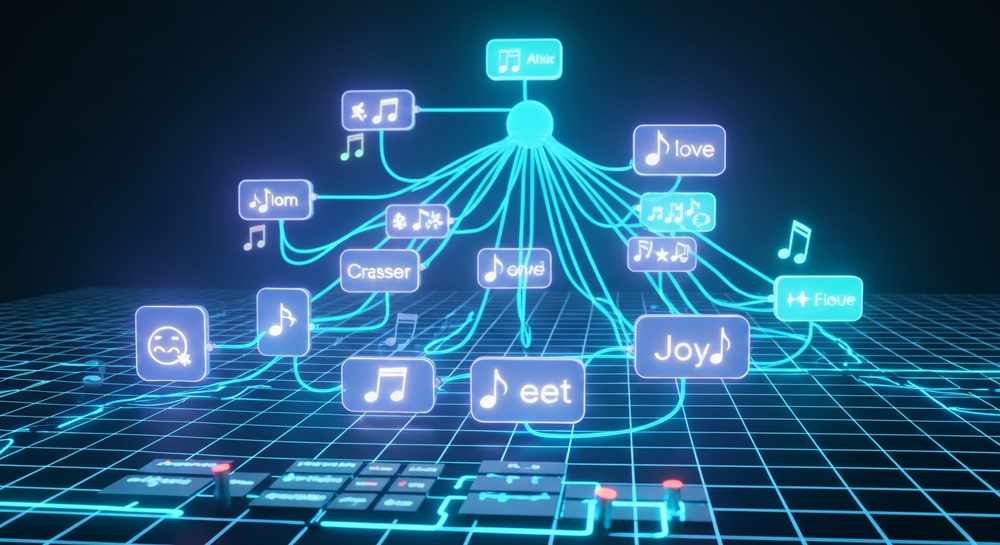
In 2026, AI playlist optimization plays a vital role in user retention. Major streaming services and independent creators depend on algorithms that can interpret subtle listener states. Spotify’s Prompted Playlist and similar features demonstrate how recommendation engines evolve to capture context-rich behavior. AI-driven recommendations now leverage multiple data layers—activity context (working, driving, relaxing), biometric feedback where available, and even textual cues from user interfaces. The aim is simple: to create an experience that feels human, empathetic, and responsive.
How does mood curation work in modern AI systems?
Mood curation has become one of the most important components of this new musical ecosystem. AI models incorporate methods from fields such as emotion analysis and affective computing to understand listener moods. These models analyze patterns from previous sessions, environmental data (time of day, device type, location), and responses to specific musical structures. For example, a listener who frequently plays soft acoustic tracks at night may prompt the AI to enrich their playlist with similarly mellow or ambient music.
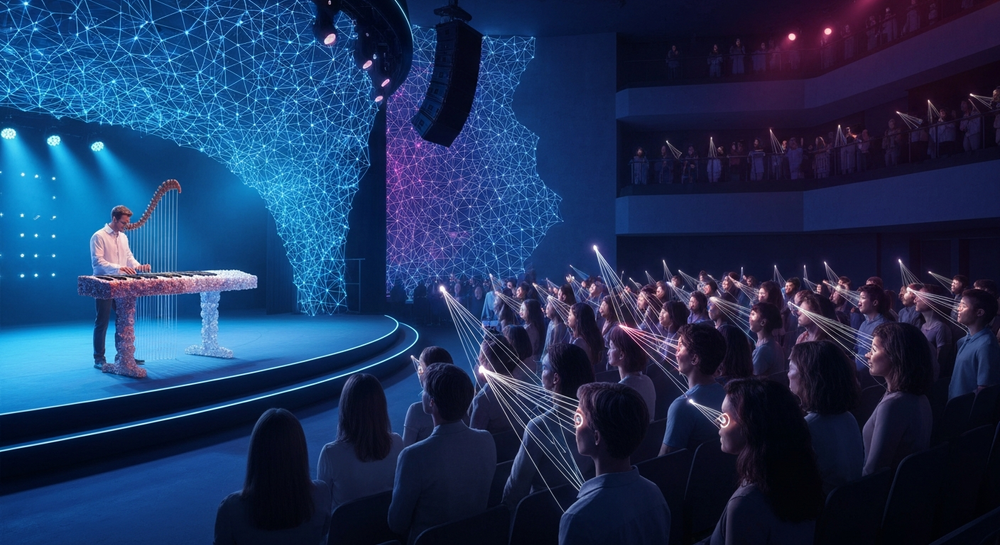
Platforms now experiment with multiple mood curation layers—thematic, temporal, and contextual. Thematic curation focuses on emotional tones like nostalgia, excitement, or calm. Temporal curation adapts playlists according to daily cycles, while contextual curation interprets activity-related signals. Together, these systems represent a new level of personalization achievable only through advanced AI understanding.
What role does listener data play in AI playlist optimization?
Listener data is the fuel that drives cutting-edge AI playlist optimization. In 2026, data collection extends beyond basic listening metrics. Sophisticated systems capture engagement depth, skip frequency, and correlation with ambient conditions. Combined with anonymized behavioral insights, these factors enable music platforms to train artificial intelligence to identify emotional transitions accurately. This shift also emphasizes ethical data use. Transparent customization strategies and privacy-friendly models ensure that personalization doesn’t compromise trust.
For professionals working on music streaming technologies, managing listener data efficiently is crucial. The challenge is achieving granular understanding without overwhelming users with over-personalization. AI optimization frameworks increasingly integrate federated learning—ensuring local data insights without central storage—to sustain privacy and relevance simultaneously. Similar data-driven innovations also power how AI analytics optimize music marketing campaigns.
How are AI developers designing algorithms for emotional understanding?
AI developers in 2026 take inspiration from neuroscience and behavioral psychology. They design systems that detect patterns rooted in rhythm preference, tonal balance, and harmonic progressions linked to emotional triggers. Natural language processing (NLP) is also used when playlists or recommendations accompany descriptive prompts. For instance, a user typing "I need to relax after work" can trigger specific emotional music sequences using text-to-mood mapping.
This convergence of technical and psychological knowledge allows music platforms to achieve consistent accuracy in predicting what sound aligns with user emotion. Data analysts support this process by segmenting audiences into emotional cohorts, facilitating improved training of AI models for adaptive playlist generation. Deezer’s current approach, as detailed in iMusician’s State of the Music Industry 2026, shows how ethical filtering of generated tracks maintains playlist authenticity.
For a practical walkthrough of creative AI integration, watch our Soundverse Tutorial - How to Make Music.
How to make AI Playlist Optimization better with Soundverse AI Music Generator
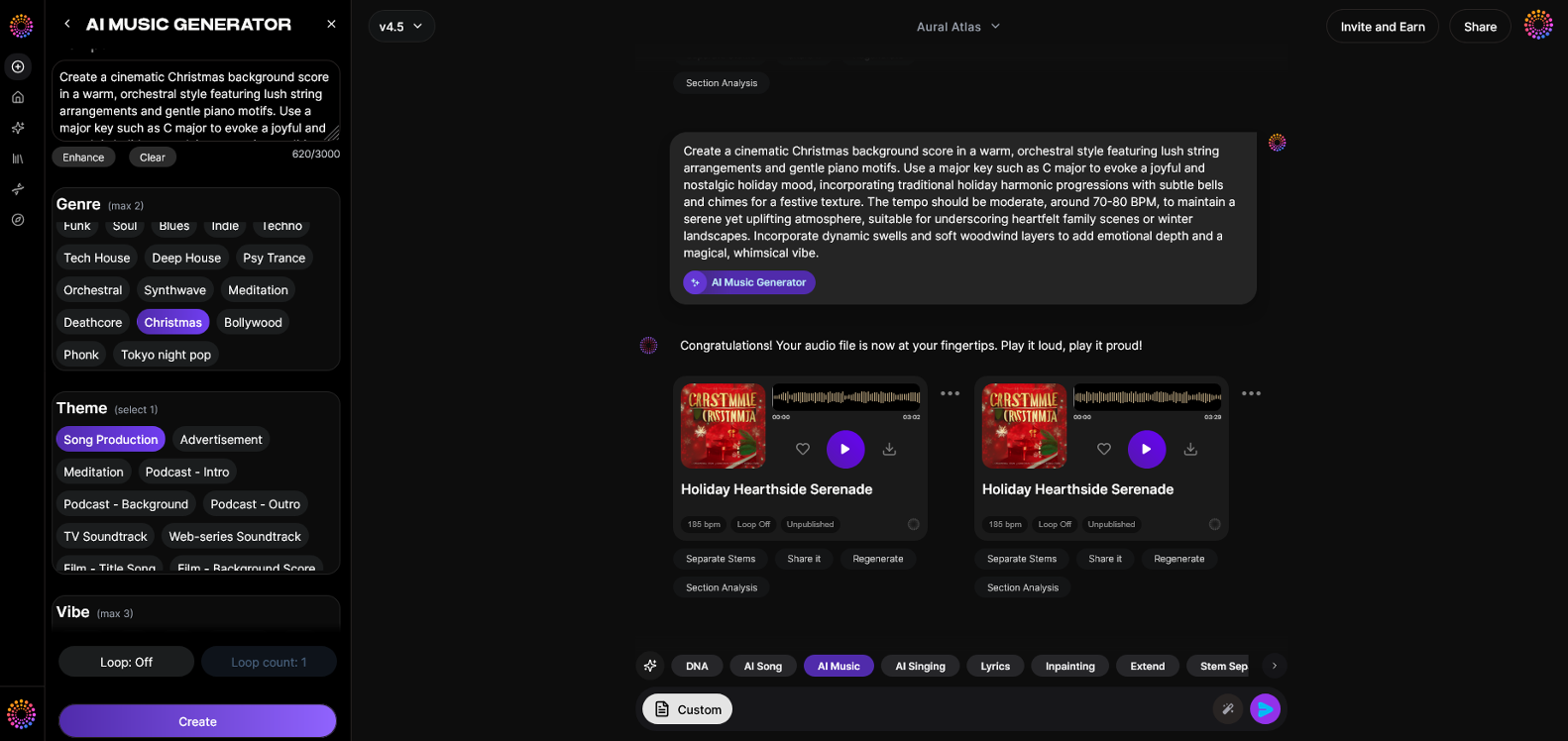
Soundverse offers a solution that connects deeply with this topic through its AI Music Generator, a feature designed to create fully produced instrumental music from text prompts. This tool excels at crafting mood-driven compositions ideal for platforms working on playlist optimization.
The Soundverse AI Music Generator enables professionals to convert textual ideas into instrumental soundscapes tailored to specific emotional contexts. With options such as detailed genre, mood, and instrument control, teams can prototype background tracks for mood playlists without waiting for traditional production workflows.
Key capabilities include:
- Text-to-Music Generation: Transform descriptive prompts into cohesive instrumental pieces that capture the intended emotion.
- Loop Mode: Perfect for creating seamless background sequences ideal for meditative or relaxing playlists.
- Model Versions V4 and V5: Enhanced quality for varied production styles—whether cinematic, ambient, or upbeat.
- Genre and Mood Control: Direct input parameters define the creative output with precision, making it easier to align each track with the intended feeling.
Primary applications extend to video soundtracks, meditation experiences, commercial scoring, and interactive music loops. For AI playlist optimization experts, these capabilities make it easy to produce theme-specific music directly aligned with emotional datasets. This approach prevents any loop fatigue or disconnect between AI-generated mood playlists and natural emotional transitions.
If you’re exploring creative AI possibilities beyond playlist optimization, check related articles like Soundverse AI Revolutionizing Music Creation for New Age Content Creators, How AI-Generated Music Is Transforming the Music Industry, or Generate AI Music with Soundverse Text-to-Music. Each piece explains different facets of AI-driven creativity and personalization.
Why 2026 marks a turning point for personalized music experiences
In 2026, personalization trends have shifted toward emotional agility. AI playlist optimization systems now aim to detect state transitions instead of static emotions. This means the algorithm understands when a listener moves from focus to relaxation or from anticipation to calm, responding accordingly. Such progress is enabled by real-time data inference combined with improved predictive analytics. Companies integrating these approaches report increased session length and retention due to emotionally accurate recommendations.
Alongside these trends, the rise of AI-assisted composition through platforms like Soundverse expands possibilities. Content creators and music app developers can now prototype unique background tracks that evolve dynamically according to user feedback data, simplifying continuous playlist adaptation.
The ethical and creative balance
As AI grows deeper into emotional intelligence, streaming platforms must balance creativity and ethics. Transparency in how listener data is used and the origin of generated audio remains non-negotiable. Leading AI systems, including those built with Soundverse tools, focus on retaining clear licensing terms and ensuring non-infringing creation. This ethical clarity makes it possible to integrate custom background music safely within automated playlist systems.
AI understanding is not about replacing musical choices—it is about augmenting them. While algorithms fine-tune selections, human creativity remains essential in defining tones and narratives. The hybrid model of human-guided AI curation ensures emotional richness.
Optimize Your Playlists with AI Precision
Discover how Soundverse’s AI tools can help you tailor music perfectly to listener moods, driving engagement and creativity like never before.
Start Creating with Soundverse
- How AI-Generated Music Is Transforming the Music Industry — Explore how AI is driving major transformations across music production, personalization, and distribution.
- The Role of AI Music in Film and Television — Learn how AI-generated compositions are reshaping soundtracks and mood creation for screen media.
- AI Music Generator and Human Composers: A Future Together — Discover how AI tools complement human creativity in composition, offering seamless collaborative possibilities.
- Most Popular Music Genres — Delve into the world’s most loved genres and see how AI can tune playlists to fit evolving listener preferences.
Here's how to make AI Music with Soundverse
Video Guide

Here’s another long walkthrough of how to use Soundverse AI.
Text Guide
- To know more about AI Magic Tools, check here.
- To know more about Soundverse Assistant, check here.
- To know more about Arrangement Studio, check here.
Soundverse is an AI Assistant that allows content creators and music makers to create original content in a flash using Generative AI. With the help of Soundverse Assistant and AI Magic Tools, our users get an unfair advantage over other creators to create audio and music content quickly, easily and cheaply. Soundverse Assistant is your ultimate music companion. You simply speak to the assistant to get your stuff done. The more you speak to it, the more it starts understanding you and your goals. AI Magic Tools help convert your creative dreams into tangible music and audio. Use AI Magic Tools such as text to music, stem separation, or lyrics generation to realise your content dreams faster. Soundverse is here to take music production to the next level. We're not just a digital audio workstation (DAW) competing with Ableton or Logic, we're building a completely new paradigm of easy and conversational content creation.
TikTok: https://www.tiktok.com/@soundverse.ai Twitter: https://twitter.com/soundverse_ai Instagram: https://www.instagram.com/soundverse.ai LinkedIn: https://www.linkedin.com/company/soundverseai Youtube: https://www.youtube.com/@SoundverseAI Facebook: https://www.facebook.com/profile.php?id=100095674445607
Join Soundverse for Free and make Viral AI Music

We are constantly building more product experiences. Keep checking our Blog to stay updated about them!