AI Music Generator for Instrumentals and Vocal Tracks in 2026
Explore how an AI Music Generator creates instrumentals and vocal tracks effortlessly with machine learning.
AI Music Generator for Instrumentals and Vocal Tracks
Introduction
The music production landscape in 2026 has evolved rapidly, thanks to advancements in artificial intelligence and machine learning. The rise of the AI music generator has empowered creators across the globe—from budding indie artists to experienced producers—to compose, arrange, and produce full tracks within minutes. No longer restricted by technical barriers, musicians now have access to tools that generate professional-quality instrumentals and vocal tracks with minimal effort.
AI-driven creation isn’t a futuristic fantasy anymore—it’s a reality shaping every corner of the industry today. Whether you’re crafting a lo-fi instrumental for a podcast intro, building a vocal hook for a pop single, or experimenting with cinematic soundscapes, an AI music generator allows you to move seamlessly from concept to completion. Let’s explore how these technologies work, why they matter in 2026, and how tools like Soundverse AI Song Generator are redefining modern music production.
What is an AI Music Generator?
An AI music generator is a machine learning-based system that can autonomously compose and produce music from user inputs such as text prompts, melodies, or lyrics. These platforms use complex neural networks trained on thousands of hours of diverse music to understand rhythm, harmony, instrumentation, style, and vocal tonality.
With growing vocal music AI and AI instrumental production technologies, creators can produce anything from ambient instrumentals to fully arranged vocal tracks. The best part is that you don’t need to master mixing, arranging, or recording setups—AI handles it all for you. Learn more about competitive tools in 8 Best AI Music Generators for 2026 (Expert Reviews).
How Does Machine Learning Drive Music Creation in 2026?
Machine learning in music creation has matured significantly between 2024 and 2026. The underlying models are more contextually aware, enabling them to interpret lyrics, adapt to genre cues, and emulate human expressions in real time. Key advancements include:
- Context-aware melody composition: Machine learning models now analyze emotional tone and lyrical phrasing to generate melodies that fit a song’s mood.
- AI vocal synthesis: This technology converts written lyrics into realistic singing voices, allowing creators to hear their compositions sung by virtual performers.
- Adaptive instrumentation: AI tools intelligently select and mix instruments that complement each genre, ensuring balance and depth in every composition.
- Multi-language support: In 2026, the best AI songwriting tools handle songs in multiple languages, broadening accessibility for global creators.
For real-world comparisons, see the Best AI Music Generators in 2026: Create Professional Audio with AI. This synergy between technology and creativity enables musicians to focus more on artistic direction instead of technical execution.
Why Are Creators Turning to AI Songwriting Tools?
For indie artists and small production teams, time and resources are often limited. AI songwriting tools address these challenges by democratizing access to professional-grade production processes. Here are some primary benefits:
- Speed and efficiency: What used to take hours in a DAW can now be done in minutes.
- Creative exploration: Artists can quickly audition new ideas and genres.
- Accessibility: No need for expensive equipment or in-depth music theory knowledge.
- Customization: Users can guide AI with prompts, lyrics, or reference audio to achieve unique sounds.
These advantages are evident in the fast-growing creator economy, where social media videos, podcasts, and short-form content need fresh and royalty-free music daily. For more insights on how AI tools are transforming creator workflows, check out this article on AI-generated music trends. For a broader market overview, explore The 2 Best AI Music Generators (Which One Wins In 2026?) for comparisons of popular tools like Suno and Udio.
How to Make AI Instrumentals and Vocal Tracks Efficiently
Creating AI music typically involves two components: generating instrumental tracks and producing accompanying vocals. The combination of AI instrumental production and AI vocal synthesis forms the backbone of automated song creation. Let’s break down their distinct roles.
Instrumental Generation
An AI music generator for instrumentals crafts beats, orchestral arrangements, or background tracks based on text prompts. You might describe your vision as “dreamy synthwave with retro drums,” and the system will output a loopable track reflecting that aesthetic. This feature is particularly popular among YouTubers, advertisers, and short-video creators seeking custom background scores.
Vocal Creation and Synthesis
Meanwhile, vocal music AI focuses on generating vocal performances, from realistic singing to experimental vocal textures. These tools interpret lyrics and style cues, producing expressive vocals that match the song’s genre. For enthusiasts who want to experiment with multilingual vocals or imaginative timbres, AI singing tools have become a creative playground.
This duality—instrumental and vocal generation—makes modern platforms like Soundverse indispensable.
How to Make AI Songs with Soundverse AI Song Generator
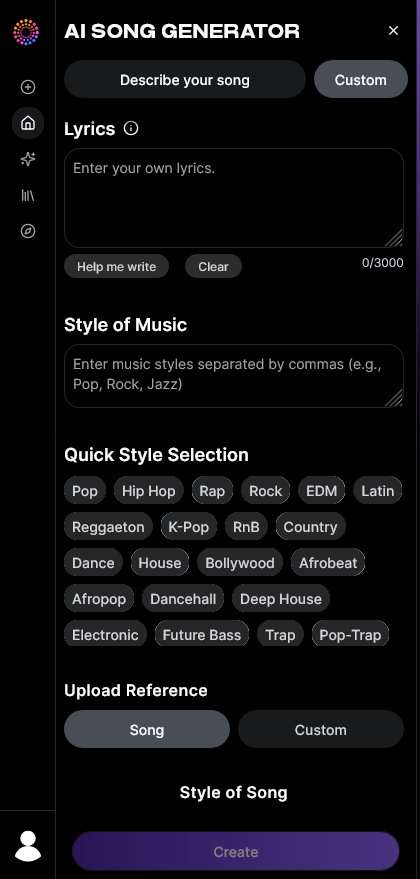
The Soundverse AI Song Generator combines both instrumental and vocal generation into a unified workflow. According to its official description, it can turn lyrics or text descriptions into complete songs featuring AI vocals and full instrumental backing. It operates through a multi-stage pipeline that handles lyrics, melody, arrangement, and mixing.
Soundverse offers two main creative modes:
- Describe Your Song Mode: Input a prompt describing the song you envision. For example, “a soulful R&B track about freedom under city lights.” The AI will interpret mood, tempo, and structure automatically.
- Custom Mode: Enter custom lyrics and explore advanced settings for more control. Add reference audio for musical style or vocal delivery guidance.
Additionally, users can select genres instantly using Quick Style Selection (Pop, Rock, EDM, Jazz, etc.) and create multilingual content in over 10 languages.
This makes Soundverse the ultimate all-in-one platform for songwriting demos, vocal prototyping, content creation, and even gifting personalized songs. To see how Soundverse’s tools compare to other platforms, explore Mubert alternatives or read about Soundraw alternatives. For an in-depth walkthrough, check out the Soundverse Tutorial Series - 9. How to Make Music on YouTube.
Step 1: Feature Overview
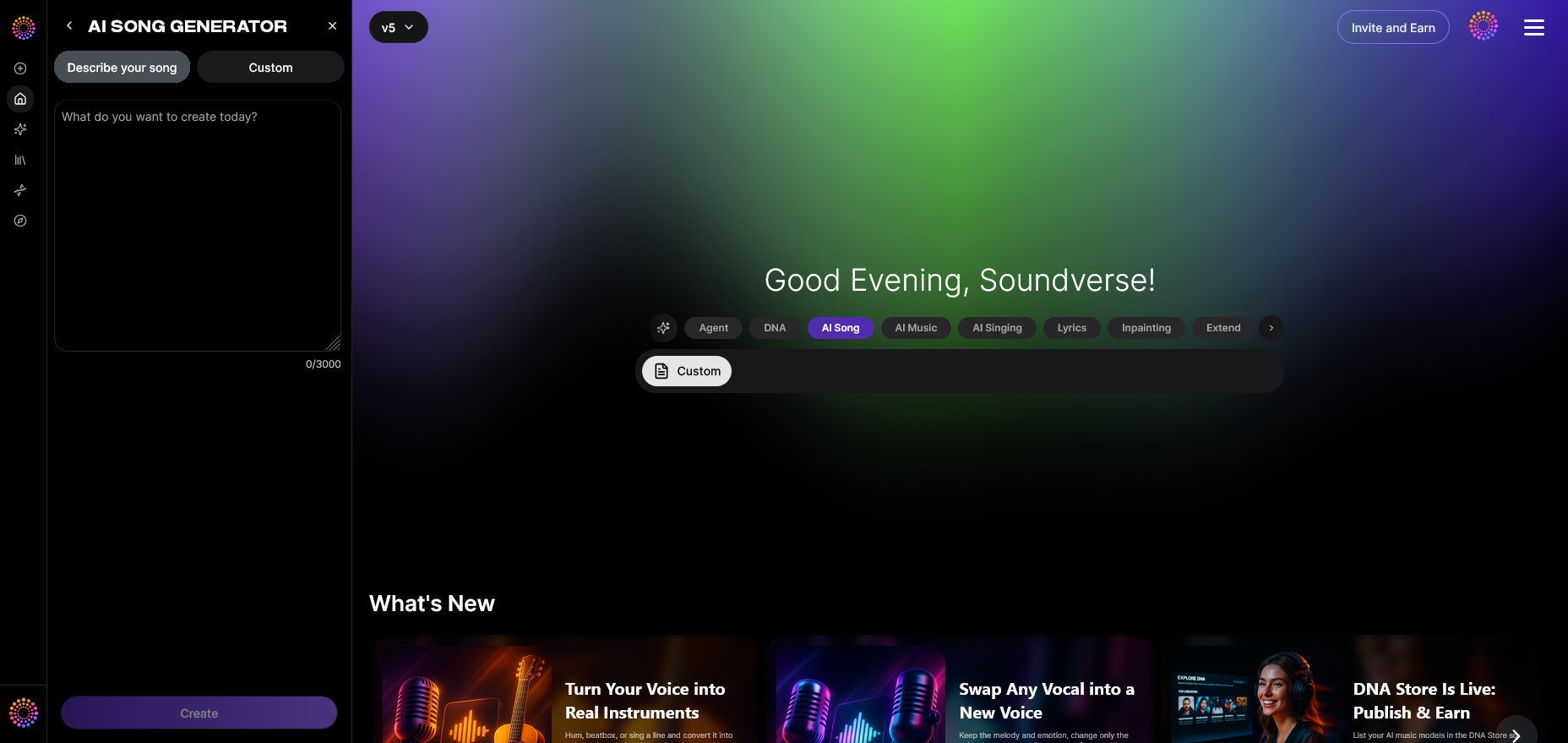
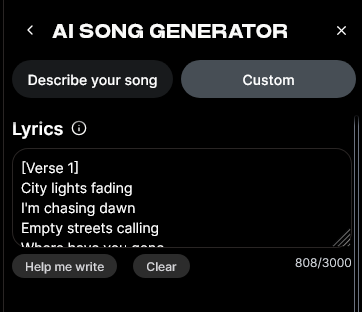
Access the AI Song Generator from Soundverse’s main menu. This is your central hub for turning text, reference audio, or lyrics into complete, AI-generated compositions.
Step 2: Lyrics Input
Paste your lyrics into the designated field or write new ones directly in-app. This forms the lyrical backbone that the AI will later interpret musically.
Step 3: Style Selection
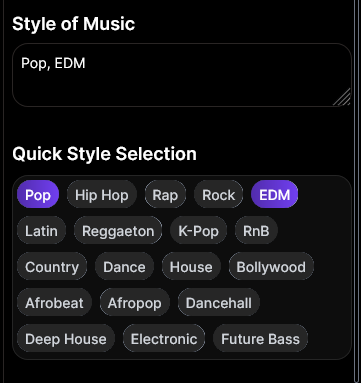
Choose your music style—Pop, EDM, Rock, or whichever fits your creative vision. Quick Style options help set the tone, instrumentation, and mood.
Step 4: Configuration
Adjust generation parameters such as vocal tone, energy, and song length. You can also upload reference audio to guide style or vocal interpretation (e.g., a guide track or humming sample). Remember, Soundverse processes this asynchronously after upload.
Step 5: Generation
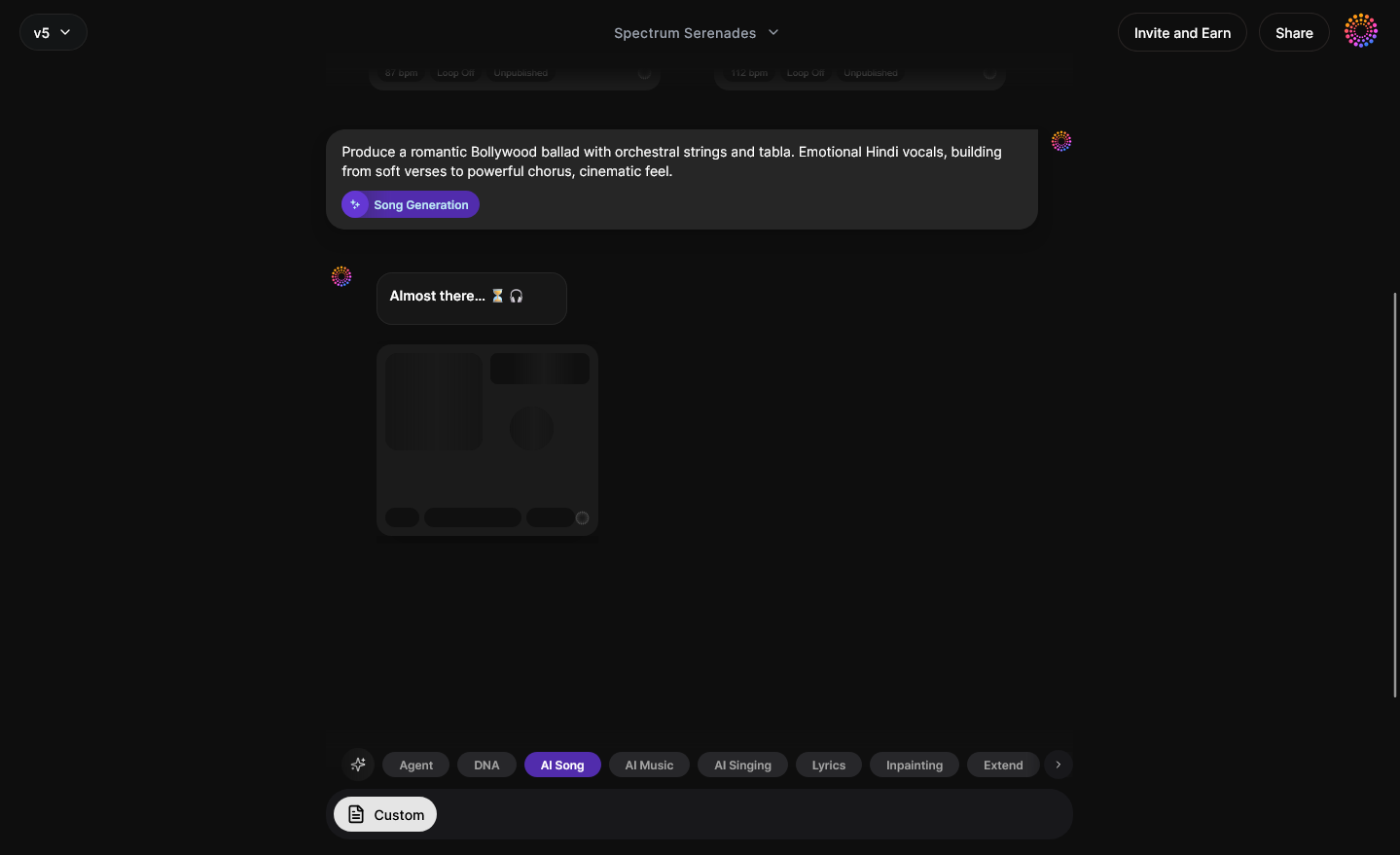
Click Generate to initiate the process. The AI now interprets your lyrics, emotion, and stylistic preferences to produce both the instrumental and vocal components.
Step 6: Generation Complete
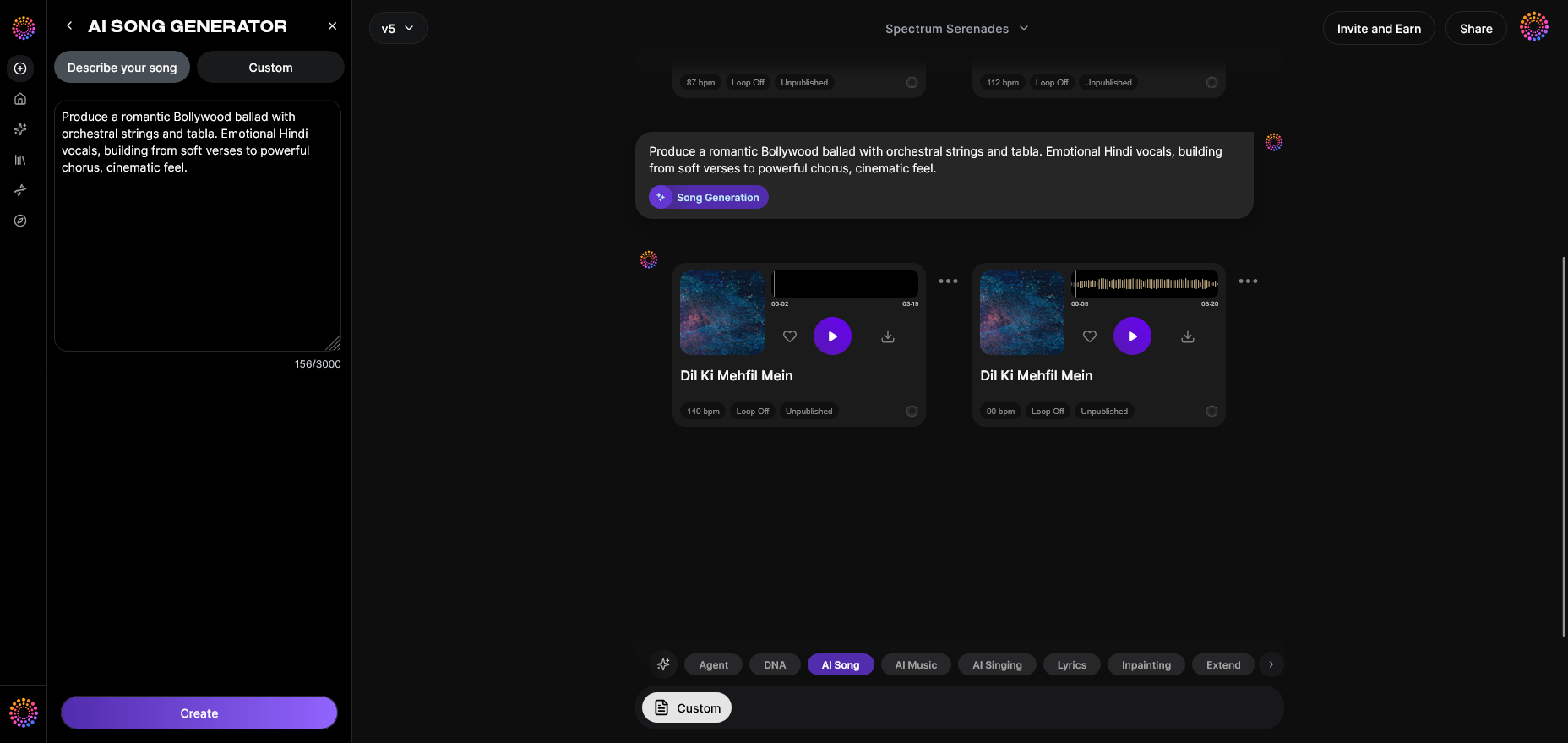
Once processed, Soundverse displays your completed track featuring AI-generated vocals, harmonies, and full instrumental backing.
Step 7: Export Results
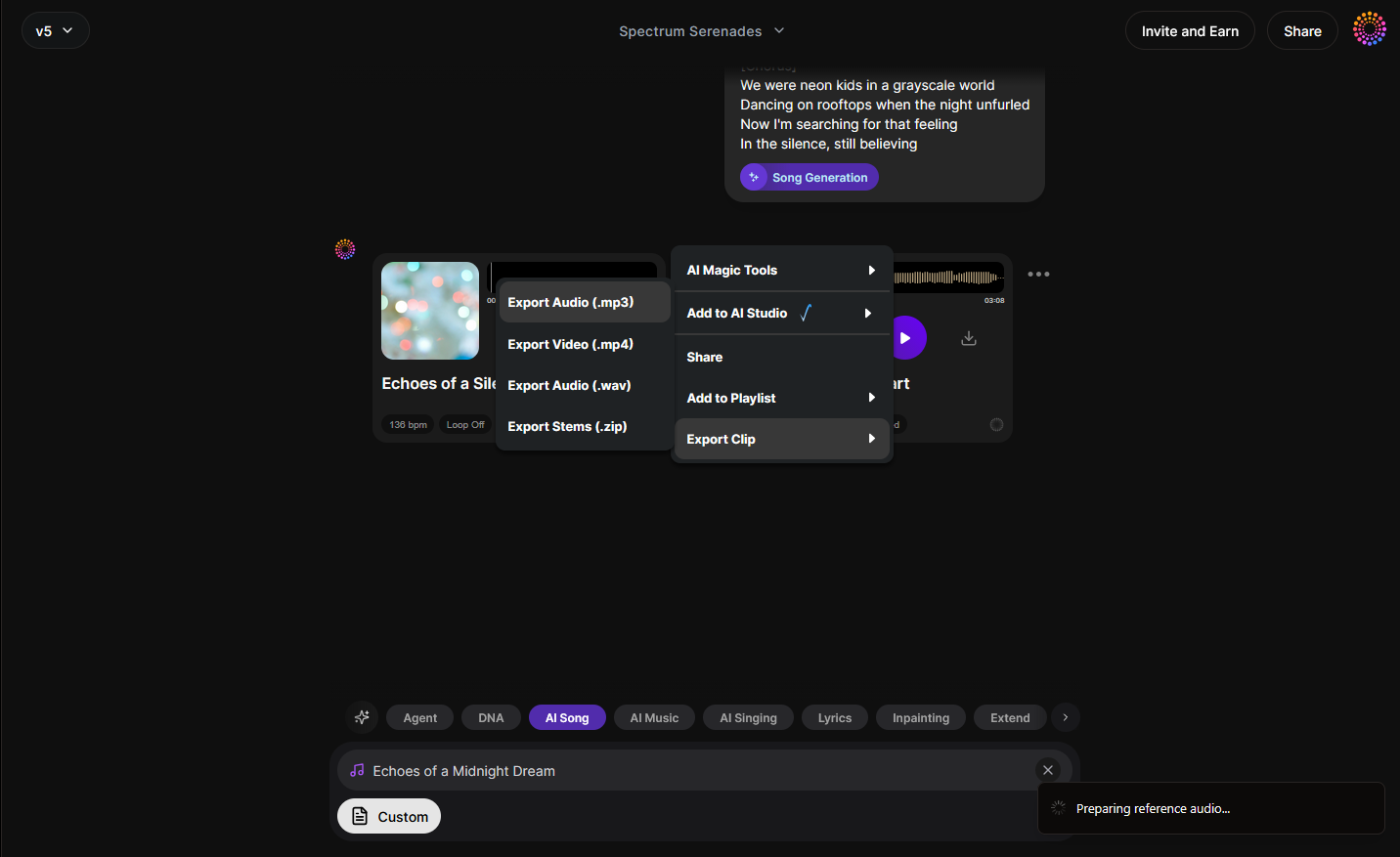
Finally, export your track in your preferred format for further mixing, video integration, or release. Many creators use these results for demos, YouTube projects, or custom content creation.
Pro Tips for Artists Using AI Music Generators
- Start simple: Use plain language in text prompts before refining specificity.
- Combine tools: Pair Soundverse with stem separation through AI Magic Tool to tweak vocals or drums independently.
- Experiment with references: Upload short reference files to better steer the generation process.
- Stay consistent with branding: If you’re a content creator, maintain a sonic identity across projects by saving prompt templates.
For more creative experimentation tutorials, visit the Soundverse Tutorial Series - 10. Make Deep House Music.
The Role of AI in the Creator Economy of 2026
By 2026, creators are integrating AI seamlessly into their daily workflows. From songwriting to post-production, automation no longer diminishes creativity—it amplifies it. Machine learning music creation allows rapid exploration of soundscapes, while AI vocal synthesis opens opportunities for multilingual collaborations and genre blending previously thought impossible.
With tools like Soundverse leading the way, musicians can now focus on storytelling and audience connection rather than battling technical hurdles. This democratization of production parallels the shift seen in video and design tools during the early 2020s. Check out more AI models highlighted in The Best AI Music Generators to Create Songs Effortlessly in 2026.
Start Creating with the Soundverse AI Music Generator Today
Experience the power of AI to produce professional-quality vocal tracks and instrumentals in minutes. Turn your ideas into polished, studio-ready music effortlessly.
Try Soundverse Free
Related Articles
- How an AI Music Generator Inspires Creative Fusion: Discover how AI-driven tools like Soundverse enhance collaboration between human creativity and machine intelligence to produce genre-bending music.
- The Benefits of Composing with an AI Music Generator: Learn how AI assists musicians, composers, and creators by streamlining composition and unlocking new creative possibilities.
- AI Music Generator and Human Composers: A Future Together: Explore how human expertise and AI innovation can coexist to shape the future of songwriting and music production.
- How to Make AI-Generated Music: Follow this step-by-step guide to generate complete songs—vocals and instrumentals included—using Soundverse’s advanced AI music tools.
Here's how to make AI Music with Soundverse
Video Guide

Here’s another long walkthrough of how to use Soundverse AI.
Text Guide
- To know more about AI Magic Tools, check here.
- To know more about Soundverse Assistant, check here.
- To know more about Arrangement Studio, check here.
Soundverse is an AI Assistant that allows content creators and music makers to create original content in a flash using Generative AI.
With the help of Soundverse Assistant and AI Magic Tools, our users get an unfair advantage over other creators to create audio and music content quickly, easily and cheaply.
Soundverse Assistant is your ultimate music companion. You simply speak to the assistant to get your stuff done. The more you speak to it, the more it starts understanding you and your goals.
AI Magic Tools help convert your creative dreams into tangible music and audio. Use AI Magic Tools such as text to music, stem separation, or lyrics generation to realise your content dreams faster.
Soundverse is here to take music production to the next level. We're not just a digital audio workstation (DAW) competing with Ableton or Logic, we're building a completely new paradigm of easy and conversational content creation.
TikTok: https://www.tiktok.com/@soundverse.ai
Twitter: https://twitter.com/soundverse_ai
Instagram: https://www.instagram.com/soundverse.ai
LinkedIn: https://www.linkedin.com/company/soundverseai
Youtube: https://www.youtube.com/@SoundverseAI
Facebook: https://www.facebook.com/profile.php?id=100095674445607
Join Soundverse for Free and make Viral AI Music

We are constantly building more product experiences. Keep checking our Blog to stay updated about them!