AI Music for Science Center Interactive Exhibits: How Sound Changes the Educational Experience in 2026
Discover how AI music enhances interactive science center exhibits and educational experiences in 2026.
AI Music for Science Center Interactive Exhibits
In 2026, science centers and museums are continuing their rapid transformation into fully immersive learning environments. Exhibits are no longer static; they respond, react, and communicate through sound and visuals. One of the most influential forces driving this change is AI music for interactive exhibits—a technology that empowers curators and designers to build dynamic educational experiences powered by adaptive soundtracks.
Why is AI music transforming science center exhibits in 2026?
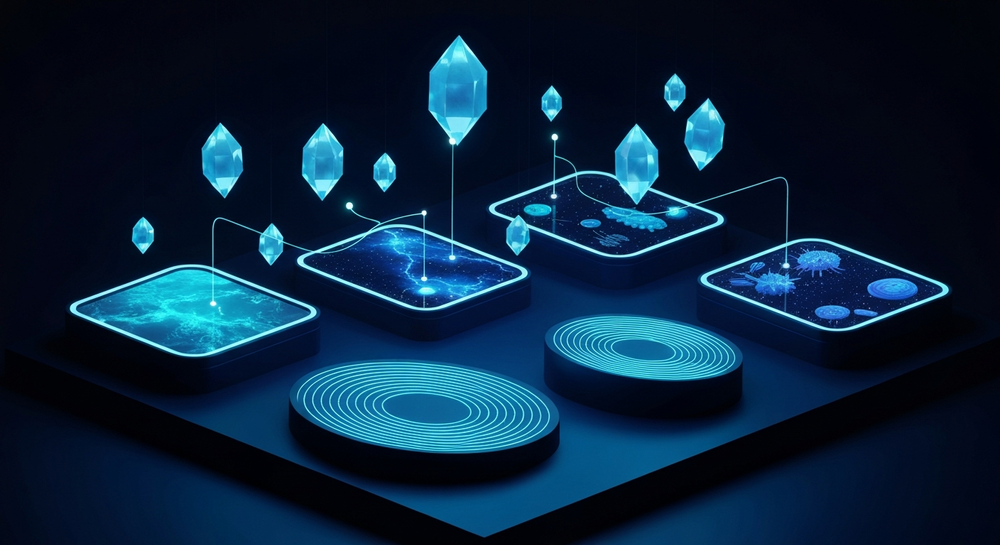
The evolution of museum experiences has always been tied to technology. When science centers first began adopting multimedia in the early 2000s, the inclusion of digital screens and interactive displays marked a great leap forward. By 2024, sound design had become a defining element of successful educational exhibits. Now, in 2026, museums are leveraging AI music for interactive exhibits to shape emotional tone, guide attention, and create thematic cohesion throughout their environments.
Unlike conventional background tracks, AI-generated compositions can adapt to themes—be it deep sea exploration, space travel, or human biology—and shift based on user interaction, time of day, or learning objectives. This flexibility offers museums and science centers the ability to create soundscapes that evolve naturally with audience engagement.
How does AI music enhance educational exhibits?
1. Increased learner engagement
Sound plays a direct role in memory and focus. In interactive exhibits, AI-generated music enhances cognitive engagement by providing rhythm, pace, and emotional grounding. Whether it’s a looped ambient background in an astronomy display or dynamic percussion in a physics lab simulation, music encourages visitors to explore and connect concepts.
2. Thematic coherence across exhibits
AI-generated music allows museums to maintain consistent auditory branding across multiple zones without repetitive or royalty-bound tracks. From quiet zones to high-energy discovery areas, curators can specify the desired mood, ensuring transitions feel seamless.
3. Accessibility and inclusivity
Modern AI tools can tailor soundscapes to meet diverse audience needs. For instance, low-frequency layers can help visually impaired visitors navigate through space, while dynamic volume adjustments ensure exhibits remain comfortable for different sensory sensitivities.
4. Easy scalability
For large-scale science centers or traveling exhibitions, managing hundreds of unique audio loops used to be difficult. Now, curators can create multiple variations of music tracks simply by changing text prompts. This modularity means that sound design can scale as quickly as exhibit design itself.
What makes interactive audio vital for science education?
In science centers, interactivity fosters discovery. Interactive audio goes beyond music playback—it reacts to sensors, visitor behavior, or educational milestones. Imagine a physics demonstration where the sound intensifies as energy levels increase, or an astronomy simulation where orchestral swells accompany a deep-space journey. Such integration deepens understanding by aligning auditory signals with conceptual progress.
This immersive sound design can also make content more inclusive for auditory learners, who assimilate information more effectively through sound than visuals. The combination of tactile and musical feedback transforms a moment of curiosity into a memorable learning event.
How museums are using AI-generated soundscapes in 2026
In 2026, several pioneering science centers are showcasing the depth of AI music for interactive exhibits:
- Planetarium experiences: AI-generated ambient tapestries adapt to cosmic events, synchronization with star projections, similar to installations seen in Frost Science Museum’s MyFi Studio exhibit.
- Biological exploration zones: Generative soundscapes reflect animal habitats—an underwater zone might pulse with AI-created oceanic bass tones, while rainforest exhibits are underscored by rhythmic organic beats, as featured in AI: More Than Human at Frost Science Museum.
- Energy and physics installations: AI music modulates dynamically as visitors manipulate displays involving motion or electricity, allowing them to ‘hear’ the science—similar to what Science Center of Iowa’s AI exhibit is enabling in 2026.
This movement aligns with the broader AI music revolution, where educational institutions are rethinking how interactive media can teach complex topics through multisensory engagement.
How to make AI music for interactive exhibits with Soundverse AI Music Generator
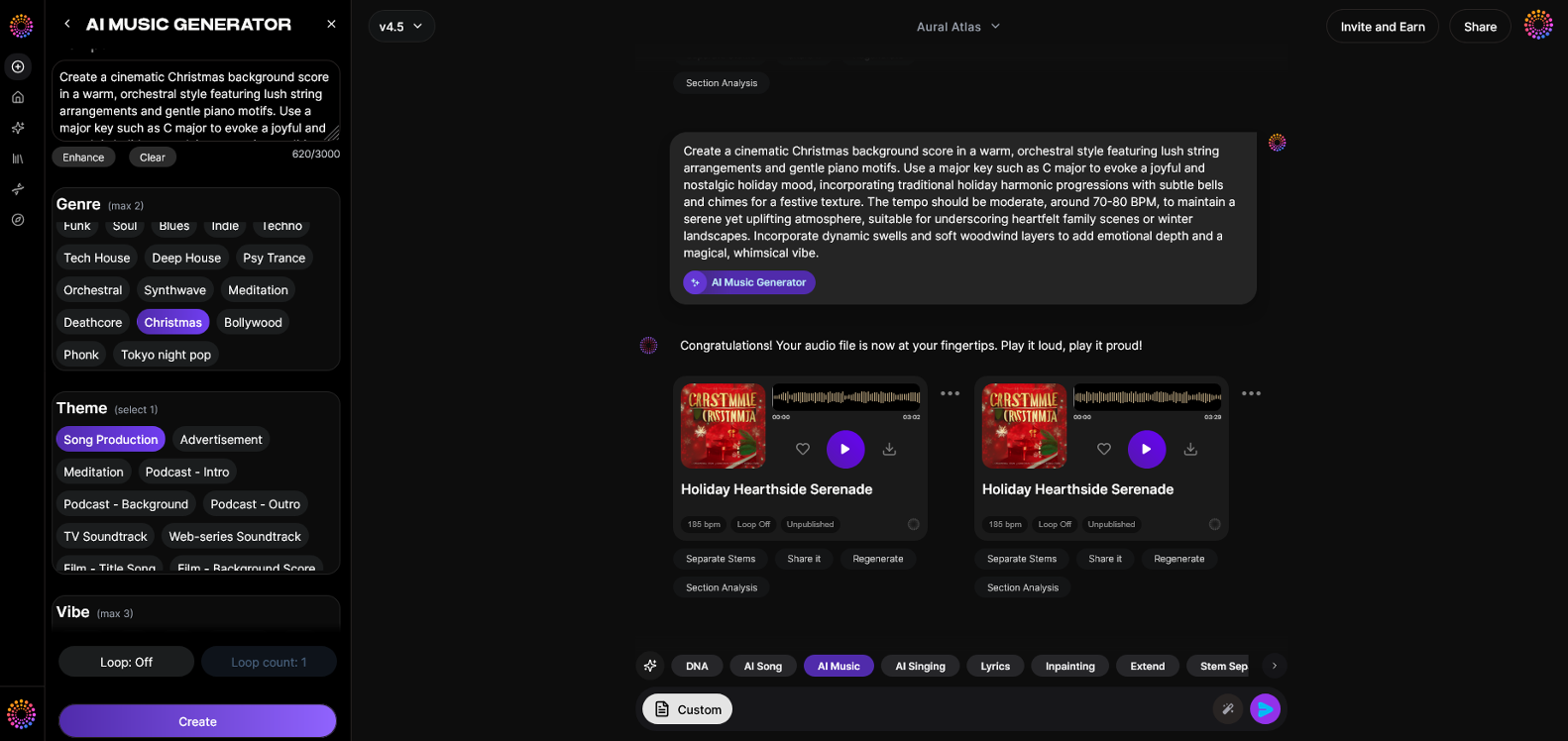
Soundverse offers a specialized AI Music Generator that simplifies the process of creating adaptive, loop-ready soundtracks perfect for museum sound design. The system can generate complete instrumental compositions from descriptive text prompts, providing exhibit designers full control over genres, moods, and instrumentation.
Key capabilities include:
- Text-to-Music Conversion: Describe your exhibit’s theme (e.g., “gentle ambient track inspired by ocean currents”), and Soundverse immediately generates original instrumental pieces.
- Loop Mode: Perfect for continuous playback in interactive zones, this feature ensures endless seamless repetition without abrupt transitions.
- Genre and Mood Control: From futuristic synthscapes to organic percussion, select tones that align precisely with your educational theme.
- Durational Customization: Choose track length based on space duration needs or visitor dwell time.
Because Soundverse’s workflow is asynchronous, users simply provide descriptive inputs, then download the fully produced instrumental files once processing completes. This means curators can develop exhibit-specific scores without relying on in-house composers or expensive licensing contracts.
Why Soundverse fits the needs of modern educational exhibits
Unlike general-purpose music tools, Soundverse was engineered to support media professionals across industries—including education, wellness, and entertainment. The platform’s text-to-music flexibility means scientists and designers can collaborate directly without needing extensive musical knowledge.
Additionally, through the Soundverse API, institutions can integrate generative music directly into exhibit control systems. For example, a sensor detecting visitor movement could trigger API requests that swap musical intensity or melody layers, enriching interactive responsiveness.
Soundverse’s Agent, the platform’s conversational AI assistant, further simplifies the process by interpreting complex natural-language instructions—transforming requests like “create a relaxing ambient track, then make a loop version” into finished, ready-to-deploy assets.
For museum technology developers seeking more insights about modern AI-assisted sound creation, exploring resources such as Generate AI Music with Soundverse Text-to-Music or Best AI Music Generator: Top Picks and Review can help guide decision-making.
For additional tutorials, see Soundverse Tutorial Series - How to Make Music and Soundverse Tutorial Series - Explore Tab.
Integrating Soundverse AI into exhibit workflows
Museums today are looking for modular creative pipelines, and Soundverse’s ecosystem supports that approach. Curators can generate individualized loops for multiple exhibits at once, allowing consistency in tone and narration.
Additionally, advanced users can employ the Similar Music Generator to produce new compositions inspired by a director-approved sample track—ideal when an exhibit requires musical continuity matching brand identity. Meanwhile, through the API, science centers can automate track refreshing over time to reflect ongoing themes.
For example, a long-term climate change exhibit could replay evolving, AI-updated soundscapes that mirror real-time environmental data—a powerful way to underscore the message of change through auditory atmosphere.
Advantages of AI-generated museum sound design
AI-generated music isn’t just about convenience—it represents a creative partnership. Here are the key advantages driving adoption in 2026:
- Cost efficiency: Generate custom educational soundtracks without licensing constraints.
- Creative flexibility: Adjust style, rhythm, and instrumentation instantly.
- Loop and ambient readiness: Optimize sound continuity for audience comfort.
- Scalability: Adapt sound environments rapidly across multiple exhibits.
- Future-proof integration: Use APIs to embed evolving audio experiences.
By combining generative sound with interactive visual systems, museums can build holistic sensory experiences—ones that stimulate curiosity, retain visitors longer, and reinforce key scientific messages.
How Soundverse supports immersive learning environments
Soundverse’s role extends beyond generation—it encourages experimentation. Designers can iterate dozens of variations of the same exhibit music simply by modifying descriptive parameters like mood, tempo, or instrumentation. This process mirrors the growing creative demand identified in past insights like The Benefits of Composing with AI Music Generator and AI Music Generator and Human Composers: A Future Together.
As AI continues to evolve, 2026 represents the moment when educational institutions begin seeing generative audio not as novelty, but as essential infrastructure—a digital composer working alongside designers to shape the sonic identity of science itself.
Bring AI Music to Your Interactive Exhibits Today
Transform science center experiences with dynamic, adaptive music created by Soundverse’s AI technology. Engage visitors with responsive soundscapes that react to movement, discovery, and emotion.
Start Creating with Soundverse
Related Articles
- How AI-Generated Music Is Transforming the Music Industry — Discover how AI-generated music is reshaping the way creators, brands, and venues design audio experiences worldwide.
- The Role of AI Music in Film and Television — Learn how filmmakers and editors use AI music to set mood, emotion, and narrative tone faster than ever before.
- Generate AI Music with Soundverse Text-to-Music — Explore how Soundverse’s text-to-music tool lets you instantly create customized compositions for immersive environments.
- The Benefits of Composing with an AI Music Generator — Find out how using AI tools like Soundverse can save time, spark creativity, and enhance audience engagement.
Here's how to make AI Music with Soundverse
Video Guide

Here’s another long walkthrough of how to use Soundverse AI.
Text Guide
- To know more about AI Magic Tools, check here.
- To know more about Soundverse Assistant, check here.
- To know more about Arrangement Studio, check here.
Soundverse is an AI Assistant that allows content creators and music makers to create original content in a flash using Generative AI. With the help of Soundverse Assistant and AI Magic Tools, our users get an unfair advantage over other creators to create audio and music content quickly, easily and cheaply. Soundverse Assistant is your ultimate music companion. You simply speak to the assistant to get your stuff done. The more you speak to it, the more it starts understanding you and your goals. AI Magic Tools help convert your creative dreams into tangible music and audio. Use AI Magic Tools such as text to music, stem separation, or lyrics generation to realise your content dreams faster. Soundverse is here to take music production to the next level. We're not just a digital audio workstation (DAW) competing with Ableton or Logic, we're building a completely new paradigm of easy and conversational content creation.
TikTok: https://www.tiktok.com/@soundverse.ai
Twitter: https://twitter.com/soundverse_ai
Instagram: https://www.instagram.com/soundverse.ai
LinkedIn: https://www.linkedin.com/company/soundverseai
Youtube: https://www.youtube.com/@SoundverseAI
Facebook: https://www.facebook.com/profile.php?id=100095674445607
Join Soundverse for Free and make Viral AI Music

We are constantly building more product experiences. Keep checking our Blog to stay updated about them!