AI Music for Museum Audio Guides: Enhancing Cultural Experiences in 2026
Explore how AI music enhances museum audio guides and gallery sound in 2026.
AI Music for Museum Audio Guides
In 2026, museums are moving beyond static audio explanations and embracing immersive, adaptive soundscapes powered by artificial intelligence. The evolution of AI music for museum audio guides has transformed how visitors experience culture. Instead of passive listening, guests are now part of a curated sonic journey that reflects art, architecture, and emotion.
What is AI Music for Museum Audio Guides?
AI music for museum audio guides refers to the use of generative artificial intelligence to create customized background music and soundscapes that enhance the visitor experience. Unlike traditional pre-recorded tracks, AI-generated music evolves instantly to suit different exhibits, moods, or visitor pacing. This technology empowers museum curators and exhibit designers to create more engaging, context-sensitive sound environments.

Museums that used to rely on uniform soundtracks can now tailor each section with unique themes—such as serene ambient tones for ancient art, rich orchestral layers for historical exhibits, or minimalist electronic soundscapes for modern art galleries. By leveraging AI, galleries can extend storytelling beyond visuals, making each moment sound as intentional as it looks. Learn more about what curators are doing in Innovations in Museum Audio Tours.
Why Does Museum Sound Design Matter in 2026?
Sound has always played an underappreciated role in cultural interpretation. Today, technological advances have elevated museum sound design to a key part of storytelling and engagement. With visitor expectations shaped by immersive entertainment and virtual reality, audiences increasingly anticipate a multisensory experience in physical spaces.

In 2026, the integration of cultural audio is more accessible thanks to AI. Museums no longer need to hire full orchestras or large production teams. Instead, AI tools generate instrumental compositions adapted to any theme, language, or mood. This democratization enables both major institutions and smaller galleries to offer refined auditory experiences that were once prohibitively expensive. Learn how this evolution unfolded in The Evolution of Audio Guides in Museums: From Devices to Apps.
Key Benefits of Integrating AI Music into Exhibit Audio
- Personalization: AI can generate music variations for different times of day, exhibit zones, or audience demographics.
- Seamless Looping: Continuous loop modes ensure the track repeats naturally without audible breaks.
- Cultural Context: By enriching exhibits with regionally inspired or era-specific sounds, curators provide deeper emotional resonance.
- Instant Adaptability: AI-generated soundscapes can evolve based on new curation narratives or updated installations.
- Cost Efficiency: Instead of licensing numerous tracks, museums can generate original royalty-free music for long-term use.
Check out New Ideas for Museum Audio Tours: Trends Shaping 2025 for sound design strategies that predicted current trends.
How Are AI Soundscapes Transforming Exhibition Design?
Exhibition designers no longer view sound merely as background—it's now part of the storytelling fabric. For example, an Egyptian exhibit may use drone-based ambient layers evoking desert winds, while a gallery focusing on early 20th-century Europe might feature AI-generated jazz reminiscent of the era’s atmosphere.
Modern exhibits rely on what specialists call “adaptive cultural audio,” which dynamically responds to user interaction. When visitors move between sections, AI-generated transitions allow smooth sonic blending. This removes abrupt sound shifts and maintains narrative flow.
Institutions integrating AI-driven gallery sound also find it easier to design inclusive experiences. For neurodivergent or visually impaired visitors, adaptive music can guide motion and set emotional tone, improving orientation and connection with the space.
See how platforms like Musa Guide are applying these technologies across cultural venues.
How to Make AI Music for Museum Audio Guides with Soundverse AI Music Generator
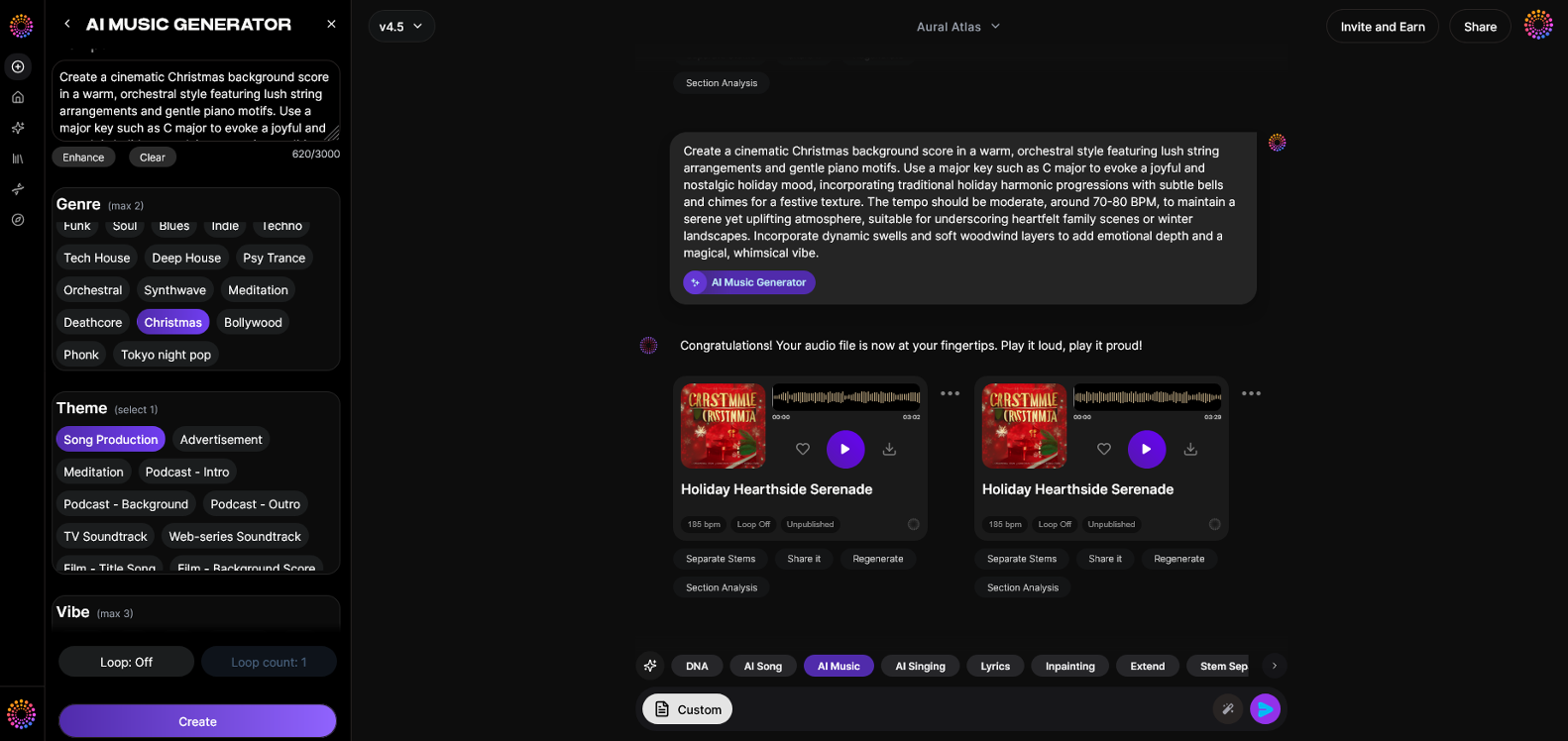
Soundverse’s AI Music Generator enables museums and exhibit teams to create high-quality instrumental tracks suited for any gallery environment. As a text-to-music platform, it transforms descriptive prompts into finished background compositions—perfect for looping or thematic layering. For a deeper dive, watch our guide on how to make music or Explore tab tutorial.
Overview of the Soundverse AI Music Generator
The AI Music Generator creates fully produced instrumental compositions from text input. This feature specalizes in background tracks, soundscapes, and beats without vocals. Its core capabilities include detailed genre, mood, and instrument control, as well as an optional Loop Mode for seamless repetition. Soundverse offers V4 and V5 model options, ensuring different creative tonalities and sound fidelity levels.
Museums can specify both duration and musical intent, resulting in unique cultural or ambient cues that match exhibition narratives. Because tracks are fully AI-created without external samples, there are no copyright conflicts or licensing restrictions.
Step 1: Feature Overview
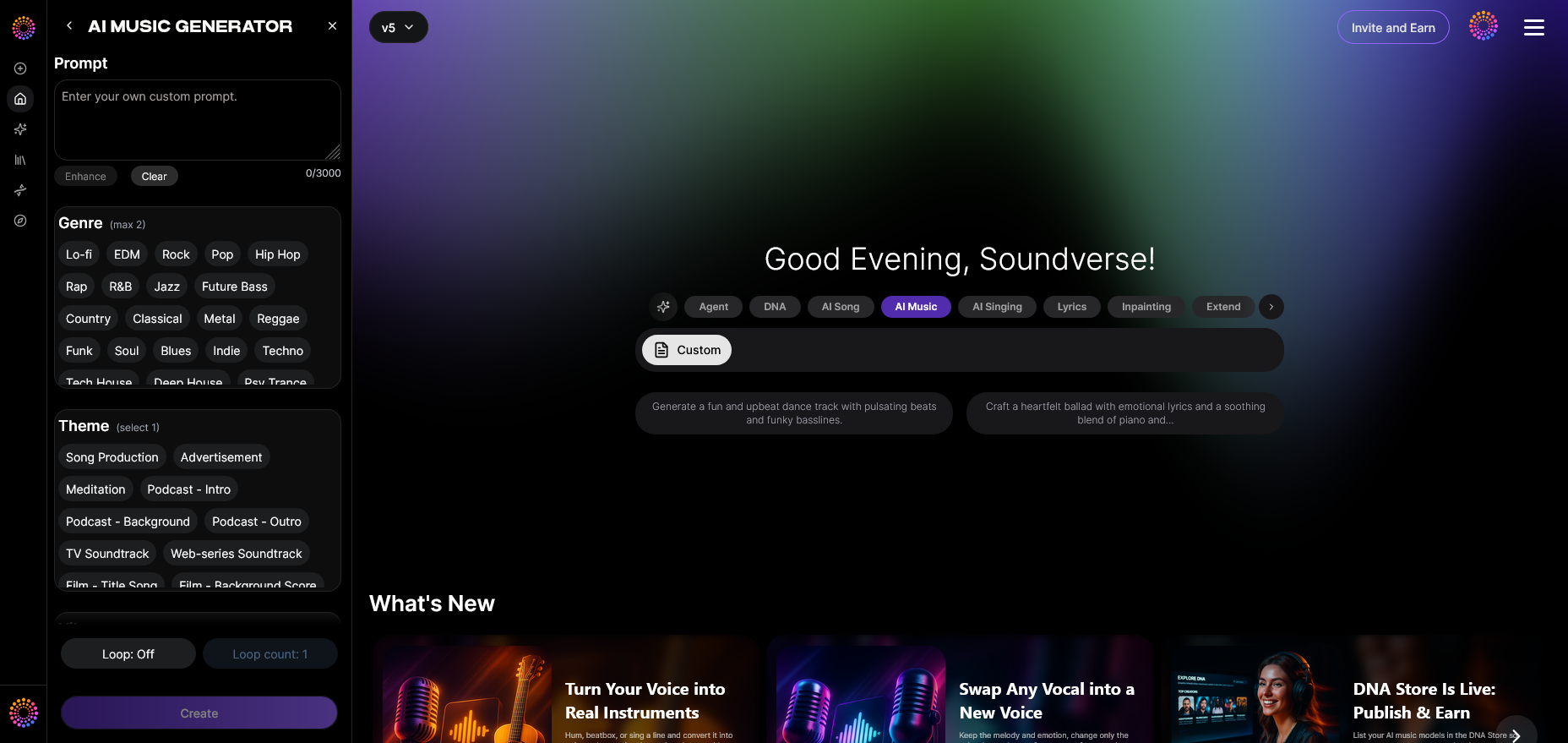
Access the AI Music Generator directly from the main menu within the Soundverse interface. Here, you choose the music generation mode best suited for the exhibit’s atmosphere.
Step 2: Description Input
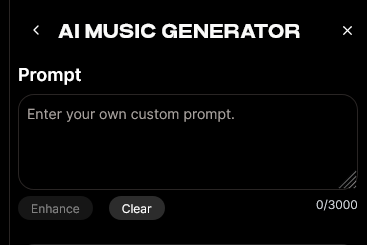
Enter a text description of the ideal background music. For example: “A soft ambient score inspired by oceanic tones for a maritime exhibit.” The AI interprets emotional adjectives, cultural references, and thematic keywords to shape composition style.
Step 3: Style & Duration
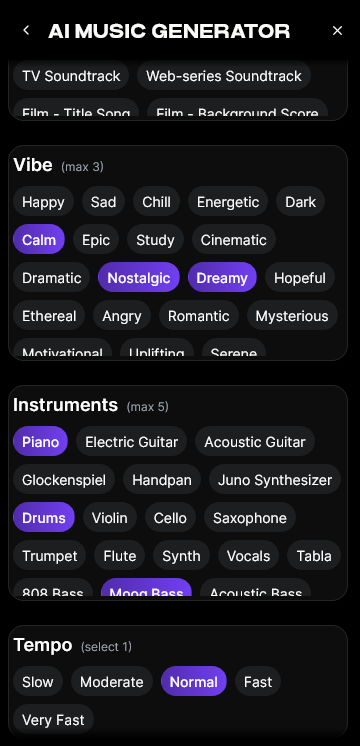
Select the desired musical style—such as classical, ambient electronic, or minimalist acoustic—and define the track’s duration. Loop Mode can be activated if the audio must play continuously in the gallery.
Step 4: Generation
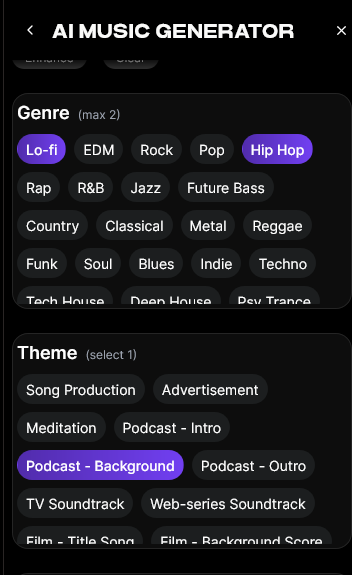
Click “Generate” to allow the AI to process your input and create the instrumental music. The generation process is asynchronous; you’ll receive the final track once processing completes.
Step 5: Export Options

After reviewing the finished piece, export the AI-generated audio in the preferred file format. The exported track can then be integrated directly into exhibit audio systems or synchronized with museum app guides.
What Makes Soundverse Ideal for Cultural and Museum Applications?
Museums rely on precision and authenticity. Soundverse’s infrastructure aligns with these values through its ethical and transparent development models.
- Soundverse Trace ensures attribution and rights transparency across every sound generated.
- The Ethical AI Music Framework provides a foundation that respects original creators while enabling innovation. This end-to-end infrastructure combines consent-based training and recurring compensation structures.
These systems are crucial for institutions committed to integrity, making Soundverse a trusted choice among modern cultural technologists. Related projects such as AI music in the USA and how AI-generated music is transforming the music industry further document the ongoing shift toward transparent, human-aligned AI music creation.
How Can Museums Implement AI Sound Integration Successfully?
- Start with Exhibit Themes: Identify emotional and cultural motifs before generating sound. Align the tone with the theme of the artwork or artifact.
- Leverage Loop Mode: Ensure smooth looping to avoid abrupt musical resets.
- Collaborate with Audio Technologists: Work with curators and sound engineers to balance intensity and spatial mapping.
- Use Soundverse’s Text-to-Music Options: You can explore examples in generate AI music with Soundverse text-to-music for creative templates.
- Monitor Visitor Feedback: Adapt compositions based on engagement analytics.
AI-driven exhibit audio doesn’t just fill silence—it deepens perception. By merging generative composition and curatorial intent, museums create multi-sensory narratives that speak beyond language.
The Future of Gallery Sound in 2026 and Beyond
Looking forward, cultural institutions are expected to expand their use of AI beyond music into fully multichannel audio systems. With layered sound zones across galleries, AI could create a distributed network of atmospheres that react in real time to visitor movement or density patterns.
By 2026, many museums already treat AI music as a form of curatorial art itself—a co-creator of experience rather than a utility. This creative partnership marks a new chapter in digital cultural engagement.
To dive deeper into AI composition innovation trends, explore companion reads like the role of AI music in film and television and soundverse AI revolutionizing music creation for new age content creators.
Bring Your Museum Guides to Life with AI Music
Enhance visitor immersion by generating custom soundscapes for each exhibit with Soundverse's AI. Create, adapt, and layer music that matches the mood and narrative of your museum’s audio guides in minutes.
Start Creating with Soundverse
Related Articles
- The Role of AI Music in Film and Television — Discover how AI-generated music is revolutionizing soundscapes for visual storytelling — from films to cultural media pieces.
- How AI-Generated Music is Transforming the Music Industry — Explore the technological evolution and creative impact of AI-generated music across industries, from entertainment to education.
- Enhancing YouTube Content with Royalty-Free and Copyright-Free Music Using Soundverse AI — Learn how creators can develop copyright-safe music and elevate their content’s atmosphere using AI tools from Soundverse.
- Navigating the World of Royalty-Free and Copyright-Free Music Using Soundverse AI — Understand how royalty-free AI music helps museums and creators share artistic experiences legally and creatively.
Here's how to make AI Music with Soundverse
Video Guide

Here’s another long walkthrough of how to use Soundverse AI.
Text Guide
- To know more about AI Magic Tools, check here.
- To know more about Soundverse Assistant, check here.
- To know more about Arrangement Studio, check here.
Soundverse is an AI Assistant that allows content creators and music makers to create original content in a flash using Generative AI.
With the help of Soundverse Assistant and AI Magic Tools, our users get an unfair advantage over other creators to create audio and music content quickly, easily and cheaply.
Soundverse Assistant is your ultimate music companion. You simply speak to the assistant to get your stuff done. The more you speak to it, the more it starts understanding you and your goals.
AI Magic Tools help convert your creative dreams into tangible music and audio. Use AI Magic Tools such as text to music, stem separation, or lyrics generation to realise your content dreams faster.
Soundverse is here to take music production to the next level. We're not just a digital audio workstation (DAW) competing with Ableton or Logic, we're building a completely new paradigm of easy and conversational content creation.
TikTok: https://www.tiktok.com/@soundverse.ai
Twitter: https://twitter.com/soundverse_ai
Instagram: https://www.instagram.com/soundverse.ai
LinkedIn: https://www.linkedin.com/company/soundverseai
Youtube: https://www.youtube.com/@SoundverseAI
Facebook: https://www.facebook.com/profile.php?id=100095674445607
Join Soundverse for Free and make Viral AI Music

We are constantly building more product experiences. Keep checking our Blog to stay updated about them!