AI Music for Ethical Creator Ecosystems in 2026
Learn how AI music supports ethical creator ecosystems in 2026 with transparent monetization and artist integrity.
AI Music for Ethical Creator Ecosystems
The rise of AI music in 2026 has transformed the way music producers, digital creators, and tech entrepreneurs approach creativity and ownership. After years of debate about data scraping, artist consent, and misuse of copyrighted catalogues (from 2024 and 2025), the industry has finally started moving toward a more sustainable and ethical framework. Today, the conversation is no longer about whether AI music is good or bad—it’s about how it can be made ethical, transparent, and fair for all participants in the creator economy.
What does ethical AI mean for the music industry in 2026?
Ethical AI refers to systems designed to respect human creativity, ensure consent, and maintain fairness in economic participation. In the context of music technology, ethical AI means AI systems trained only on licensed data, giving artists the opportunity to monetize their style while maintaining attribution and integrity.
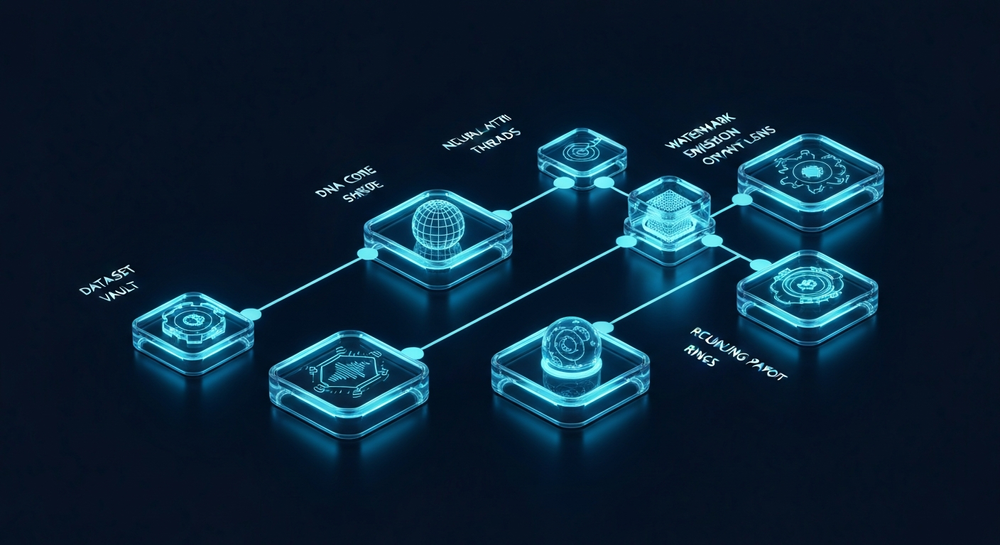
In the past, AI models frequently scraped websites for samples and stems without permission. This led to issues where musicians saw their creative DNA reproduced without acknowledgment or payment. As a result, the challenge shifted from technical performance to ethical transparency. By 2026, leading AI music platforms have begun establishing verifiable frameworks that ensure consent, data traceability, and compensation. According to recent discussions in AI Music Presents Novel Issues Within Current Frameworks, the integration of artificial intelligence into music creation presents complex copyright and licensing challenges that demand ethical solutions.
The transition toward ethical AI aligns with how the creator economy is maturing. Digital creators aren’t just individuals uploading videos or songs; they are now micro-entrepreneurs running sustainable businesses. These creators demand fair tools that protect their content from unlicensed reuse. This new standard has pushed music technology platforms to adopt traceable, ethical AI systems as the foundation for collaboration.
Why does the creator economy need ethical AI?
The creator economy relies on trust, collaboration, and fair monetization. Without ethical frameworks, creators face an uneven playing field in which AI-generated content can undercut their originality. Ethical AI systems safeguard creative ecosystems by introducing transparency across every data usage stage.
Music producers and brands now want assurance that the music generated by AI is copyright-safe. This is crucial for enterprises that use generative AI for advertisements, film scoring, or YouTube videos. Ethical AI bridges the gap between innovation and compliance—making AI music a tool for empowerment rather than exploitation. As highlighted in AI raises concerns over creativity and copyright in music, generative AI’s use of musicians’ work without permission has sparked ongoing debate—one that ethical AI systems aim to resolve.
The rapid expansion of the creator economy has shown that sustainability is not just about money—it’s also about maintaining creative dignity. Ethical frameworks preserve artists’ intellectual property, ensuring that every generated sound carries a lineage of consent and attribution.
For example, emerging artists using platforms like Soundverse can now participate in licensing programs that ensure they earn royalties whenever their contributed datasets are used. This transforms AI music from a tech novelty into a true economic system where creativity and data ethics coexist.
How music technology has evolved toward ethical systems
Between 2024 and 2025, several AI music tools focused primarily on generative performance—producing quality tracks quickly, but overlooking dataset consent. By 2026, global regulations and creator-led movements have demanded full transparency. Ethical AI music technology now integrates features like explainable inference, watermarking, and deep search to establish accountability at scale. According to The 2026 State of AI Music - Major Differences and Legal Peace, the copyright landscape has matured toward greater peace and accountability.
Developers have realized that AI creativity must not ignore human context. Modern systems use explainable modeling to show exactly where inspiration sources come from. This introduces educational and commercial benefits alike—for instance, producers can trace AI-generated stems, blending styles ethically without violating copyright.
Platforms committed to ethical AI also offer transparent export auditing via watermarking, so every track contains digital proof of its origin and permissions. These innovations have set the stage for a new generation of responsible music technology.
For creators, this shift means being able to deploy AI tools in professional workflows without fear of infringement. Whether creating meditation tracks, lofi backgrounds, or cinematic scores, the ethical structure ensures that every sound is legally compliant. You can explore applications like AI music in the USA or check out extended use cases in film and television to see how ethical AI frameworks now influence global practice. For a deeper dive, watch our guide on creating Deep House music or explore the Soundverse tutorial on music creation.
How to make ethical AI music with Soundverse The Ethical AI Music Framework
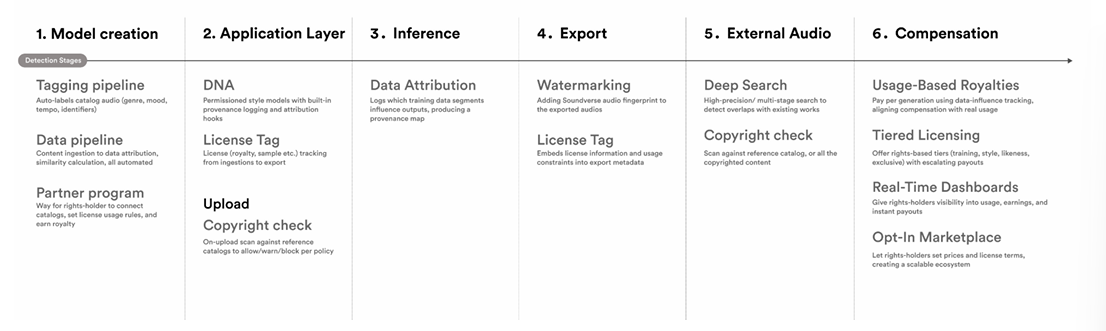
Soundverse’s Ethical AI Music Framework defines what responsible AI creativity looks like in 2026. It is a comprehensive end-to-end infrastructure that bridges the gap between innovation and artist integrity. Instead of using black-box models, Soundverse builds transparency directly into its workflow through a six-stage pipeline.
The Six-Stage Pipeline for Transparent AI Music
- Licensed Data Sourcing (No scraping) – All data used for model training comes from verified, licensed catalogs. Artists and rights-holders participate voluntarily, ensuring consent.
- Permissioned Models (DNA) – The Soundverse DNA system creates AI profiles based on authentic artist styles. This enables customized generation while maintaining ethical standards.
- Explainable Inference (Attribution) – Every AI-generated output includes traceable attribution data, showing which sources influenced the result.
- Traceable Export (Watermarking) – Generated tracks offer digital watermarking to secure ownership and prevent misuse.
- Deep Search (External Scanning) – Soundverse Trace scans across external libraries and online datasets to verify originality.
- Recurring Compensation (Partner Program) – Through the Content Partner Program, artists receive royalties based on how often their data contributes to new generations.
This structure ensures legal compliance for enterprise users, protects artist rights during AI training, and creates sustainable monetization models for labels and digital creators. It is not just an AI feature—it is a music technology ethos that advances the entire creator economy.
How AI creativity empowers digital creators in 2026
Digital creators in 2026 have become highly diversified. They produce podcasts, YouTube intros, social campaigns, and virtual experiences where music plays a core role. AI music enables them to generate soundscapes for every project style and duration, allowing faster production cycles without compromising creativity.
However, ethical AI ensures that creators don’t unknowingly infringe on other artists’ rights. Transparent platforms like Soundverse combine advanced generation systems with explainable modeling to maintain both creative and legal integrity. This balance is critical for sustainable digital production.
A creator using Soundverse can generate genre-specific tracks—for example, an EDM score or jazz-inspired background—by inputting text descriptions. You can try workflows like creating EDM with Soundverse AI or making jazz tracks ethically to see how consistent and copyright-safe music generation now works.
In addition, ethical AI transforms collaboration. Producers can allow their stylistic DNA to be used by others under licensed frameworks, forming micro-economies within the broader creator ecosystem. AI no longer replaces artists—it becomes a multiplier for creativity.
How Soundverse strengthens the ethical creator economy
The Soundverse ecosystem provides several interconnected tools that help creators thrive ethically:
- Content Partner Program: Rights-holders opt into licensed data contributions for AI training, earning recurring royalties based on verified attribution. This encourages artists to participate confidently.
- Soundverse Trace: This trust layer ensures transparency and integrity throughout the AI music lifecycle—from dataset creation to final export.
- Soundverse DNA: Artist-trained models generate music aligned with specific sonic identities, allowing creators to monetize their creative DNA securely.
Together, these tools create a self-sustaining framework where every creative act feeds back into a transparent value loop. Instead of competing against machines, artists collaborate with ethical AI engines that respect their authorship.
Ethical AI systems drive innovation responsibly. By connecting transparency with creativity, Soundverse sets a standard other music platforms strive to meet. Competitors such as Mubert, Soundraw, or Suno offer generative capabilities but often lack deep rights integration. Soundverse’s focus on data licensing and recurring compensation makes it a cornerstone of ethical music technology in 2026.
Create Ethical AI Music with Soundverse
Generate unique AI music while ensuring transparency, fair use, and creative integrity. Join Soundverse to explore a platform built for ethical creators who innovate responsibly.
Related Articles
- How AI-Generated Music Is Transforming the Music Industry: Discover how AI music tools are reshaping production, collaboration, and the economics of music creation.
- AI Music Generator and Human Composers: A Future Together: Explore how human creativity and AI algorithms can harmonize to build the next generation of musical art.
- The Role of AI Music in Film and Television: Learn how AI music is changing the way soundtracks and scores are produced in modern entertainment.
- AI Music in the USA: Understand the evolving legal, ethical, and creative landscape shaping AI music within the US market.
Here's how to make AI Music with Soundverse
Video Guide

Here’s another long walkthrough of how to use Soundverse AI.
Text Guide
- To know more about AI Magic Tools, check here.
- To know more about Soundverse Assistant, check here.
- To know more about Arrangement Studio, check here.
Soundverse is an AI Assistant that allows content creators and music makers to create original content in a flash using Generative AI. With the help of Soundverse Assistant and AI Magic Tools, our users get an unfair advantage over other creators to create audio and music content quickly, easily and cheaply. Soundverse Assistant is your ultimate music companion. You simply speak to the assistant to get your stuff done. The more you speak to it, the more it starts understanding you and your goals. AI Magic Tools help convert your creative dreams into tangible music and audio. Use AI Magic Tools such as text to music, stem separation, or lyrics generation to realise your content dreams faster. Soundverse is here to take music production to the next level. We're not just a digital audio workstation (DAW) competing with Ableton or Logic, we're building a completely new paradigm of easy and conversational content creation.
TikTok: https://www.tiktok.com/@soundverse.ai
Twitter: https://twitter.com/soundverse_ai
Instagram: https://www.instagram.com/soundverse.ai
LinkedIn: https://www.linkedin.com/company/soundverseai
Youtube: https://www.youtube.com/@SoundverseAI
Facebook: https://www.facebook.com/profile.php?id=100095674445607
Join Soundverse for Free and make Viral AI Music

We are constantly building more product experiences. Keep checking our Blog to stay updated about them!