AI Music and Ethical Defaults: Building Trust in 2026’s Creative AI Ecosystem
Explore AI music ethics and Soundverse's Ethical AI Music Framework shaping responsible innovation in 2026.
AI Music and Ethical Defaults
In 2026, the evolution of artificial intelligence in music has reached a pivotal moment. As technologies grow capable of mimicking human creativity, stakeholders in the creative industry—ranging from music technologists to AI developers and digital ethicists—are grappling with fundamental questions about the moral landscape of this transformation. The term “AI music ethics” has become a cornerstone of discussion among leading platforms, regulatory bodies, and artistic communities worldwide.
Why are AI music ethics critical in 2026?
AI-generated music has transcended experimentation and entered commercial distribution, entertainment, education, and social media personalization. However, as AI systems continue to generate content trained from historical music catalogs, ethical challenges unfold rapidly. Consent, attribution, and fair compensation are no longer abstract ideals—they define the legitimacy and sustainability of digital creativity.
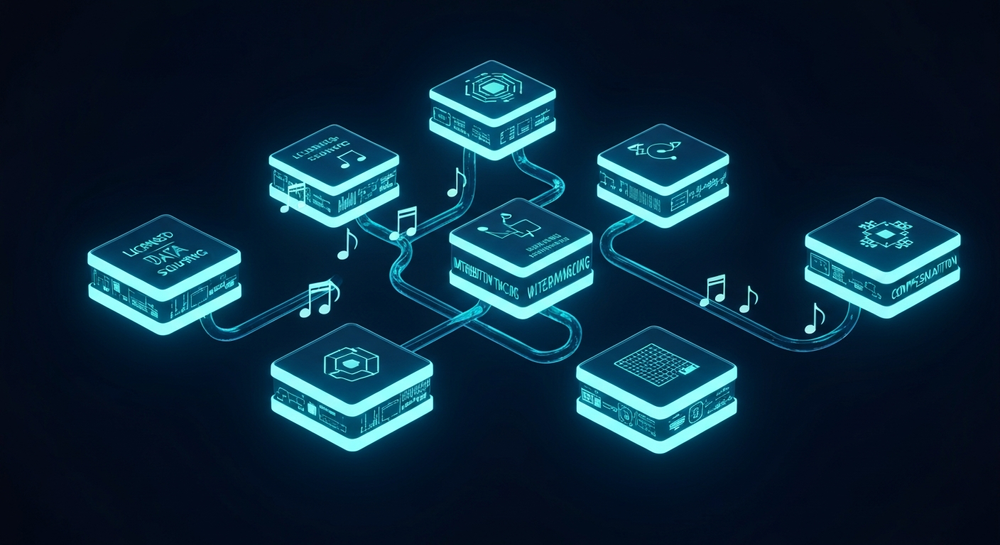
Ethical AI development demands not only transparency but also enforceable safeguards that ensure artists’ voices, styles, and legacies are respected. Past controversies in 2024 and 2025, involving unauthorized data scraping and imitation of popular artists, triggered widespread discussions and regulatory actions. By 2026, the industry recognizes that responsible AI design must be embedded into every layer of the creation pipeline rather than introduced as an afterthought. As highlighted in AI Music Ethics and Disclosure: Complete Guide for 2026, these principles are now becoming legal and cultural expectations across creative platforms.
What defines responsible AI design in music?

Responsible AI design rests on four interconnected pillars:
- Consent and Data Integrity: Models must be trained on licensed or permissioned data, avoiding the extraction of protected material through scraping.
- Transparent Attribution: Each AI-generated output should be able to trace its lineage back to the contributing artists and datasets.
- Sustainable Compensation: Rights-holders should receive recurring royalties, reflecting ongoing usage of their creative DNA.
- Explainability and Accountability: AI creators and operators must document decisions, ensuring auditability and compliance with emerging global AI governance laws.
This responsibility aligns closely with the movement called creative responsibility in technology, a growing philosophy that positions AI systems as cooperative partners rather than exploitative replicators. Ethical defaults are now the cornerstone of AI systems that aspire to scale transparently across industries like music and film.
How does ethical AI development influence creativity?
Ethical frameworks influence both the design of AI tools and the creative culture surrounding them. Developers building artificial intelligence in music increasingly recognize that ethical compliance can accelerate innovation by building public and professional trust. Artists are more willing to collaborate with platforms that respect their works. Moreover, enterprises gain legal assurance when distributing AI music globally.
Without these ethical foundations, creative technology runs the risk of eroding the very ecosystem it depends on. For example, non-transparent models using unlicensed datasets can lead to legal disputes, revenue losses, and resistance from artists. Conversely, frameworks centered on licensed data and transparent attribution create opportunities for healthy collaboration and commercialization. This vision is echoed in articles like Sony Music Joins Industry Push for Ethical AI and Protections for Creative Work.
What are the leading principles shaping AI music ethics in 2026?
The 2026 ethical landscape is shaped by several guiding standards:
- Transparency: Every generative output must be explainable, with accessible audit trails.
- Consent-driven training: Datasets should rely on explicit permissions from rights-holders.
- Accountable monetization: AI operators share profits through verifiable royalty programs.
- Cultural inclusion: AI should reflect diversity in sound representation rather than reinforce dominant historical catalogs.
- Ongoing governance: Systems periodically undergo ethical audits to remain compliant with international creative laws.
As the AI music field matures, technologies that embed these principles are taking the lead. Soundverse’s infrastructure exemplifies this transition, merging ethical oversight with creative scalability. For further learning, watch our guide on creating Deep House music or visit the Explore tab tutorial on our YouTube channel.
How to make responsible AI music with Soundverse The Ethical AI Music Framework
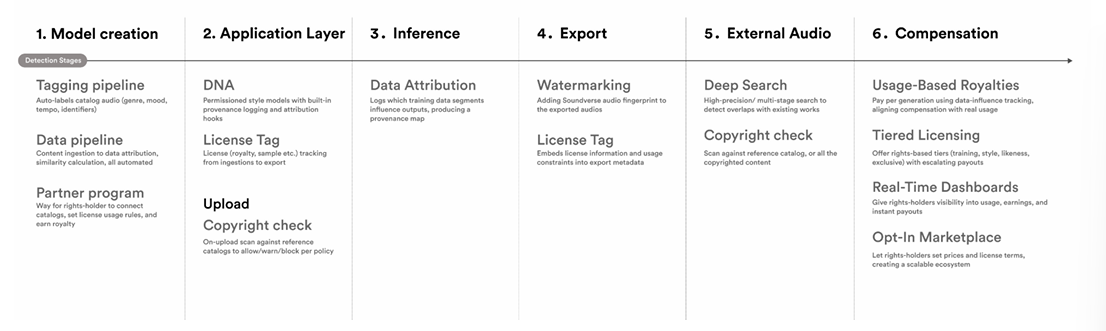
Soundverse’s Ethical AI Music Framework serves as a new benchmark for sustainable and trustworthy AI creation. This end-to-end infrastructure bridges innovation with artist integrity, deliberately replacing opaque black-box models with a transparent six-stage pipeline.
The Six Stages of Ethical AI Music
- Licensed Data Sourcing: All training material originates from verified and licensed audio inputs—never scraped from the internet. This ensures legal protection and artistic consent.
- Permissioned Models (DNA): Models are developed with explicit rights-holder participation, capturing the authentic sonic DNA of artists. This capability is actualized through platforms such as Soundverse DNA, which allows creators to monetize their unique style.
- Explainable Inference (Attribution): Each AI output is accompanied by clear attribution records, allowing users and auditors to identify source contributors.
- Traceable Export (Watermarking): AI-generated music includes embedded identifiers, facilitating accountability when content circulates across streaming and social platforms.
- Deep Search (External Scanning): This stage allows proactive rights detection, identifying unauthorized AI music that resembles licensed styles.
- Recurring Compensation (Partner Program): Through the Content Partner Program, rights-holders receive recurring royalties linked to their audio contributions.
The model creates a virtuous cycle—ethical compliance enhances innovation, while artist collaboration fosters financial sustainability.
What other Soundverse tools enhance ethical creation?
Beyond the Ethical Framework, Soundverse offers several interconnected solutions reinforcing transparency and responsibility:
- Soundverse Trace: A trust layer embedded across the music lifecycle, enabling attribution verification and rights protection.
- Soundverse DNA: A system that protects artist identity in AI music generation, ensuring originality while preventing imitation.
- Content Partner Program: An opt-in licensing initiative empowering artists to earn royalties through verified AI usage.
These tools align with broader technological principles described in articles such as The Role of AI Music in Film and Television, How AI-Generated Music is Transforming the Music Industry, and AI Music Generator and Human Composers: A Future Together.
To learn more, check out our How to Make Music tutorial video.
How do ethical defaults redefine creative responsibility in technology?
The emergence of ethical defaults means that compliance and creativity are now intertwined. Instead of merely reacting to regulations, platforms are proactively embedding ethical design principles into their operational pipelines. For Soundverse users, this ensures that each text-to-music or arrangement process aligns with respect for rights and sustainability.
Ethical defaults are vital not only for protecting artists but also for cultivating trust among consumers. As generative AI becomes increasingly integrated into content creation tools for YouTube, advertising, and gaming, transparency ensures users understand the origin and legitimacy of generated music.
In practice, ethical defaults mean:
- Developers must design consent-first systems.
- Artists can track and monetize their creative fingerprints.
- Enterprises deploy AI music solutions without fear of litigation.
By 2026, such integration of ethics and innovation is not optional—it defines competitive advantage.
Examples of responsible adoption of AI music ethics
Several enterprise sectors are now adapting to frameworks similar to Soundverse’s model. Media agencies use watermarking to verify AI soundtracks. Labels collaborate through licensed training partnerships. Educational institutions train AI models with open-source or permissioned datasets, encouraging students to explore innovation responsibly.
The ecosystem’s rapid maturity illustrates how ethical AI development stimulates creativity instead of restricting it. Transparent systems empower creators with new instruments while establishing fair economic models.
Why is Soundverse leading the ethical music technology movement?
Soundverse remains at the forefront due to its deep integration of artist-oriented design and enterprise-level compliance mechanisms. Every output—whether generated instrumentals or full compositions—carries the ethical DNA of its origin. The company’s mission aligns with global expectations of fairness, inclusivity, and transparency in the age of generative creativity.
For industry leaders evaluating reliable AI platforms, comparisons such as Best AI Music Generator—Top Picks and Review or Mubert Alternatives: Why Soundverse Leads demonstrate how ethical infrastructure serves as a differentiating factor.
Create Ethically Inspired Music with Soundverse AI
Discover how easy it is to generate high-quality, royalty-free music while maintaining ethical standards in AI music production. Join a creative community shaping the future of responsible sound generation.
Start Creating with Soundverse
Related Articles
- How AI-Generated Music Is Transforming the Music Industry: Explore how AI technologies are reshaping music creation, production, and distribution around the world.
- AI Music Generator and Human Composers: A Future Together: Learn how AI and human creativity are blending to redefine the boundaries of musical collaboration.
- The Role of AI Music in Film and Television: Find out how AI-generated compositions are changing the way soundtracks are created for movies and TV shows.
- Copyright Free vs Royalty Free Music: What Creators Should Know: Understand the key differences between copyright-free and royalty-free music to stay compliant and creative.
Here's how to make AI Music with Soundverse
Video Guide

Here’s another long walkthrough of how to use Soundverse AI.
Text Guide
- To know more about AI Magic Tools, check here.
- To know more about Soundverse Assistant, check here.
- To know more about Arrangement Studio, check here.
Soundverse is an AI Assistant that allows content creators and music makers to create original content in a flash using Generative AI. With the help of Soundverse Assistant and AI Magic Tools, our users get an unfair advantage over other creators to create audio and music content quickly, easily and cheaply. Soundverse Assistant is your ultimate music companion. You simply speak to the assistant to get your stuff done. The more you speak to it, the more it starts understanding you and your goals. AI Magic Tools help convert your creative dreams into tangible music and audio. Use AI Magic Tools such as text to music, stem separation, or lyrics generation to realise your content dreams faster. Soundverse is here to take music production to the next level. We're not just a digital audio workstation (DAW) competing with Ableton or Logic, we're building a completely new paradigm of easy and conversational content creation.
TikTok: https://www.tiktok.com/@soundverse.ai
Twitter: https://twitter.com/soundverse_ai
Instagram: https://www.instagram.com/soundverse.ai
LinkedIn: https://www.linkedin.com/company/soundverseai
Youtube: https://www.youtube.com/@SoundverseAI
Facebook: https://www.facebook.com/profile.php?id=100095674445607
Join Soundverse for Free and make Viral AI Music

We are constantly building more product experiences. Keep checking our Blog to stay updated about them!