A Practical Guide to AI Music Licensing for Startups and SaaS Teams
Learn how startups and SaaS teams can manage AI music licensing, compliance, and integration in 2026.
A Practical Guide to AI Music Licensing for Startups and SaaS Teams
In 2026, the conversation around AI music licensing has evolved from curiosity to necessity. With the explosive growth of SaaS video tools, short-form marketing content, and generative soundscapes built with text-to-music platforms, founders and creative teams are asking the same question: how do we legally and ethically use AI-generated or royalty-free music in our digital products? This guide breaks down everything a startup or SaaS team needs to know about AI music licensing — from choosing the right type of license to integrating compliant, high-quality soundtracks into products at scale.
Why AI music licensing matters for startups in 2026
Generative AI is now powering product demos, explainer videos, onboarding sequences, and ambient app soundtracks. Because music has such emotional impact, startups often rely on AI tools to quickly generate fitting scores. But as AI-generated sound expands into commercial use, the gray area of ownership and attribution grows. Using AI music without understanding its licensing terms can expose companies to serious compliance risks.
AI music licensing ensures that when you use music created or trained with AI, all contributing rights-holders receive proper credit and royalties. It’s not just about legal safety – it’s also about showing respect for artists and ethical AI development. In 2026, investors, regulators, and users expect startups to follow these principles.

What makes AI music licensing different from traditional music licensing?
Traditional licensing covers pre-existing music (think record labels, publishers, and sync rights). AI music, on the other hand, may come from datasets trained on thousands of songs, often with complex ownership layers. If you’re using a service labeled royalty-free AI music, make sure it truly provides commercial rights and includes verified attribution.
Key differences:
- Training data transparency: AI models depend on how ethically their training data was sourced.
- Attribution tracking: Licenses can include automated attribution mechanisms that credit original contributors.
- Usage-based royalties: Instead of fixed fees, some systems calculate royalties per generation or per export event.
These distinctions have made AI music compliance an emerging legal discipline, especially for SaaS platforms embedding music libraries or audio generation features.

How to make AI music licensing work for SaaS and startup workflows with Soundverse Content Partner Program
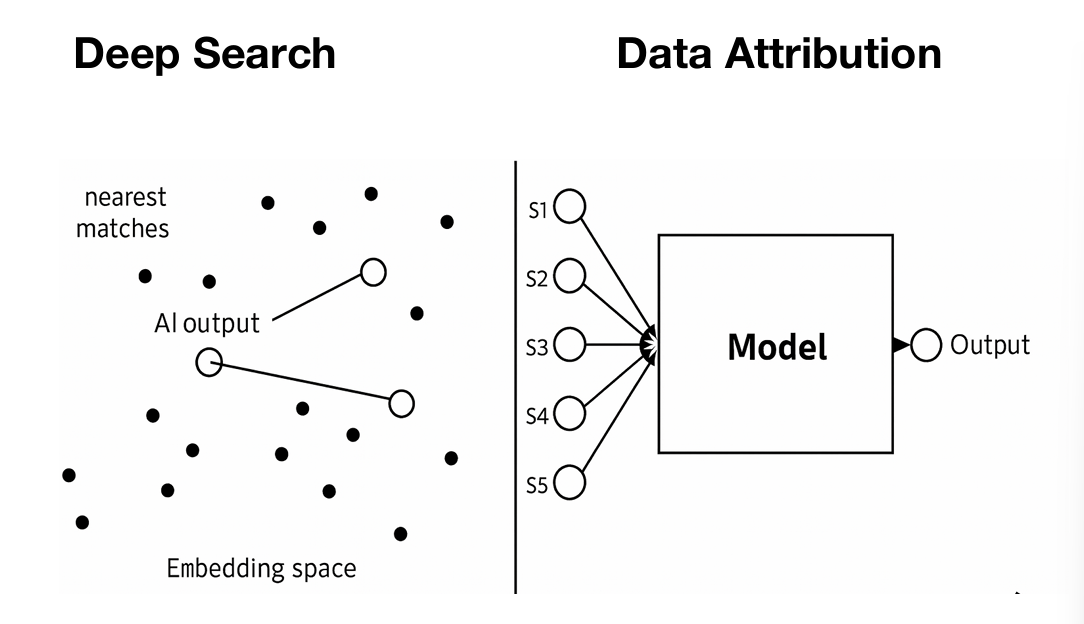
Soundverse’s Content Partner Program provides a foundational approach for rights-holders and startups to coexist within the AI music economy. Built as an opt-in licensing framework, it allows music creators to contribute their audio for AI model training. In return, contributors earn recurring, usage-based royalties whenever their work influences an AI-generated soundtrack or composition.
Core features and benefits
- Influence-Based Payouts: Payments are distributed based on measurable influence metrics – essentially, contributors are paid per generation.
- Tiered Licensing (Tiers 1–6): Different tiers accommodate various commercial use cases, from internal prototypes to full-scale public distribution.
- Real-Time Dashboards: Rights-holders can view earnings, licensing tiers, and attribution data through a transparent dashboard experience.
- Transparency Reports: Every track used or generated can be traced back to its source material, offering a level of accountability crucial for corporate compliance teams.
For startups: This structure removes uncertainty. You get access to licensed, ethically sourced AI music that can scale with your production pipeline. Whether embedding background tracks in SaaS explainer videos or integrating soundscapes into mobile apps, Soundverse ensures attribution integrity without extra administrative burden.
This is part of the broader Ethical AI Music Framework, which guarantees consent, attribution, and recurring compensation. It also works seamlessly with Soundverse Trace, the trust layer that embeds rights metadata and ensures compliance across the entire lifecycle—from dataset creation to export.
Step 1: Audit your existing sound sources
The first step in achieving compliant AI music licensing is knowing what you already use. If your SaaS or startup marketing workflow involves video editors, explainer reels, or automated social content, list each track and identify its origin. Check whether your music comes from truly royalty-free, AI-generated, or traditional sources. For practical context, review how AI-generated music is transforming the music industry.
Step 2: Choose a compliant AI music provider
Opt for providers that guarantee attribution integrity and transparent data sourcing. A good provider should tell you not only that the music is licensed but also how it is licensed. Services leveraging transparent frameworks – like Soundverse’s Content Partner Program – protect both creators and commercial users.
Compare your options. While tools such as Mubert or Amper Music can generate royalty-free music, many lack a clear attribution ledger. If you need an ethical and scalable alternative, see the breakdown in Mubert Alternatives: Why Soundverse is the Ethical AI Music Platform.
Step 3: Match licenses to your business use case
Startups tend to overlook how license tiers affect distribution. For instance, music used in internal product demos may require a basic license, but the same track in a customer-facing SaaS onboarding sequence likely needs a higher tier. With Soundverse’s tiered licensing, upgrading use rights is straightforward. This flexibility protects your launching campaigns from unexpected claims after scaling.
Step 4: Integrate licensing data into your workflow
When automating content generation in SaaS platforms, link your music licensing records directly into your asset management system. This ensures traceability for every clip or exported video. If your team builds API-based content systems, embedding metadata such as license ID and attribution tag satisfies most 2026 compliance guidelines.
Soundverse Trace helps streamline this by embedding attribution securely at the file level—ideal for SaaS video music usage.
Step 5: Train teams on ethical music use
The last step is human—educating everyone who uploads, edits, or publishes audio. Build a quick-reference guide that defines royalty-free vs. copyright-free material, referencing articles like Copyright-Free vs. Royalty-Free Music: What Creators Should Know. Make sure your marketing and product design teams understand that “free” does not mean “without responsibility.” For a deeper dive, watch our guide on creating Deep House music or explore our tutorial on the Soundverse “Explore” tab for workflow best practices.
Pro Tips for startups managing AI music compliance
- Use royalty logs: Keep a record of all generations and exports for potential audits.
- Stay updated on evolving AI music policies: As of 2026, regulators in the EU and US are finalizing frameworks for dataset consent—monitor these changes.
- Prefer trackable, not anonymous generation systems: Choose models that can show attribution back to verified contributors.
- Combine creative efficiency with ethical sourcing: AI should be a collaborative partner, not a shortcut around rights management.
Start Creating Licensed AI Music for Your Brand Today
Unlock access to Soundverse’s AI-powered music generation tools to create, license, and customize tracks for your startup or SaaS platform—quickly and legally.
Related Articles
- Navigating the World of Royalty-Free and Copyright-Free Music Using Soundverse AI: Discover how to legally and safely use music in your digital projects without worrying about copyright issues.
- The Role of AI Music in Film and Television: Explore how AI music is transforming scoring and licensing workflows in video and entertainment industries.
- How AI-Generated Music Is Transforming the Music Industry: Learn about the groundbreaking changes AI music generators are bringing to composition, licensing, and distribution.
- Copyright-Free vs. Royalty-Free Music: What Creators Should Know: Understand the key differences between copyright-free and royalty-free tracks to make informed licensing decisions.
Here's how to make AI Music with Soundverse
Video Guide

Here’s another long walkthrough of how to use Soundverse AI.
Text Guide
- To know more about AI Magic Tools, check here.
- To know more about Soundverse Assistant, check here.
- To know more about Arrangement Studio, check here.
Soundverse is an AI Assistant that allows content creators and music makers to create original content in a flash using Generative AI.
With the help of Soundverse Assistant and AI Magic Tools, our users get an unfair advantage over other creators to create audio and music content quickly, easily and cheaply.
Soundverse Assistant is your ultimate music companion. You simply speak to the assistant to get your stuff done. The more you speak to it, the more it starts understanding you and your goals.
AI Magic Tools help convert your creative dreams into tangible music and audio. Use AI Magic Tools such as text to music, stem separation, or lyrics generation to realise your content dreams faster.
Soundverse is here to take music production to the next level. We're not just a digital audio workstation (DAW) competing with Ableton or Logic, we're building a completely new paradigm of easy and conversational content creation. TikTok: https://www.tiktok.com/@soundverse.ai Twitter: https://twitter.com/soundverse_ai Instagram: https://www.instagram.com/soundverse.ai LinkedIn: https://www.linkedin.com/company/soundverseai Youtube: https://www.youtube.com/@SoundverseAI Facebook: https://www.facebook.com/profile.php?id=100095674445607
Join Soundverse for Free and make Viral AI Music

We are constantly building more product experiences. Keep checking our Blog to stay updated about them!
Image Steps: []