Long-Tail AI Music Keywords: How to Target the Future of Intelligent Sound Discovery
Learn how long-tail AI music keywords drive intelligent sound discovery and boost AI music SEO in 2026.
Long-Tail AI Music Keywords: How to Target the Future of Intelligent Sound Discovery
In 2026, digital music discovery has evolved beyond basic genre searches and playlist optimization. With artificial intelligence reshaping how audiences find and interact with sound, SEO professionals and music technology startups are increasingly turning to long-tail AI music keywords to capture micro-intent and feed machine learning–driven recommendation systems. This article unpacks how these niche queries are redefining intelligent sound discovery and how brands can strategically position themselves in the future of AI music SEO.
What are Long-Tail AI Music Keywords and Why Do They Matter in 2026?
Long-tail keywords are search phrases that contain three or more words and express specific intent—for example, “AI-generated lo-fi chill music for podcasts” rather than simply “AI music.” In the context of AI music, these long phrases help pinpoint narrow interest zones among audiences exploring artificial intelligence-driven sound. They usually reveal micro-niches like “AI-generated jazz for film scoring,” “machine learning ambient music for wellness,” or “AI music generator for indie game soundtracks.”

In 2026, long-tail AI music keywords have become vital because the AI music ecosystem has expanded dramatically. Platforms now produce adaptive tracks tailored to emotions, environments, and brand themes. The more precise a user’s query, the better the AI recommendation system or search algorithm can connect them with relevant content. Marketers leveraging these detailed terms can outperform competitors relying on generic keywords.
How Have AI Music Search Trends Evolved Since 2024?
Between 2024 and 2026, AI-generated music search trends shifted from curiosity to utility. Early adopters sought novelty, asking “Can AI make music?” By 2025, musicians and content creators were exploring integration—such as blending human vocals with AI-based arrangements. Now, in 2026, search intent reflects professional adoption and ethical transparency. Queries like “royalty-safe AI jazz loops” or “verified AI soundtracks for commercial use” signal a maturing market.

Machine learning music keywords now often coincide with semantic layers—users want validation of rights and provenance besides quality. This is where attribution and rights protection frameworks matter, particularly for marketers focusing on compliance and legitimacy. For deeper insights into how AI is transforming global sound ecosystems, explore AI-generated music trends.
How Can Digital Marketers Identify High-Intent Niche AI Music Keywords?
To build an effective strategy around niche AI music queries, marketers can follow several proven approaches:
- Analyze Emerging Microgenres: Search interest data from streaming and social media reveals rising microgenres like “AI-generated cinematic ambient” or “machine learning lo-fi textures.” Each reflects distinct creative uses of artificial intelligence.
- Leverage Community Data: Subreddits, YouTube comments, and Discord servers centered on AI music tools showcase authentic phrases creators use—gold mines for discovering long-tail AI music keywords.
- Monitor Competitor SEO Footprints: Platforms such as Soundraw and Mubert demonstrate how descriptive music-related terms evolve. You can also explore comparisons like Soundraw Alternative or Mubert Alternatives to study semantic variations.
- Use Predictive Search Tools: AI-driven SEO platforms can project future music keyword growth based on personalization data. Combining predictive analytics and contextual sentiment increases keyword specificity.
For a deeper dive, watch our guide on creating Deep House music or learn how to make music using Soundverse tools.
What Are the Dominant Long-Tail AI Music Keyword Categories in 2026?
Long-tail AI music categories can be classified across user intent and market verticals:
- Emotion-Based Discovery: Examples include “AI music for focus and productivity” or “AI-generated relaxation sounds for therapy.”
- Use-Case-Driven Keywords: “AI music generator for YouTube intros,” “AI soundtrack tools for film editors,” or “machine learning beats for dance tutorials.” These reflect commercial applications.
- Ethical and Attribution-Based Searches: Growing awareness around copyright and AI training data leads to long-tail keywords like “transparent AI music platform with rights tagging.”
- Platform-Specific Conversion Terms: Brands benefit from keywords indicating user familiarity—“generate AI music with Soundverse text-to-music” or “best AI music generator for content creators.” Using relevant internal resources like Text-to-Music Creation can reinforce user retention through contextual linking.
Explore our “Explore” Tab tutorial to see how long-tail tags enhance search filtering.
How Does Artificial Intelligence Music Marketing Benefit from Long-Tail SEO?
Artificial intelligence music marketing relies on precision alignment between creative output and audience expectation. Unlike traditional music SEO that prioritizes genre, AI music SEO focuses on descriptor-rich metadata and machine perception. Long-tail keywords allow:
- Better Personalization: AI systems ingest these queries to refine recommendation algorithms, ensuring creators reach audiences seeking exact emotional styles.
- Ethical Transparency: As attribution frameworks evolve, marketers use long-tail keywords referencing “provenance-verified AI tracks” to promote compliant content.
- Conversion Optimization: Longer phrases capture users further along the decision journey—those ready to subscribe, license, or generate custom music.
This alignment enhances organic traffic for music tech startups and strengthens the performance of AI music catalogs across search and streaming ecosystems.
What SEO Techniques Work Best for AI-Generated Music in 2026?
AI music SEO has matured into a fusion of semantic optimization and audio-based metadata classification. Effective practices include:
- Embedding Contextual Tags: Use AI-friendly descriptors like mood, tempo, and vibe directly in captions and descriptions. This helps search engines relate music outputs to user emotion queries.
- Using Structured Data Markup: Adding JSON-LD elements describing track provenance, licensing, and creator attribution ensures compliance and improves relevance signals.
- Refreshing Keyword Lists Quarterly: New long-tail AI music keywords emerge faster than standard digital trends; continuous update cycles maintain authority.
- Cross-Linking Content Assets: For example, link to posts such as Music Industry Trends and AI Music Generator Reviews to drive deeper engagement within specialized networks.
How to Make Long-Tail AI Music Keyword Optimization Sustainable
Sustainability requires maintaining ethics, transparency, and traceability in every AI interaction. Companies must ensure that models used for generating music have documented training sources, consent, and compensation systems. Long-tail keywords explicitly referencing transparency enhance brand trust. Terms such as “AI model with licensed datasets” or “ethically trained AI composer engine” differentiate responsible creators.
This aligns with industry frameworks emphasizing attribution—an increasing focus since 2025—when major music platforms began integrating audit trails for AI-generated tracks.
How to make Long-Tail AI Music Keyword Campaigns with Soundverse Trace
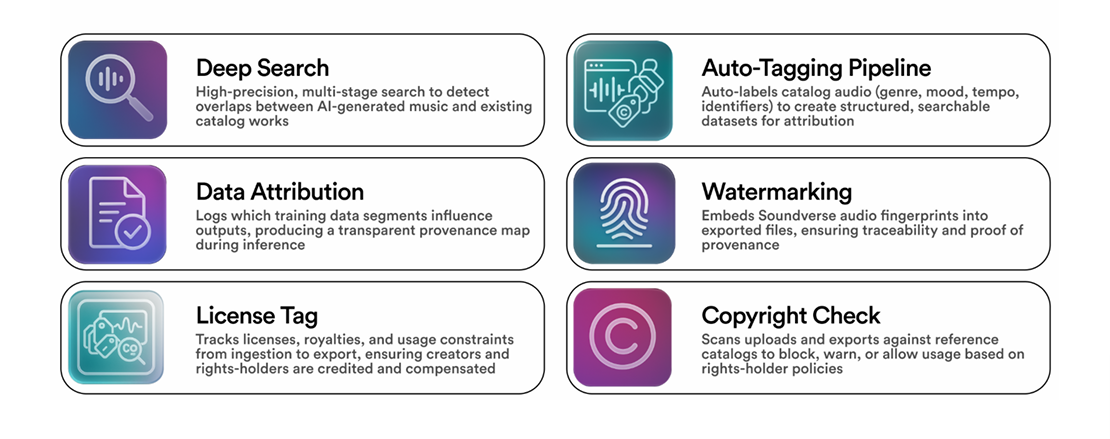
Now that you understand why long-tail AI music keywords shape intelligent sound discovery, here is how to create compliant, keyword-verified campaigns using Soundverse Trace.
Soundverse Trace is a comprehensive trust layer for AI music that embeds attribution, deep search, and rights protection throughout the creative lifecycle. Its key capabilities include:
- Deep Search: High-precision scanning (1:1, 1:N) for overlap detection, crucial when analyzing datasets behind AI-generated music outputs.
- Data Attribution: Automatically logs which training audio influenced final results, supporting transparency in keyword-targeted campaigns.
- Audio Watermarking: Embeds inaudible fingerprints ensuring that every file remains verifiable across publishing channels.
- License Tagging: Preserves rights metadata from ingestion to export, preventing copyright misuse and simplifying royalty workflows.
Use cases include preventing infringement, tracking catalog usage for royalty payouts, and verifying provenance before distributing AI-generated songs tagged with niche phrases. As part of the wider Ethical AI Music Framework, Soundverse Trace integrates with the Content Partner Program—giving rights-holders recurring, attribution-driven royalties. For users scaling branded sound experiences, it ensures every AI-generated asset can be traced back to licensed data and ethical consent.
For marketers optimizing their AI music SEO pipelines, Soundverse Trace connects keyword targeting with transparent audio governance. Whether running campaigns like “AI music generator for video editors” or “machine learning ambient tracks for yoga apps,” verified attribution systems reinforce both SEO credibility and creative trust.
Start Creating Smarter AI Music Today
Unlock the power of Soundverse to generate high-quality, personalized soundtracks using advanced AI and optimized keyword targeting. Harness creative control with intelligent sound discovery tools built for modern creators.
Sign Up Free
Related Articles
- How AI-Generated Music Is Transforming the Music Industry — Explore how artificial intelligence is reshaping composition, production, and listener experiences across genres.
- Soundverse Assistant: Your AI Music Co-Producer — Discover how Soundverse Assistant helps musicians refine their sound and streamline creation through intelligent AI tools.
- AI Music Generator and Human Composers: A Future Together — Learn how AI complements human artistry, enabling collaborative music creation like never before.
- The Role of AI Music in Film and Television — See how AI music is changing soundtracking for visual media, helping creators produce cinematic sound quickly and efficiently.
Here's how to make AI Music with Soundverse
Video Guide
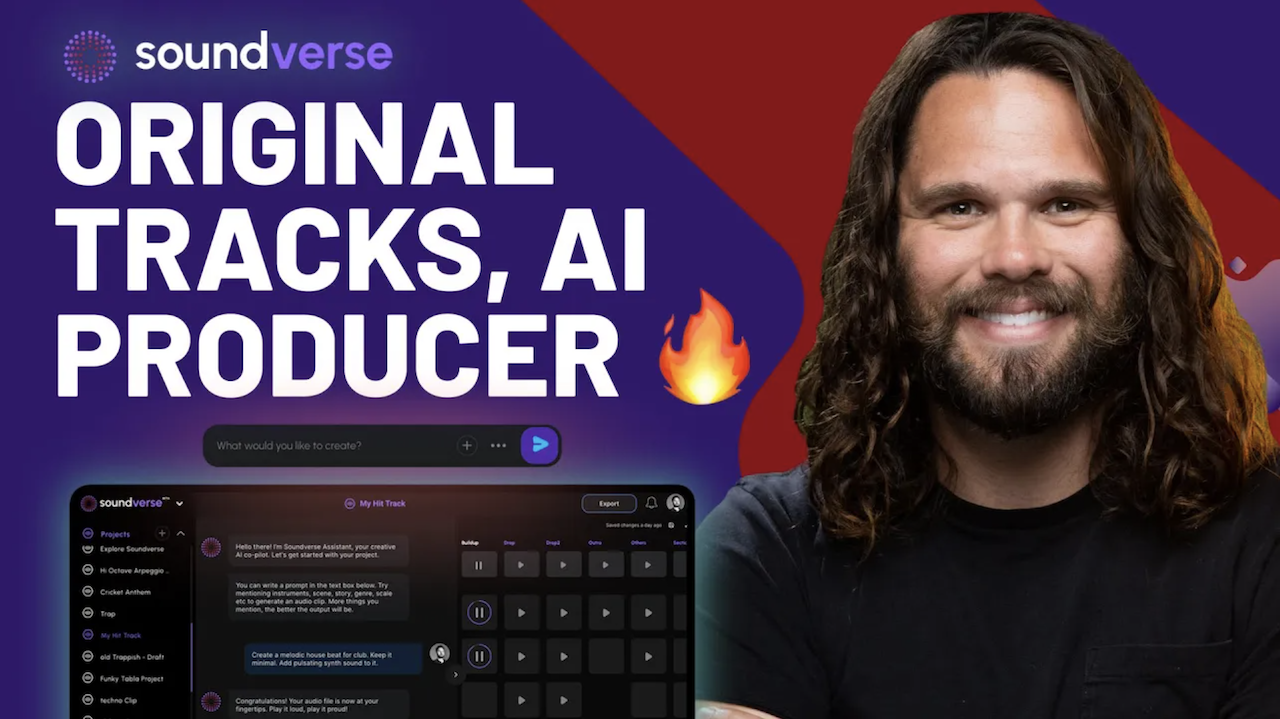
Here’s another long walkthrough of how to use Soundverse AI.
Text Guide
- To know more about AI Magic Tools, check here.
- To know more about Soundverse Assistant, check here.
- To know more about Arrangement Studio, check here.
Soundverse is an AI Assistant that allows content creators and music makers to create original content in a flash using Generative AI. With the help of Soundverse Assistant and AI Magic Tools, our users get an unfair advantage over other creators to create audio and music content quickly, easily and cheaply. Soundverse Assistant is your ultimate music companion. You simply speak to the assistant to get your stuff done. The more you speak to it, the more it starts understanding you and your goals. AI Magic Tools help convert your creative dreams into tangible music and audio. Use AI Magic Tools such as text to music, stem separation, or lyrics generation to realise your content dreams faster. Soundverse is here to take music production to the next level. We're not just a digital audio workstation (DAW) competing with Ableton or Logic, we're building a completely new paradigm of easy and conversational content creation.
TikTok: https://www.tiktok.com/@soundverse.ai
Twitter: https://twitter.com/soundverse_ai
Instagram: https://www.instagram.com/soundverse.ai
LinkedIn: https://www.linkedin.com/company/soundverseai
Youtube: https://www.youtube.com/@SoundverseAI
Facebook: https://www.facebook.com/profile.php?id=100095674445607
Join Soundverse for Free and make Viral AI Music

We are constantly building more product experiences. Keep checking our Blog to stay updated about them!