How AI Music Impacts Music Licensing in 2026
Explore how AI music licensing is reshaping rights, royalties, and ethical AI training in 2026.
How AI Music Impacts Music Licensing
Artificial intelligence has become a central force in the music industry by 2026, transforming how songs are composed, distributed, and monetized. From AI-generated beats to virtual vocalists, the rise of AI in music production has prompted a major evolution in intellectual property law, ethics, and business models. At the heart of this transformation lies one core concern: AI music licensing. How do creators, rights holders, and developers align in a world where machines contribute creatively to the process?
In this article, we explore how AI is redefining music licensing, the challenges around rights attribution and compensation, and how new frameworks like the Soundverse Content Partner Program are building a fair, transparent path forward.
What is AI Music Licensing and Why Does It Matter in 2026?
AI music licensing refers to the legal and commercial frameworks that govern how artificial intelligence-generated or -assisted music can be used, distributed, and monetized. As generative models become central to music production, rights holders are demanding new licensing mechanisms that recognize both human and AI contributions.
By 2026, the conversation around AI music licensing is less about whether AI should be allowed to create and more about how the use of existing copyrighted works in AI training data should be managed. When training an AI music model, large datasets of existing works are often analyzed to learn structure, melody, and rhythm patterns. Without clear consent and attribution frameworks, this process raises issues around music copyright and ethical data use.
How Has AI Changed the Traditional Music Licensing Model?
Traditionally, music licensing was straightforward—songwriters, publishers, and labels controlled usage. Rights management systems were designed for human production, not algorithmic co-creation. Now, AI-generated music challenges those assumptions.
AI models can now generate complete compositions in seconds, sometimes approximating the style of well-known artists. This creates complex questions:
- Who owns an AI-generated track—the user, the AI developer, or the rights holders whose material was used to train the system?
- Should AI models pay royalties back to the databases they trained on?
- How can rights holders ensure transparency when their catalog contributes to an AI model’s intelligence?
These questions underscore the growing need for robust frameworks around AI music licensing. As noted in Music and AI: 2025's developments that will shape 2026's disputes, AI remained a massive talking point across the industry, driving changes in how companies address copyright obligations. In 2026, music rights AI discussions are centered on balancing innovation with integrity—how technology can fuel creativity without undermining artists’ ownership.

What Are the Legal and Ethical Challenges of AI-Generated Music?
The rapid growth of AI-generated music has tested traditional copyright laws. Current frameworks in the EU, US, and Asia still differ on whether AI creations can hold copyright themselves. Most regulatory bodies emphasize human attribution, making rights assignment tricky when AI models compose autonomously. As explained in How Copyright Office Guidance Applies to Music That Includes AI-Generated Material, purely AI-generated works lack copyright protection unless there’s substantial human input.
The key ethical challenges include:
- Data Ethics and Consent: Many AI models were trained using copyrighted works without permission. For proper music copyright practices, datasets must now rely on opt-in frameworks.
- Attribution and Transparency: Rights holders need assurance that their contributions are recognized if their audio samples or compositions influence AI generations.
- Compensation Models: Fair compensation must extend beyond one-time fees. The industry is increasingly moving toward usage-based and influence-weighted payment systems.
The tension between innovation and intellectual property protection is driving both legal reform and industry-led initiatives to establish ethical norms for music industry technology.
How Are Technological Advances Transforming AI Music Licensing?
2026’s music industry technology has taken a leap forward. Modern systems incorporate blockchain-verifiable attribution, deep learning-based influence tracking, and transparent dashboards that help artists monitor their catalog’s AI usage. This transparency was missing a few years ago, which led to growing congressional and EU investigations into AI data ethics, such as the BMI and AI advocacy efforts.
With advanced tracking systems, musicians and rights holders can now see when their songs inspire AI output—even indirectly. Licensing models are becoming granular, allowing differentiation between active reproduction (sampling) and passive stylistic influence. These advancements are critical to building trust in AI-driven music ecosystems.
Emerging ethical frameworks encourage collaboration between developers and rights holders rather than conflict. This cooperative model is exemplified by initiatives like the Soundverse Content Partner Program, designed specifically for transparent and equitable participation in AI training. For a deeper dive into creative applications, watch our guide on creating Deep House music.
How to Make AI Music Licensing Work for Everyone: The Soundverse Approach
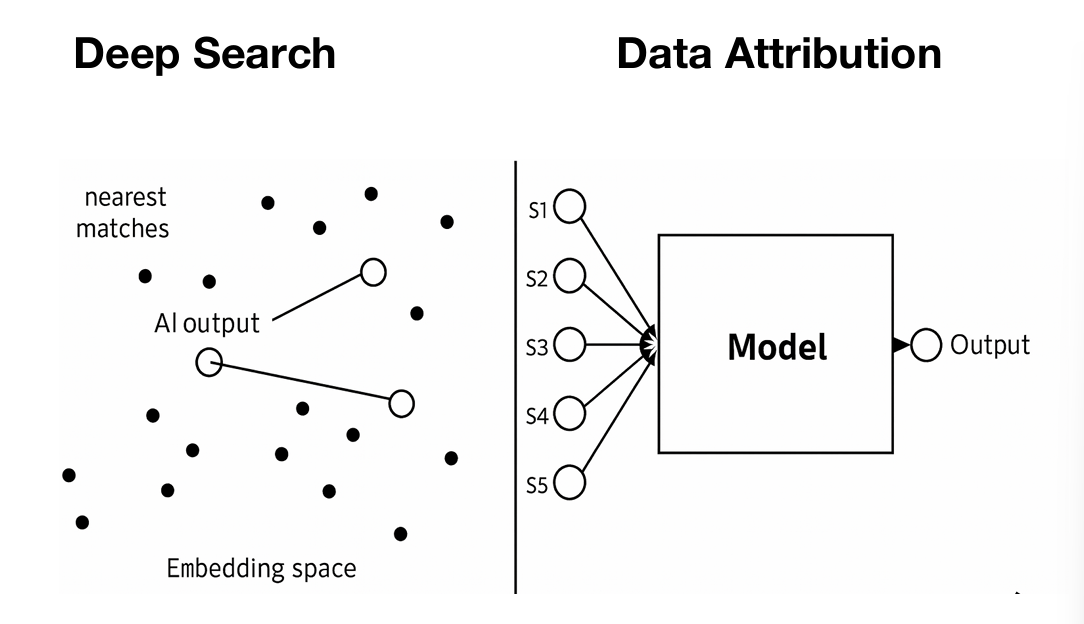
The most effective way to balance innovation and fairness in music rights AI is through opt-in, transparent programs that reward rights holders for participation. This is exactly what Soundverse has built.
How to make AI music licensing work ethically with the Soundverse Content Partner Program
The Soundverse Content Partner Program is an opt-in licensing framework that allows rights holders to contribute audio for AI training while earning recurring, usage-based royalties. Unlike traditional lump-sum models, payouts are driven by actual AI generation events, ensuring compensation reflects true influence.
Core Capabilities:
- Influence-Based Payouts (Pay per Generation): Each time a Soundverse AI model generates content influenced by a partner’s contribution, royalties are distributed according to contribution weight.
- Tiered Licensing (Tiers 1-6): Rights holders can choose different levels of participation—from open creative use to tightly restricted access.
- Real-Time Dashboards: Users view their cumulative royalties and generation-based performance analytics.
- Transparency Reports: The program provides clear data on how and when partner content is used for training.
This structure incentivizes ethical participation. Instead of resisting AI adoption, artists and labels can monetize datasets responsibly. Soundverse’s integration with Soundverse Trace ensures each data point retains its attribution signature, while the Ethical AI Music Framework provides an end-to-end ethical backbone ensuring consent, attribution, and fair compensation.
How Are Rights Holders Benefiting from Ethical AI Participation?
For artists and label owners, participating in AI training used to mean risking data misuse. Today, frameworks like Soundverse’s turn that risk into revenue. By 2026, many rights holders use their back catalogs not only for sync licensing but also for AI model training revenue streams. Every model generation that references their content triggers micro-royalty payouts—creating an entirely new income layer for dormant assets.
Such systems also reduce piracy risk. Each use is traceable, and thanks to Soundverse Trace, attribution data persists throughout the generation lifecycle. The result: transparent AI music licensing that respects both innovation and ownership.
What Does the Future of Music Copyright Look Like in the Age of AI?
Going forward, music copyright will expand beyond static ownership definitions toward dynamic participation models. AI-generated content requires multi-layer attribution systems that account for layered influence. The rise of semantic fingerprinting and blockchain verification enables this evolution.
By late 2026, we can expect industry standards to converge toward hybrid licensing—combining human copyright protection with algorithmic tracking mechanisms. Artists will no longer just protect their works—they’ll actively power the next generation of AI music creation tools. As explained in AI copyright and licensing in 2026 explained - Artlist Blog, creators who understand these evolving frameworks stand to benefit from transparent, compliant AI music systems.
Final Thoughts: A New Era of Transparent Music Licensing
AI music licensing is not a threat—it’s an opportunity for a fairer, more innovative industry. Through transparent frameworks like Soundverse’s Content Partner Program, creators can participate in the AI revolution while maintaining ownership integrity. The future of music lies in collaboration between people and technology, underpinned by transparency, data ethics, and trust.
For more insights into the evolution of AI in the creative ecosystem, explore related discussions on how AI-generated music is transforming the music industry, music industry trends, Soundverse’s AI Magic Tools, and AI music generation prompts.
By embracing AI responsibly, music professionals can turn ethical licensing into the next great wave of creative opportunity.
Simplify AI Music Licensing with Soundverse
Create, license, and share AI-generated tracks effortlessly while staying compliant with evolving music regulations. Soundverse helps creators focus on creativity, not legal complexities.
Start Creating Today
Related Articles:
- How AI-Generated Music Is Transforming the Music Industry: Explore how AI tools are reshaping music production and distribution across genres and platforms.
- Copyright-Free vs. Royalty-Free Music: What Creators Should Know: Learn the key differences between copyright-free and royalty-free music, and how it affects content creators.
- Navigating the World of Royalty-Free and Copyright-Free Music Using Soundverse AI: Find out how Soundverse AI empowers creators with simple, royalty-free music for any project.
- The Role of AI Music in Film and Television: Discover how AI-generated tracks are changing soundtracks, trailers, and visual storytelling.
Here's how to make AI Music with Soundverse
Video Guide
Here’s another long walkthrough of how to use Soundverse AI.
Text Guide
- To know more about AI Magic Tools, check here.
- To know more about Soundverse Assistant, check here.
- To know more about Arrangement Studio, check here.
Soundverse is an AI Assistant that allows content creators and music makers to create original content in a flash using Generative AI.
With the help of Soundverse Assistant and AI Magic Tools, our users get an unfair advantage over other creators to create audio and music content quickly, easily and cheaply.
Soundverse Assistant is your ultimate music companion. You simply speak to the assistant to get your stuff done. The more you speak to it, the more it starts understanding you and your goals.
AI Magic Tools help convert your creative dreams into tangible music and audio. Use AI Magic Tools such as text to music, stem separation, or lyrics generation to realise your content dreams faster.
Soundverse is here to take music production to the next level. We're not just a digital audio workstation (DAW) competing with Ableton or Logic, we're building a completely new paradigm of easy and conversational content creation.
TikTok: https://www.tiktok.com/@soundverse.ai
Twitter: https://twitter.com/soundverse_ai
Instagram: https://www.instagram.com/soundverse.ai
LinkedIn: https://www.linkedin.com/company/soundverseai
Youtube: https://www.youtube.com/@SoundverseAI
Facebook: https://www.facebook.com/profile.php?id=100095674445607
Join Soundverse for Free and make Viral AI Music

We are constantly building more product experiences. Keep checking our Blog to stay updated about them!