How to Separate Vocals from Instrumental: 2026 Guide to Vocal Isolation Techniques
Learn vocal isolation techniques and remove vocals from songs using Soundverse Stem Separator.
How to Separate Vocals from Instrumental
Separating vocals from instrumentals has become an essential skill for modern music producers, remix artists, and sound designers in 2026. Whether you want to create karaoke tracks, remix an old favorite, or analyze a mix’s structure, knowing how to apply effective vocal isolation techniques is key to professional-grade audio results. With the rise of AI-assisted music production tools, separating stems is no longer a tedious manual process — it’s fast, precise, and easily accessible through platforms like Soundverse.
Why is Vocal Isolation Important for Music Production in 2026?
Music creators in 2026 face a landscape dominated by hybrid AI workflows. Producers often need to split audio tracks to rebuild or re-imagine sections of existing songs. Vocal isolation techniques allow engineers to remove vocals from song recordings or separate voice and music to repurpose tracks for remixing, performance backing, or even educational projects.
Using audio editing software to split audio tracks accurately can be challenging without the right tools. Traditional approaches rely on phase cancellation or equalization filters, which frequently degrade vocal clarity or leave unwanted residue. In 2026, however, AI-driven audio processing has reached a point where clean, high-fidelity separation is possible in seconds. This makes it easier for creators to work collaboratively or adapt audio in line with the growing trend of personalized remix culture.

What are the Most Effective Vocal Isolation Techniques?
There are several approaches to separate vocals from instrumentals, ranging from classic signal-processing methods to cutting-edge AI separation models.
- Phase Inversion Method:
The traditional approach involves inverting one stereo channel and combining it with the other to cancel out centered vocals. While effective in specific cases, it’s rarely perfect because not all mixes position vocals strictly in the center. - Spectral Editing:
Tools like iZotope RX and Adobe Audition allow spectral analysis of audio frequencies, enabling manual removal of vocal bands. This process delivers better precision but demands technical expertise and time. - AI Audio Separation:
Machine learning models now dominate professional workflows. These tools can automatically recognize and isolate specific sound components — such as voice, drums, bass, and accompaniment — without damaging quality. The AI approach represents the state-of-the-art solution for vocal isolation as of 2026. - Dynamic Filtering Techniques:
This involves applying dynamic equalizers that target vocal frequencies while preserving the rest. It’s used for partial isolation but isn’t ideal for creating completely clean stems.
For creators seeking practical speed and reliability, AI-driven separation outperforms all older techniques. That’s where Soundverse Stem Separator transforms the workflow.

How to Make Vocal and Instrumental Separation with Soundverse Stem Separator
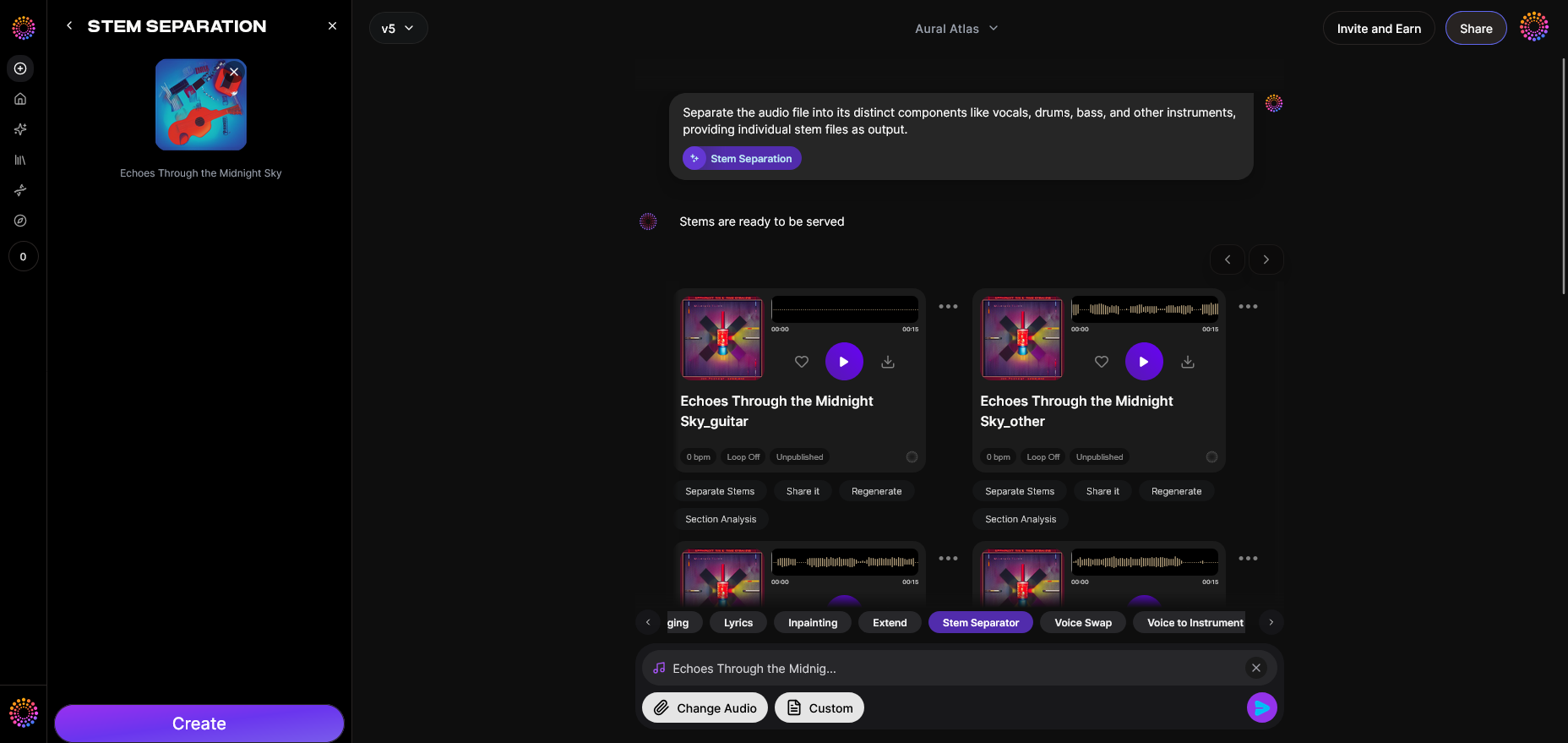
The Soundverse Stem Separator is designed specifically for high-quality vocal isolation and stem extraction.
Overview of the Soundverse Stem Separator
Soundverse’s Stem Separator dissects mixed audio into up to six editable stems, including Vocals, Drums, Bass, Guitar, and Accompaniment. This tool supports file uploads, direct recording, or URL input for flexible access. Each processed stem maintains studio-level quality, enabling remixing, educational analysis, or performance backing creation.
It’s a top application of machine learning in music post-production, helping users remove vocals from song tracks or separate voice and music layers precisely.
Step 1: Upload Interface
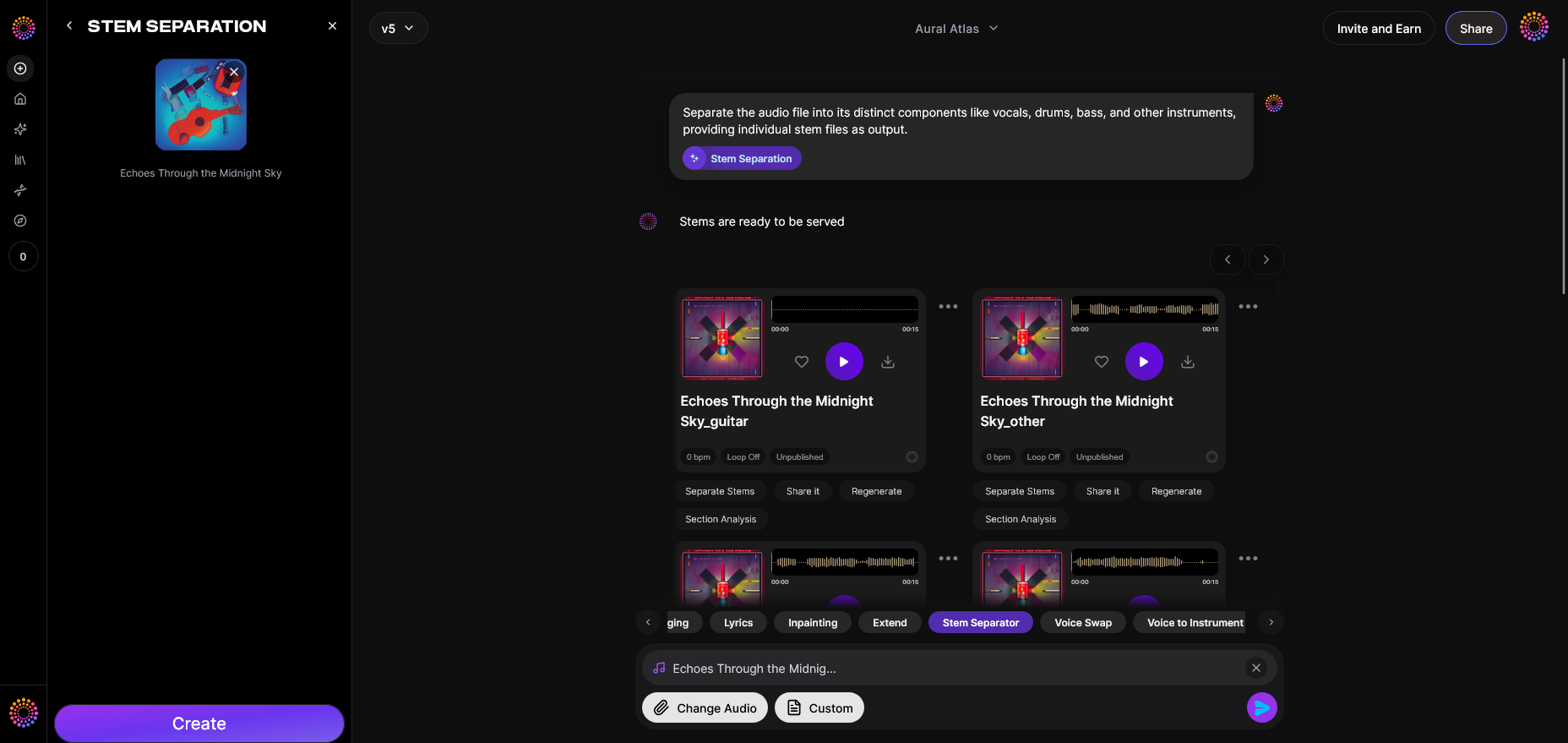
Begin by opening the Soundverse Stem Separator feature. Use the upload dialog to import your chosen song. You can upload a local file, paste a URL link, or record directly inside Soundverse. The asynchronous workflow means once your track is uploaded, the system analyzes it before displaying the results.
Step 2: Additional References
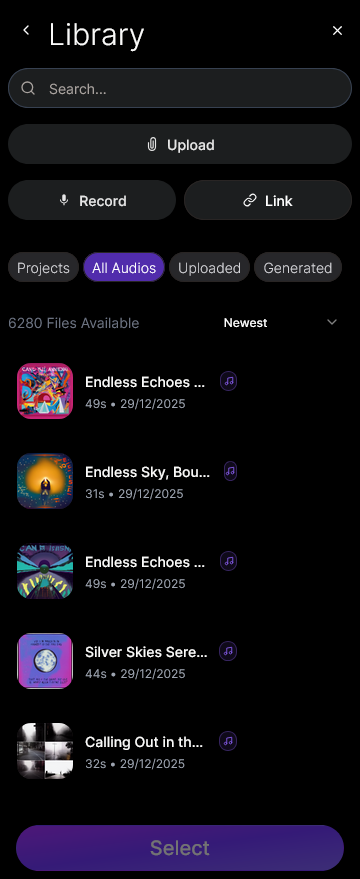
In this step, you can add optional reference material. Producers sometimes use reference audio to guide the AI model toward specific tonal or mix preferences. While optional, this enhances the isolation accuracy for complex multi-instrument mixes.
Step 3: Results Display
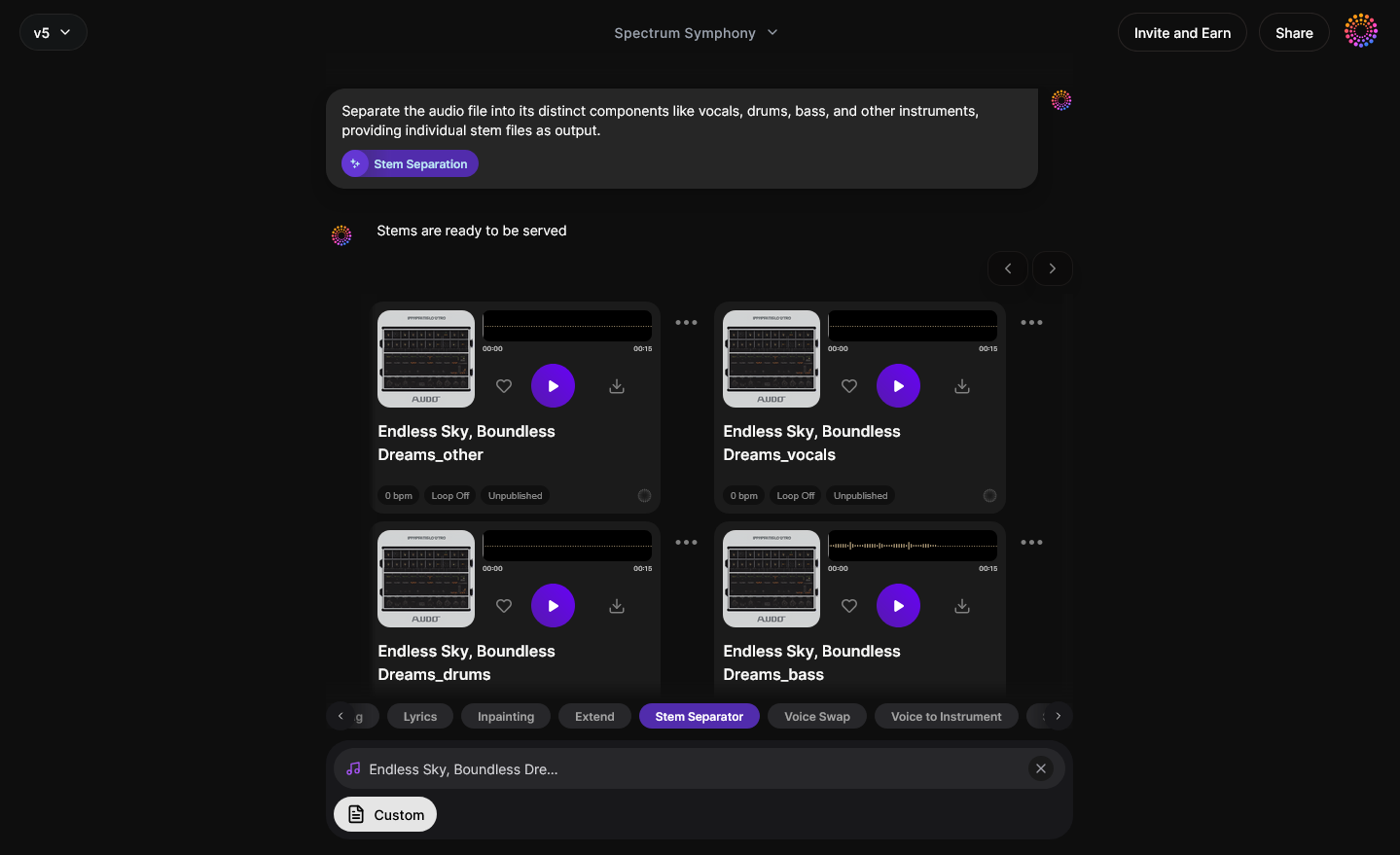
After processing, Soundverse presents a clear visualization of the separated stems. You’ll see six labeled segments — Vocals, Drums, Bass, Guitar, Accompaniment, and Others. Each can be previewed individually and adjusted before download. This separation makes remixing or learning mix structures extremely intuitive. For a deeper dive, watch our guide on creating Deep House music and other tutorials from the Soundverse channel.
Step 4: Download Stems
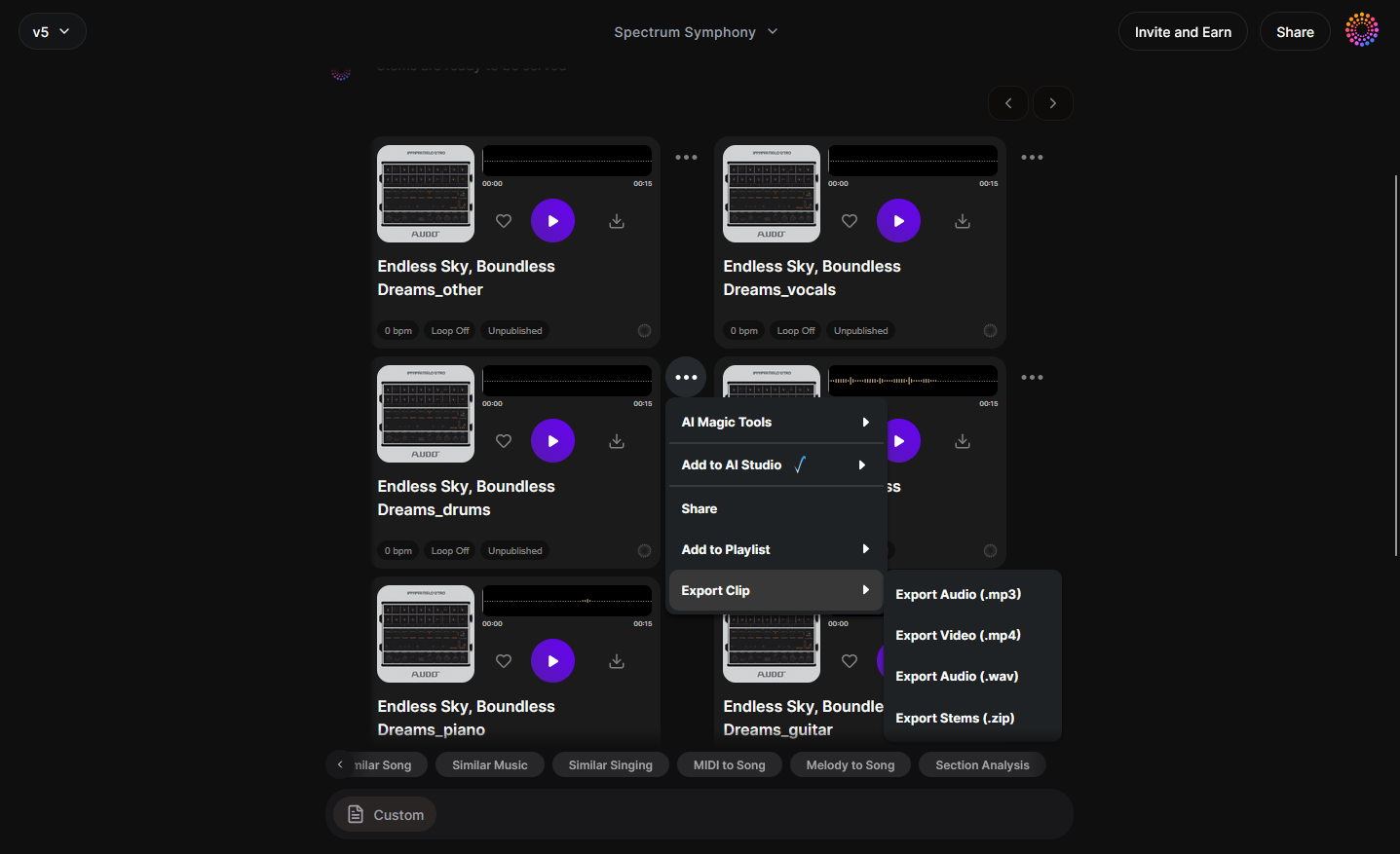
Finally, you can download individual stems for further processing. Whether creating karaoke versions, remixing with AI Music Generators, or pairing with an AI Singing Generator, Soundverse ensures each stem maintains fidelity suitable for professional studio production.
Expert Music Production Tips for Better Vocal Isolation
Beyond technical execution, there are best practices producers can adopt to ensure clean results:
- Use High-Resolution Source Audio: Start with WAV or FLAC files instead of compressed MP3s to preserve clarity during separation.
- Perform Frequency Sweep Checks: Post-separation, inspect frequencies around 1–5 kHz (where vocals dominate) for artifacts or residual echo.
- Combine Multiple Passes: Some producers use two separation runs — one optimized for vocals and another for instruments — then manually blend results.
- Avoid Over-Compression Post Process: Excessive compression can dull dynamics in isolated stems.
Applying these best practices alongside AI isolation ensures your remix or instrumental retains professional-grade sound.
Common Use Cases for Vocal and Instrumental Separation
Modern creators use vocal isolation for more than just karaoke or remixing. Typical applications include:
- Educational Mix Analysis: Instructors separate stems to study arrangement and balance.
- Live Performance Preparation: Artists extract instrumentals for backing tracks.
- Sound Design: Engineers reuse isolated vocals for ambient layering or sound collage.
- Social Media Content Creation: Creators use vocal isolation to make mashups or challenge videos, following trends outlined in Music Industry Trends.
How Does AI Stem Separation Compare to Other Tools in 2026?
Several platforms support vocal isolation, such as Spleeter, LALAL.AI, and Moises.ai. While each provides decent AI-based splitting, Soundverse differentiates itself through broader stem variety and superior acoustic fidelity.
Soundverse not only handles vocal separation efficiently but integrates seamlessly with its larger ecosystem — including the AI Singing Generator and AI Music Generator. This makes it a full-stack AI music creation suite rather than a single-purpose isolation tool.
Creators switching from competing tools often prefer Soundverse because it supports URL import, fast processing, and clean six-stem extraction. Learn more about the technology powering this system in Soundverse Introduces Stem Separation AI Magic Tool.
Pro Workflow Integration: Combining Isolated Vocals with Generated Music
After isolating vocals, producers often pair them with new arrangements generated by AI. Using Soundverse’s built-in music generation capabilities, users can generate instrumentals of any genre — from EDM to Jazz — as detailed in guides like How to Create EDM with Soundverse AI or How to Create Jazz Music with Soundverse AI.
Integrating separated stems into new tracks accelerates the remix workflow, enabling artists to reinvent songs quickly for digital releases or performance sets.
Start Isolating Vocals with Soundverse AI Today
Experience effortless vocal separation and stem creation powered by advanced AI. Turn any song into mix-ready stems in minutes for remixing, mastering, or creative sampling.
- Soundverse Introduces Stem Separation AI Magic Tool — Discover how Soundverse’s AI Magic Tool revolutionizes stem separation for faster, cleaner music production.
- What Are Song Stems and Why Do You Need Them — Learn the importance of song stems and how they streamline remixing, mastering, and vocal isolation workflows.
- Soundverse AI Magic Tools: Create Content Quickly with AI — Explore Soundverse’s suite of AI Magic Tools designed to accelerate music production and sound design.
- Soundverse Assistant: Your AI Music Co-Producer — Meet Soundverse Assistant, the intelligent co-producer that helps automate complex music creation tasks effortlessly.
Here's how to make AI Music with Soundverse
Video Guide
Here’s another long walkthrough of how to use Soundverse AI.
Text Guide
- To know more about AI Magic Tools, check here.
- To know more about Soundverse Assistant, check here.
- To know more about Arrangement Studio, check here.
Soundverse is an AI Assistant that allows content creators and music makers to create original content in a flash using Generative AI.
With the help of Soundverse Assistant and AI Magic Tools, our users get an unfair advantage over other creators to create audio and music content quickly, easily and cheaply.
Soundverse Assistant is your ultimate music companion. You simply speak to the assistant to get your stuff done. The more you speak to it, the more it starts understanding you and your goals.
AI Magic Tools help convert your creative dreams into tangible music and audio. Use AI Magic Tools such as text to music, stem separation, or lyrics generation to realise your content dreams faster.
Soundverse is here to take music production to the next level. We're not just a digital audio workstation (DAW) competing with Ableton or Logic, we're building a completely new paradigm of easy and conversational content creation.
TikTok: https://www.tiktok.com/@soundverse.ai
Twitter: https://twitter.com/soundverse_ai
Instagram: https://www.instagram.com/soundverse.ai
LinkedIn: https://www.linkedin.com/company/soundverseai
Youtube: https://www.youtube.com/@SoundverseAI
Facebook: https://www.facebook.com/profile.php?id=100095674445607
Join Soundverse for Free and make Viral AI Music

We are constantly building more product experiences. Keep checking our Blog to stay updated about them!