How Does AI-Generated Music Work?
Discover how AI-generated music uses neural networks and machine learning to create original tracks in 2026.
How Does AI-Generated Music Work?
Artificial intelligence has evolved rapidly, and by 2026, AI-generated music has become one of the most transformative innovations in sound production. Musicians, producers, and digital creators now use AI not only to speed up workflow but also to explore new creative dimensions that were once impossible through traditional composition. But how exactly does AI-generated music work? This article breaks down the core technology, from data training to composition modeling, and explains how modern AI tools like Soundverse are redefining music creation for professionals and enthusiasts alike.
What is AI-Generated Music?
AI-generated music refers to musical compositions created or assisted by artificial intelligence systems. Instead of writing notes manually, producers can feed descriptions, emotions, or genre preferences into a machine learning model that translates text into sound. The process involves algorithms trained to understand musical theory, recognize patterns in melodies, harmonies, and rhythms, and emulate human creativity.
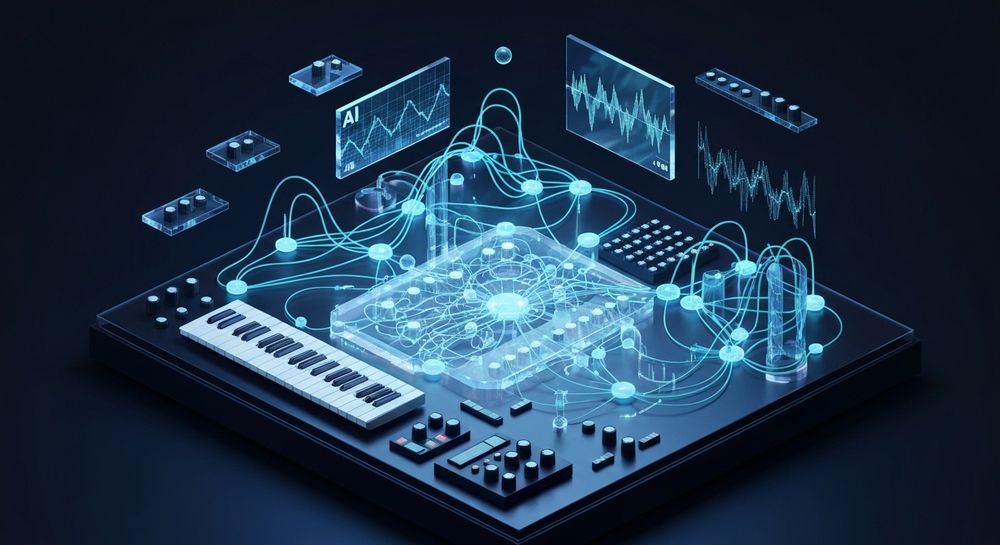
These models can compose complete soundtracks, beats, and ambient soundscapes autonomously. In 2026, AI-generated music is frequently used in YouTube videos, podcasts, games, advertisements, and even wellness and meditation spaces due to its flexibility and speed.
How Does AI Learn to Create Music?
Artificial intelligence in music is based on machine learning—a subset of AI that allows systems to identify patterns and make decisions using data. There are several stages to how this learning process occurs:
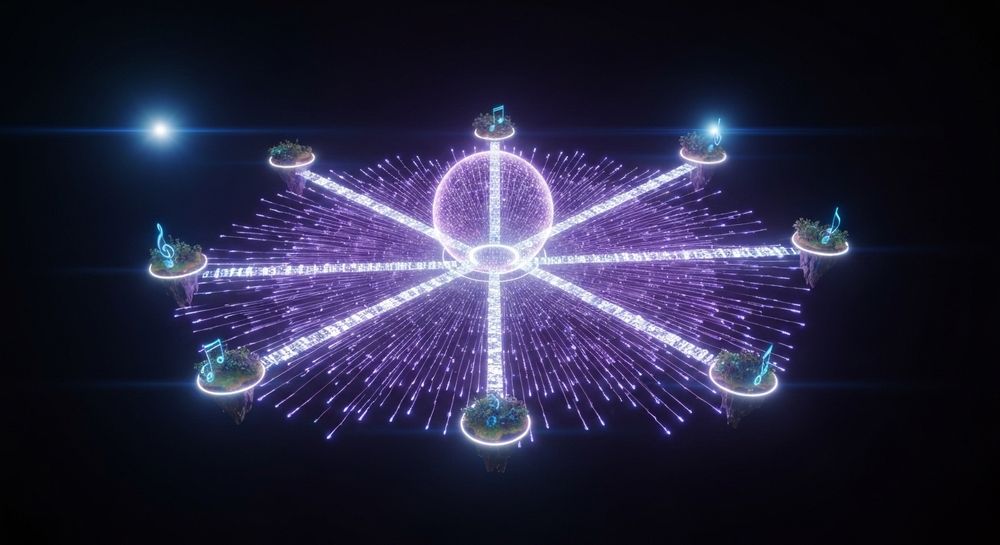
- Data Collection: AI developers compile large datasets of musical compositions across diverse genres and styles. Each audio track is analyzed for attributes such as tempo, key, rhythm, chord progressions, and dynamic range.
- Feature Extraction: Once the data is ingested, the system breaks down complex audio signals into smaller components—like beats, notes, and timbres—that can be mathematically modeled.
- Neural Network Training: Modern AI models, especially deep learning architectures such as recurrent neural networks (RNNs) and transformers, are trained on these extracted features. These networks enable machines to predict what comes next in a musical sequence or generate new arrangements from contextual inputs.
- Music Generation: When a user gives a prompt (such as “uplifting electronic background music” or “ambient forest soundscape”), the trained neural network translates that text into a structured musical output using learned probability patterns.
- Post-Processing and Mixing: Finally, AI tools optimize timbre, instrument balance, and transitions for production-ready sound quality. These steps ensure the final track feels natural rather than algorithmically robotic.
What Role Do Neural Networks Play in Music Creation?
Neural networks for music act as the "brain" behind AI composition. They mimic the way human neurons connect and transmit signals, allowing the AI system to make intelligent decisions about melody progression and harmonic structure. By 2026, transformer-based neural architectures—similar to those used in language and image generation—dominate the landscape of music AI.
These models excel at understanding temporal sequences. Since music is time-dependent, neural networks trained to predict the next note or phrase produce compositions that follow musical grammar logically. More advanced systems analyze genre-specific traits: jazz improvisation patterns, electronic drop structures, or classical orchestration techniques.
For a deeper dive, watch our guide on creating Deep House music.
Which Algorithms Power AI Music Generators?
Several AI models are responsible for creating music intelligently:
- Generative Adversarial Networks (GANs): These involve two neural nets—the generator creates music, and the discriminator evaluates authenticity. This competition leads to outputs that sound increasingly human-like.
- Recurrent Neural Networks (RNNs): Specialized for sequence prediction, RNNs are great for melody and rhythm generation.
- Transformers: As of 2026, transformer models dominate text-to-music generation by learning large contextual dependencies from data and generating entire compositions based on descriptive prompts.
- Variational Autoencoders (VAEs): Used for stylistic variation, allowing AI to morph between musical genres smoothly.
You can see this process in action by watching the Soundverse Tutorial on how to make music.
What Are the Use Cases for AI-Generated Music in 2026?
Artificial intelligence in music now supports numerous professional applications:
- Content Creation: Creators use AI music generators for YouTube, TikTok, and podcast intros or outros. Check out these related guides: Enhancing YouTube Content with Copyright-Free Music Using Soundverse AI and 100 Text-to-Music Prompts That Will Help You Create Viral Music.
- Game Development: AI tools help developers produce looping background themes and emotional cues for gameplay environments.
- Film Scoring: While human composers still lead creative storytelling, AI assists with rapid prototyping and variations in cinematic scoring.
- Therapeutic and Meditation Music: Systems generate relaxing compositions or binaural soundscapes used in wellness apps, as explained in How to Create Healing Meditation Music with Soundverse AI.
- Advertising and Brand Identity: Brands leverage consistent sonic themes produced through machine learning music creation.
For a complete introduction, watch Soundverse Explore Tab Tutorial.
How Does Text-to-Music Generation Work?
AI translates text prompts into music using multimodal learning. Here, models link written descriptions (like “warm acoustic guitar under sunset tones”) with corresponding auditory samples. When a new prompt is entered, the AI forms a musical arrangement that embodies the given mood, instrumentation, and genre instructions.
Modern tools also enable parameter control: users specify tempo, instrument layers, intensity, and length before generation. Soundverse’s proprietary technology, for example, allows this level of customization for loopable music tracks.
The Ethical Side of Machine Learning Music Creation
A major conversation in 2024 and 2025 centered on copyright and originality in AI art. In 2026, those discussions evolved into practical solutions. AI systems now rely on licensed datasets—legally sourced tracks that respect artists’ rights while giving algorithms the material they need to learn patterns. Soundverse DNA is a pioneering example, enabling ethical training so artists can monetize AI-generated works created from their styles without copyright risks.
This shift ensures that AI-generated music is not just algorithmically powerful but also ethically sustainable for a global digital ecosystem.
How to Make AI-Generated Music with Soundverse AI Music Generator
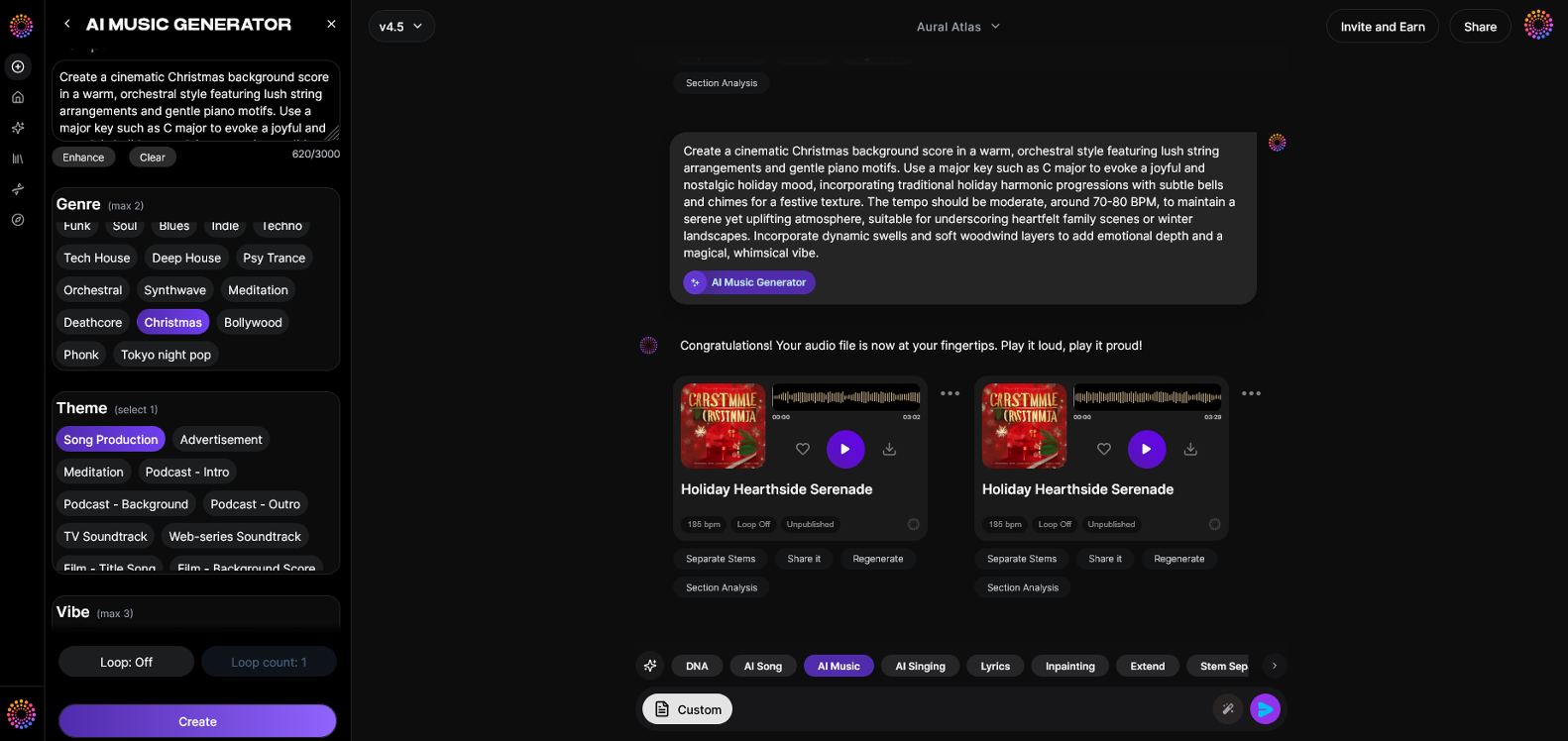
Now that you understand how AI-generated music works, here’s how to create your own compositions instantly using Soundverse.
Soundverse AI Music Generator is designed for producing fully instrumental soundscapes and beats from simple text prompts. It specializes in background tracks, game loops, meditation sounds, and commercial audio with seamless looping support.
Step 1: Feature Overview
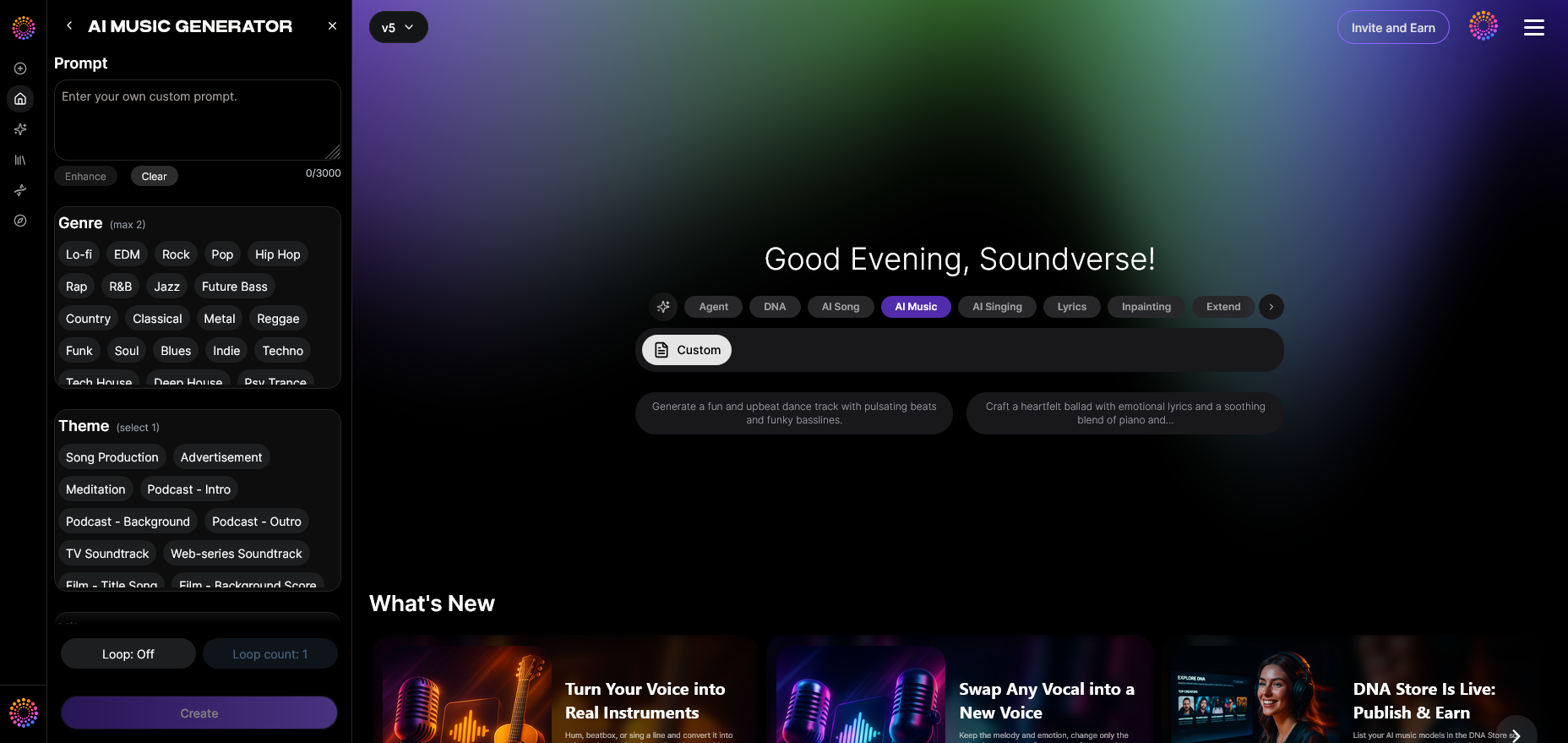
Access the AI Music Generator directly from the Soundverse main dashboard. The intuitive interface allows users to create high-quality music for professional use without technical barriers.
Step 2: Description Input
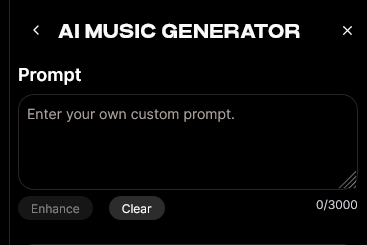
Enter a detailed text description of the type of music you want — such as mood, genre, atmosphere, or instruments. For example, "uplifting lo-fi chill beats for study" will guide the algorithm to produce relevant tonal energy.
Step 3: Style & Duration
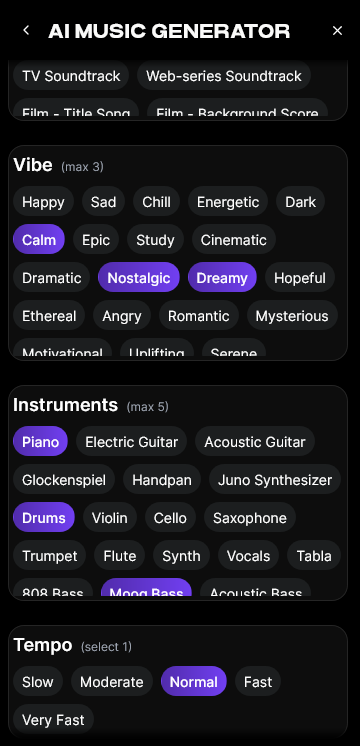
Select the genre and duration of the audio track. You can control style settings like cinematic, ambient, acoustic, or electronic, ensuring consistent match with your creative vision.
Step 4: Generation
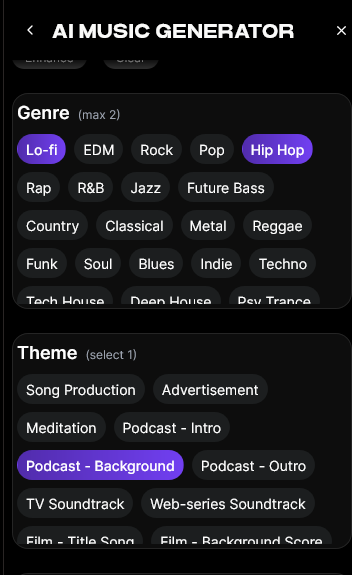
Click “Generate” to let the AI model process your request. The system uses advanced V4 or V5 model options to create instrumental audio with rich harmonic layering.
Step 5: Export Options

Once generation completes, review and download the produced track. Export your file in the required format for integration into video editing or podcast projects.
Soundverse provides users with fully copyright-safe AI music suitable for commercial and creative deployment. It’s also the fastest way to produce loopable background audio — perfect for continuous playback without breaks.
Future Trends in AI Music (2026 and Beyond)
Looking at current developments, AI music models will soon integrate emotional detection and adaptive scoring for personalized experiences. Tools may generate dynamic background tracks that respond to user motion or content theme changes. As seen in The Role of AI Music in Film and Television, AI will continue shaping creative workflows across entertainment production.
AI isn't replacing musicians—it’s collaborating with them. By merging human emotion with algorithmic precision, 2026 stands as the year artists and machines compose together.
Start Creating Your Own AI Generated Music Today
Discover how easy it is to create original tracks with Soundverse. Generate, customize, and share unique AI-powered music that perfectly fits your vibe — no production experience required.
- How AI Generated Music Is Transforming the Music Industry: Explore how artificial intelligence is reshaping creativity, production, and collaboration across modern music ecosystems.
- Generate AI Music with Soundverse Text-to-Music: Learn how to instantly turn ideas into fully-produced tracks using Soundverse’s text-to-music technology.
- The Benefits of Composing with AI Music Generator: Understand how AI composition tools simplify the creative process for artists, producers, and content creators.
- AI Music Generator and Human Composers: A Future Together: Discover how human creativity and AI innovation can coexist to shape the next generation of musical artistry.
Here's how to make AI Music with Soundverse
Video Guide
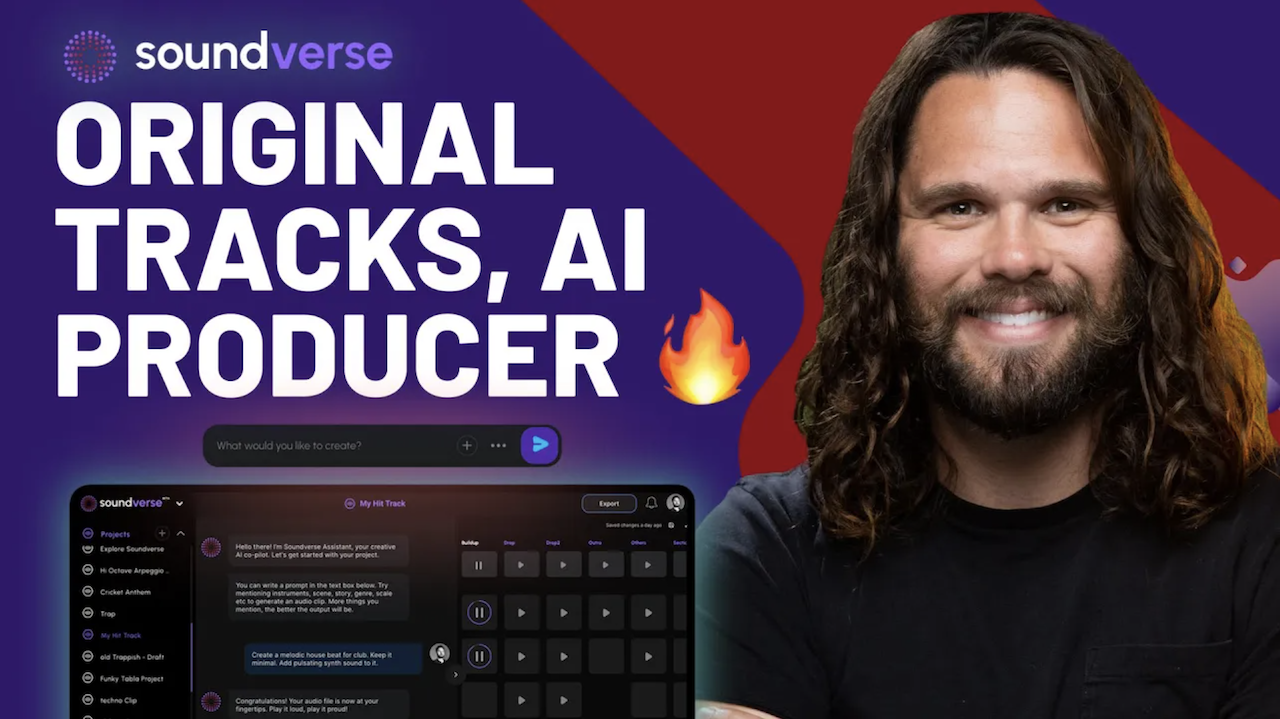
Here’s another long walkthrough of how to use Soundverse AI.
Text Guide
- To know more about AI Magic Tools, check here.
- To know more about Soundverse Assistant, check here.
- To know more about Arrangement Studio, check here.
Soundverse is an AI Assistant that allows content creators and music makers to create original content in a flash using Generative AI.
With the help of Soundverse Assistant and AI Magic Tools, our users get an unfair advantage over other creators to create audio and music content quickly, easily and cheaply.
Soundverse Assistant is your ultimate music companion. You simply speak to the assistant to get your stuff done. The more you speak to it, the more it starts understanding you and your goals.
AI Magic Tools help convert your creative dreams into tangible music and audio. Use AI Magic Tools such as text to music, stem separation, or lyrics generation to realise your content dreams faster.
Soundverse is here to take music production to the next level. We're not just a digital audio workstation (DAW) competing with Ableton or Logic, we're building a completely new paradigm of easy and conversational content creation.
TikTok: https://www.tiktok.com/@soundverse.ai
Twitter: https://twitter.com/soundverse_ai
Instagram: https://www.instagram.com/soundverse.ai
LinkedIn: https://www.linkedin.com/company/soundverseai
Youtube: https://www.youtube.com/@SoundverseAI
Facebook: https://www.facebook.com/profile.php?id=100095674445607
Join Soundverse for Free and make Viral AI Music

We are constantly building more product experiences. Keep checking our Blog to stay updated about them!