Why Don't They Just Kill Brick? A Deep Dive into Rian Johnson’s Neo-Noir Masterpiece
Explore Brick character analysis, symbolism, and Rian Johnson's groundbreaking plot in this 2026 deep-dive review.
Why Don't They Just Kill Brick?
Film enthusiasts still debate the central enigma of Rian Johnson’s Brick: why doesn’t anyone simply kill Brendan (often mistakenly called Brick)—the protagonist who pokes deep into a high-school noir underworld filled with drug deals, deceit, and betrayal? This question, deceptively simple, reveals the film’s complex interplay of morality, survival, and symbolism.
Why is Brick’s character at the center of Rian Johnson’s neo-noir puzzle?
Rian Johnson’s Brick (2005) reimagines classic noir tropes in a high school setting, replacing private detectives and gangsters with teenage archetypes. The so-called “Brick” in the film isn’t a person—it’s the term for a quantity of heroin, central to the mystery surrounding the death of Brendan’s ex-girlfriend, Emily. Yet viewers consistently refer to Brendan or the symbolic “Brick” as a target that others could simply eliminate. So, why don’t they?

The answer lies in Brick’s layered storytelling and its meticulous construction of a believable, self-contained world where the protagonist’s persistence disrupts the delicate balance of power. The lack of direct violence towards him isn’t mercy—it’s strategy.
For background, Brick (film) - Wikipedia describes how the high school noir aesthetic builds an authentic subculture where control and manipulation replace brute force.
How does the Brick character analysis reveal Rian Johnson’s narrative technique?
Performing a Brick character analysis in 2026 requires looking beyond plot mechanics and seeing Brendan as both player and pawn. Johnson uses him as the audience’s surrogate detective—a morally ambiguous hero whose determination mirrors the hardboiled investigators of the 1940s. We empathize with his emotional drive: the guilt and obsession following Emily’s tragic fate.
Brendan’s survival depends on the social ecosystem of his school—a microcosm of noir Los Angeles, now reduced to hallways, parking lots, and cafeteria meetings. His enemies cannot kill him because violence would break the illusion of control. The film creates tension through manipulation, secrets, and leverage, not brute force. Critics from Rotten Tomatoes note his lone detective persona navigating teenage cliques while infiltrating layers of deceit.
What is the deeper meaning behind “Brick” in the movie?
A full Brick movie explanation reveals that the titular “Brick” functions as a metaphor for weight—emotional, moral, and physical. The drug becomes a stand-in for deception itself. Those seeking power are bound to this symbol; those rejecting it, like Brendan, are defined by their resistance.
In many neo-noirs, drugs serve as narrative accelerants, but in Brick, the heroin brick creates stillness. Its existence forces characters to act with precision, never impulsively. This unique rhythm mirrors the way Johnson composed the script: every line sharp, clipped, and coded. The Talk Film Society points out that this focus on precision sets Brick apart from typical teen dramas.
Why didn’t they just kill Brendan in Brick?
Within the logic of the narrative, Brendan’s death would serve no strategic purpose. The film’s criminal hierarchy, led by The Pin and Tug, operates by control and negotiation. Killing him would fracture the existing order and bring unwanted attention.
Symbolically, Brendan stands as an avatar for truth. As in many noir stories, truth cannot simply be silenced—it must be outsmarted or corrupted. The attempts to mislead, manipulate, and isolate him are symbolic assassinations. By surviving, Brendan embodies endurance and understanding within moral chaos.
For further visual analysis, Film in Dublin’s cult breakdown of Brick highlights how the narrative structure preserves Brendan’s symbolic role as truth incarnate.
How does the Brick ending meaning tie this all together?
The Brick ending meaning relies on ambiguity—a Rian Johnson hallmark later echoed in films like Looper and Knives Out. Brendan exposes the sprawling corruption but pays an emotional price. The resolution leaves him morally scarred, reflecting noir’s tradition of victory at personal cost.
In 2026, critics re-evaluate this finale as a precursor to Johnson’s future storytelling methods. The film’s minimalist approach predicted modern independent cinema’s love for psychological realism and genre fusion. Rather than closure, Brick delivers reflection: a meditation on how truth reshapes identity when all illusions collapse.
For viewers exploring filmic rhythm and visual cues in music, watch our Soundverse Tutorial Series - 9. How to Make Music, which demonstrates how tonal tension translates into sound design.
What symbolism defines Brick’s world?
Brick film symbolism is everywhere—mirrors, corridors, and telephone lines all signifying separation and reflection. The physical “brick” of heroin connects characters through dependency and greed, symbolizing societal decay. Brendan’s trench coat-like attire evokes old Hollywood detectives, reminding viewers that he’s anchored in a cinematic lineage.
The color palette emphasizes muted tones—gray, brown, washed-out blue—evoking emotional coldness. In 2026, this visual restraint continues to inspire indie filmmakers seeking ways to combine nostalgia with minimalism, particularly in narrative-driven music videos and visual storytelling.
Who is in the Brick cast and how do they shape its identity?
The Brick cast includes Joseph Gordon-Levitt as Brendan Frye, Nora Zehetner as Laura, Lukas Haas as The Pin, and Noah Fleiss as Tug. Their performances embody an indie realism that contrasts sharply with Hollywood’s polished delivery.
Gordon-Levitt’s portrayal challenges the archetypal hero. His restraint and fragmented speech patterns make Brendan believable as a recluse yet iconic as a noir detective. Zehetner’s Laura wields manipulation as her weapon—never through physical dominance but emotional engineering. The ensemble connects through tension, silence, and coded exchanges, creating an atmosphere where every gesture carries narrative weight.
Why does Brick remain relevant to modern filmmakers?
Even in 2026, Brick stands as a textbook example of tonal control. Rian Johnson’s marriage of low-budget production and high-concept storytelling inspired directors globally. In an era saturated with digital visual effects, Brick reminds creators that dialogue rhythm and structural clarity can achieve lasting impact.
Its longevity also comes from the deep sense of identity—every decision by Brendan reverberates through an ethical spectrum, guiding modern writers who use AI-assisted tools to emulate noir intensity. Platforms like Soundverse have helped modern creators channel cinematic mood through AI-generated soundscapes for short films and online content.
How to make Brick-inspired noir scenes with Soundverse AI Song Generator
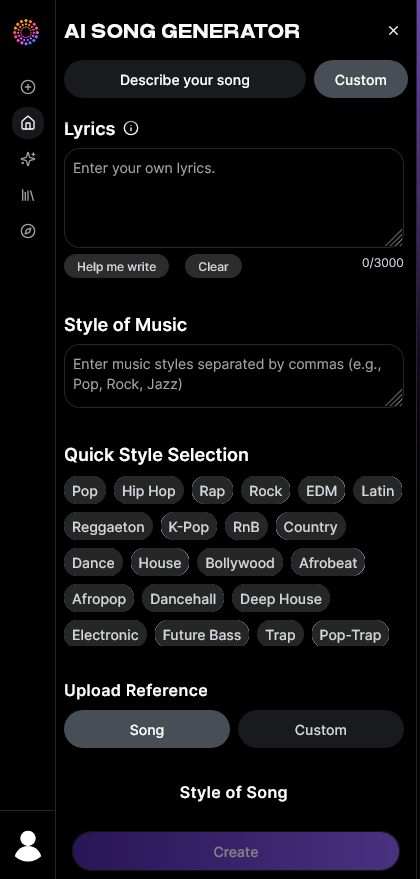
Now that you understand the Brick character analysis and the narrative sophistication Rian Johnson brings to his first feature, you can easily replicate the film’s atmosphere using the Soundverse AI Song Generator.
Soundverse transforms written descriptions or lyrics into complete musical compositions with AI-generated vocals and instrumentals. Its Describe Your Song mode lets creators enter mood-based prompts—perfect for producing dark, suspenseful noir soundtracks inspired by Brick. You can select styles like Jazz, Rock, or Cinematic Ambient using the Quick Style Selection option.
By pairing Soundverse’s AI Lyrics Writer and AI Singing Generator, you can craft mood pieces reminiscent of Brick’s tone—a mixture of melancholy and mystery. For instance, if you’re analyzing a sequence from Brick, you might enter text like “haunting urban streets under a fading light” in Soundverse’s prompt field to generate fitting music.
Soundverse operates through a sophisticated pipeline encompassing lyrics analysis, melody generation, arrangement, and mixing. Users access it from the main menu, input lyrics or descriptions, pick genres, adjust parameters such as tempo or vocal type, and generate complete songs asynchronously. The result can then be exported in multiple formats for video scoring or content background use.
If you’re crafting video essays about Brick or creating noir-inspired short films, pairing your visuals with an original Soundverse soundtrack enhances narrative immersion without worrying about copyright issues. Learn more about AI in film by exploring The Role of AI Music in Film and Television and How Soundverse’s AI Magic Tools Create Content Quickly.
AI music technology in 2026 now represents a bridge between nostalgia and innovation. Johnson’s classic noir tone can be reimagined with contemporary AI-driven composition systems. Using Soundverse, creators not only re-analyze Brick’s moral dimensions but audibly express them.
Unlock Creative Storytelling with AI-Powered Tools
Bring your next character study or story to life with music and sound shaped by intelligent AI. Soundverse helps writers and creators craft immersive experiences effortlessly.
Start Creating with Soundverse
Related Articles
- How AI-Generated Music Is Transforming the Music Industry: Explore how AI music tools are reshaping creativity, production, and the way we experience sound.
- The Role of AI Music in Film and Television: Discover how AI compositions are enhancing visual storytelling and emotional impact in media.
- How an AI Music Generator Inspires Creative Fusion: Learn how creators use Soundverse’s AI tools to blend emotion, sound design, and narrative depth.
- Soundverse: AI Revolutionizing Music Creation for New-Age Content Creators: See how Soundverse empowers digital creators to produce unique, personalized soundtracks effortlessly.
Here's how to make AI Music with Soundverse
Video Guide
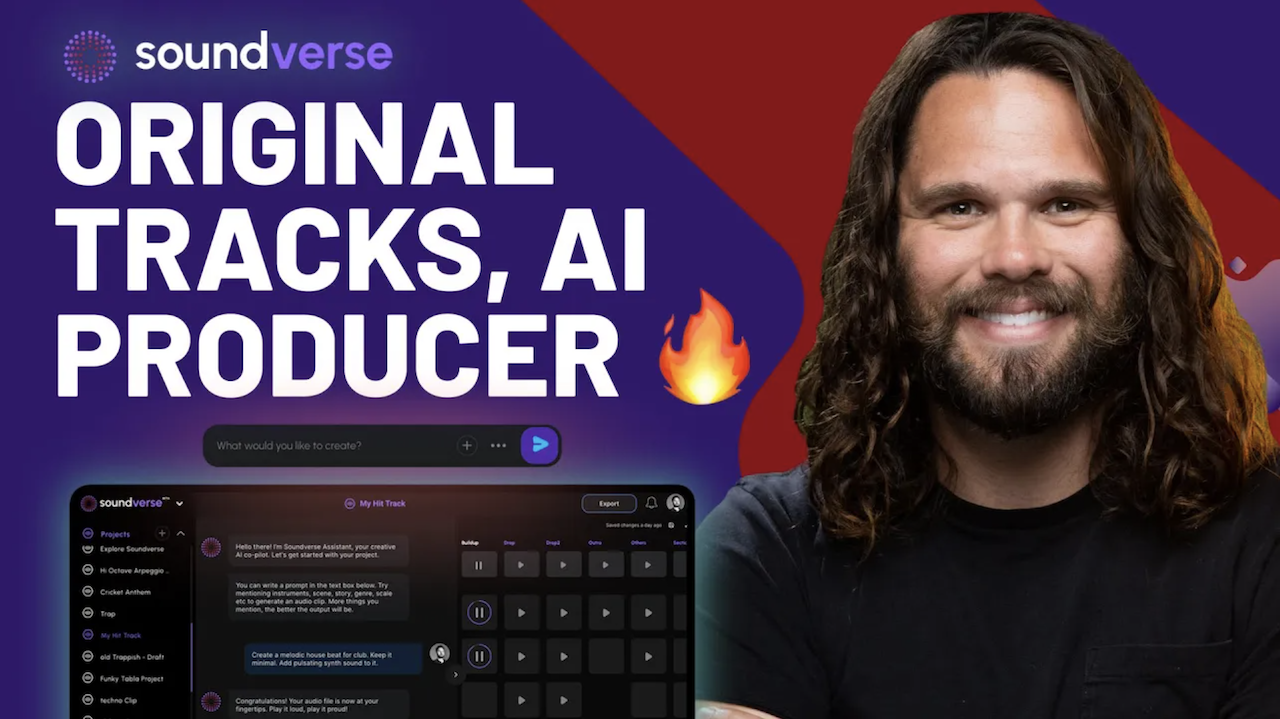
Here’s another long walkthrough of how to use Soundverse AI.
Text Guide
- To know more about AI Magic Tools, check here.
- To know more about Soundverse Assistant, check here.
- To know more about Arrangement Studio, check here.
Soundverse is an AI Assistant that allows content creators and music makers to create original content in a flash using Generative AI. With the help of Soundverse Assistant and AI Magic Tools, our users get an unfair advantage over other creators to create audio and music content quickly, easily and cheaply. Soundverse Assistant is your ultimate music companion. You simply speak to the assistant to get your stuff done. The more you speak to it, the more it starts understanding you and your goals. AI Magic Tools help convert your creative dreams into tangible music and audio. Use AI Magic Tools such as text to music, stem separation, or lyrics generation to realise your content dreams faster. Soundverse is here to take music production to the next level. We're not just a digital audio workstation (DAW) competing with Ableton or Logic, we're building a completely new paradigm of easy and conversational content creation.
TikTok: https://www.tiktok.com/@soundverse.ai
Twitter: https://twitter.com/soundverse_ai
Instagram: https://www.instagram.com/soundverse.ai
LinkedIn: https://www.linkedin.com/company/soundverseai
Youtube: https://www.youtube.com/@SoundverseAI
Facebook: https://www.facebook.com/profile.php?id=100095674445607
Join Soundverse for Free and make Viral AI Music

We are constantly building more product experiences. Keep checking our Blog to stay updated about them!