What Are Music Stems? A Complete Guide for Producers and Engineers in 2026
Learn what music stems are, how they’re used in audio mixing and production, and how Soundverse helps separate stems easily.
What Are Music Stems?
What are music stems and why do they matter in 2026?
Music stems have become an essential concept across modern audio mixing, multitrack recording, and sound engineering workflows. In simple terms, music stems refer to individual audio components of a completed song that can be separated for remixing, editing, or analysis. In 2026, with the continued rise of AI-driven music production and the proliferation of digital collaboration spaces, stems enable artists and producers to reimagine existing material with unprecedented speed and precision.
When you listen to a finished track, what you hear is usually a fully mixed version combining vocals, drums, bass, guitars, and effects. Stems take that final mix and break it down into its separate parts. For example, a professional stem package might include five or six isolated elements such as vocals, drums, bass, guitar, and ambient accompaniment. This gives producers control similar to having the original multitrack session, but with simplified access that’s portable, remix-ready, and ideal for collaboration.
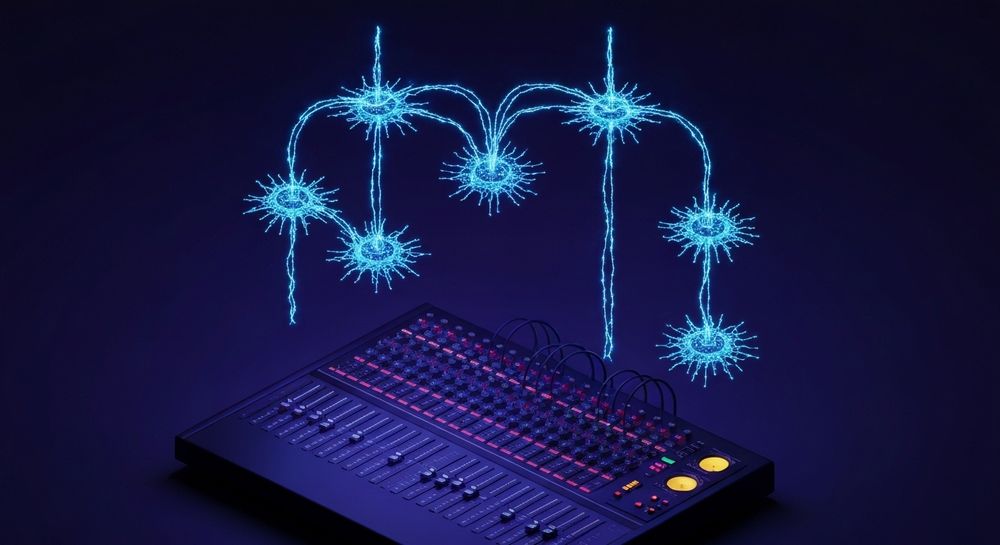
How did music stems evolve from multitrack recording?
The term “stem” originated from the audio post-production world before becoming a standard practice in music production. In the early days of multitrack recording, engineers worked with physical tapes containing multiple instruments recorded separately. This workflow advanced significantly through the late 2010s with digital audio workstations (DAWs) like Ableton, Logic Pro, and Pro Tools. By 2024, producers were already experimenting with cloud-based remixing and early stem separation algorithms. By 2026, stem extraction powered by machine learning has reached studio-grade precision, becoming an everyday tool for professionals.
Multitrack recording forms the foundation of modern music stems. The process begins with capturing every instrument and vocal part individually, followed by mixing and mastering to achieve the final track. Stems provide a midpoint between raw multitracks and a complete mix—cleanly grouped channels ready for large-format mixing or easy integration into new creative projects.

How do producers use music stems in audio mixing and music production?
Music stems serve multiple creative and technical functions:
- Remixing and Reinterpretation: DJs and producers use isolated stems to rework existing material without needing original session files. This is especially common in electronic genres where reimagined versions thrive, as discussed in What Are Stems in Music? Complete Guide to Audio Stems (2026).
- Live Performance and Karaoke: Stems make it simple to remove main vocals or instruments, creating backing tracks for performances and karaoke.
- Sound Design and Sampling: Engineers extract bass lines or drum grooves for sampling and re-composition.
- Educational Analysis: Music schools and training courses use stems to teach mixing balance, EQ, and spatial dynamics.
- Audio Restoration: Editors clean up stems from noisy background tracks or uneven live recordings, improving quality for re-release or sync licensing.
In 2026, collaborative platforms integrate stem management natively, allowing distributed teams to upload, separate, and remix songs globally. The value of stems extends beyond creativity—they streamline workflow efficiency and integrate across sound engineering pipelines, from television post-production to commercial music libraries. For a visual breakdown of remix workflows, check out Soundverse’s tutorial on creating Deep House music.
What role does stem separation technology play in modern sound engineering?
Stem separation involves using advanced algorithms to divide a mixed track into distinct audible components automatically. AI-driven systems analyze spectral patterns to identify instrument boundaries and isolate them without access to raw session files. This approach revolutionized workflows that previously required manual stem creation, described well in Stems and multitracks: What's the difference? - iZotope.
For sound engineers, accurate stem separation means flexibility: adjusting drum levels, equalizing vocals, or removing bleed-throughs without reopening original projects. By 2026, stem separation is commonly used not only for remixing but also in forensic audio restoration, film scoring, and adaptive game music systems where dynamic layering improves immersion.
If you're curious about where AI fits in, explore trends shaping the music industry through this article on AI and music and check out Soundverse’s introduction to AI Magic Tools for comprehensive insights.
Why are music stems important for collaboration and creative growth?
In today’s decentralized production environments, professionals often collaborate remotely. Instead of sharing heavy DAW sessions, they exchange stems—compact audio blocks that maintain mix integrity and simplify project syncing. This flexibility lets artists co-produce or remix seamlessly across genres. As Stems vs Multitracks: What is the Difference? - Boris FX explains, stems keep production efficient while preserving key mix qualities.
Artists also benefit from better mix transparency. Having stems means you can quickly adjust vocal intensity for regional versions, modify percussion for radio edits, or reformat songs for sync placements. Sound engineers working in spatial and immersive formats such as Dolby Atmos or Ambisonics also rely on stem layers to distribute sound dynamically.
By 2026, AI tools have further simplified this. Producers who previously needed technical expertise can now rely on advanced platforms to generate stems automatically, letting them focus more on creativity rather than manual audio tasks.
How to make music stems with Soundverse Stem Separator
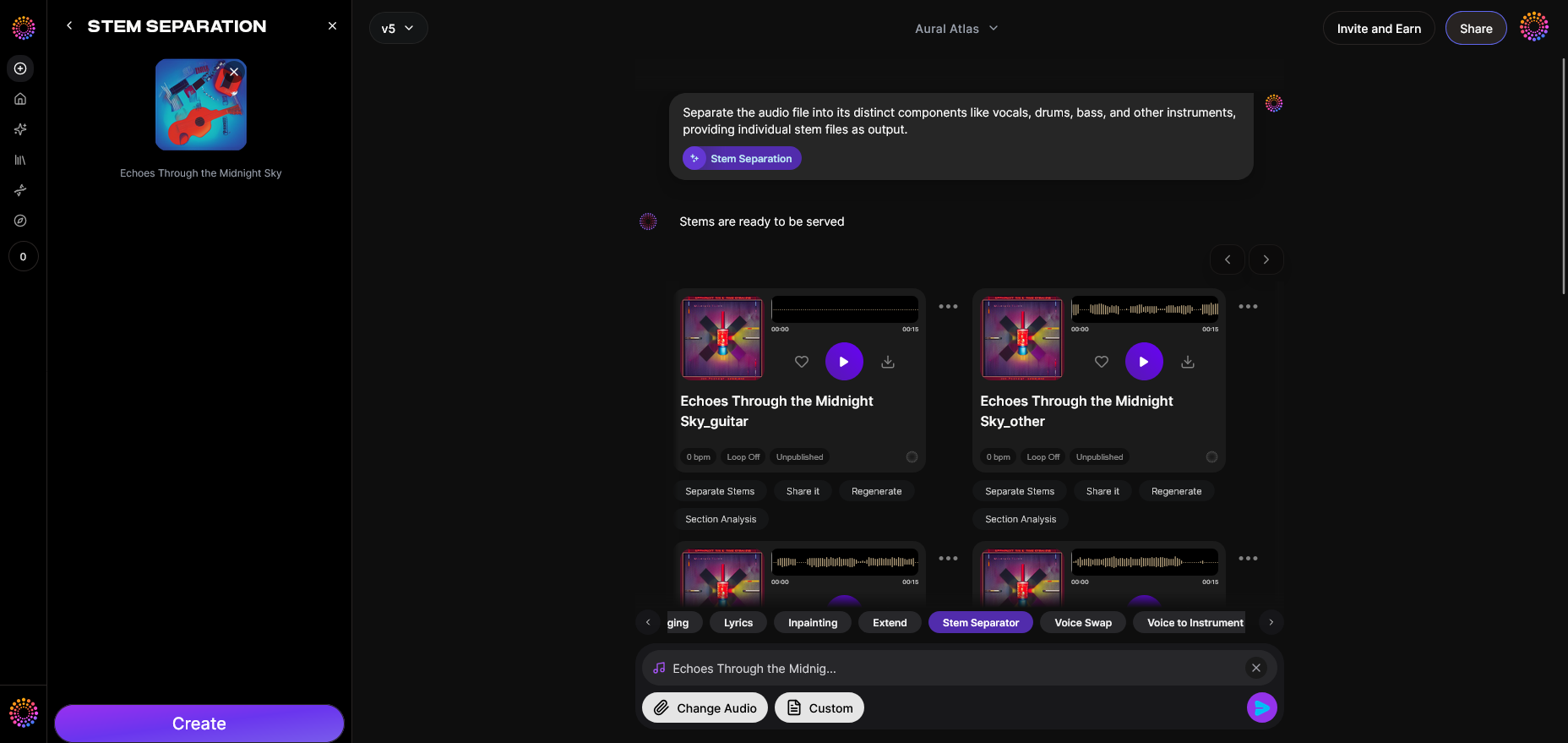
Now that you understand what music stems are and why they’re essential to professional sound design, here is how to create them instantly using Soundverse.
What is Soundverse Stem Separator?
Soundverse’s Stem Separator is a specialized AI-powered application designed to dissect mixed audio into up to six editable stems: Vocals, Drums, Bass, Guitar, Accompaniment, and other optional layers depending on content. It supports uploads from URLs, stored files, or direct recording input. The algorithm isolates elements with high-quality precision suitable for remixing, educational breakdowns, or karaoke preparation.
Key Capabilities of Soundverse Stem Separator:
- 6-stem separation for detailed mix control.
- Support for URL, file, and recording input.
- High-quality isolation optimized for professional use.
- Application across remixing, cleaning, and academic analysis.
Whether you’re remixing a track or evaluating an arrangement for instructional purposes, Soundverse provides an intuitive interface. After processing asynchronously, results appear as isolated stems ready to edit or export.
Pair with Other Soundverse Tools
Soundverse integrates seamlessly with complementary features like Section Analysis, which automatically labels song segments (Intro, Verse, Chorus, Bridge, Outro), giving producers timestamp accuracy when remixing. Additionally, Arrangement Studio creates a collaborative editing environment for refining song structures. When used together, these tools let producers dissect, rearrange, and master songs efficiently.
If you’d like to explore deeper into Soundverse’s music innovation environment, read the detailed review on Soundverse’s Stem Separation AI Magic Tool and discover how artists are leveraging these tools in modern remix workflows. You can also learn about AI-driven arrangement processes and complementary creation guides like How to Create EDM with Soundverse AI for genre-based experimentation. For hands-on assistance, watch our Explore tab demo on YouTube.
Start Creating Your Own Music Stems with AI Today
Unlock the full potential of your music production workflow. Instantly separate vocals, instruments, and beats with Soundverse’s Stem Separation AI Magic Tool — making remixing, mastering, and customization effortless.
Try Soundverse Free
Related Articles
- What Are Song Stems and Why Do You Need Them: Discover how individual song elements enhance remixing and production versatility for creators.
- Soundverse Introduces Stem Separation AI Magic Tool: Learn how Soundverse’s cutting-edge AI breaks down tracks into stems in seconds.
- How AI-Generated Music Is Transforming the Music Industry: Explore how artificial intelligence is revolutionizing music creation and production standards worldwide.
- Soundverse AI Revolutionizing Music Creation for New-Age Content Creators: Find out how Soundverse empowers modern creators to produce custom music faster and smarter with AI.
Here's how to make AI Music with Soundverse
Video Guide
Here’s another long walkthrough of how to use Soundverse AI.
Text Guide
- To know more about AI Magic Tools, check here.
- To know more about Soundverse Assistant, check here.
- To know more about Arrangement Studio, check here.
Soundverse is an AI Assistant that allows content creators and music makers to create original content in a flash using Generative AI.
With the help of Soundverse Assistant and AI Magic Tools, our users get an unfair advantage over other creators to create audio and music content quickly, easily and cheaply.
Soundverse Assistant is your ultimate music companion. You simply speak to the assistant to get your stuff done. The more you speak to it, the more it starts understanding you and your goals.
AI Magic Tools help convert your creative dreams into tangible music and audio. Use AI Magic Tools such as text to music, stem separation, or lyrics generation to realise your content dreams faster.
Soundverse is here to take music production to the next level. We're not just a digital audio workstation (DAW) competing with Ableton or Logic, we're building a completely new paradigm of easy and conversational content creation.
TikTok: https://www.tiktok.com/@soundverse.ai
Twitter: https://twitter.com/soundverse_ai
Instagram: https://www.instagram.com/soundverse.ai
LinkedIn: https://www.linkedin.com/company/soundverseai
Youtube: https://www.youtube.com/@SoundverseAI
Facebook: https://www.facebook.com/profile.php?id=100095674445607
Join Soundverse for Free and make Viral AI Music
 We are constantly building more product experiences. Keep checking our Blog to stay updated about them!