Temperature-Reactive Music Experiences Explained: The Future of Climate Music in 2026
Explore how temperature-reactive music transforms environmental audio design in 2026 with AI-driven adaptive sound systems.
Temperature-Reactive Music Experiences Explained
In 2026, the relationship between environment and sound has reached a new level of interactivity — a phenomenon best illustrated by temperature-reactive music. This emerging field merges environmental sensing technology with adaptive AI composition, crafting soundscapes that literally change with the weather. From art installations to climate awareness campaigns, temperature-reactive music is reshaping how listeners experience audio in real time.
What is temperature-reactive music?
Temperature-reactive music refers to compositions or soundscapes that adapt dynamically based on environmental temperature data. In simple terms, these are sonic environments that respond to heat, cold, humidity, or atmospheric changes. Developers and sound artists create systems where sensor inputs or weather APIs feed data into music generators, altering parameters like tempo, tone, instrumentation, or key.
This approach represents a broader category known as environmental audio — a practice where sound design reacts to real-world conditions. Similar to how motion-responsive lights change according to movement, temperature-reactive music responds to the thermal state of an environment. For example, as a summer afternoon heats up, a composition might introduce brighter timbres or faster percussion. Conversely, a drop in temperature at dusk could trigger mellow bass layers or minimalist ambient tones.

Why is temperature-reactive music trending in 2026?
Over the past few years, artists have become increasingly interested in blending sustainability, awareness, and sensory immersion. The intersection of AI and environmental art is a prime example of this shift. In 2024 and 2025, AI-driven genres such as climate music and reactive sound gained traction across galleries and indie game environments. By 2026, temperature-reactive music has evolved from a niche experimental concept into a practical tool for emotional and educational engagement.
Several converging factors fuel this trend:
- Climate communication through art – With global concern about climate variability, sound artists use temperature-reactive systems to make environmental changes audible. It’s a way to translate data into emotional resonance.
- Advances in sensor integration – Affordable IoT (Internet of Things) sensors can now capture local atmospheric conditions and stream them to composition software in minutes.
- Rise of AI-assisted music tools – Platforms like Soundverse simplify the process of generating adaptive ambient or generative music layers, turning what used to require coding into a few descriptive sentences.
- Demand for immersive installations – Exhibition spaces, smart homes, and meditation retreats now integrate audio systems that reflect natural patterns, creating deeper experiential engagement.

How does climate music differ from other adaptive audio systems?
While climate music and temperature-reactive sound both adapt to environmental changes, they differ in their focus. Climate music often translates larger planetary datasets — like CO₂ concentrations or ice melt rates — into macro-scale musical narratives. Temperature-reactive systems, on the other hand, are localized: they react immediately to the surrounding environment, often generating personalized experiences.
Key differences:
- Data granularity: Climate music uses long-term environmental data, while temperature-reactive sound uses live or near-live temperature readings.
- Purpose: Climate music tends to communicate scientific messages. Temperature-reactive audio focuses on mood, atmosphere, and listener engagement.
- Adaptation timescale: Climate pieces may evolve over months or years; temperature-reactive music changes minute-by-minute.
The distinction matters for sound designers who wish to choose the right framework for their work — whether that’s educational storytelling or immediate sensory design.
How are artists using reactive sound in 2026?
The versatility of reactive sound allows creators to integrate it across multiple domains:
- Art installations: Museums use temperature sensors embedded in sculptures to trigger sound layers, fusing visual and auditory sensations.
- Environmental performance spaces: Musicians synchronize compositions with outdoor temperature shifts, producing living concerts.
- Gaming: Developers program music systems that adapt in tandem with virtual weather, increasing immersion.
- Wellness technology: Meditation apps integrate ambient loops that evolve with the listener’s real-world climate, enhancing emotional regulation.
With these applications, temperature-reactive music is transforming both artistic and commercial projects, pushing adaptive sound into mainstream design.
What technologies make temperature-reactive music possible?
Creating these experiences requires a combination of software, sensors, and AI systems:
- Temperature sensors or APIs – Devices collect real-world climate data and communicate it to audio generation apps.
- AI music generation engines – Tools such as Soundverse’s AI Music Generator interpret environmental variables and transform them into musical parameters.
- Sound layer management – Systems combine generated stems to ensure smooth transitions as temperatures fluctuate.
- Playback frameworks – Whether in Unity for games or Max/MSP for installations, these frameworks dynamically apply new values to sound parameters.
These interlocking systems allow for real-time adaptation without manual mixing — making sound truly environmental.
How to make temperature-reactive music with Soundverse AI Music Generator
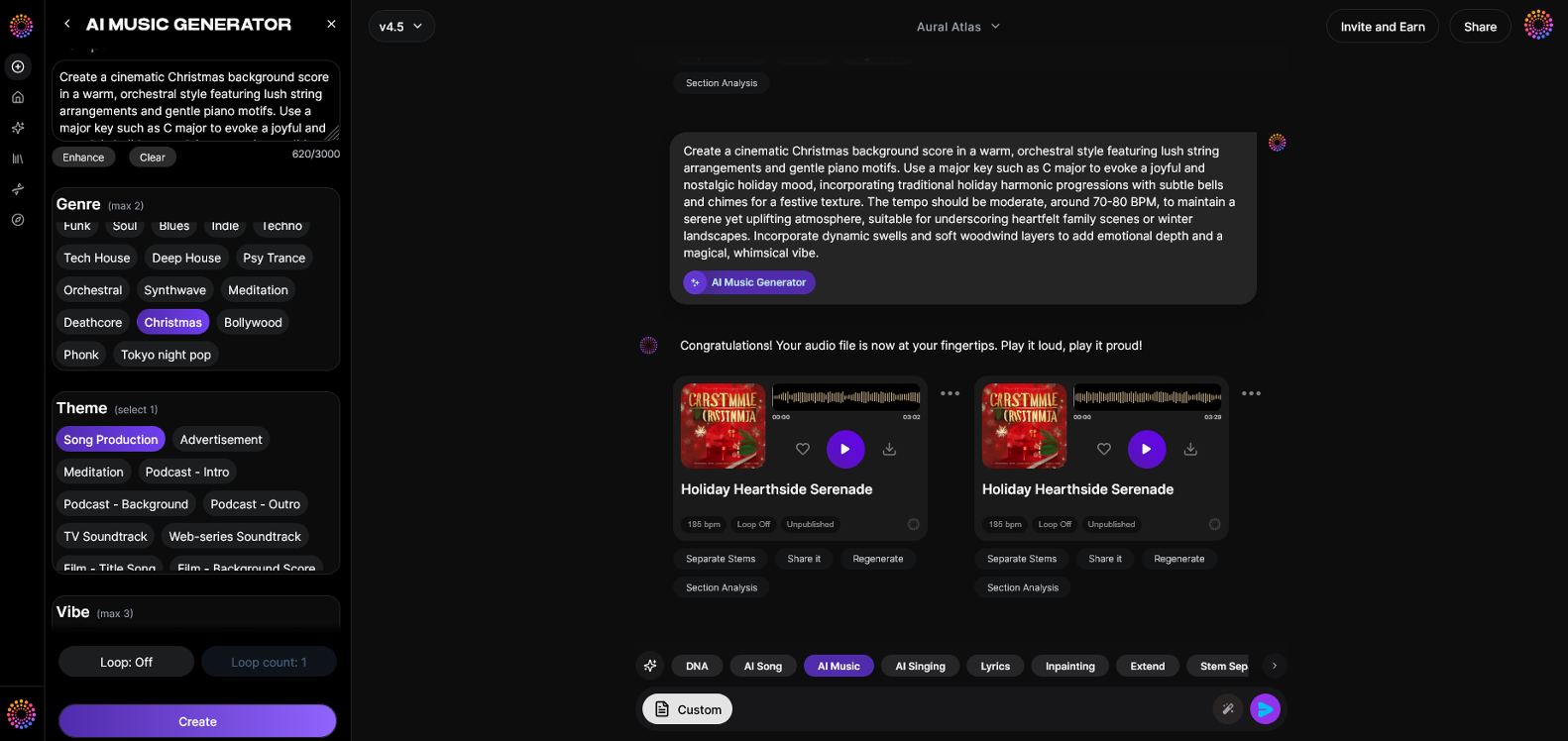
Soundverse’s AI Music Generator allows creators to produce temperature-reactive compositions without the need for complex code or synthesis programming. This AI-driven tool converts text prompts into instrumental soundscapes perfectly suited for installations or interactive projects.
Feature Overview:
The AI Music Generator can create fully produced instrumental pieces directly from a short textual description. Its Loop Mode ensures seamless playback, which is vital for reactive installations. Using detailed controls, creators can specify genre, mood, and instrumentation to ensure that each generated layer aligns with the environmental theme.
Core Capabilities:
- Text-to-music generation for immediate ambient or rhythmic layers.
- Genre/mood control for emotional precision.
- Loop Mode to maintain continuous environmental feedback loops.
- V4 and V5 models offering stylistic depth and audio realism.
Once base audio layers are generated within Soundverse, designers can integrate them into environmental playback frameworks using APIs or sensor triggers. This setup enables the music to shift automatically in response to temperature data. The resulting system functions as a live reactive environment while preserving composition quality.
For example, one might generate three ambient loops: “warm afternoon,” “cool evening,” and “rain-soaked dawn.” Each is rendered via Soundverse, categorized by temperature thresholds, and triggered by external sensors. The transitions create an illusion of a continuously adaptive sonic atmosphere.
For deeper creative guidance, users can explore tutorials such as How to Create Country Music with Soundverse AI or thematic breakdowns like How to Create Music Evoking the Desert to understand prompt design strategies.
Soundverse’s architecture also connects seamlessly with its ecosystem tools:
- Voice to Instrument – allows transformation of vocal sketches into instrumental textures for added nuance.
- Similar Music Generator – creates compositional variations inspired by existing temperature themes.
For artists seeking efficient setup walkthroughs, refer to resources such as Generate AI Music with Soundverse Text to Music or Soundverse AI Magic Tools Create Content Quickly with AI. For a deeper dive, watch our Soundverse Tutorial Series - Make Deep House Music or Explore Tab Overview on YouTube.
How does temperature-reactive music impact the future of environmental audio?
By merging sensor intelligence with AI-based composition, temperature-reactive music is helping redefine the boundaries of environmental audio. This fusion not only supports climate storytelling but also deepens emotional empathy with our surroundings. Sound now serves as a mirror of local temperature states, allowing audiences to “hear” the climate as it changes.
Industry trends suggest that by late 2026, more AR/VR experiences and architecture projects will use temperature-reactive frameworks to craft responsive atmospheres. As artists and developers pursue new methods for adaptive expression, the importance of tools like Soundverse will only increase. Its balance of accessibility and depth is already inspiring sound designers to imagine what the next evolution of environmental music might sound like.
Experience the Future of Temperature-Reactive Music!
Discover how Soundverse powers music that adapts to the world around you. Create immersive soundscapes that respond to temperature, mood, and more — all through AI-driven innovation.
Start Creating with Soundverse
Related Articles
- How AI-Generated Music Is Transforming the Music Industry — Explore the impact of AI-driven creativity and how it is shaping new trends in digital music production.
- Soundverse AI Magic Tools: Create Content Quickly with AI — Learn how Soundverse’s AI Magic Tools make music creation faster and more intuitive than ever.
- Now Generate Music with Filters such as Genre, Theme, Instruments or Even Vibe — Discover powerful customization tools that let you generate personalized music based on your creative vision.
- The Role of AI Music in Film and Television — See how AI-generated music is revolutionizing soundtracks and enhancing cinematic experiences worldwide.
Here's how to make AI Music with Soundverse
Video Guide

Here’s another long walkthrough of how to use Soundverse AI.
Text Guide
- To know more about AI Magic Tools, check here.
- To know more about Soundverse Assistant, check here.
- To know more about Arrangement Studio, check here.
Soundverse is an AI Assistant that allows content creators and music makers to create original content in a flash using Generative AI. With the help of Soundverse Assistant and AI Magic Tools, our users get an unfair advantage over other creators to create audio and music content quickly, easily and cheaply. Soundverse Assistant is your ultimate music companion. You simply speak to the assistant to get your stuff done. The more you speak to it, the more it starts understanding you and your goals. AI Magic Tools help convert your creative dreams into tangible music and audio. Use AI Magic Tools such as text to music, stem separation, or lyrics generation to realise your content dreams faster. Soundverse is here to take music production to the next level. We're not just a digital audio workstation (DAW) competing with Ableton or Logic, we're building a completely new paradigm of easy and conversational content creation.
TikTok: https://www.tiktok.com/@soundverse.ai
Twitter: https://twitter.com/soundverse_ai
Instagram: https://www.instagram.com/soundverse.ai
LinkedIn: https://www.linkedin.com/company/soundverseai
Youtube: https://www.youtube.com/@SoundverseAI
Facebook: https://www.facebook.com/profile.php?id=100095674445607
Join Soundverse for Free and make Viral AI Music

We are constantly building more product experiences. Keep checking our Blog to stay updated about them!