Spatial Audio Music Production With AI Tools: The 2026 Revolution
Discover how AI tools are transforming spatial audio music production and immersive mixing workflows in 2026.
Spatial Audio Music Production With AI Tools
Spatial audio has transitioned from a high-end novelty to a mainstream creative standard, redefining how musicians and sound designers craft immersive sonic experiences. In 2026, spatial audio music production integrates artificial intelligence (AI) in groundbreaking ways — accelerating workflows, expanding creative possibilities, and redefining how producers achieve depth, realism, and emotional impact.
What is spatial audio music production and why is it redefining sound in 2026?
Spatial audio music production is an advanced approach to creating sound in three-dimensional space. Unlike traditional stereo mixes—limited to left-right channels—spatial audio spreads sound throughout a virtual environment. It allows listeners to sense the direction, distance, and movement of each element. This technology fuels formats like Dolby Atmos and Sony 360 Reality Audio, and by 2026, it has evolved into a standard practice for gaming, film, virtual concerts, and even VR meditation tracks.
With artificial intelligence joining the toolkit, spatial audio production now combines high-dimensional sound placement with generative intelligence. AI tools analyze frequency, tone, and rhythmic patterns, suggesting optimal spatial positions for different instruments or sound effects. This fusion results in immersive mixing sessions where producers can achieve cinematic sound depth in a fraction of the time.
How AI is accelerating 3D music production workflows
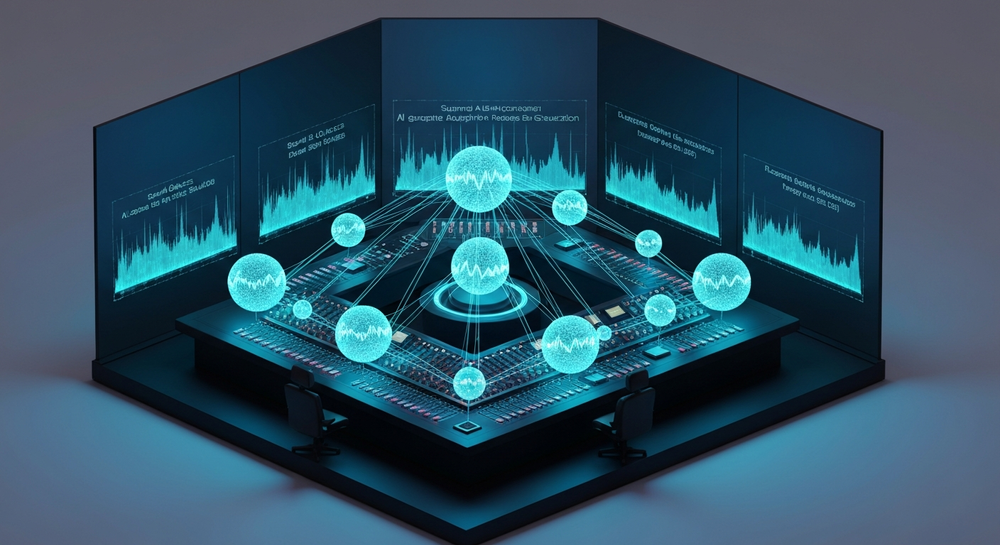
AI’s role in 3D music production has grown sharply since 2024, but 2026 marks the year when creative autonomy and precision truly converge. Advanced neural models can map sonic layers across a 360º spectrum, enabling producers to “paint” with sound. These algorithms assist engineers by:
- Automating object placement – AI identifies spatial sound placement zones in Dolby Atmos workflows, ensuring balanced distribution and avoiding phase or frequency conflicts.
- Dynamic reverb simulation – Instead of manually designing ambient reflections, AI models simulate how sound behaves in realistic acoustic spaces like arenas, chambers, or natural landscapes.
- Adaptive mix balance – AI continuously learns from a mix’s structure and adjusts volume levels and panning to preserve clarity even in complex 3D productions.
- Creative prompts for ambient design – Instead of relying strictly on manual experimentation, producers use descriptive phrases like “ethereal underwater scene” or “futuristic digital skyline,” enabling AI tools to generate rich textures and matching ambient layers.
This intelligent diffusion process results in cohesive immersive soundscapes ideal for next-generation experiences including AR installations, playable worlds, and meditative virtual spaces.
What does an immersive mixing process look like in 2026?
Immersive mixing in 2026 blends advanced automation with creative intent. Producers often start with multichannel stems or AI-generated elements designed for 3D placement. Modern DAWs integrate plug-ins that visualize sound positions dynamically inside spheres or domes, allowing manual fine-tuning of each source.
In an optimized Dolby Atmos workflow, AI tools assist in localizing percussive elements around the listener while melodic lines may float above or beneath, establishing emotional dimension. This process yields audiences who “experience” rather than merely listen.
In contrast to 2025, remix engineers in 2026 rely heavily on cloud-based collaboration systems that handle multi-layer spatial data. These platforms sync sessions seamlessly across devices, minimizing latency and enabling rapid iteration.
For practical exploration, check out our Soundverse Tutorial: How to Make Music and Explore Tab walkthrough for real workflow insights.
How Soundverse is streamlining spatial audio music production with AI
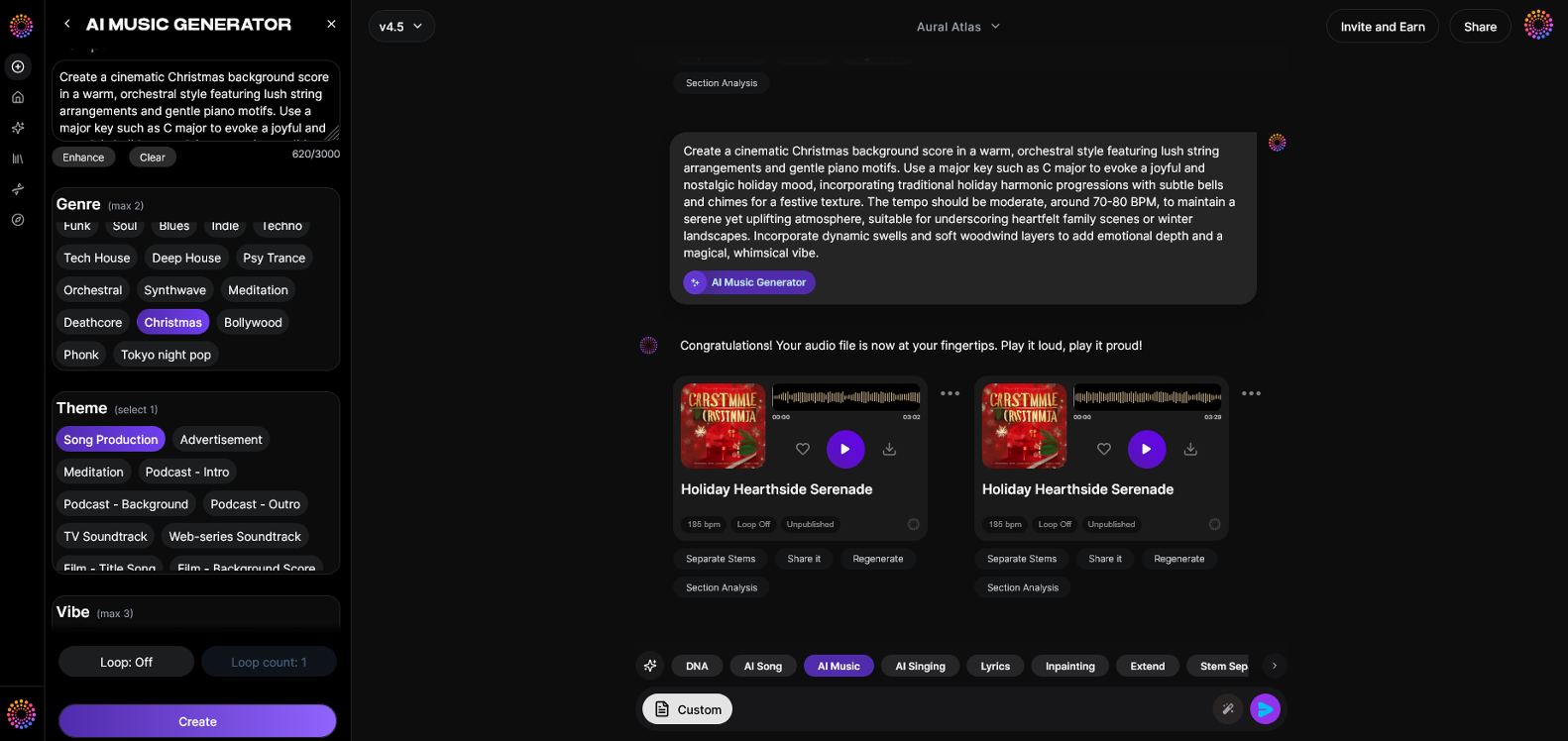
Soundverse stands at the forefront of 2026’s AI-driven creative revolution, particularly through its AI Music Generator — an intuitive text-to-music engine built for instrumental and ambient sound creation.
Key capabilities of Soundverse AI Music Generator
- Text-to-music generation: Producers can describe the vibe, atmosphere, genre, or instrumentation they want (e.g., “cinematic ambient with deep spatial tones”) and Soundverse transforms the prompt into a fully produced instrumental composition.
- Loop Mode: Ideal for seamless, endless playback in game design or meditation experiences, maintaining rhythmic and tonal coherence.
- Detailed genre/mood/instrument control: Creative teams define precise attributes like tempo or timbral palette to achieve consistent sonic identity across projects.
- Model flexibility: Users choose between V4 and V5 generation models to balance complexity, realism, and production speed.
This makes Soundverse a natural partner for engineers experimenting with spatial formats. Generated instrumental beds serve as foundations for immersive mixing, where users later layer stems using compatible 3D workstations or Soundverse’s extended ecosystem. For more composition insights, explore Soundverse Tutorial - Make Deep House Music.
How to make spatial audio music production creations with Soundverse AI Music Generator
To start working with spatial audio concepts through Soundverse, producers follow a clear workflow:
Step 1: Feature Overview
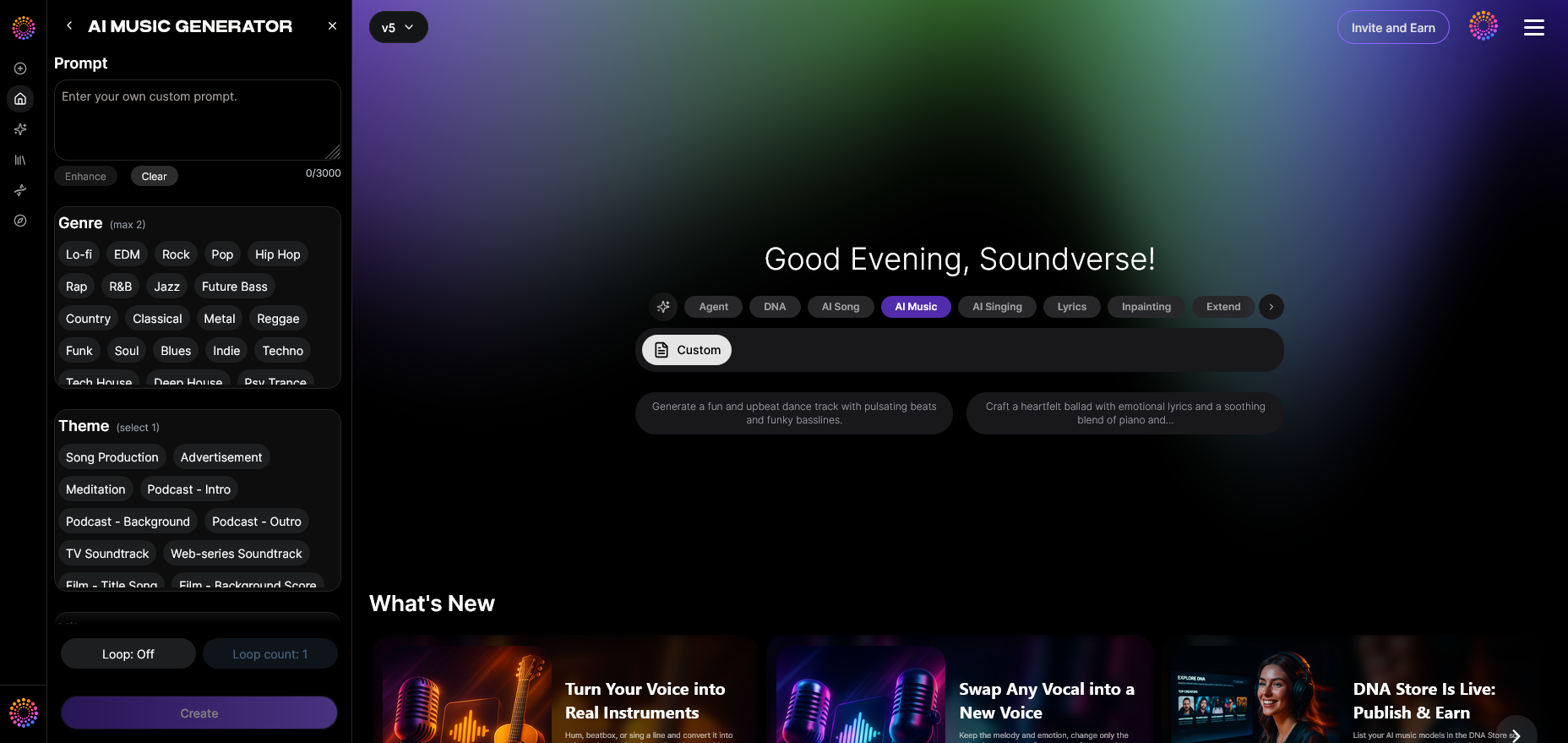
Access AI Music Generator from the Soundverse main menu. This tool specializes in instrumental music generation suited for immersive contexts like Dolby Atmos or 3D mixes.
Step 2: Description Input
Enter a text description reflecting your desired sonic imagery — for spatial audio, phrases such as “expansive ambient field with glowing synth orbs” or “organic percussion moving through space” create rich starting points.
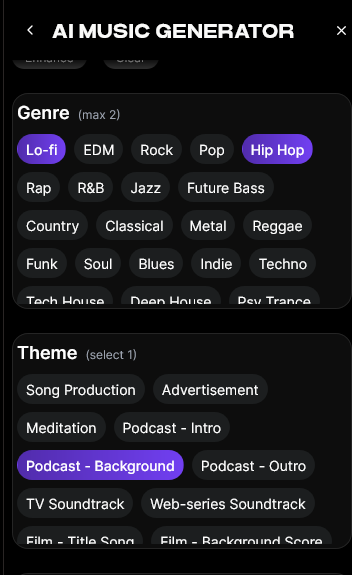
Step 3: Style & Duration
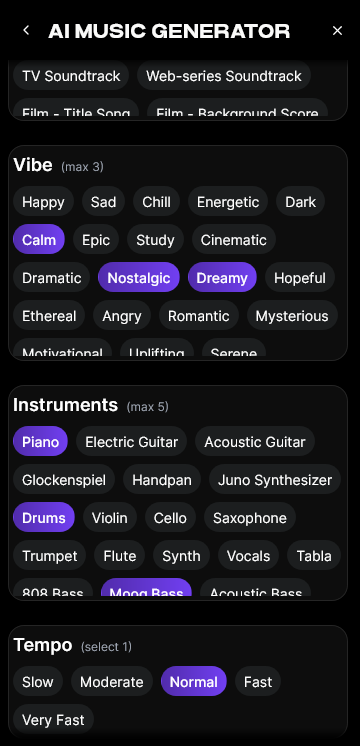
Select your preferred music style and how long the track should last. Producers often opt for ambient, cinematic, or atmospheric genres since they adapt well to spatial layering.
Step 4: Generation
Click generate. The system processes the prompt asynchronously and returns a polished instrumental composition. With AI’s adaptive modeling, tonal balance and temporal evolution remain consistent for spatial post-production.
Step 5: Export Options

Download your track in your preferred format. You can then bring it into Dolby Atmos-enabled DAWs or other immersive production environments. The result is a ready-to-mix foundation containing the texture, rhythm, and spatial cues designed through Soundverse’s AI logic.
Integrating Soundverse tools for complete immersive mixing
Soundverse’s surrounding ecosystem enhances spatial workflows:
- Soundverse DNA: Artists can imprint their unique sonic identity onto generated content, ensuring copyright-safe consistency across immersive projects. This helps maintain authenticity for branded experiences and long-form installations.
- Arrangement Studio: Once generated, tracks can be refined structurally. Producers edit segments, rearrange transitions, or apply spatial transitions before exporting final stems.
- Section Analysis: Automatically labels logical song structures (Intro, Verse, Chorus, Bridge, Outro), enabling precise placement of sections in spatial environments.
These tools together create a scalable pipeline for spatial designers building looping atmospheres, multi-channel gaming soundtracks, or cinematic ambiences.
Why AI-enhanced Dolby Atmos workflow is booming this year
In 2026, Dolby Atmos integration is no longer limited to major studios. Smaller teams are adopting cost-efficient AI workflows to achieve multidimensional sound panoramas. With AI automation helping to interpret complex audio cues, engineers can focus more on creative placement rather than technical minutiae.
Accessibility also drives this boom — cloud platforms like Soundverse lower entry barriers by providing fast background generation, section labeling, and stylistic control without steep learning curves. This democratization parallels music industry trends showing that AI-led production tools are reshaping how content creators operate globally.
How AI-generated 3D music enhances emotional storytelling
Spatial sound accentuates storytelling — an evolving philosophy across 2026’s multimedia landscape. AI-generated 3D music achieves realism through evolving textures and dynamic energy distribution, allowing listeners to feel transitions physically. For example, spatial ambiences generated via AI can follow motion patterns synchronized with visuals in virtual spaces or cinematics.
This emotional realism makes Soundverse not just a generator but a creative co-producer. Projects using Soundverse Assistant benefit from automated suggestions that refine prompts, improving alignment between narrative goals and sound immersion.
Case applications: Game design, wellness, and advertising
Spatial audio’s impact stretches across sectors:
- Game Design: Continuous loops generated via Soundverse add adaptive soundscapes, enhancing realism and guiding player emotion.
- Wellness & Meditation: Ambient textures generated in Loop Mode immerse listeners into calming multi-layer environments, aligning perfectly with mindfulness-focused products. See related guides like how to create healing meditation music.
- Advertising: Brands deploy AI-based 3D sound to emphasize luxury and modernity, constructing memorable identity-based sonic assets.
Start Creating Spatial Audio Tracks with AI Today!
Unlock professional-grade spatial audio music production effortlessly. Experiment, mix, and master in 3D space using Soundverse’s intelligent AI tools to elevate your sound design.
Sign Up Free
Related Articles
- Soundverse Introduces Stem Separation AI Magic Tool — Discover how Soundverse’s Stem Separation tool enables precise audio manipulation for complex multitrack projects.
- The Role of AI Music in Film and Television — Learn how AI-generated compositions are transforming the soundtrack landscape for visual media and immersive entertainment.
- AI Music Generator and Human Composers: A Future Together — Explore how musicians and AI tools collaborate to push boundaries and craft multidimensional sound experiences.
- Soundverse Assistant: Your AI Music Co-Producer — Meet your new creative partner that helps refine mixes, generate ideas, and streamline your production flow.
Here's how to make AI Music with Soundverse
Video Guide
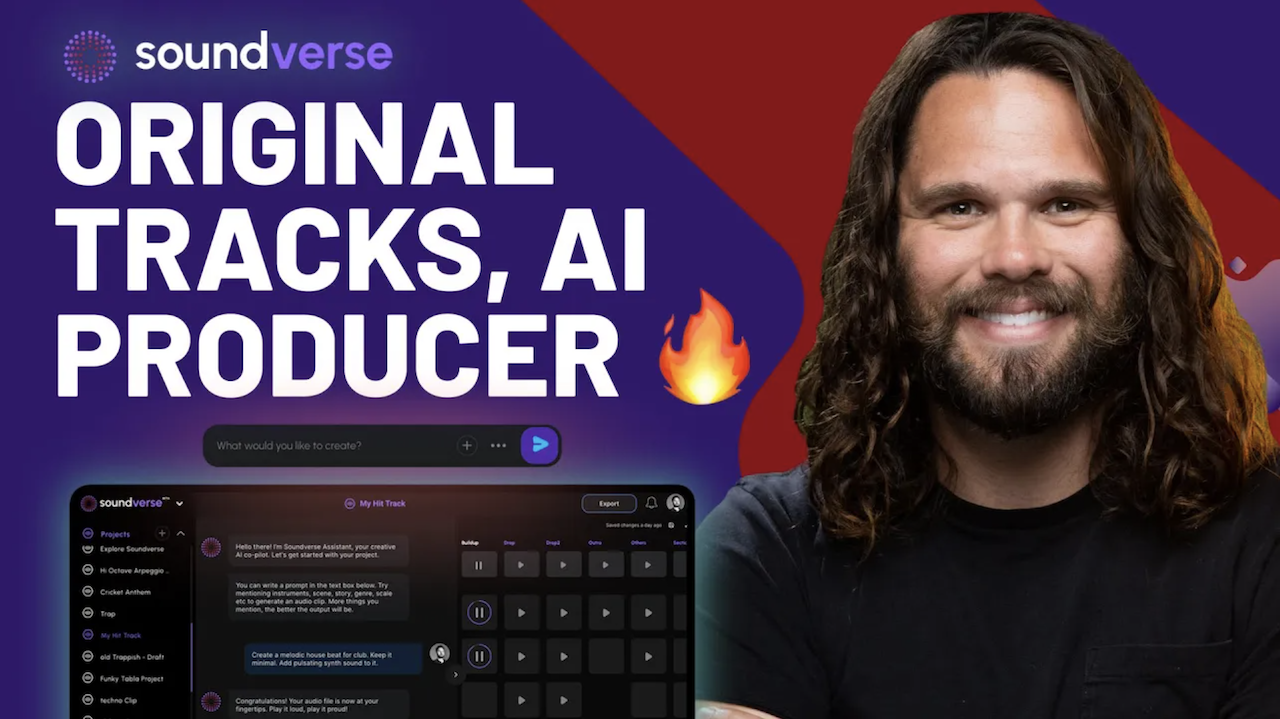
Here’s another long walkthrough of how to use Soundverse AI.
Text Guide
- To know more about AI Magic Tools, check here.
- To know more about Soundverse Assistant, check here.
- To know more about Arrangement Studio, check here.
Soundverse is an AI Assistant that allows content creators and music makers to create original content in a flash using Generative AI. With the help of Soundverse Assistant and AI Magic Tools, our users get an unfair advantage over other creators to create audio and music content quickly, easily and cheaply. Soundverse Assistant is your ultimate music companion. You simply speak to the assistant to get your stuff done. The more you speak to it, the more it starts understanding you and your goals. AI Magic Tools help convert your creative dreams into tangible music and audio. Use AI Magic Tools such as text to music, stem separation, or lyrics generation to realise your content dreams faster. Soundverse is here to take music production to the next level. We're not just a digital audio workstation (DAW) competing with Ableton or Logic, we're building a completely new paradigm of easy and conversational content creation.
TikTok: https://www.tiktok.com/@soundverse.ai
Twitter: https://twitter.com/soundverse_ai
Instagram: https://www.instagram.com/soundverse.ai
LinkedIn: https://www.linkedin.com/company/soundverseai
Youtube: https://www.youtube.com/@SoundverseAI
Facebook: https://www.facebook.com/profile.php?id=100095674445607
Join Soundverse for Free and make Viral AI Music

We are constantly building more product experiences. Keep checking our Blog to stay updated about them!