Soundverse DNA vs Suno Persona: Why Soundverse Built a Better AI Music Identity System
Compare Soundverse DNA vs Suno Personas for AI music identity systems. Discover why DNA's catalog training, artist compensation, and ethical framework make Soundverse the leading platform for professional AI music generation, offering a consistent sonic identity.
Contents
Introduction
When it comes to creating music with a consistent sonic identity, Soundverse DNA and Suno Personas represent two fundamentally different approaches to the same creative challenge. One was built to empower artists and solve ethical problems in AI music. The other exists as a convenience feature within a subscription service.
If you are deciding which platform to use or simply curious about how AI music generation is evolving, this comparison will help you understand what each system offers and why DNA represents a more comprehensive, ethical, and professional solution.
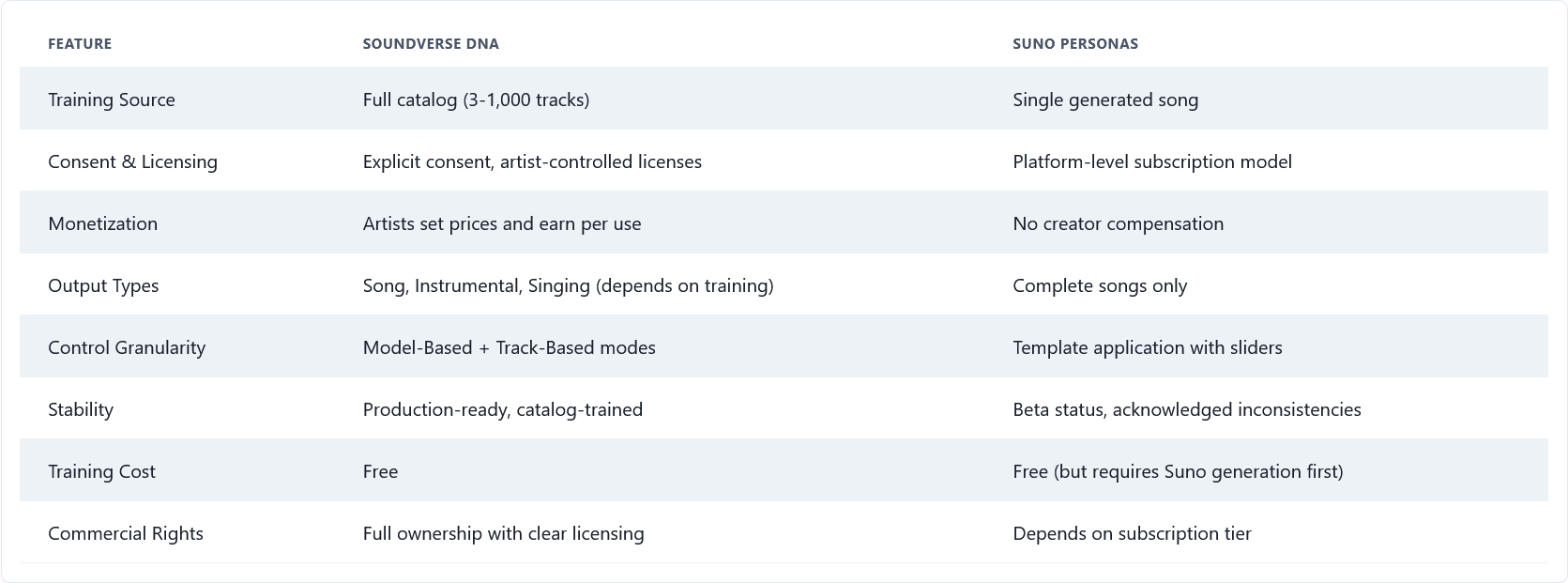
At a Glance: DNA vs Personas
The core attributes of each system are broken down side-by-side below:
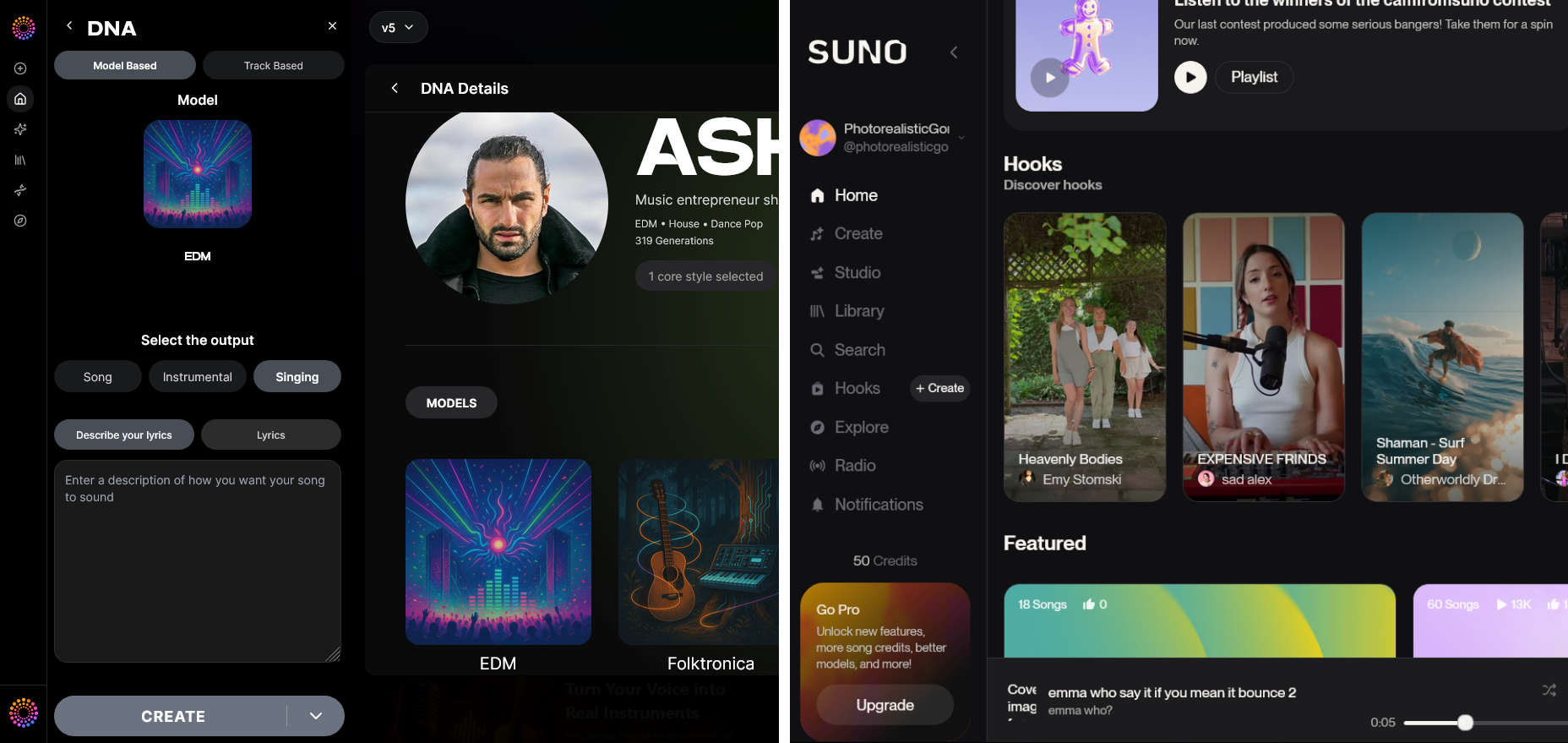
What DNA and Personas Actually Are
Both systems aim to solve the same problem: how do you maintain a consistent sound across multiple tracks without manually recreating your style every single time?
Throughout this comparison, three differences define everything else: how identity is learned, who gets paid, and how stable outputs are. These pillars shape every feature, workflow, and business decision within each platform.
Soundverse DNA: Artist-Trained AI Models
DNA trains custom AI models on actual artist catalogs with explicit consent and proper licensing. When you train a DNA model on your catalog, the system does not just memorize your tracks, it learns how you think musically. It extracts your production choices, harmonic preferences, rhythmic tendencies, arrangement instincts, and emotional contours.
There are two types of DNA models:
Full DNA trains on complete songs, instrumentals, or acapellas. Generates complete tracks, instrumentals, and sometimes singing performances depending on training data.
Voice DNA trains exclusively on isolated vocal recordings. Generates vocals or transforms performances with a specific singer's vocal character.
For a complete guide on building and monetizing your DNA, see How to Build Your Own AI Music Model and Earn Money with Soundverse DNA.
Suno Personas: Single-Track Templates
Personas capture the DNA of a single existing song, its vocal character, musical style, performance energy, and overall atmosphere. You create a Persona from any song in your Suno library, then apply it as a template when generating new tracks.
Key limitation: Personas can only be created from songs you have already generated within Suno. You cannot train a Persona on your own existing catalog or uploaded audio.
Training Process: Catalog vs Single Track
Creating a DNA Model
Training a DNA model on Soundverse is a thorough, multi-step process:
Step 1: Access My DNA Dashboard
Navigate to My DNA from the main Soundverse interface. Click Build DNA to start.
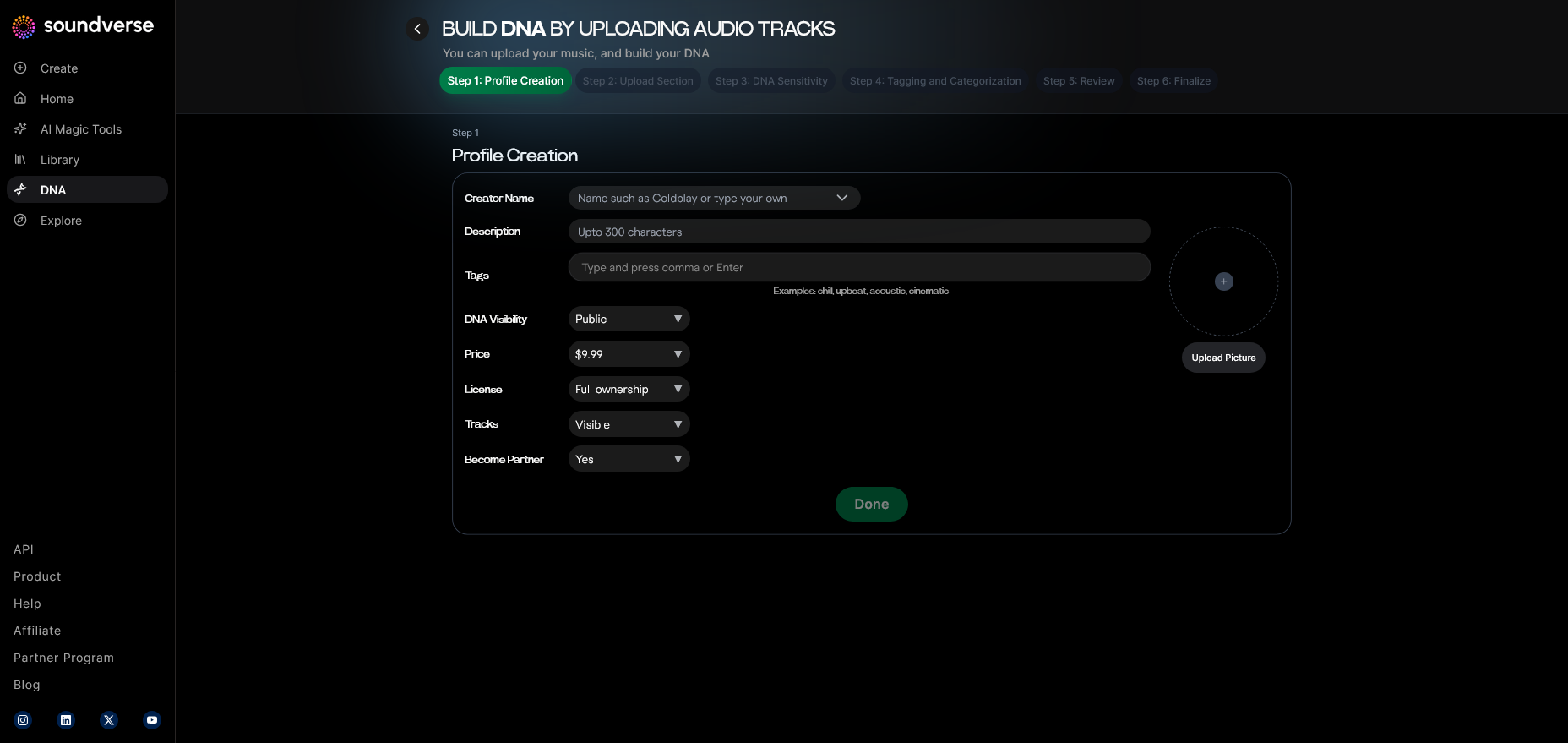
Step 2: Set Up Your Creator Profile
Create your profile or select an existing one. Add your creator name, description up to 300 characters, and upload a square profile image. This represents you publicly if you publish the DNA.
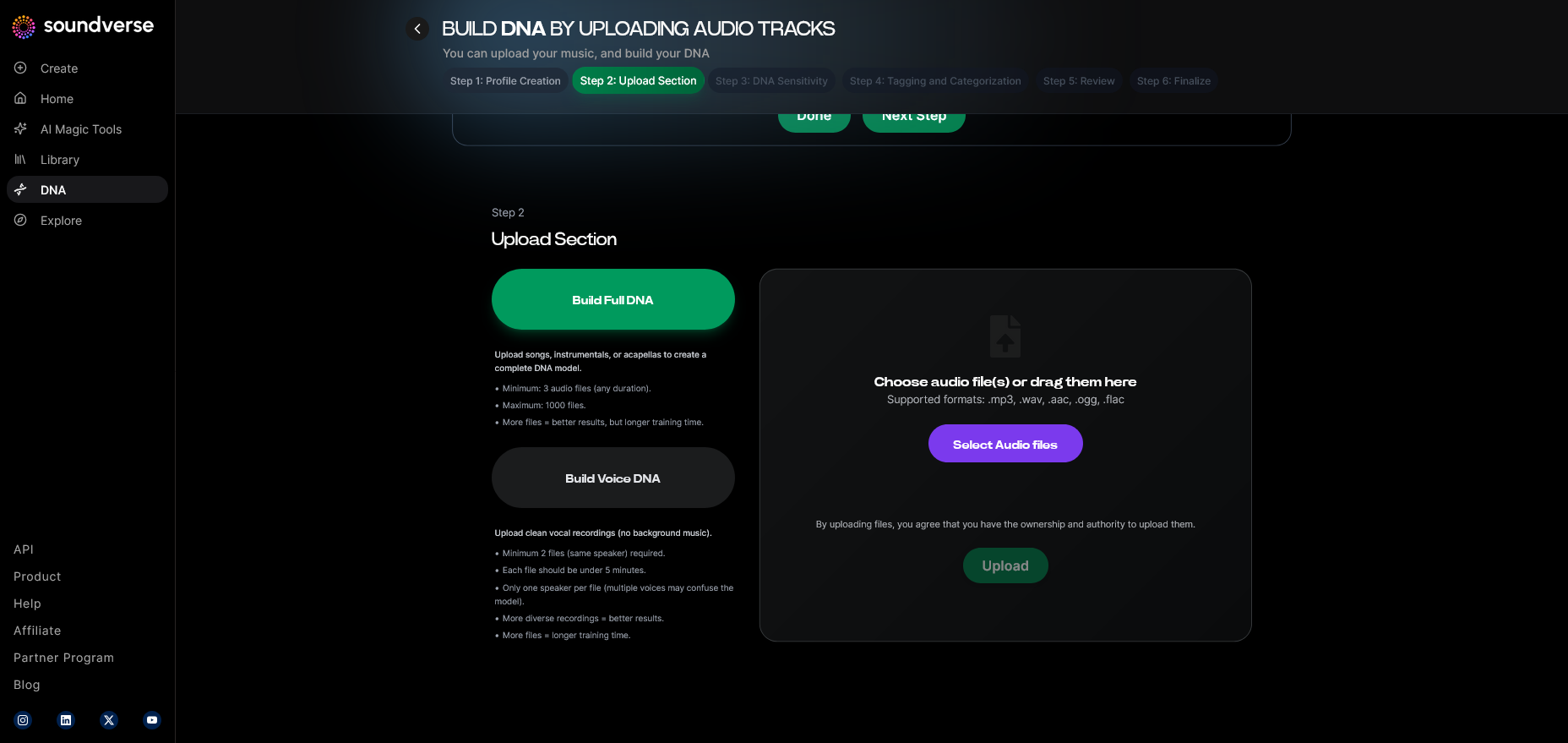
Step 3: Choose DNA Type
Select Build Full DNA for complete songs, instrumentals, or acapellas. Minimum 3 tracks, maximum 1,000. Or select Build Voice DNA for isolated vocal recordings. Minimum 2 files under 5 minutes each.
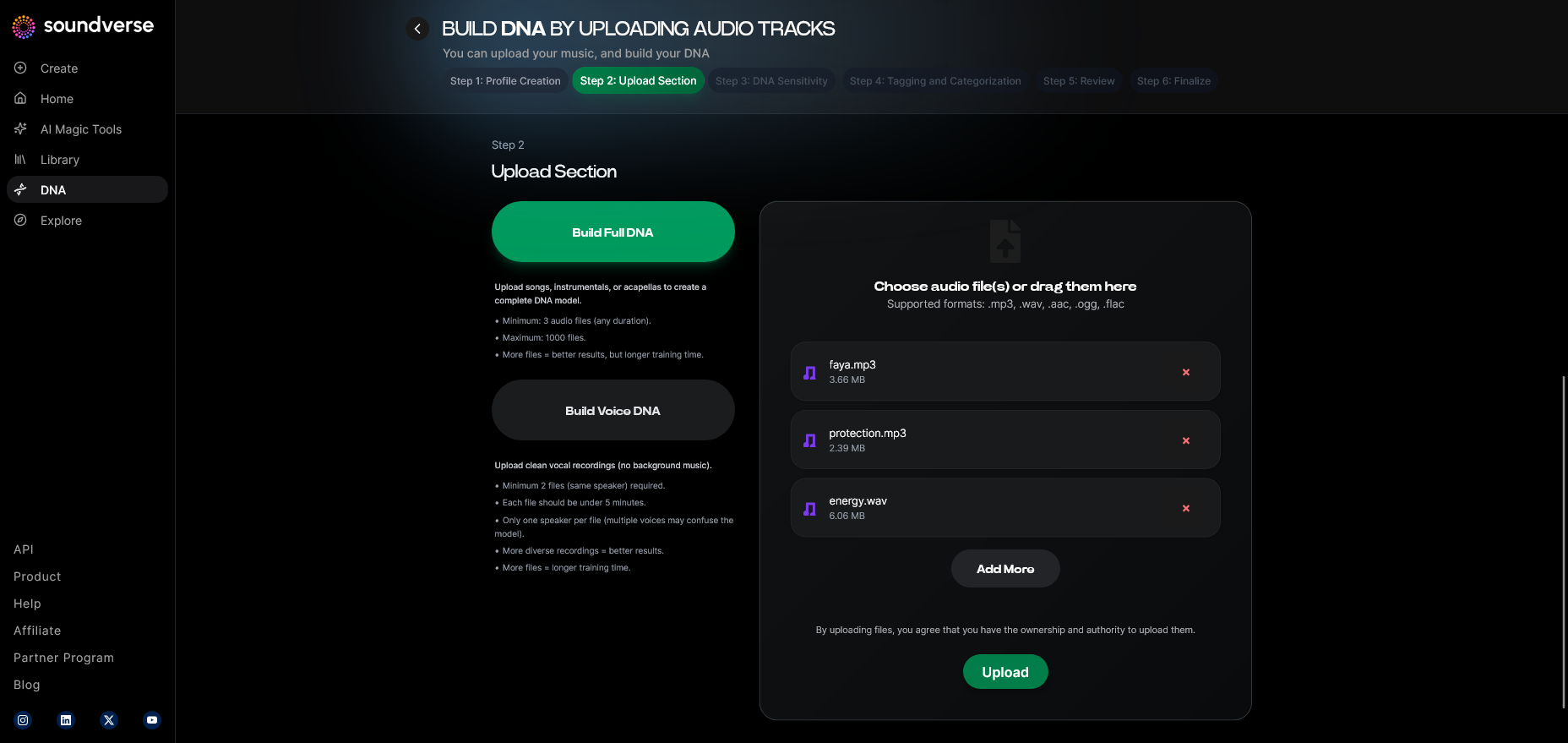
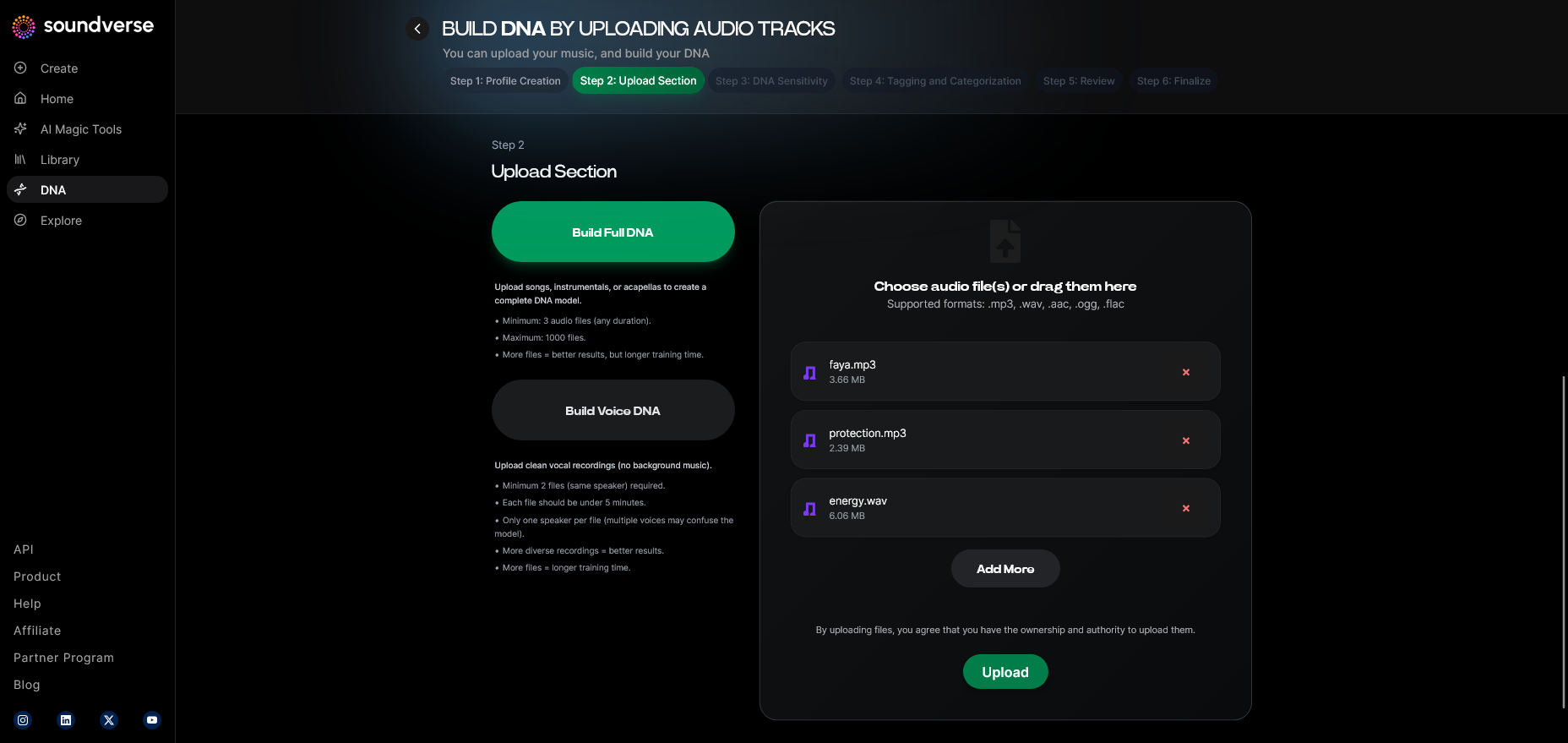
Step 4: Upload Your Audio
Upload your catalog in MP3 or WAV format. Choose audio that genuinely represents your style. Include diversity within your aesthetic. Use high-quality, studio-quality recordings for best results.
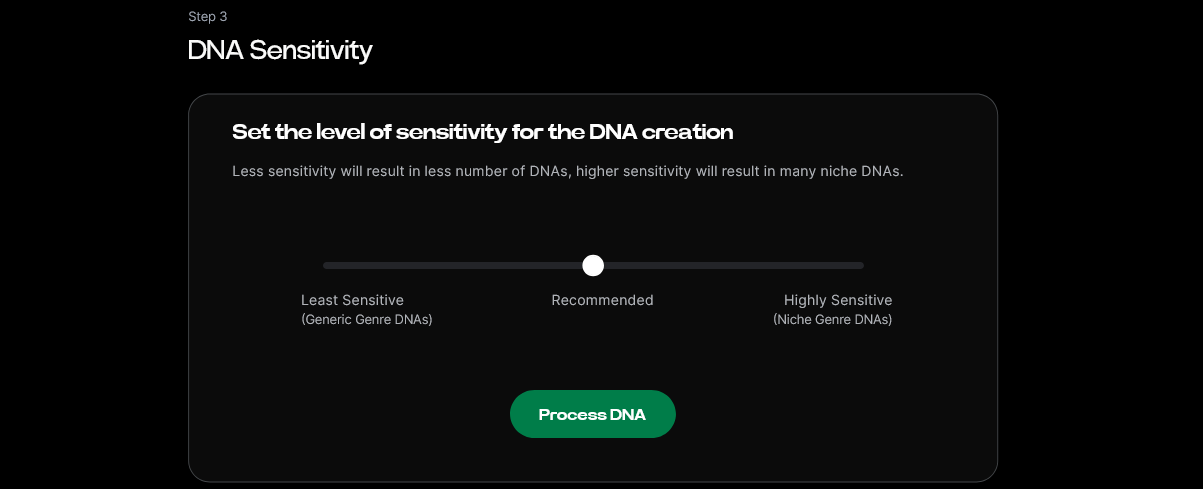
Step 5: Configure Sensitivity
For Full DNA, set sensitivity from 0 to 350, recommended 150. Higher sensitivity means closer fidelity to your catalog. Lower sensitivity allows more creative variation. For Voice DNA, select Model Quality level.
Step 6: Review Automatic Tags
Soundverse automatically categorizes your audio into songs, instrumentals, and vocals. Extracts genres, moods, energy levels, instruments, and era. Review and edit for accuracy.
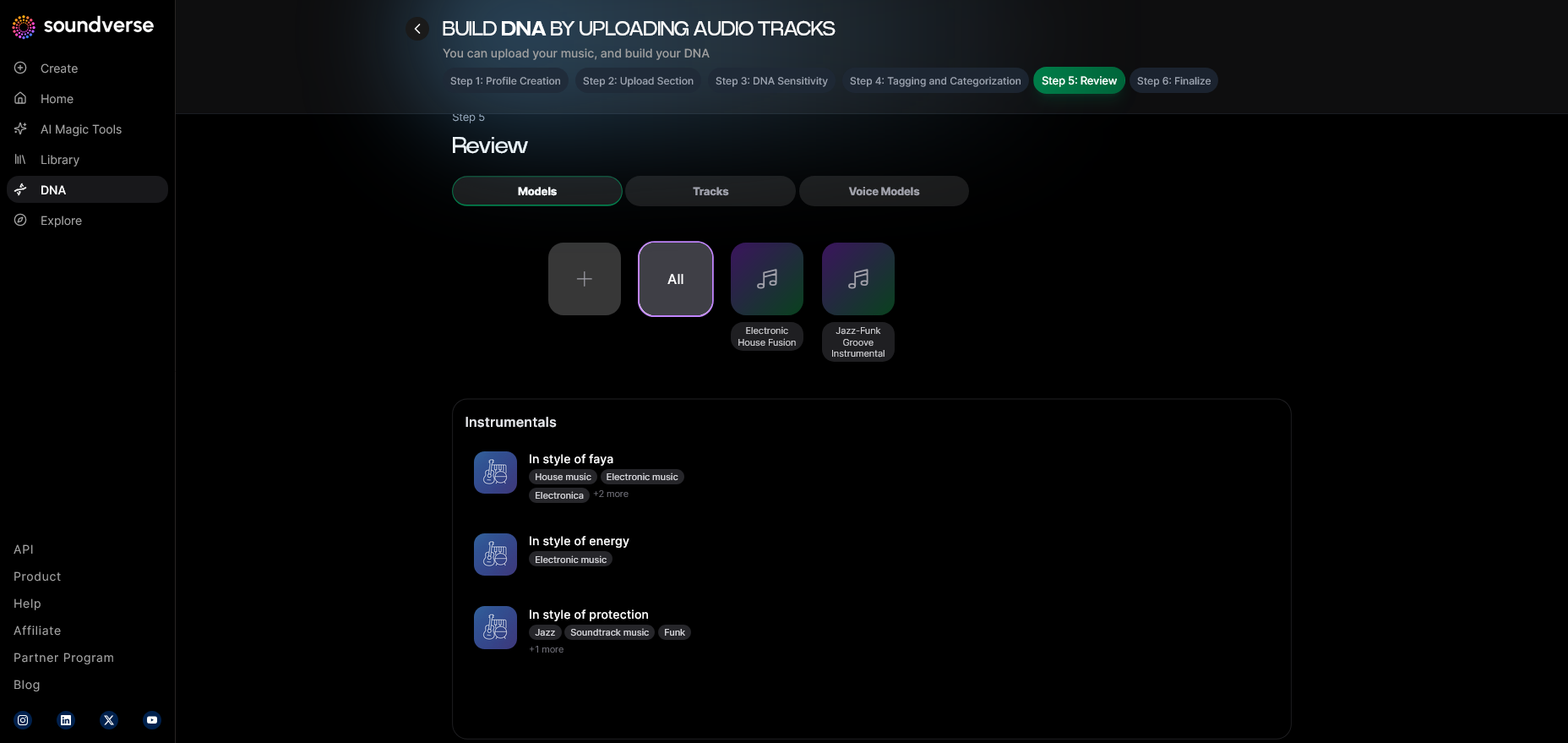
Step 7: Set Price and License
Choose your price per export from $0.99 to $9.99. Select license type: Royalty Free, Sample, Distribution, Sync, or Full Ownership. Set visibility to Public or Private. Enable Become Partner to earn from usage.
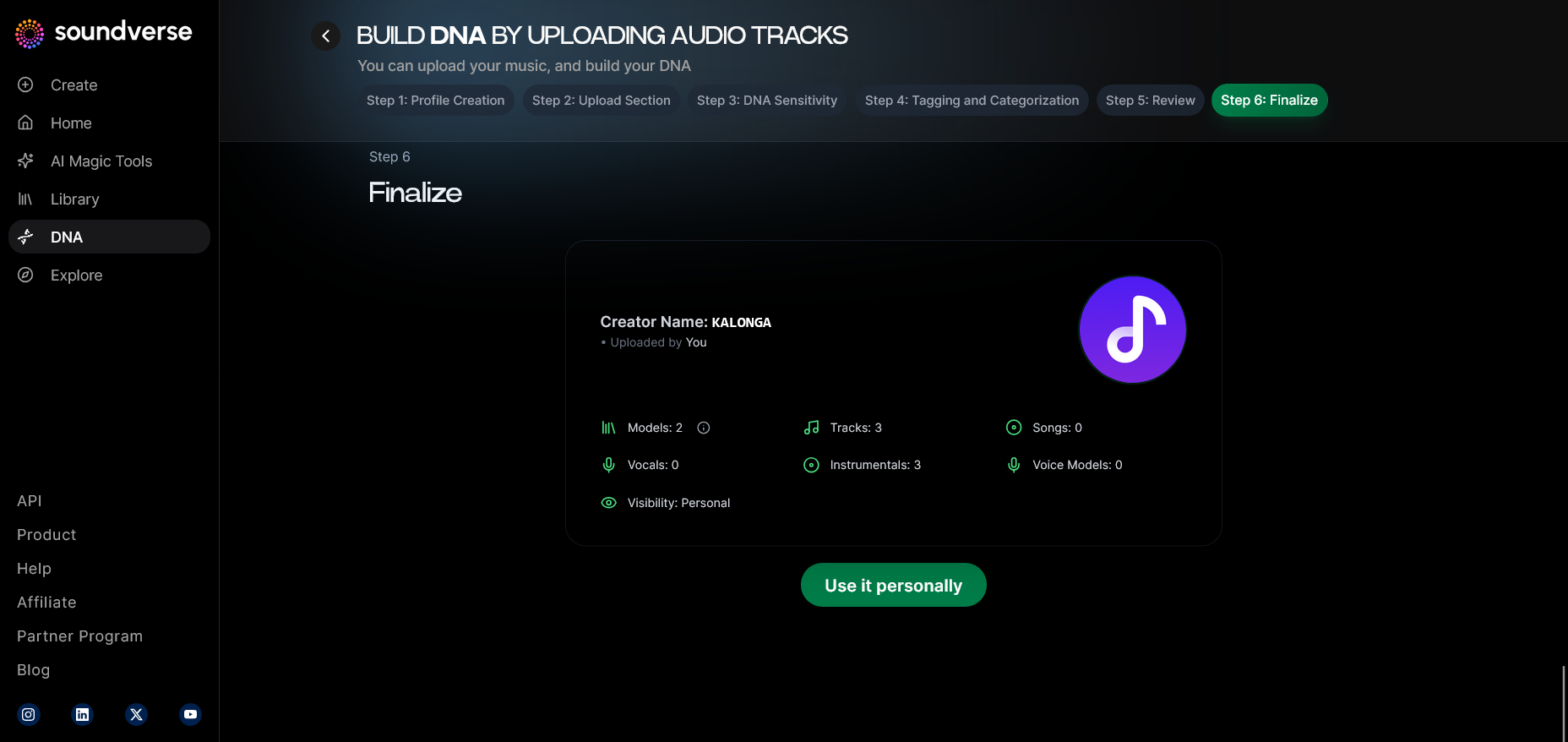
Step 8: Review and Publish
Check your DNA name, description, tags, license, and price. Click Publish. The Soundverse team reviews for quality and ethical compliance. You will receive an email when approved. Training is completely free.
You do not have to stay on the page during training. Close the tab and you will get an email when your DNA is ready.
Creating a Persona
Creating a Suno Persona requires three steps: select a source song from your Suno library, click Make a Persona, then customize with name, avatar, and description.
The fundamental constraint: you cannot train on your own existing catalog. You must first generate songs within Suno, then create Personas from those generations.
Why Training Source Matters: Voice DNA vs Persona Vocals
Voice DNA trains on isolated vocal recordings, meaning the system analyzes clean, unprocessed vocal takes without backing instrumentation. This enables precise pitch stability, formant consistency, expressive control, and reliable cross-project vocal identity.
Personas infer vocals from a mixed song, extracting vocal characteristics from a complete track where vocals are blended with instrumentation and effects. This makes vocal capture less precise, leading to potential drift in tone and difficulty maintaining consistency.
This is why Suno needed the December 2025 update focused specifically on improving vocal consistency, the single-track mixed-source approach creates inherent challenges that catalog-based isolated-vocal training avoids from the start.
For broader context on vocal AI tools, see The Best AI Vocal Tools of 2025.
Generation Capabilities: Control and Flexibility
DNA Generation: Two Modes for Different Needs
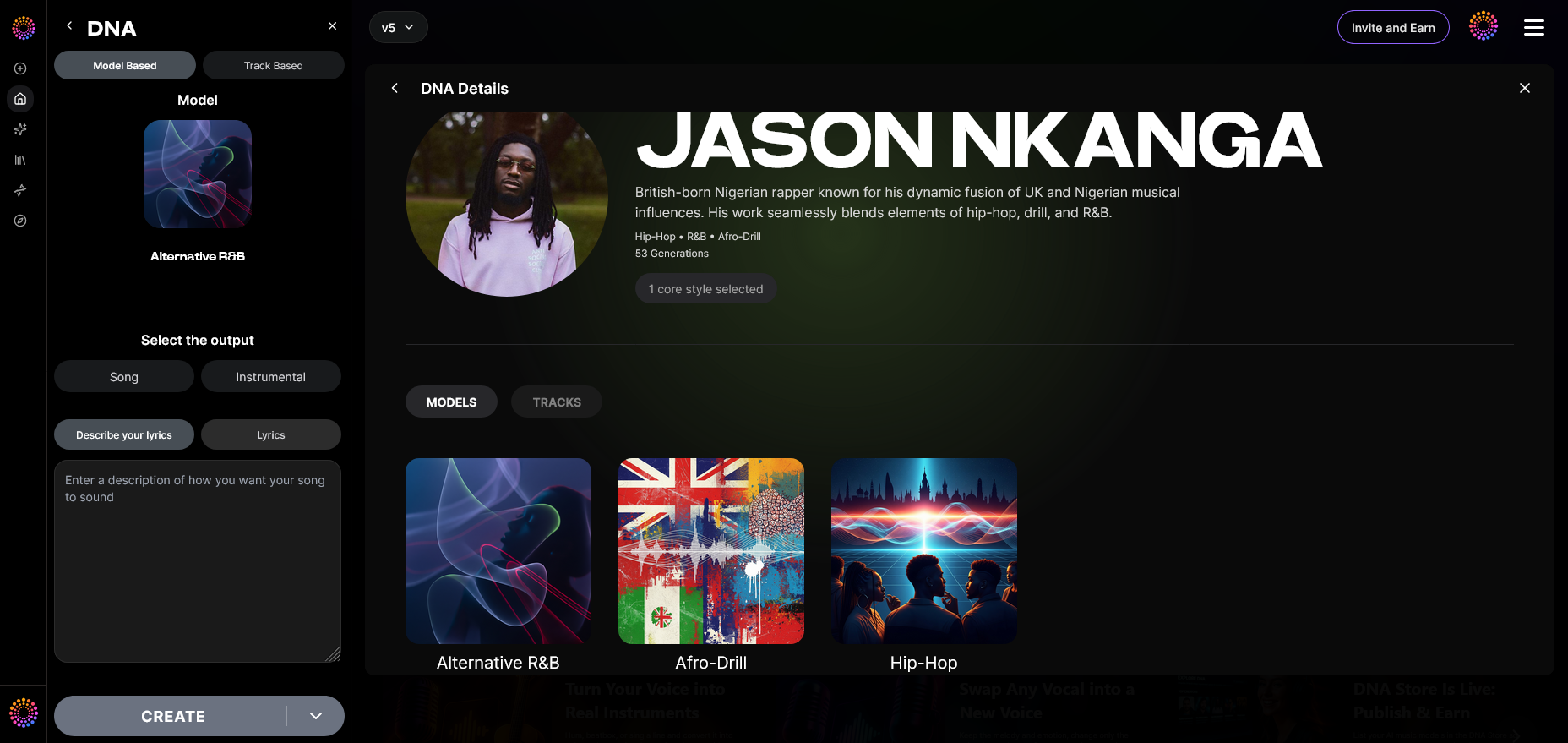
Model-Based Generation treats the entire DNA as a unified artistic intelligence. Best for cohesive, authentic-sounding tracks that feel like natural extensions of your catalog.
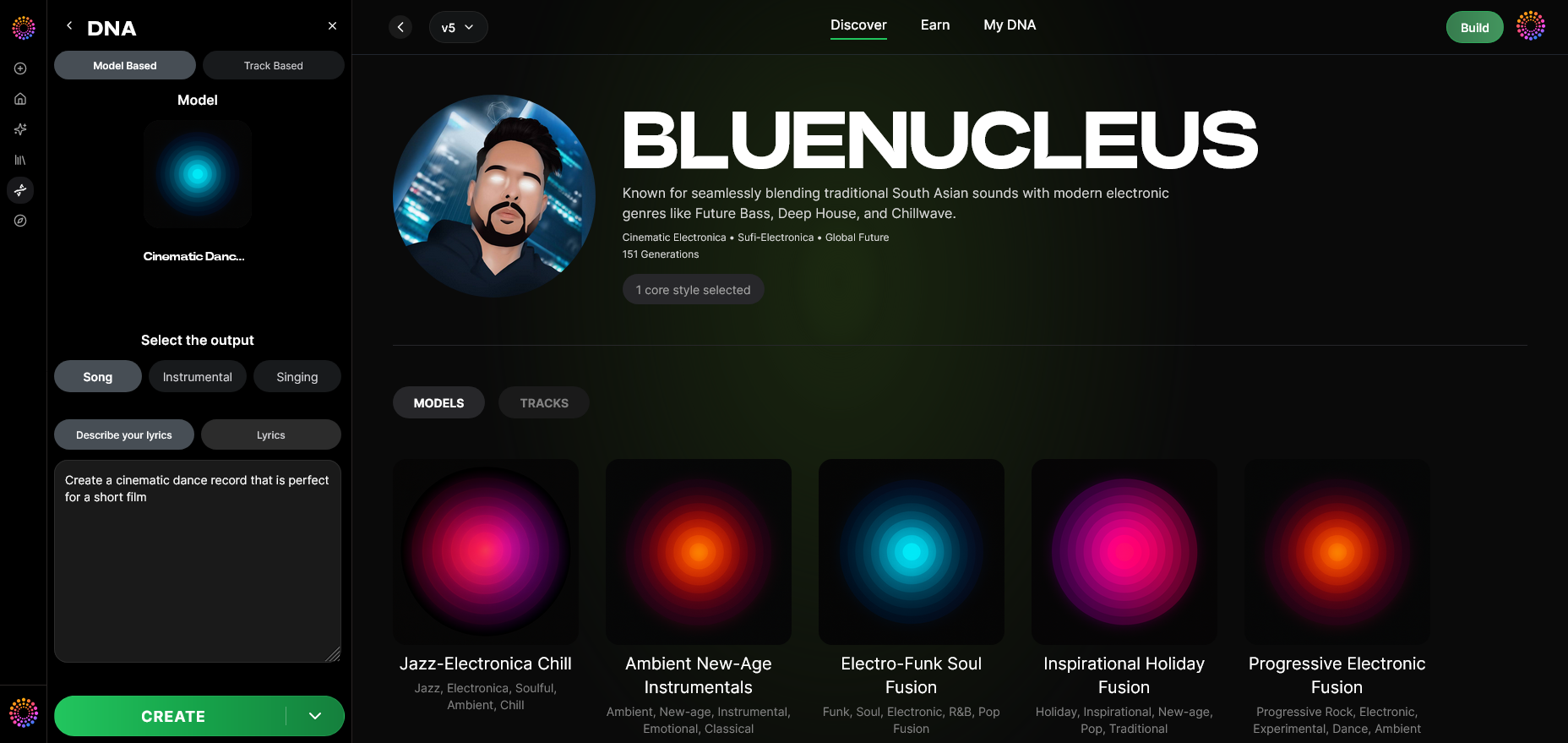
Track-Based Generation provides surgical precision. DNA models contain extracted Song Styles, Vocal Styles, and Instrumental Styles pulled from your training data. Select exactly which facet of your artistic identity you want to explore.
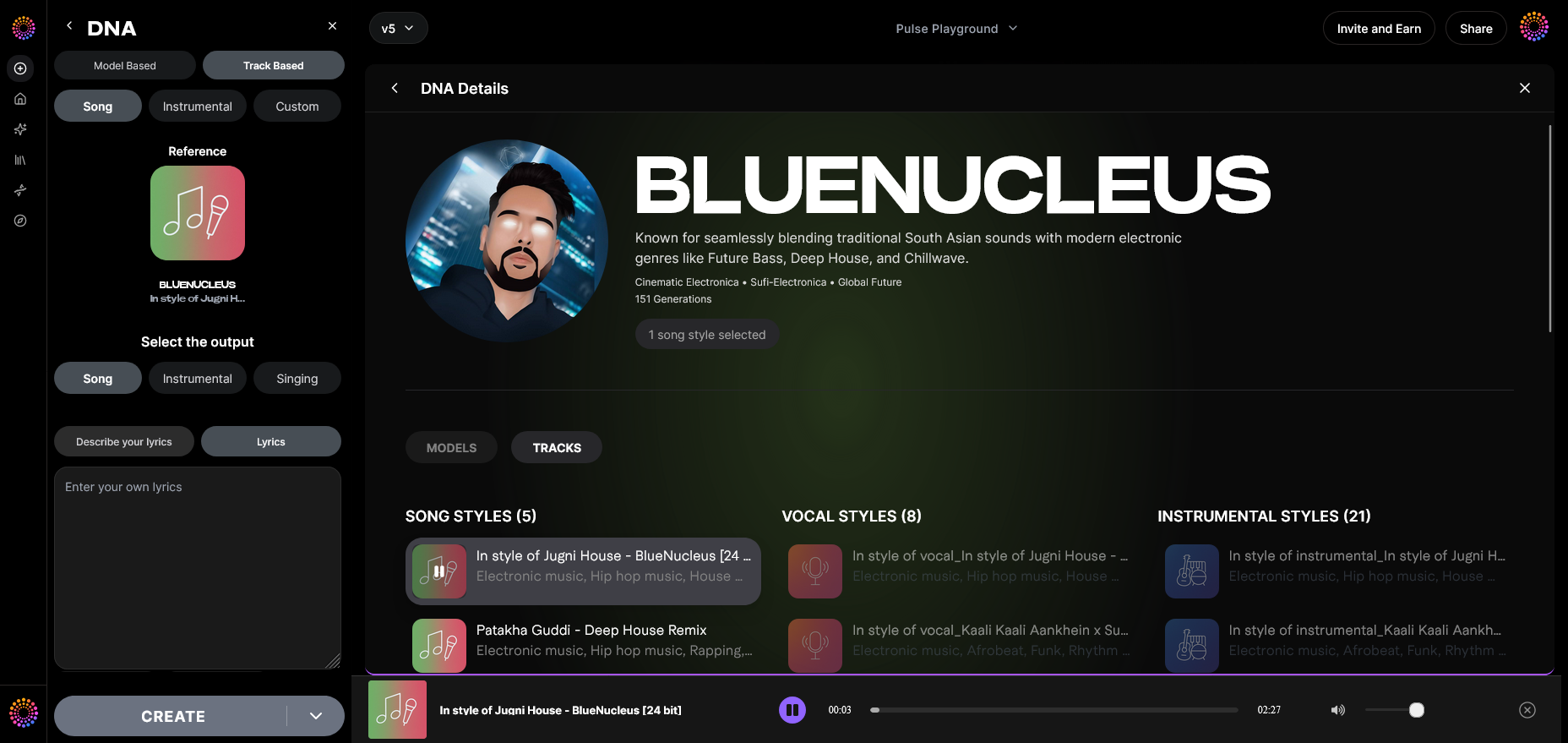
Output Types Available:
Song generates a complete track with music and vocals.
Instrumental generates music only without vocals.
Singing generates vocals only, available for select DNA models with vocal training data.
Critical rule: When you select a Song Style track, all three outputs are available. When you select an Instrumental Style track, only Instrumental output is available. When you select a Vocal Style track, only Singing output is available.
Persona Generation: Template Application
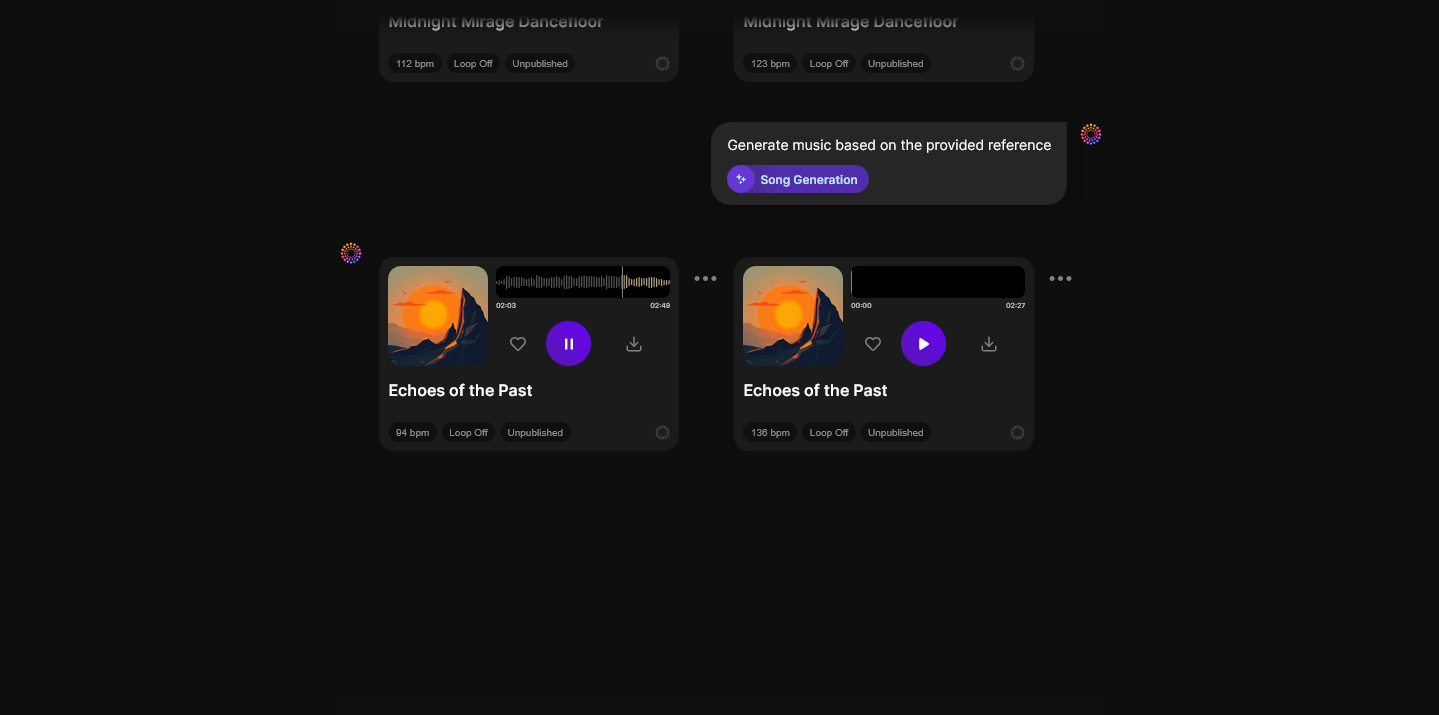
Personas work as applied templates in Custom mode. Select your saved Persona, write lyrics and style guidance, then generate complete songs. You do not have granular control to generate vocals-only or instrumentals-only using the Persona system.
Suno offers Style Influence and Weirdness sliders to fine-tune how strongly the Persona affects output, but the December 2025 update made Personas more dominant, sometimes overpowering style prompts. Users often need to simplify prompts to just 1 to 2 genres to prevent template dominance.
The Consistency Problem
Suno explicitly states things may not be perfect with Personas, which remain in beta. User feedback confirms vocal tones do not always match perfectly across generations, and the AI sometimes ignores prompt elements. The platform recommends generating 2 to 3 short test clips before committing to full songs due to inconsistency issues.
DNA operates on a more stable foundation. Catalog training captures the full range of your stylistic variations from the start, creating models that understand context and variation as inherent parts of your artistic identity.
Ownership, Rights, and Monetization
DNA: Artist Compensation Built In
DNA was built with artist compensation at its core, addressing a critical problem in AI music: unconsented style replication. For deeper exploration of this philosophy, see Cracking AI Attribution in Music.
For DNA Creators:
Training is free. You own your DNA completely. Your uploaded audio remains your property exclusively. Set your own pricing from $0.99 to $9.99 per export. Earn ongoing revenue when others use your public DNA. Connect Stripe through the Earn tab for transparent payment tracking.
License Options You Can Offer:
Royalty Free: Background use in videos, podcasts, presentations.
Sample: Includes Royalty Free plus the right to chop, loop, and layer AI audio inside larger tracks.
Distribution: Release finished songs to Spotify, Apple Music, and other platforms.
Sync: Music-to-picture uses in film, TV, games, adverts, trailers.
Full Ownership: User gets exclusive ownership, can resell, press physical media, use across any media.
For DNA Users:
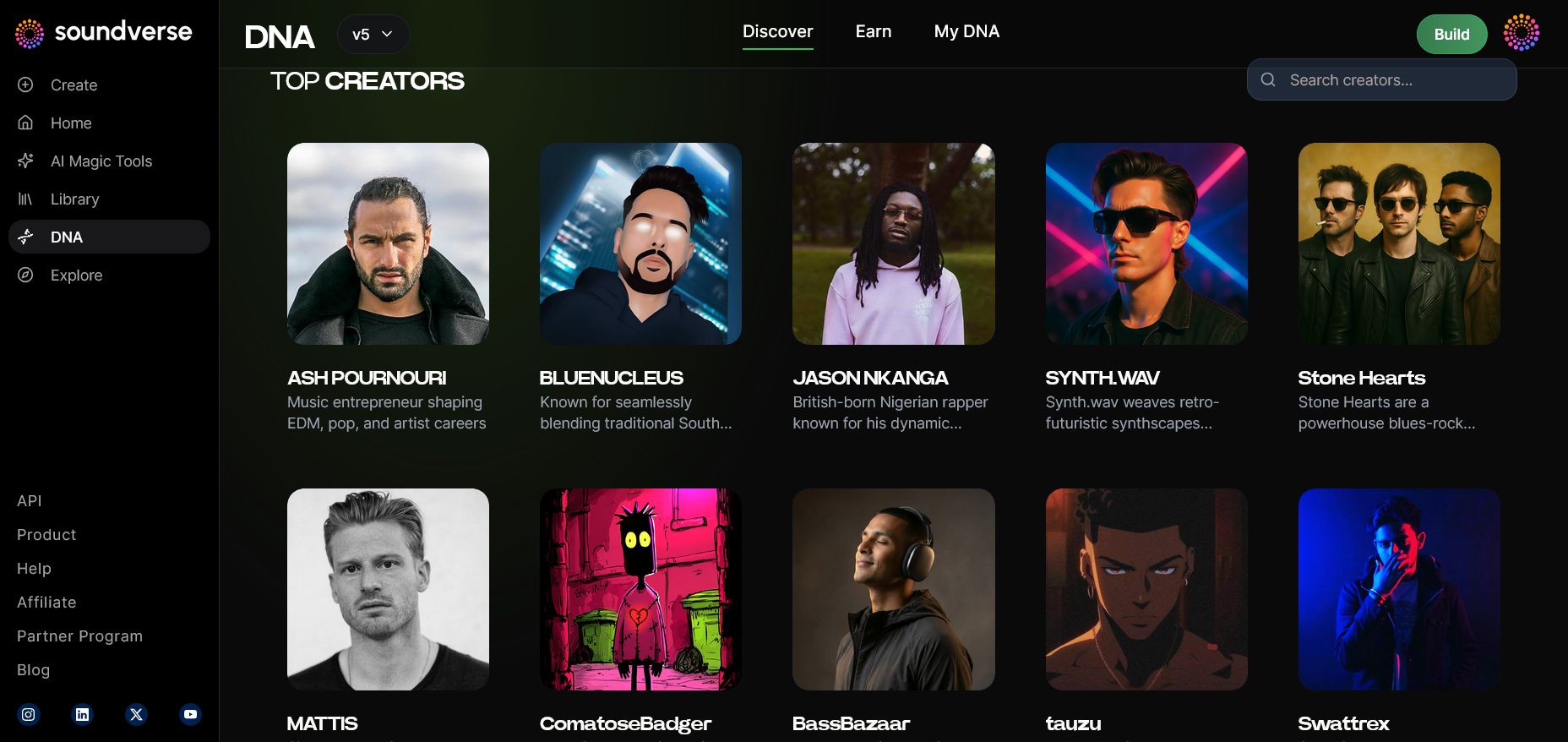
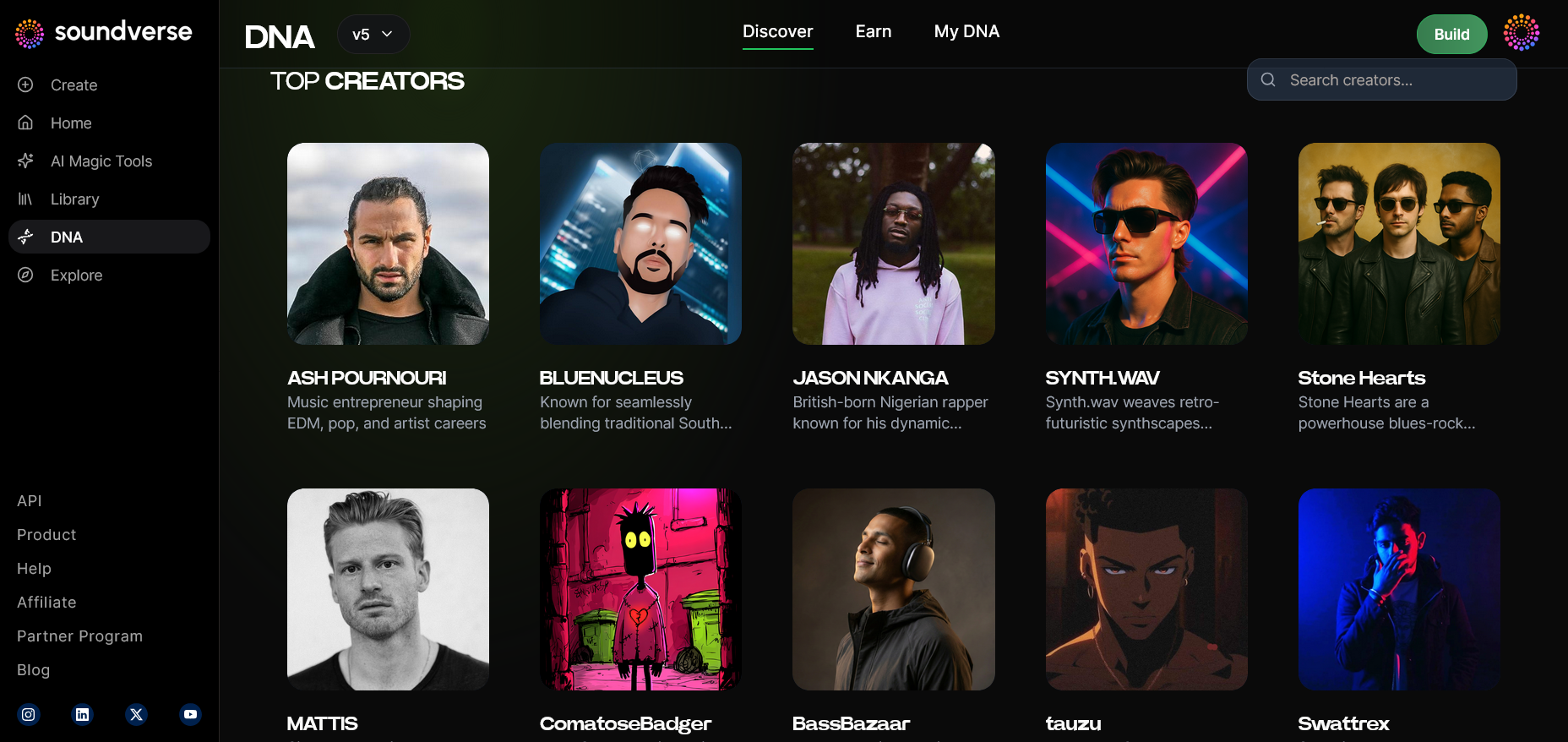
Browse public DNA models in Discover featuring DNA from songwriters associated with Coldplay, Imagine Dragons, Skrillex, Madonna, and more. Pay the creator's set price to generate content. Support artists directly through usage fees.
Personas: No Creator Compensation
Suno operates on a subscription model. Personas cost 10 credits per use after the first 200 free generations. Pro costs $10 per month, Premier costs $30 per month.
Key limitation: You cannot monetize Personas you create. If you build a Persona from a song you generated, you can make it public, but you do not receive compensation when others use it. The subscription fee goes to Suno, not to individual creators.
Platform Ecosystem: Production Integration
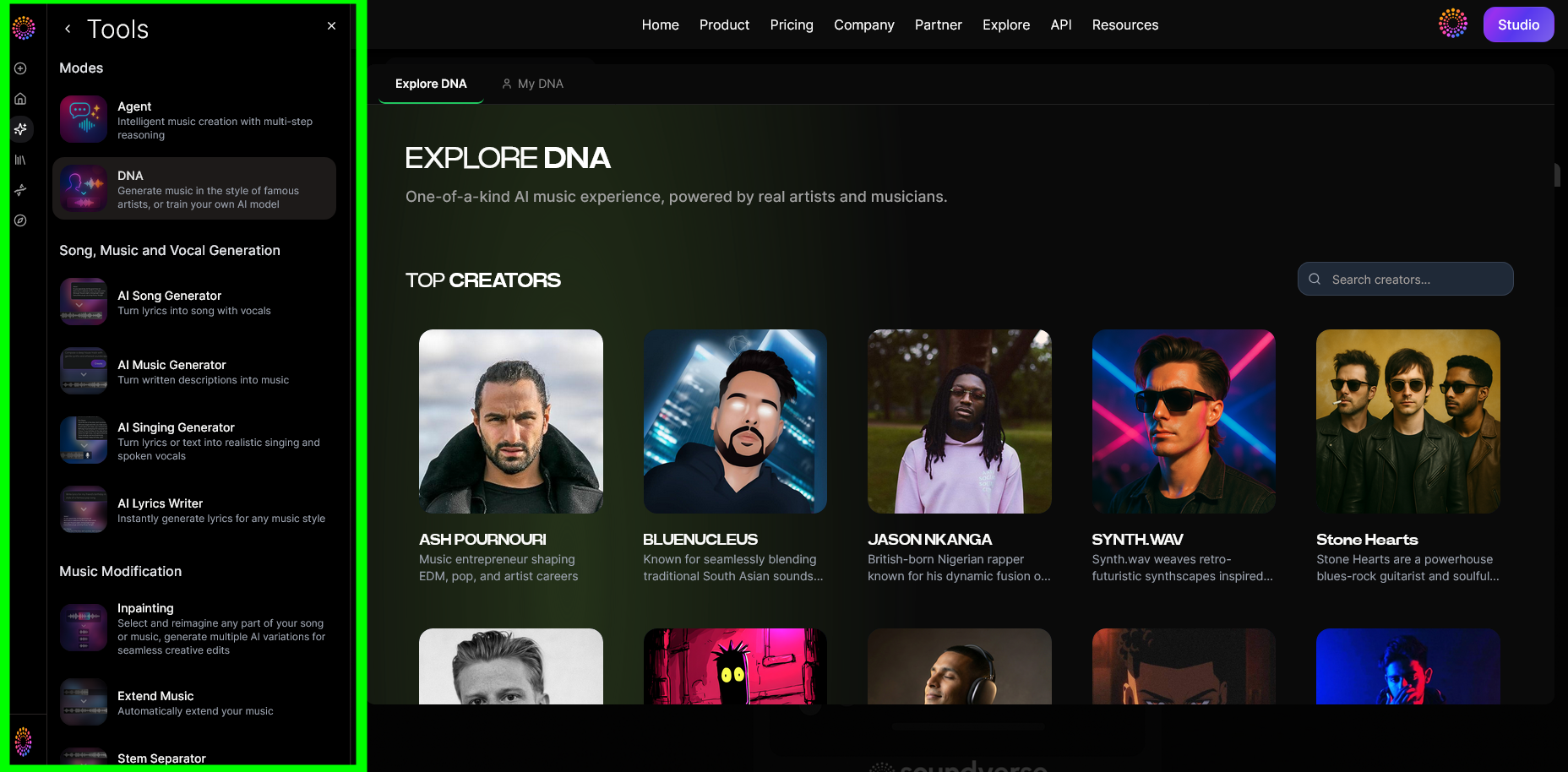
DNA Integrates Into Full Production Suite
DNA works as part of a comprehensive ecosystem:
Arrangement Studio for editing generated tracks, rearranging sections, refining compositions.
Inpainting to regenerate specific sections while preserving the rest.
Stem Separator to extract vocals, drums, bass, and other elements as individual files.
Voice Swap to transform vocal performances while maintaining composition.
Extend Music to lengthen tracks while maintaining stylistic coherence.
Similar Song Generator to generate variations based on reference tracks.
Export formats include MP3, WAV, MP4 video, and ZIP containing stems. Full integration with DAWs like Ableton, Logic, FL Studio, Pro Tools.
Access via web at soundverse.ai/dna, iOS and Android mobile apps, or Enterprise API at platform.soundverse.ai.
For detailed platform evaluation, see Soundverse Review 2025.
Personas: Focused on Generation
Suno offers Suno Studio for editing, Stem Separation, and Audio Upload for adding vocals to existing tracks. The platform excels at generating complete songs quickly but offers less flexibility for hybrid workflows or integration with external tools.
Common Failure Modes and How DNA Handles Them
Style Collapse
When AI generates increasingly similar outputs, losing variety over multiple generations.
DNA prevents this through catalog training. The model learned from diverse examples within your stylistic range, understanding variation as part of your identity. Track-Based mode provides additional protection by letting you target specific style facets.
Personas are more susceptible because training happens on a single track. Outputs can become repetitive with similar prompts.
Overfitting and Training Data Reproduction
When AI memorizes training data instead of learning patterns, risking copyright issues.
DNA implements platform-level safeguards preventing direct reproduction of training material. Generated outputs will never be identical copies of your training audio. They maintain your artistic character while being distinctly new compositions.
Vocal Consistency Issues
When generated vocals sound artificial or drift between generations.
Voice DNA training on isolated vocals produces cleaner, more natural results. The focused training data leads to consistent formants, pitch stability, and natural expression.
Personas are more prone to this issue because vocals are extracted from mixed tracks. The December 2025 update specifically targeted vocal consistency, indicating this was a known problem. Even after improvements, Suno acknowledges vocal tones do not always match perfectly.
Prompt Over-Dominance
When the style system overpowers your creative direction.
DNA sensitivity settings during training give you control over how tightly the model adheres to catalog characteristics. Track-Based mode provides escape valves by letting you isolate specific elements.
The December 2025 Persona update made this worse. Stronger Persona influence means you may need to drastically simplify style prompts to prevent template dominance.
The Ethical Difference
DNA's Consent-Based Framework
Soundverse built DNA explicitly to solve ethical problems:
Artists must explicitly upload their own work or have clear permission. The platform verifies ownership during review. Training on copyrighted music you do not own violates terms and ethical principles.
Users know exactly whose style they are using. The creator profile shows on every generation. Artists see usage through earnings tracking.
Artists set their own prices. Direct payment for every generation. Transparent earnings tracking through the Earn tab.
This framework directly addresses the core criticism of AI music tools: that they train on artist styles without permission or payment. For more on this approach, see Cracking AI Attribution in Music.
Personas: Platform-Level Model
Suno's AI trains on a broad dataset, specific sources are not publicly detailed. Personas work as in-platform templates rather than individually compensated artist models. You cannot train Personas on external music, uploaded audio is not supported. Public Personas do not generate revenue for their creators.
The subscription model supports the platform, not individual style contributors. This approach is simpler but does not solve the compensation problem for artists whose styles might influence the underlying model.
Real-World Use Cases
Building a Cohesive Album or EP
Train Full DNA on your existing catalog. Use Model-Based generation to create multiple tracks that all feel authentically you. For variety, switch to Track-Based mode to target specific moods or energy levels from your DNA. Export and refine in Arrangement Studio or your DAW.
DNA excels here. Training on your full catalog means the model understands the breadth of your artistic range. Every generation feels like part of the same universe because it comes from the same learned identity.
Exploring Genre Variations on Your Style
Train DNA on diverse examples within your stylistic range. Use Track-Based mode to select specific elements, for example your Jazz Vocal Style combined with your Electronic Music Style. Prompt for genre fusions like jazz vocals over synthwave production.
DNA's catalog training and Track-Based mode make this seamless. The model learned your approach to multiple genres during training, so it can intelligently blend them.
Monetizing Your Sonic Identity
Train DNA on your best, most commercially viable work. Set Public visibility with appropriate pricing and licensing. Write compelling creator profile and DNA descriptions. Promote your DNA through social media and creator resources. Earn ongoing revenue when others use your DNA. Track earnings transparently through the Earn tab.
For step-by-step guidance, see How to Build Your Own AI Music Model and Earn Money with Soundverse DNA.
DNA was designed for this. The entire system, from licensing options to Stripe integration, supports artist monetization. Personas cannot be monetized by individual creators.
Quick Iteration and Experimentation
Select your DNA model. Write a prompt describing what you want. Generate. If unsatisfied, adjust prompt and regenerate. Each generation is entirely original but stylistically aligned.
Fast and flexible. The prompt-based system means quick iterations, and comprehensive training ensures consistent style even with varied prompts.
Collaborating with Other Artists Styles
Browse Discover to find public DNA models from professional songwriters and artists. Review audio previews, creator descriptions, and licensing terms. Generate using the DNA, paying the creator's set fee. Receive properly licensed, ethically sourced music. Support the artist directly through your usage.
Transparent, ethical, and legal. You know exactly whose style you are working with and they are compensated fairly. Soundverse features DNA from songwriters associated with Coldplay, Imagine Dragons, Skrillex, Madonna, and more.
Who DNA Is Built For
Artists and Producers can transform their sonic identity into a new earning channel, monetizing their sound while offering fans access to generate legally approved music inspired by their style. This model also supports artists interested in the Partner Program.
Fans and Consumers can remix, experiment, and write new songs with an artist's DNA, getting instant access to a safe, licensed space to create without legal risks.
Brands, Filmmakers, and Content Creators gain a reliable source of high quality music that fits a defined aesthetic. DNA's outputs are fully original and cleared for commercial licensing. For broader API level integrations, explore Soundverse's AI Music Generation API.
Who Should Skip DNA
DNA is powerful, but it is not for everyone.
You do not have an existing catalog. DNA requires real audio assets for training. If you are just starting out with no tracks to upload, generate music first using other tools, build a small catalog, then return to DNA.
You want zero learning curve. DNA's two-mode system and licensing options require understanding. If you need to create music right now without reading documentation, a simpler tool might serve you initially.
You are making throwaway content. DNA shines for projects with longevity, cohesive albums, branded content, commercial licensing. For one-off joke tracks, DNA's comprehensive infrastructure is overkill.
You need results in the next 5 minutes. DNA training takes time, from upload to review to approval. However, generating from an already-trained DNA is fast.
How to Use DNA in Your Workflow
If you are a creator looking for a style:
Open DNA inside Soundverse. Go to Discover and browse Top Creators and Top DNAs. Click on a DNA that fits your project. Hit Create to open the DNA Generation Panel. Pick your mode, Model-Based or Track-Based. Select your output type. Choose your prompt type. Write your prompt and tap CREATE. Once ready, open it in Arrangement Studio or export to your DAW.
If you are an artist building and monetizing your own DNA:
Go to My DNA and click Build DNA. Create or select your creator profile. Choose Build Full DNA or Build Voice DNA. Upload your audio. Set sensitivity or model quality, tags, price, license, and visibility. Review everything. Publish to submit for review. Go to Earn, connect Stripe, and start tracking usage and earnings.
For extra depth, the DNA Help Center walks through each panel and setting step by step.
How DNA Fits Into the Larger Soundverse Ecosystem
DNA is one part of a broader platform that includes voice models, singing generators, controlled music generation, and a fully expanded enterprise API.
Developers comparing different AI audio systems can explore Soundverse versus ElevenLabs. Creators exploring voice and style options can look at the best AI vocal tools of 2025.
Game studios use Soundverse tools for adaptive music that responds to gameplay. Creative agencies leverage them for mood-syncing music in advertising campaigns. Video platforms implement automatic scoring features. Wellness apps create personalized soundscapes.
Creators can use AI music generation to build a unique audio identity that sets channels and brands apart.
Why DNA Represents the Future of Ethical AI Music
DNA embodies a simple belief: AI should amplify artists, not replace them. The system is built around consent over scraping, attribution and traceability by design, fair economics where artists set their own terms, and creativity at scale where fans and producers can write inside your universe without legal fog.
DNA rewrites the social contract around AI music. No more invisible training on your life's work. No more style cloning with zero acknowledgment. Instead, if your sound powers this, you are part of it.
This vision extends beyond music generation into broader industry transformation. DNA represents one piece of a larger ecosystem where AI attribution becomes standard practice, partner programs provide sustainable artist income, and commercial APIs enable ethical integration across applications.
Where to Go Next
If you are ready to dive in, use Discover to start writing with existing DNAs. Browse Top Creators and Top DNAs at soundverse.ai/dna to hear examples of professionally trained AI artist models in action.
If you are an artist or producer, go to My DNA and begin building your first Full DNA or Voice DNA from your catalog. For complete guidance, check out How to Build Your Own AI Music Model and Earn Money with Soundverse DNA.
For developers who want structured integrations, explore the Soundverse API and see how DNA fits into scalable production workflows.
For comprehensive documentation including FAQs, troubleshooting, and advanced techniques, visit the DNA Help Center.
DNA is still evolving, but the north star is clear. Put artists at the center of AI music, and make their sound work for them, not the other way around.
Ready to get started? Join Soundverse for free and explore the future of ethical AI music generation.
