How to Build Your Own AI Music Model and Earn Money with Soundverse DNA
Create your own AI music model with Soundverse DNA. Train on your sound, set your price, earn money. The #1 AI Music Generation platform for artists.
Contents
Introduction
AI music is exploding. That is exciting, but it is also messy. If you are an artist today, you have probably asked yourself how do I train my own AI model, who trained on my songs, do I get paid when someone uses my sound in an AI track, and how do I use AI to go faster without giving away my identity for free. Soundverse DNA exists because those questions should not be vague. DNA is our way of saying your style is yours, and if AI learns from it, you are in the loop, you set the rules, and you participate in the upside.
This article explores how DNA works, who it is for, what it actually generates, and how it fits into the broader Soundverse ecosystem of ethical AI music creation. It also links to supporting research, technical documentation, and related tools, including comparisons between AI music platforms and evaluations of modern AI vocal tools.
What Is Soundverse DNA?
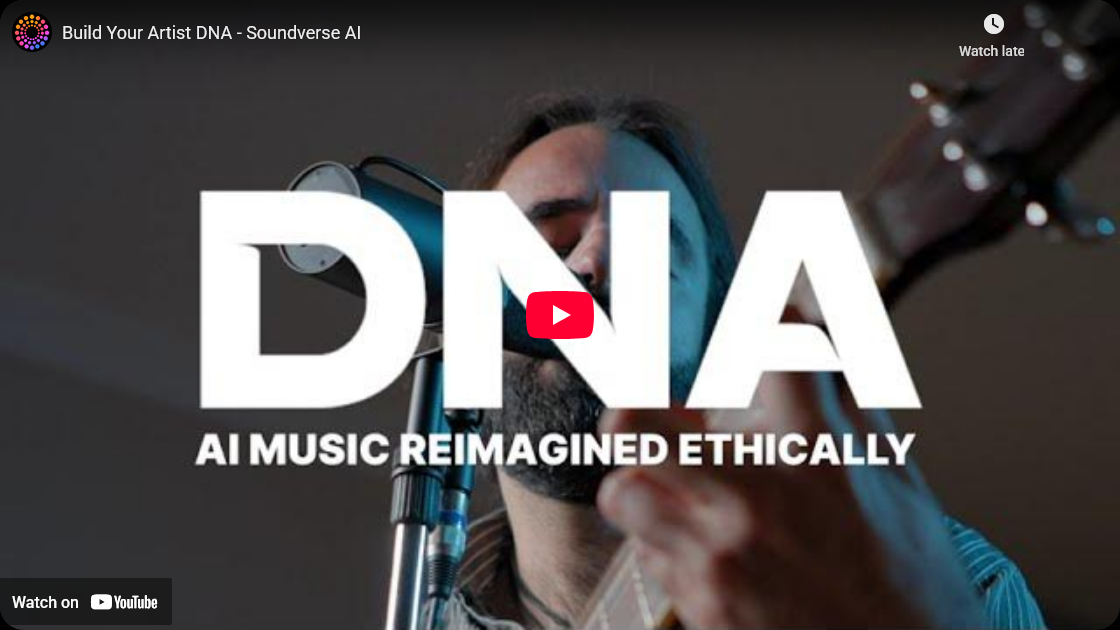
DNA is your artist trained AI music model on Soundverse. Each DNA is built from the music and vocals of a real creator, learning production style, harmonies and chord tendencies, groove and rhythm, textures, sound design, and arrangement. For voice models, it captures vocal tone and performance feel. The model generates completely new songs, instrumentals, or vocals that stay true to that creator's vibe, while remaining original audio, not copies of old tracks.
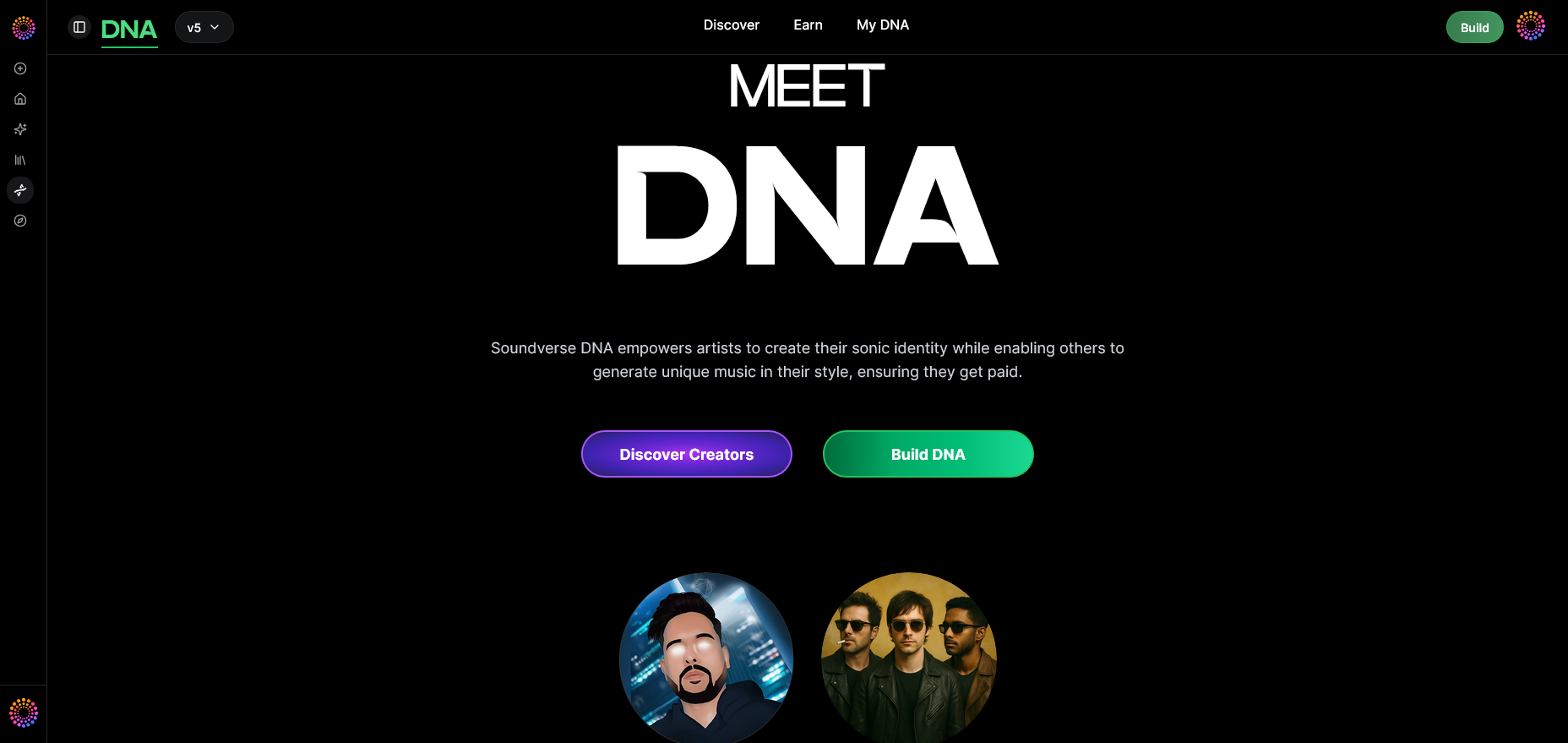
There are two main types. Full DNA is trained on full songs, instrumentals, or acapellas, and can generate song, instrumental, and sometimes singing outputs depending on what you trained it on. Voice DNA is trained only on a singer's voice and is used to generate vocals or to replace your own voice with that singer's style in a new performance. This distinction is key to why DNA is safe for distribution, suitable for commercial use, and comfortable for artists to adopt.
Why DNA Exists: Fixing the Broken Incentives of AI Music
We have seen AI songs climb real charts while mimicking a human artist's phrasing and style without their knowledge or consent, which has sparked serious ethical concerns around who gets credit, who gets paid, and who gets erased. Most generic AI tools treat style like a free resource. DNA is built as the opposite of that.
The core idea is straightforward. If AI learns from you, you opt in by uploading your catalog or voice with permission. DNA is trained on consented, licensed data only, not scraped mystery datasets. You stay in control, deciding whether a DNA is public or private, choosing the license type such as royalty free, sample, distribution, sync, or full ownership, and setting the price per export. When other users generate and export tracks using your DNA, revenue is calculated based on the price and license you set, then paid out through Stripe.
For a deeper look at this approach, the article Cracking AI Attribution in Music explores how attribution can be solved without overcomplicating the system. DNA extends that philosophy by allowing artists to directly license their sound to AI users while keeping ownership, control, and earning rights.
Who Is DNA Built For?
Artists and Producers can transform their sonic identity into a new earning channel, monetizing their sound while offering fans access to generate legally approved music inspired by their style. This model also supports artists interested in the Partner Program, where musicians receive royalties when their cleared catalog is used across Soundverse's training ecosystem.
Fans and Consumers can remix, experiment, and write new songs with an artist's DNA, getting instant access to a safe, licensed space to create without legal risks associated with unapproved clones or deepfakes.
Brands, Filmmakers, and Content Creators gain a reliable source of high quality music that fits a defined aesthetic. DNA's outputs are fully original and cleared for commercial licensing, making it suitable for campaigns, videos, games, or product launches. For broader API level integrations, explore Soundverse's AI Music Generation API.
How DNA Works: The Training Process
Creating a Soundverse DNA model begins when an artist uploads at least three of their own tracks in MP3 or WAV format. For Full DNA, you can upload songs, instrumentals, or acapellas, with a minimum of 3 tracks and a maximum of 1,000. Best results come from a diverse but coherent catalog that truly represents your sound. For Voice DNA, you upload clean vocal takes with no backing track, one singer per file, in short clips.
Once submitted, Soundverse's internal systems analyze the material to extract the musical identity embedded in the audio, detecting production choices, rhythmic tendencies, harmonic texture, arrangement instincts, and emotional contour. The model learns how the artist typically blends these qualities into a cohesive style, creating a stylistically faithful but entirely original generative framework.
The DNA creation process follows a six step flow. Profile creation, where you set your creator name and description. Audio upload, following the guidelines above. DNA sensitivity or model quality selection, where a slider controls how tightly the model adheres to your catalog versus allowing variation. Automatic tagging and categorisation, where Soundverse detects songs versus instrumentals versus vocals and extracts genres, moods, energy, instruments, and era. Review, where you see a full summary and can refine tags and commercial settings. Finally, publish, where your DNA goes through a short review by the Soundverse team to check quality and ensure it meets ethical and legal guidelines.
Training your DNA is free. Previews are included with your monthly plan. Exporting from your own DNA is free, while exporting from someone else's DNA costs the token price they set. Tokens refresh monthly or you can top up as needed.
For detailed documentation, the DNA Help Center guide offers step by step instructions.
Model-Based vs Track-Based Generation
Once the DNA is trained, users can generate music through two modes.
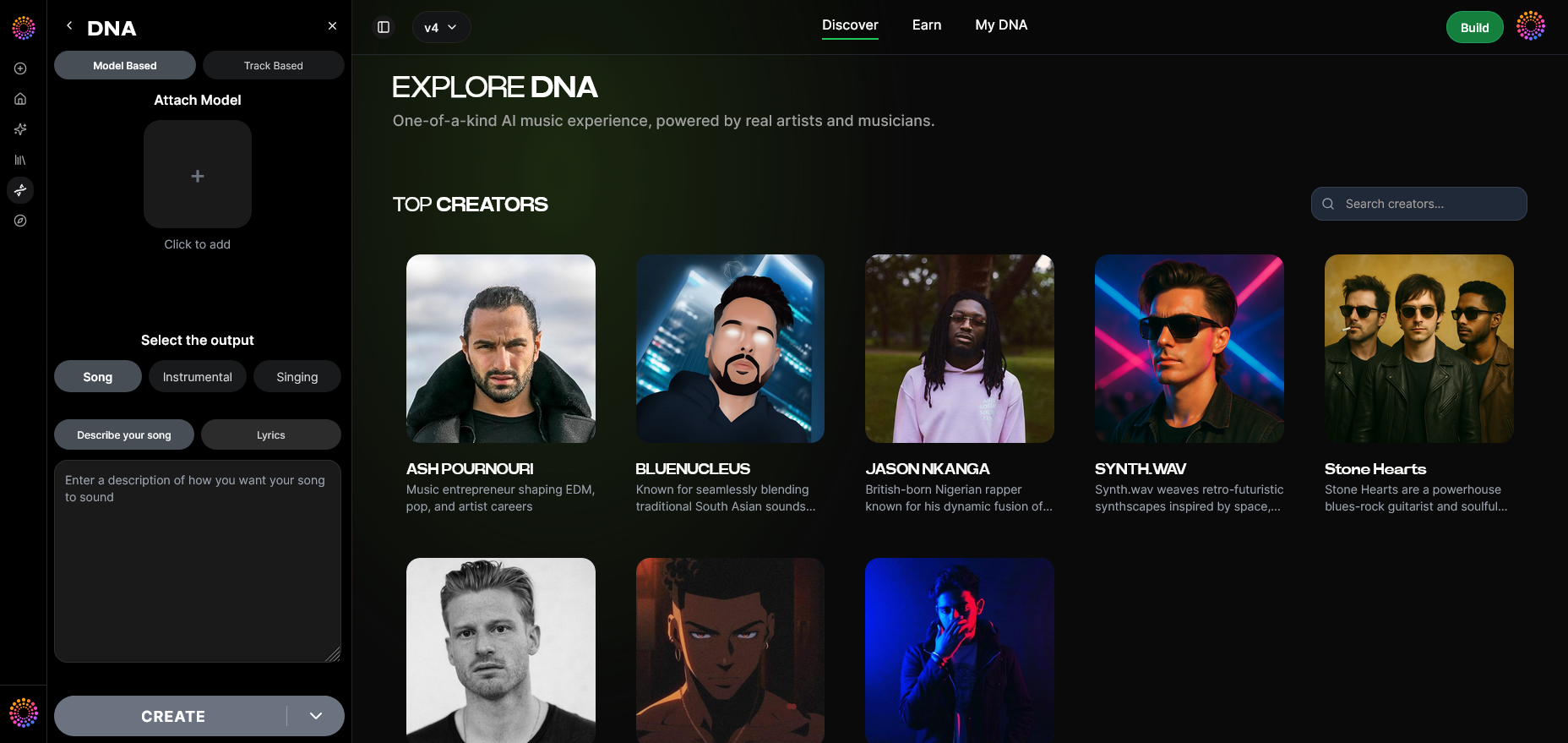
Model based generation uses the entire DNA as one unified artist brain, reflecting the artist's overall sonic identity rather than referencing one specific track. It is ideal for creating songs that feel like they exist naturally within the artist's universe with automatic structure and arrangement.
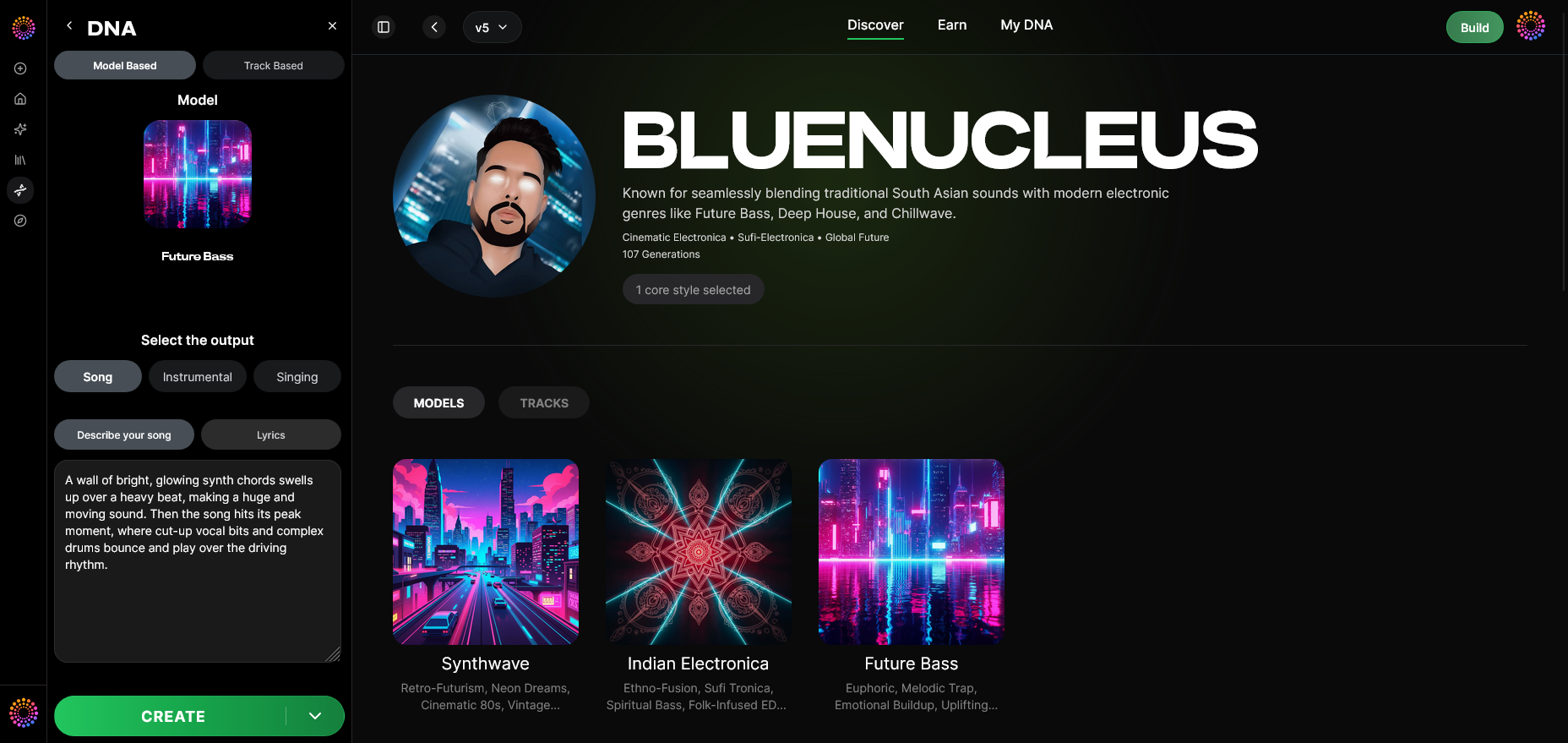
Track based generation allows users to start from specific song styles, vocal styles, or instrumental styles extracted from the DNA. Each style comes with a name and description covering mood, influences, and atmosphere. This mode is perfect when you want surgical control, for example just the piano house side of this artist or only this airy falsetto vocal style.
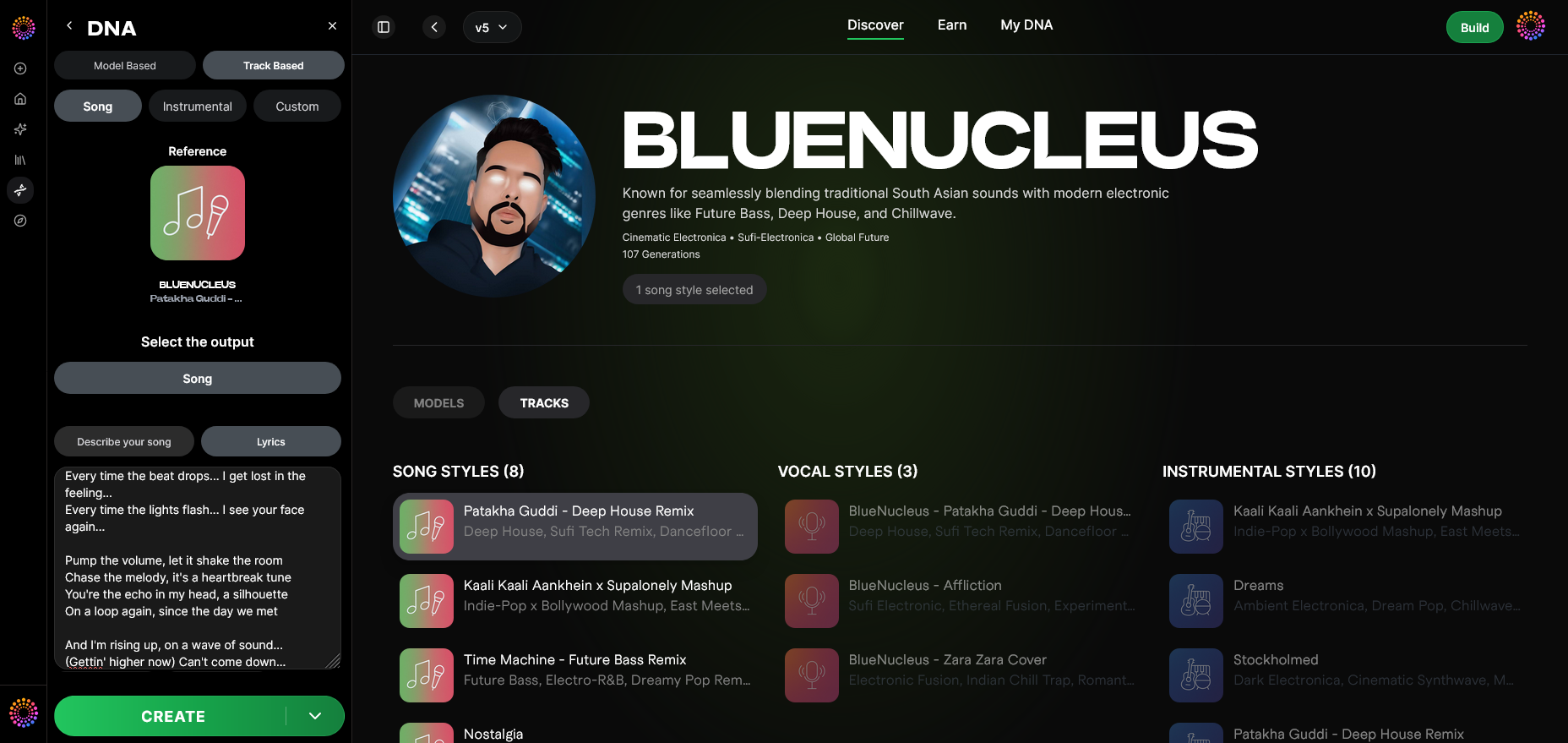
Both modes complement the broader suite of Soundverse tools covered in the Soundverse Review 2025.
What DNA Actually Generates
When you open the DNA Generation Panel, you pick your output type. Song creates a full track with music and vocals. Instrumental creates music only. Singing creates vocals only. You also choose your prompt type. Describe your song lets you write prompts like euphoric synthwave track for night driving, 120 BPM, big drums, emotional lead. Lyrics lets you paste your lyrics and optionally a short style line.
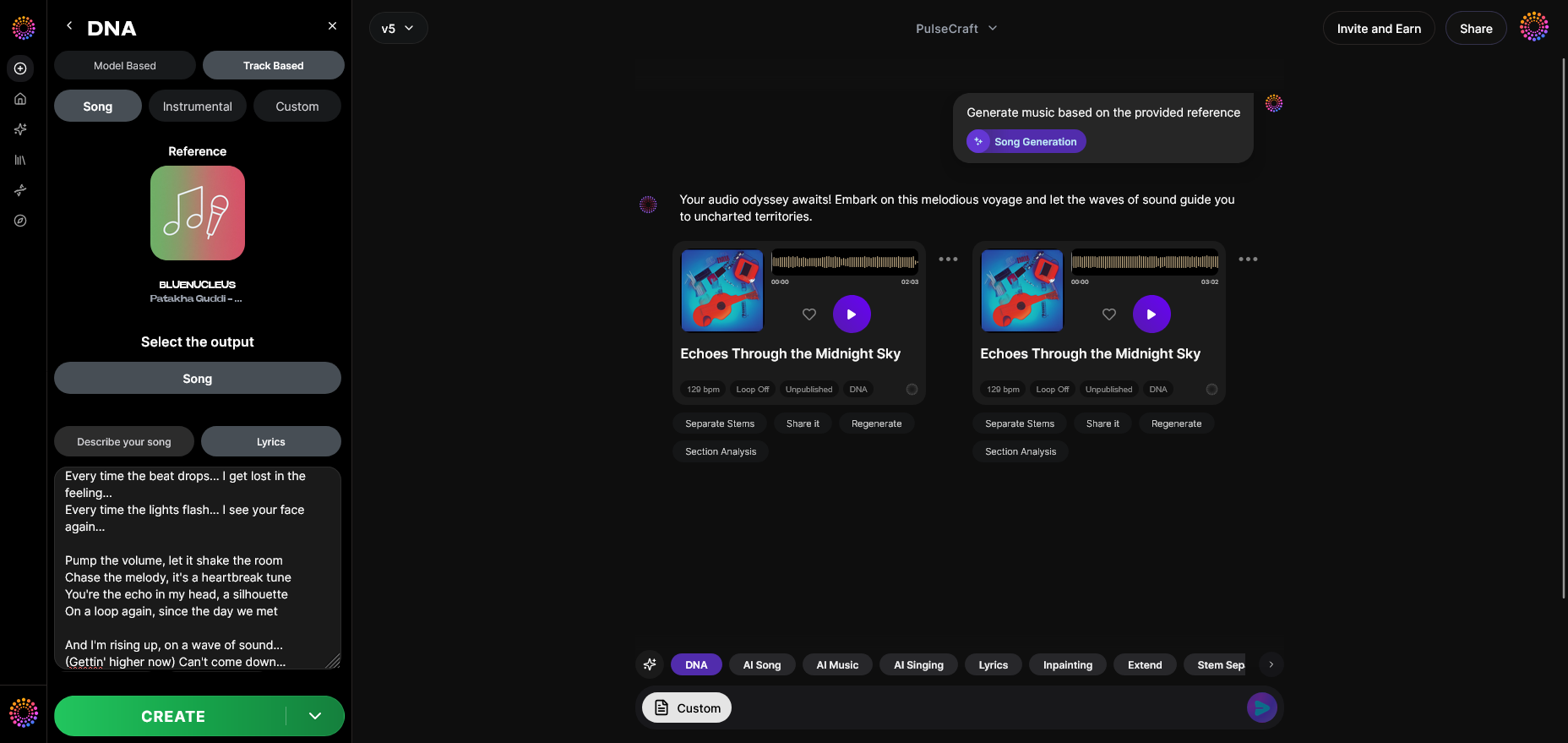
The model handles everything from chord progressions to rhythmic patterns, creating new work that matches the artist's stylistic flavor but remains compositionally unique. Outputs are available as WAV files or stems. Once you have generated something you love, you can open it in Arrangement Studio to chop, loop, extend sections, and combine multiple generations, or export stems to finish the mix in your DAW such as Ableton, Logic, FL Studio, or Pro Tools.
This flexibility makes DNA attractive for brands, filmmakers, game developers, and independent artists. Game studios are using similar Soundverse tools for adaptive music that responds to gameplay, creative agencies are leveraging them for mood syncing music in advertising campaigns, and video platforms are implementing automatic scoring features.
Guardrails for Originality and Copyright Protection
DNA is designed to avoid plagiarism by learning style, not content. It extracts production tendencies, rhythmic language, and harmonic characteristics without memorizing recordings or reusing structural elements. Platform level safeguards prohibit the reproduction of any specific uploaded song. Even when users generate through track based mode, the system creates new compositions instead of editing or continuing the original.
All data used for training comes directly from the artist, ensuring every part of the workflow remains licensed and permission based. This creates a clean, ethical training loop with no hidden sources, no inferred rights, and no borrowed melodies. For additional context on Soundverse's ethical structure, the article Cracking AI Attribution in Music provides further detail.
Set Your Price, License, and Visibility
From the very first DNA, you decide your price per export, visibility whether public or private, and license type. Options include royalty free for background use in content, sample for producers to chop and loop your AI audio inside larger tracks, distribution for releasing finished songs on DSPs, sync for music to picture use in films, ads, games, and trailers, and full ownership where the user gets exclusive ownership of the generated audio.
You are not just data, you are a rights holder setting business terms. This tiered approach simplifies commercial deployment, because plan selection maps neatly to project needs, and license upgrades are transparent and affordable per track.
Get Paid Transparently
Connect Stripe via the Earn tab to enable payouts. Train and publish your DNA. As people generate and export using your DNA, your earnings are tracked in the dashboard based on your price and license, then paid out via Stripe's own schedule. When you generate with a DNA, you support the artist behind it.
Privacy is a major pillar in the DNA ecosystem. Uploaded audio is processed solely to build the model and provide personalized generations. Artists maintain full ownership of their DNA models, and none of the music they upload becomes part of any public training dataset.
A Quick How-To: Using DNA in Your Workflow
If you are a creator looking for a style. Open DNA inside Soundverse, go to Discover and browse Top Creators and Top DNAs, click on a DNA that fits your project, hit Create to open the DNA Generation Panel, pick your mode, output, and prompt type, write your prompt and tap create. Once it is ready, open it in Arrangement Studio, tweak structure, then export stems or full mix to your DAW.
If you are an artist building and monetising your own DNA. Go to My DNA and click Build DNA, create or select your creator profile, choose Build Full DNA or Build Voice DNA and upload your audio, set sensitivity or model quality, tags, price, license, and visibility, review everything, then publish. Go to Earn, connect Stripe, and start tracking usage and earnings.
For extra depth, the DNA Help Center walks through each panel and setting step by step.
How DNA Fits Into the Larger Soundverse Ecosystem
DNA is one part of a broader platform that includes voice models, singing generators, controlled music generation, and a fully expanded enterprise API. Developers comparing different AI audio systems can explore the differences in Soundverse versus ElevenLabs, which highlights how DNA's music first structure diverges from speech oriented platforms. Creators exploring voice and style options can also look at the best AI vocal tools of 2025 for a landscape level overview.
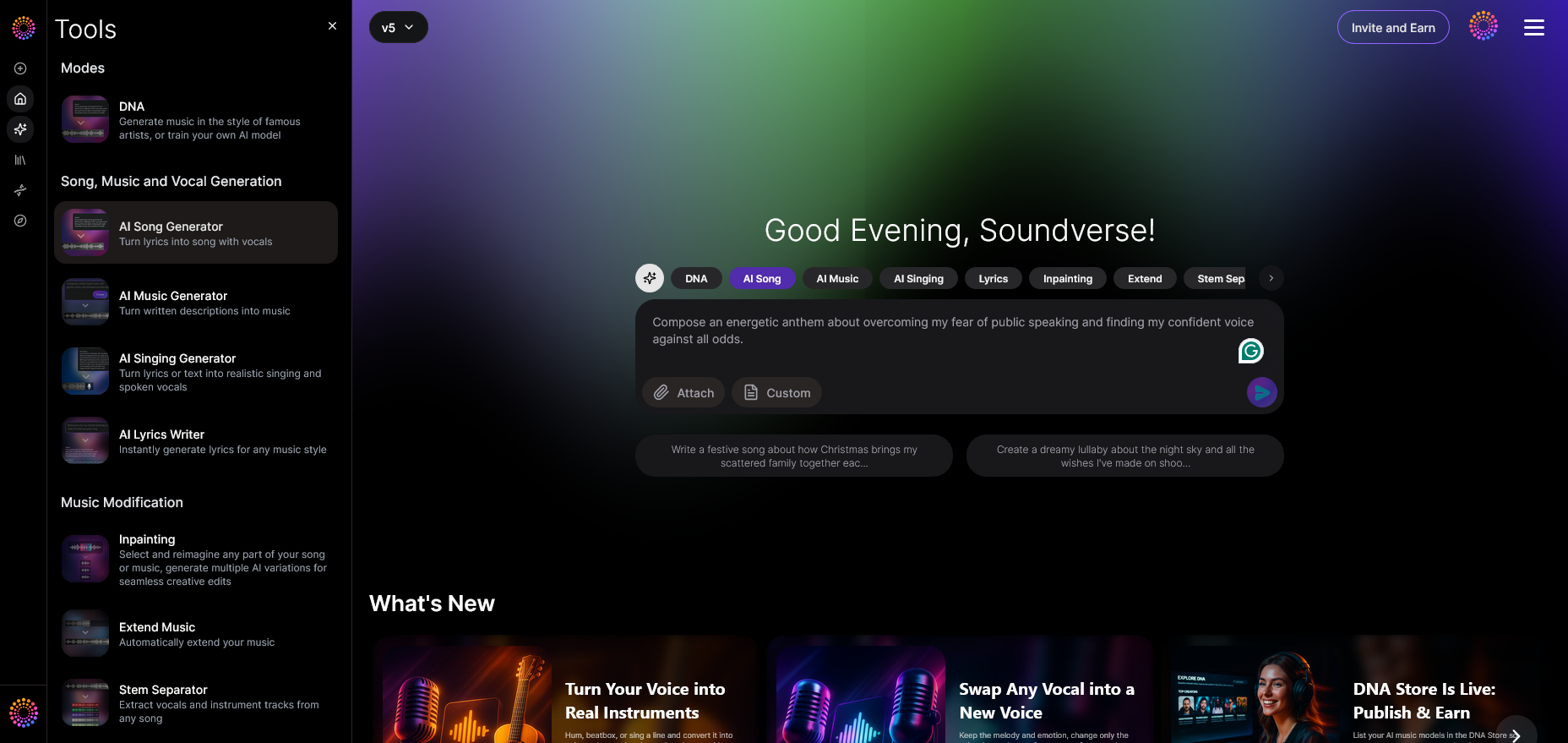
The platform also supports wellness apps creating personalized soundscapes based on user preferences, and creators looking to establish consistency across their content can use AI music generation to enable building a unique audio identity that sets channels and brands apart.
The Philosophy Behind DNA: Artist-Centric AI
At the heart of DNA is a simple belief. AI should amplify artists, not replace them. DNA is built around consent over scraping, where DNA uses consented, licensed inputs, not random web crawls. Attribution and traceability by design, where every DNA is tied to a creator profile and clear license. Fair economics, where artists set their own terms and earn whenever their DNA helps someone else create. Creativity at scale, where fans, producers, and other artists can write inside your universe with new songs and collaborations without the usual legal fog.
DNA is an attempt to rewrite the social contract around AI music. No more invisible training on your life's work. No more style cloning with zero acknowledgment. Instead, if my sound powers this, I am part of it.
Where to Go Next
If you are ready to dive in, use Discover to start writing with existing DNAs and feel how different it is to work inside a real artist's universe. If you are an artist or producer, go to My DNA and begin building your first Full DNA or Voice DNA from your catalog. For developers who want structured integrations, explore the Soundverse API and see how DNA fits into scalable production workflows.
DNA is still evolving, but the north star is clear. Put artists at the center of AI music, and make their sound work for them, not the other way around.
Ready to get started? Click the button below to join Soundverse for free.