How to Separate Instruments in a Song: A Complete Guide for 2026
Learn how to separate instruments in a song using modern AI and Soundverse's Stem Separator in 2026.
How to Separate Instruments in a Song
Separating instruments in a song is one of the most sought-after music production techniques in 2026. Whether you’re remixing, sampling, or studying audio mix structures, isolating specific instruments gives you creative and technical control over sound. In this guide, you’ll learn how to separate instruments in a song using both traditional and AI-driven approaches — and how tools like Soundverse Stem Separator make it effortless.
Why Do Music Producers Separate Instruments in a Song?
The ability to separate instruments from a finished track allows artists, producers, and engineers to:
- Remix professionally mixed songs: Change pitch, tempo, or add new layers.
- Study mix balance: Understand how professional engineers blend vocals, bass, and percussion.
- Create karaoke or performance backing tracks: Remove vocals or any selected component.
- Restore or clean up audio: Eliminate noise or unintended instruments.
- Sample instruments: Extract clean audio layers for new productions.
As music production technology evolved between 2024 and 2025, AI-based tools became standard for stem separation. By 2026, this process is faster and more accurate than ever.

What Are Audio Stems and Why Are They Important?
In music production, audio stems refer to grouped elements of a mix — like drums, bass, vocals, and guitars — each stored as separate files. These isolated tracks give you full control during mixing or redesign. Stems are critical because they serve as a bridge between raw recordings and final mixes. They allow sound engineers to:
- Rebalance components without revisiting the entire recording session.
- Apply effects to specific sounds, like reverb to vocals or compression to drums.
- Collaborate easily by exchanging manageable, organized audio segments.
For deeper insights, see What Are Song Stems and Why Do You Need Them.

How to Separate Instruments in a Song Manually
Before AI stem separation tools became popular, instrument isolation was achieved using manual filtering and phase inversion. Here’s how it was done:
- Equalization (EQ) Visualization: Producers used parametric EQs to identify the frequency ranges of specific instruments and apply cuts or boosts.
- Phase Cancellation: Engineers flipped the phase of one stereo channel to cancel out overlapping frequencies (common for vocal removal).
- Spectral Editing: Tools like iZotope RX allowed visual dissection of sound waves to remove or enhance certain tonal areas.
- Multi-band Compression: By isolating specific frequency bands, producers could focus processing on instruments within those bands, such as low-end bass or high-frequency cymbals.
While effective, these older techniques are time-consuming and cannot produce clean instrument stems consistently.
How AI Audio Tools Revolutionized Instrument Separation
The 2024–2025 transition marked an AI revolution in music production. As of 2026, AI audio tools use machine learning models trained on vast datasets of mixed and isolated tracks to recognize and extract sonic elements automatically.
AI-based music track isolation offers several benefits:
- Speed: Upload a song, and within minutes, receive precise, separated stems.
- Quality: Algorithms preserve natural reverb and tone characteristics, minimizing artifacts.
- Accessibility: No need for studio-level technical knowledge.
- Flexibility: Supports separation for both instrumental removal and remix creation.
For a deeper dive, watch our guide on creating Deep House music.
These advances positioned AI tools like Soundverse as the go-to platforms for producers worldwide.
What Music Production Techniques Improve Instrument Separation Results?
Even with AI tools handling the heavy lifting, producers can optimize outcomes using a few additional techniques:
- High-quality source audio: The cleaner your original track, the smoother the AI will separate it.
- Reference matching: Some systems allow uploading similar reference files to guide separation precision.
- Post-processing: Use EQ and compression to fine-tune instrument balance after extraction.
- Mix context analysis: Study section transitions (intro, chorus, bridge) using structural tools for better flow.
You can also explore tools like Arrangement Studio for remixing and compositional adjustments after isolation.
How to Make Separate Instruments in a Song with Soundverse Stem Separator
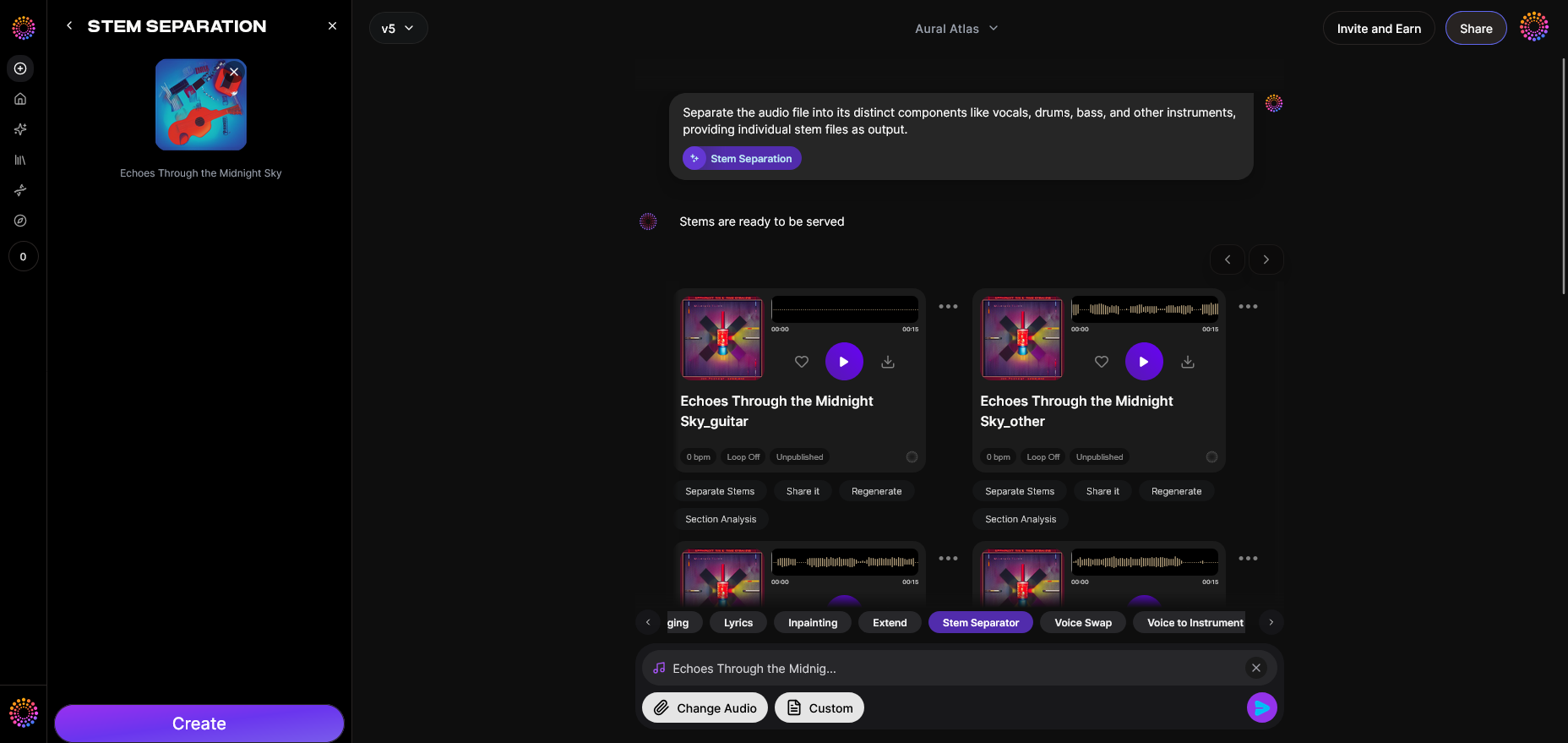
Now that you understand how instrument separation works conceptually, here’s how you can perform it quickly using Soundverse.
Step 1: Upload Interface
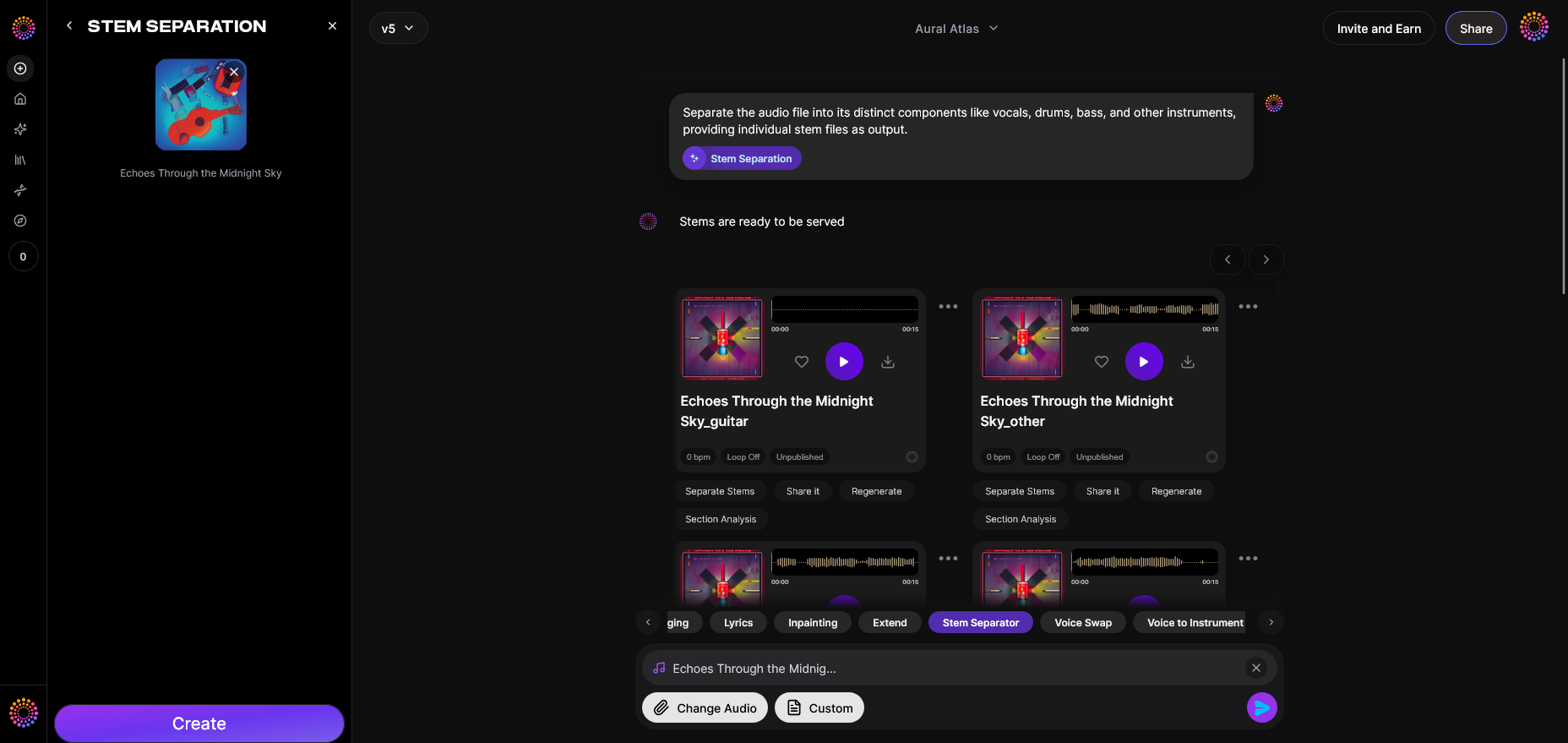
Begin by uploading your audio file, URL, or recorded segment directly into Soundverse’s Stem Separator dialog. The tool accepts file-based, URL-sourced, and recorded audio inputs.
Step 2: Additional References
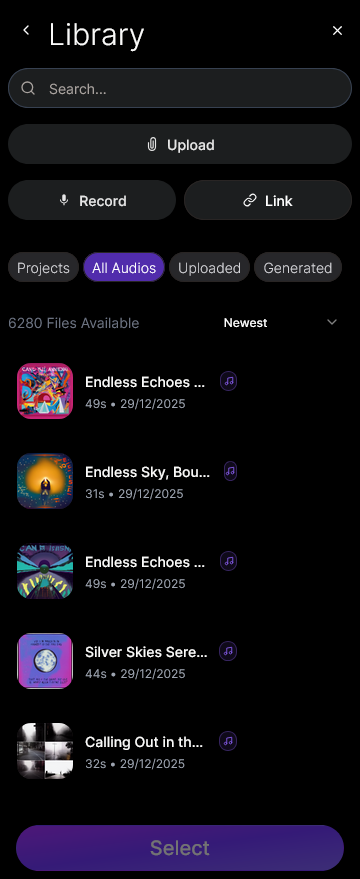
For optimal separation accuracy, you can add reference audio examples that demonstrate the instrumental tone or style you’re aiming for. This helps the system discern instrument roles within the mix.
Step 3: Results Display
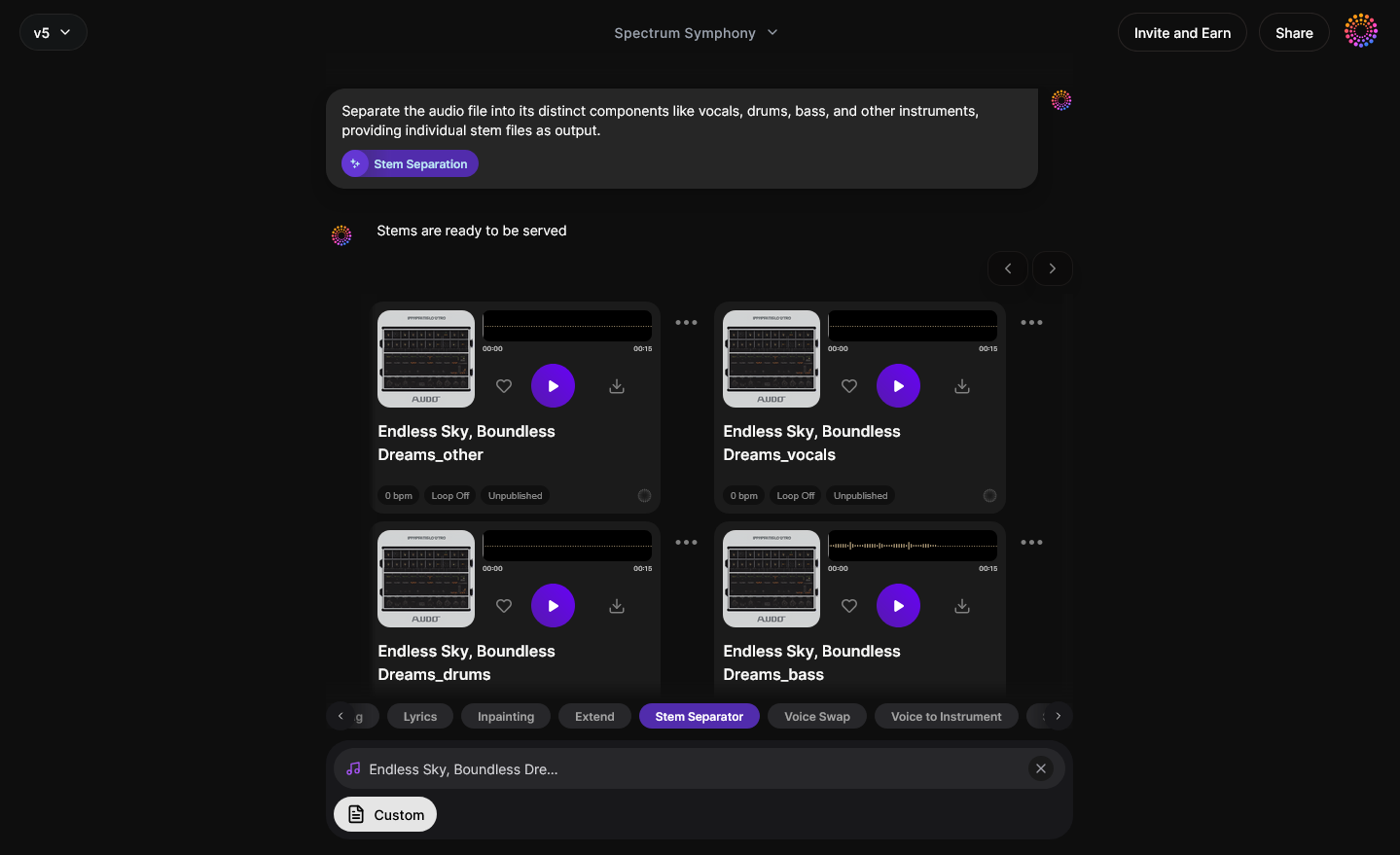
Once processed, Soundverse presents a detailed visualization of up to six isolated stems — Vocals, Drums, Bass, Guitar, Accompaniment, and more. Each stem is editable and can be enhanced individually inside compatible editing environments like Arrangement Studio.
Step 4: Download Stems
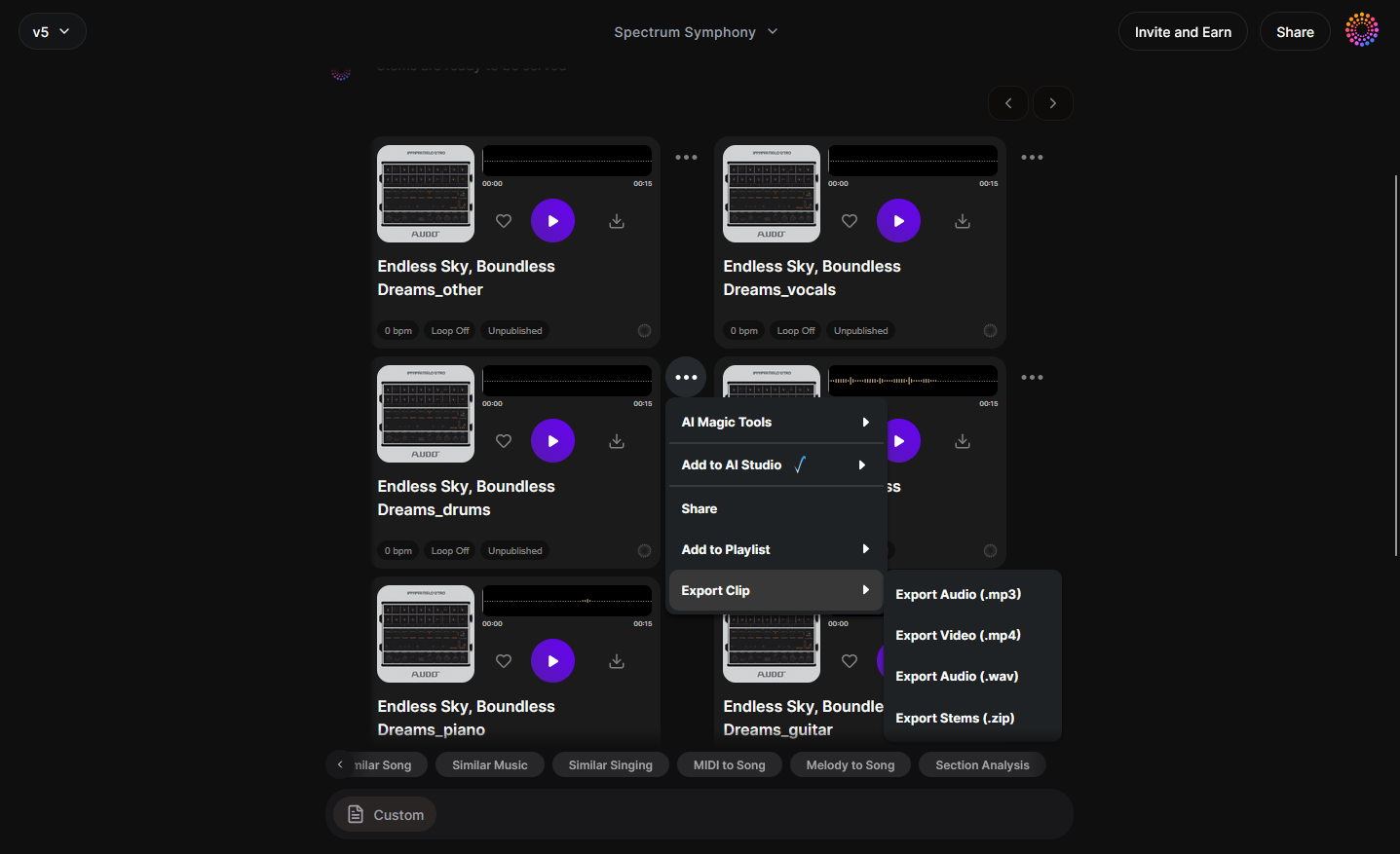
Finally, download the separated stems individually or as a project folder for remixing, educational analysis, or live performance preparation.
The Stem Separator is ideal for:
- Creating karaoke and performance backing tracks.
- Remixing existing songs with total tonal control.
- Cleaning up audio recordings for improved clarity.
- Studying mix structure for professional growth.
For further community perspectives on stem separation quality, check out the Gearspace discussion.
It delivers high-quality isolation and supports all standard input types for a seamless workflow—without live monitoring or real-time preview.
Related Soundverse AI Tools for Advanced Workflows
Soundverse’s broader ecosystem offers connected functionality beyond the Stem Separator:
- Section Analysis: Automatically detects and labels song sections (Intro, Verse, Chorus, Bridge, Outro) with timestamps—perfect for workflow mapping.
- Arrangement Studio: A collaborative environment where you can open separated stems for advanced editing, rearrangement, and compositional refinement.
- Soundverse Assistant: Acts as your AI co-producer to automate selection of suitable tools based on your project type, as explained in Let Soundverse Assistant Auto-Select the Right AI Magic Tool for You.
For those exploring multi-purpose creation, check out advanced platforms such as Musicfy and recent innovations discussed in How AI Generated Music Is Transforming the Music Industry. For another tutorial, you can also watch our “Explore” tab walkthrough.
Final Thoughts: The Future of Audio Stem Separation in 2026
In 2026, audio stem separation has become not just a technical process but an artistic enabler. Music producers are now able to unlock remix creativity, study intricate production methods, and breathe new life into legacy tracks. Whether you’re creating AI-generated music, learning mix structures, or building custom instrumentals, separating instruments in a song is no longer a complex dream—it’s a click away.
If you’re ready to explore effortless stem isolation and premium audio quality, Soundverse Stem Separator is the industry benchmark. Combine it with Arrangement Studio and Section Analysis for a full-spectrum AI production workflow. Soundverse continues to redefine the boundaries of music creation, empowering both professionals and hobbyists to visualize and edit sound in smarter ways.
Separate Instruments in Songs Instantly with Soundverse AI
Unlock precision audio editing with Soundverse’s stem separation tool. Isolate vocals, drums, and more in seconds — perfect for remixing, learning, or content creation.
Try Soundverse Stem Separation
Related Articles
- Soundverse Introduces Stem Separation AI Magic Tool — Discover how Soundverse’s latest AI Magic Tool makes instrument isolation effortless for music creators.
- What Are Song Stems and Why Do You Need Them — Learn the basics of song stems and how separating instruments can transform your production workflow.
- Soundverse Assistant: Your AI Music Co‑Producer — Explore how Soundverse Assistant helps automate complex music editing tasks and enhances collaboration.
- Soundverse AI Revolutionizing Music Creation for New‑Age Content Creators — Find out how Soundverse AI tools are reshaping how modern creators compose and edit their music.
Here's How to Make AI Music with Soundverse
Video Guide
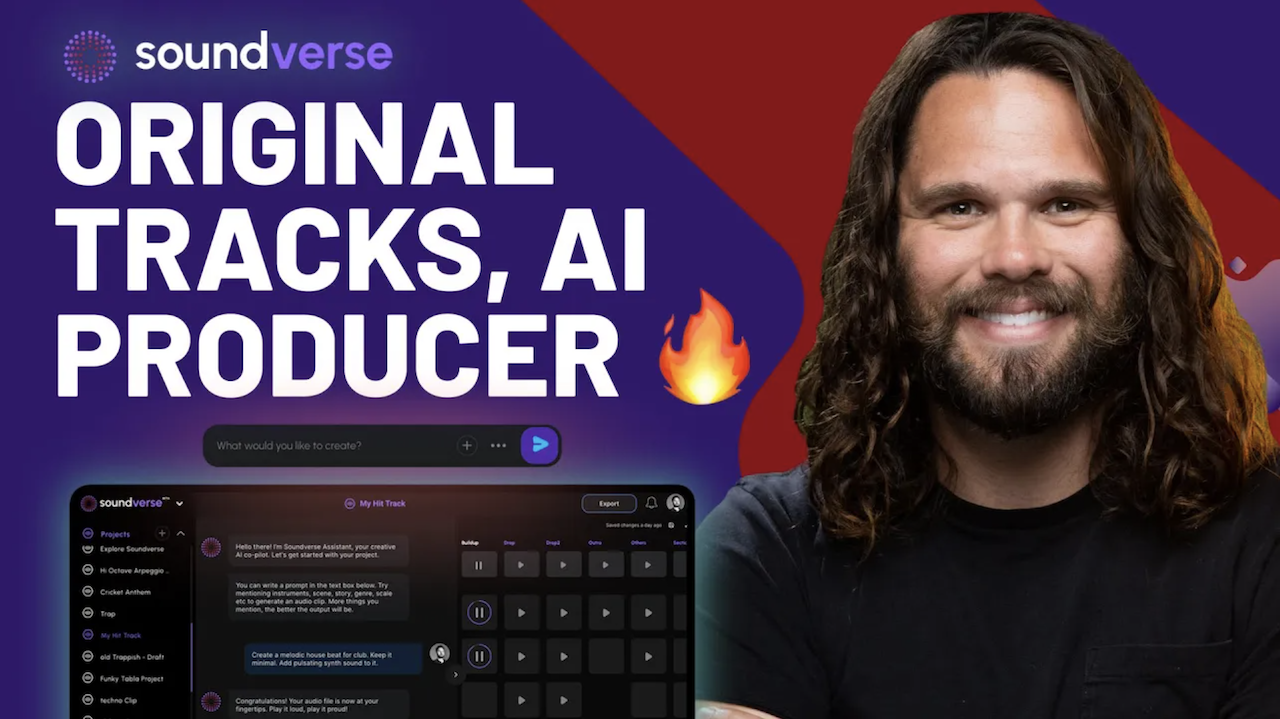
Here’s another long walkthrough of how to use Soundverse AI.
Text Guide
- To know more about AI Magic Tools, check here.
- To know more about Soundverse Assistant, check here.
- To know more about Arrangement Studio, check here.
Soundverse is an AI Assistant that allows content creators and music makers to create original content in a flash using Generative AI.
With the help of Soundverse Assistant and AI Magic Tools, our users get an unfair advantage over other creators to create audio and music content quickly, easily and cheaply.
Soundverse Assistant is your ultimate music companion. You simply speak to the assistant to get your stuff done. The more you speak to it, the more it starts understanding you and your goals.
AI Magic Tools help convert your creative dreams into tangible music and audio. Use AI Magic Tools such as text to music, stem separation, or lyrics generation to realise your content dreams faster.
Soundverse is here to take music production to the next level. We're not just a digital audio workstation (DAW) competing with Ableton or Logic, we're building a completely new paradigm of easy and conversational content creation.
TikTok: https://www.tiktok.com/@soundverse.ai
Twitter: https://twitter.com/soundverse_ai
Instagram: https://www.instagram.com/soundverse.ai
LinkedIn: https://www.linkedin.com/company/soundverseai
Youtube: https://www.youtube.com/@SoundverseAI
Facebook: https://www.facebook.com/profile.php?id=100095674445607
Join Soundverse for Free and Make Viral AI Music

We are constantly building more product experiences. Keep checking our Blog to stay updated about them!