How AI Music Videos Are Changing Visual Storytelling in 2026
Explore how AI music videos are redefining visual storytelling with creative AI tools and machine learning innovations in 2026.
How AI Music Videos Are Changing Visual Storytelling
Artificial intelligence has now become the creative backbone of the music and film industry. In 2026, AI music videos are no longer futuristic experiments; they are powerful tools redefining how artists, directors, and technologists craft visual stories. These videos combine machine learning, generative audio, and AI-driven visuals to produce rich, emotionally engaging narratives that once demanded large teams and budgets.
What are AI music videos and why are they gaining popularity?
AI music videos are audiovisual experiences created or enhanced through artificial intelligence systems. Unlike traditional videos, where visuals and sounds are composed separately, AI synchronizes both elements at the computational level. Using generative models, a creator can input prompts like “surreal neon city dreamscape with ambient electronic music” and instantly obtain a synthesis of image and sound that feels cohesive and intentional.
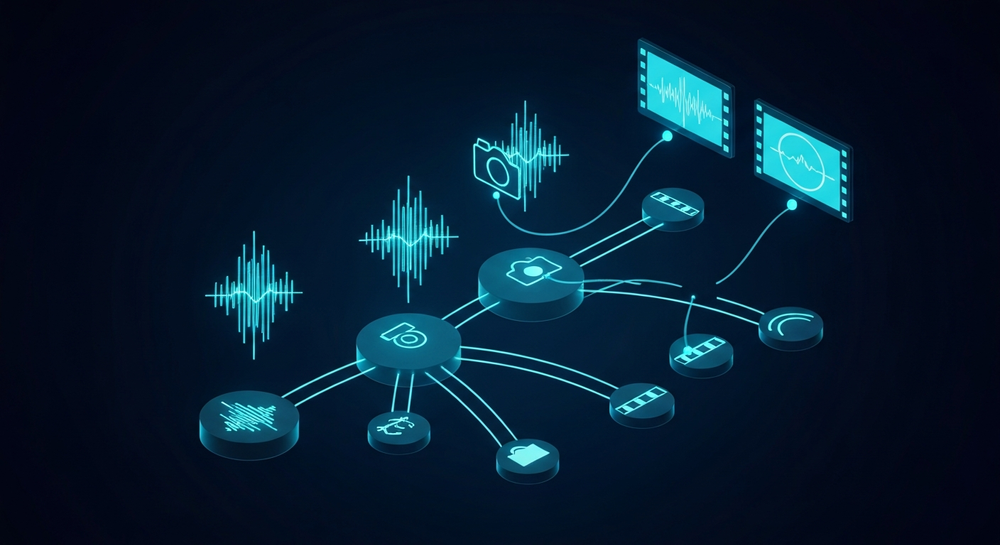
Between 2024 and 2025, tools like diffusion models, video-to-video refinement, and text-to-music platforms matured rapidly. By 2026, generative video pipelines are capable of crafting entire sequences—from animated worlds to human-like performances—matched precisely to musical rhythm. It's not only about automation; it’s about expanding creative reach. For directors and digital artists, AI removes technical barriers and lets storytelling focus purely on concept and emotion. Tutorials such as How to Create AI Music Videos for Multiple Singers (2026 Workflow) showcase how creators can use text prompts efficiently to synchronize sound and visuals.
For those seeking visual inspiration, review 10 Best AI Video Examples for Inspiration in 2025 illustrating enterprise-level implementations.
How is AI reshaping visual storytelling for music creators?
Traditionally, music videos express a song’s tone through cinematography, choreography, and editing. AI enhances this foundation by generating dynamic visual metaphors automatically. Machine learning models detect tempo, energy, and transitions from audio segments and translate them into motion, color shifts, or camera movements.
For example, AI can:
- Analyze sound frequencies and translate bass pulses into slow camera zoom-ins.
- Match lyrical or melodic intensity with lighting and visual transitions.
- Create abstract visualizations representing mood—dreamy, melancholic, euphoric—based on music metadata.
This visual intelligence strengthens narrative immersion. In an era of “faceless creators” and short-form video dominance, AI music videos have become essential for artists who need consistent thematic aesthetics without massive production overhead. Check out AI Music Video Workflow 2026 for 100% Real Lip Sync to see how creators achieve realistic character synchronization through neural capture.
What are the biggest music video trends in 2026?
The year 2026 has witnessed several distinct trends emerging from the fusion of AI and visual arts:
- Prompt-based Direction: Instead of writing detailed shot scripts, directors now use text prompts to generate entire scenes or sequences. Descriptions like “retro-futurist dancer illuminated by holographic light” can guide both visual and auditory generations.
- Adaptive Storytelling: Using real-time emotion analysis, AI adapts video pacing according to audience engagement metrics, creating personalized visuals for different viewers.
- AI-driven Character Performance: Virtual performers animated through neural motion capture make it possible to have actors who are completely generated, enabling artists to visualize themselves in alternate worlds or personas.
- Multimodal Editing: Integrated systems now mix audio stems, video segments, and text-based elements fluidly, letting editors fuse concepts such as choreography timing and beat progression.
- Sonic Visualization: Machine learning algorithms directly translate soundscapes into corresponding color gradients and texture movements—a style popular among electronic and ambient creators.
For practical applications, watch EXACTLY How I'd Start Making AI Music Videos in 2026 - YouTube showcasing AI workflows with OpenArt. These trends underpin how AI merges human creativity with computational design. Directors exploring these new workflows often combine generative systems such as Soundverse tools with others to create cohesive artistic ecosystems.
How does machine learning drive creative decisions in AI music videos?
Machine learning serves as the interpretive engine in modern AI visual storytelling. Models trained on video editing patterns, musical structures, and emotion mapping learn to predict how viewers respond to audiovisual combinations. This allows for intuitive synchrony between sound and scene.
In AI music video production:
- Audio feature extraction reads BPM, key, and dynamics.
- Scene matching algorithms propose visuals using learned correlations—soft piano tones align with delicate motion; upbeat percussive patterns inspire rapid editing.
- Generative blending lets AI morph between visual themes smoothly, providing a cinematic flow.
Machine learning also manages version iteration. Instead of endless manual revisions, artists adjust prompt parameters or model settings and regenerate the output. For many creators, this process mirrors co-directing with an intelligent system.
For more insights on how generative models influence music creation, explore Soundverse AI Magic Tools or learn from Music Industry Trends.
For a deeper dive into musical creativity, watch our guide on creating Deep House music and learn basic production flow through Soundverse Tutorial Series - 9. How to Make Music.
How creative AI tools are bridging audio and video storytelling
Modern creative AI tools are designed to connect musicians and visual artists under one digital roof. While audio generation used to be separate from motion production, today platforms integrate text-to-music, AI visual generation, and scene editing together.
This convergence allows creators to develop multisensory narratives:
- Musicians can provide an emotional prompt, and AI visualizes it instantly.
- Directors can turn a color scheme or aesthetic concept into matching soundscapes.
- Content creators can prototype a full video concept within hours instead of weeks.
For artists working on short-form content for TikTok, YouTube Shorts, or immersive installations, creative AI provides a production pipeline that's cost-efficient and scalable. For step-by-step tutorials, check #1 AI Music Video Hack 2026: Beginner to PRO Tutorial - YouTube for beginner-friendly workflows.
How to make AI music videos with Soundverse AI Music Generator
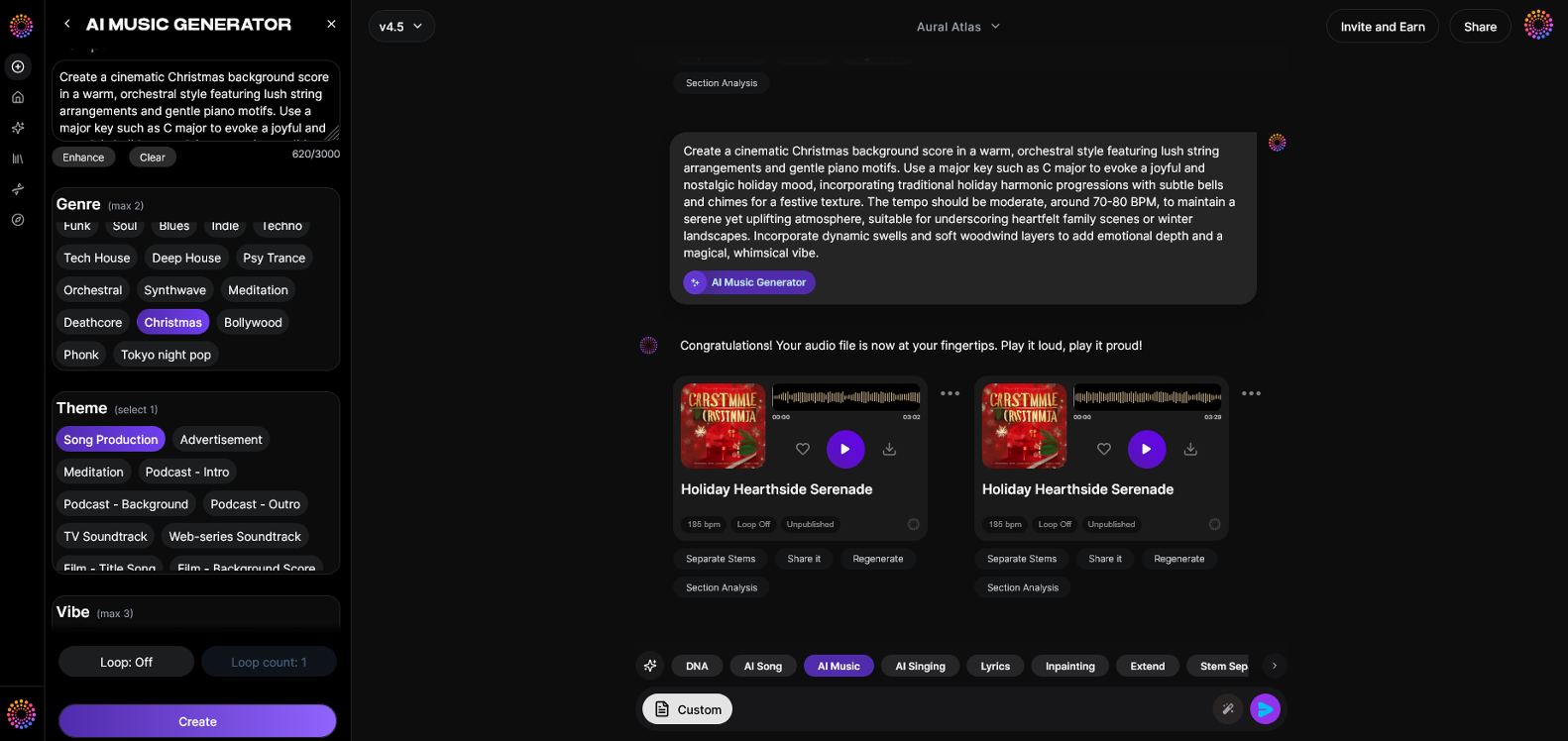
When it comes to crafting authentic, copyright-safe soundtracks for AI-driven videos, the Soundverse AI Music Generator stands out. This tool enables creators to produce fully instrumental background music via simple text prompts. It specializes in beats, loops, and soundscapes suited for video environments—perfect for directors experimenting with generative visuals.
The platform’s core capabilities include:
- Text-to-music generation: Describe a mood, genre, or visual theme, and let AI compose accompanying audio instantly.
- Loop Mode: Generate seamless, repeatable tracks that fit animated sequences or longer video scenes.
- Genre, mood, and instrument control: Adjust sonic parameters precisely to align with visual tone.
- Multiple model choices (V4 & V5): Select algorithms optimized for cinematic or electronic environments.
The primary use cases include video background scores, game loop soundtracks, meditation sequences, and commercial scoring. By producing non-vocal compositions, it ensures that AI music videos maintain visual focus while benefiting from professional-grade audio design.
Soundverse also integrates ethically trained technology like Soundverse DNA, allowing licensed artist styles to be used responsibly. This protects copyright integrity and supports artists in monetizing their sound patterns. Such innovation resolves longstanding ethical problems in cross-media AI collaboration.
For creators looking to bridge music and storytelling further, read about AI Generated Music is Transforming the Industry or dive into AI’s Role in Film and Television.
How will AI music videos shape the future of music production?
By 2026, AI has shifted the definition of production itself. Instead of separating writing, recording, editing, and post-production, everything operates within a unified AI ecosystem. Visual storytelling is now an interactive experience—the music doesn’t just accompany the visuals; it informs them.
Soundverse and similar technologies make this possible by allowing sound design to adapt dynamically to narrative evolution. As AI continues to generate music from prompts, directors can visualize these soundscapes simultaneously in their AI video editing platforms, minimizing creative friction.
In the near future, expect:
- More cross-platform compatibility between music and video AIs.
- Expanded personalization, where viewers generate unique music video interpretations based on mood.
- New creative professions, like AI story curators or visual composers specializing in generative storytelling.
For detailed tutorials, check out How to Create EDM with Soundverse AI or learn to Generate Text-to-Music.
Start Creating AI Music Videos Today!
Unlock the power of Soundverse to generate stunning AI-driven visuals and soundtracks that elevate your storytelling. Whether you’re an artist or content creator, bring your music to life effortlessly.
Try Soundverse Free
Related Articles
- The Role of AI Music in Film and Television: Explore how AI-generated music is shaping on-screen narratives and transforming the entertainment industry.
- How AI-Generated Music Is Transforming the Music Industry: Discover the ways AI compositions are changing how artists, producers, and studios create music.
- Creating a Faceless Valentine’s Day Video Message with Free AI Tools: See how AI enables creators to design expressive visual messages without needing traditional filming setups.
- Soundverse: Revolutionizing Music Creation for New-Age Content Creators: Learn how Soundverse’s AI technology is empowering creators to compose music faster and more creatively.
Here's how to make AI Music with Soundverse
Video Guide
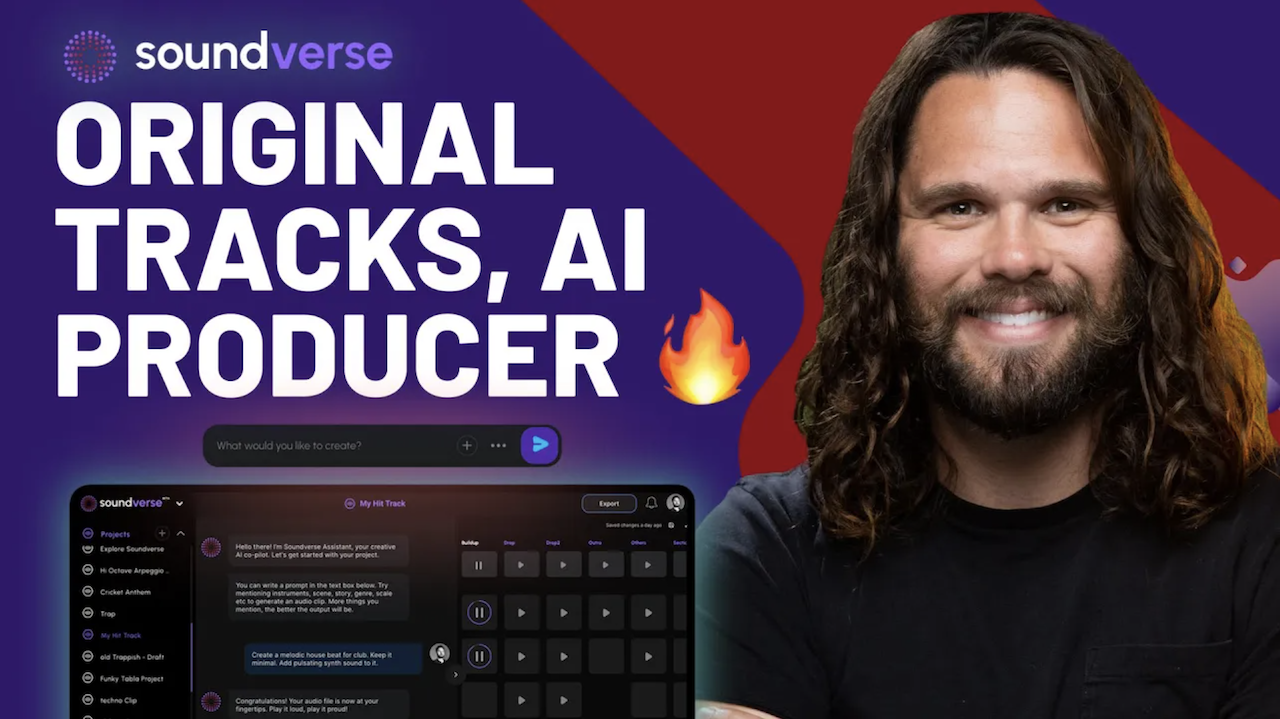
Here’s another long walkthrough of how to use Soundverse AI.
Text Guide
- To know more about AI Magic Tools, check here.
- To know more about Soundverse Assistant, check here.
- To know more about Arrangement Studio, check here.
Soundverse is an AI Assistant that allows content creators and music makers to create original content in a flash using Generative AI. With the help of Soundverse Assistant and AI Magic Tools, our users get an unfair advantage over other creators to create audio and music content quickly, easily and cheaply. Soundverse Assistant is your ultimate music companion. You simply speak to the assistant to get your stuff done. The more you speak to it, the more it starts understanding you and your goals. AI Magic Tools help convert your creative dreams into tangible music and audio. Use AI Magic Tools such as text to music, stem separation, or lyrics generation to realise your content dreams faster. Soundverse is here to take music production to the next level. We're not just a digital audio workstation (DAW) competing with Ableton or Logic, we're building a completely new paradigm of easy and conversational content creation.
TikTok: https://www.tiktok.com/@soundverse.ai
Twitter: https://twitter.com/soundverse_ai
Instagram: https://www.instagram.com/soundverse.ai
LinkedIn: https://www.linkedin.com/company/soundverseai
Youtube: https://www.youtube.com/@SoundverseAI
Facebook: https://www.facebook.com/profile.php?id=100095674445607
Join Soundverse for Free and make Viral AI Music

We are constantly building more product experiences. Keep checking our Blog to stay updated about them!