How AI Music Licensing Affects Streaming Royalties in 2026
Explore how AI music licensing reshapes streaming royalties, payments, and artist revenue models in 2026.
How AI Music Licensing Affects Streaming Royalties
In 2026, the collision between artificial intelligence and music rights management has become a defining feature of the digital audio economy. As generative AI systems increasingly produce, adapt, and remix soundscapes, the concept of AI music licensing has moved from a niche issue to a dominant factor influencing streaming royalties and how creators get compensated across major platforms.
For music industry professionals, streaming executives, and rights managers, understanding how AI licensing frameworks alter royalty impact and streaming payments is now essential. The landscape has changed dramatically since 2025—what was once experimental is now institutionalized through transparent models and AI-participation frameworks.
What is AI Music Licensing and Why Does It Matter in 2026?
AI music licensing defines how musical works used in AI model training are contracted, attributed, and monetized. Early generative systems often trained on unlicensed datasets, creating major copyright disputes across 2024 and 2025. By 2026, new ethical frameworks have standardized how audio data feeds into machine learning engines. AI music licensing ensures consent from rights-holders and creates structured compensation models whenever their material helps generate new music.
This licensing mechanism has shifted perceptions of authorship and royalty handling. Instead of a binary payout model where an artist earns per stream alone, AI licensing introduces influence-based royalties—paying creators whose sounds, performances, or compositions inform AI generations. The result: a multi-layered revenue model that incorporates attribution beyond the act of streaming.
How Does AI Music Licensing Impact Traditional Streaming Payments?
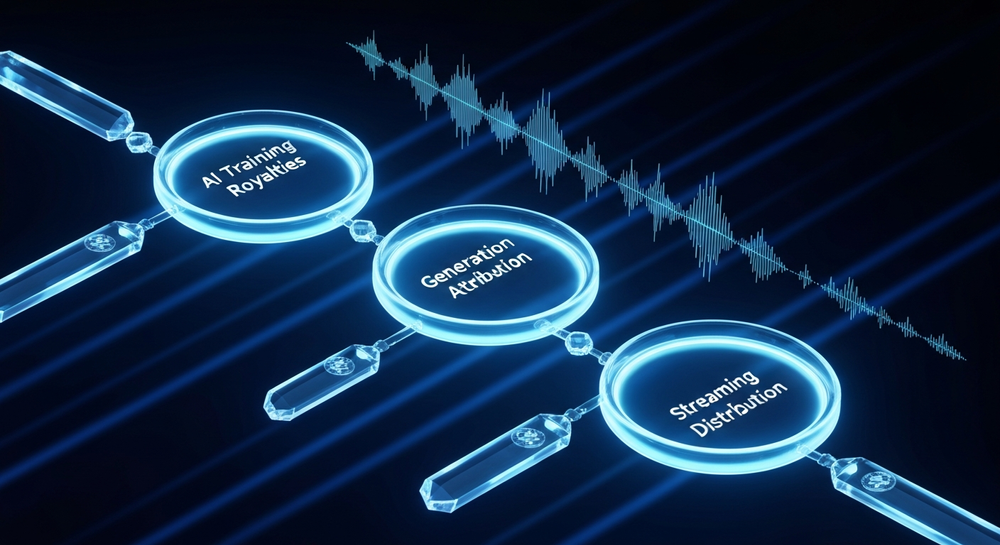
In the pre-AI era, royalties from Spotify, Apple Music, and other platforms flowed primarily through performance and mechanical rights channels. As AI music gained traction, the streaming payment calculus changed. Licensing now extends to three categories:
- AI Training Royalties: Rights-holders earn when their content trains models that contribute to derivative generations.
- Generation Attribution Royalties: Payments triggered every time AI-generated tracks reference or algorithmically draw from licensed stems.
- Streaming Distribution Royalties: Traditional per-stream earnings maintained for directly streamed catalog tracks.

This tri-layered model decentralizes royalty accumulation. Instead of relying solely on human-driven play counts, creators now accrue value from machine learning interactions. For digital rights managers, this complexity introduces both opportunity and data management challenges—especially when scaling to millions of AI-generated musical instances.
For a deeper dive, watch our guide on creating Deep House music and how to make music using Soundverse AI.
How is Royalty Impact Measured in AI-Powered Ecosystems?
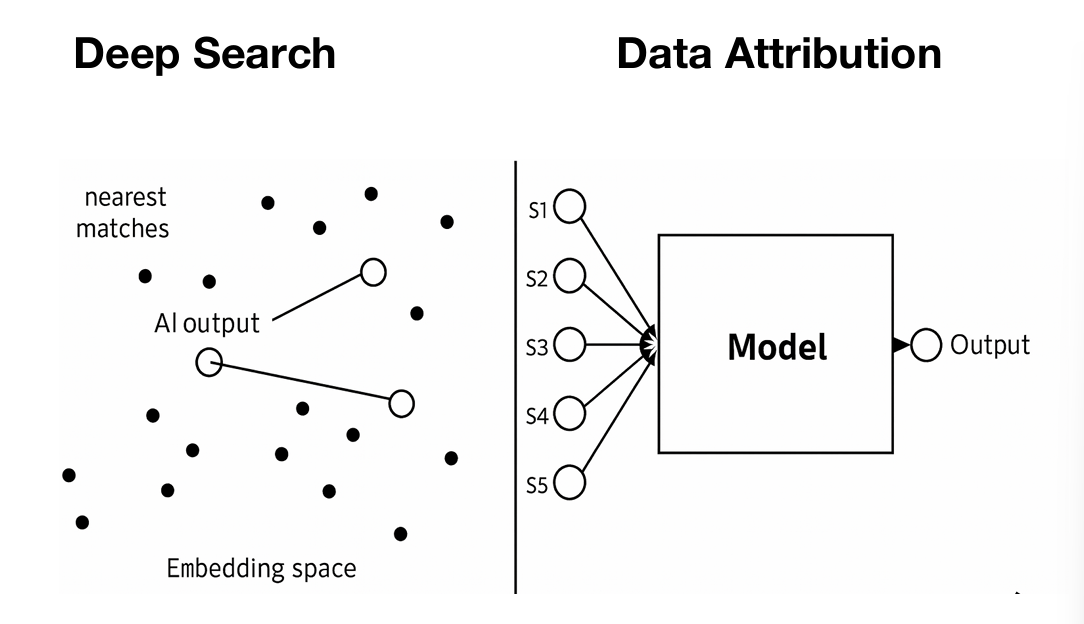
Royalty impact in 2026 aligns with attribution frequency and generative relevance. AI platforms embed traceable metadata—commonly facilitated by trust layers like Soundverse Trace—to ensure every generated output carries an ethical lineage. Rights-holders can view how often their material informs new compositions, making payout distribution more dynamic.
This method has placed transparency at the core of royalty management. Instead of opaque accounting cycles, AI licensing platforms issue real-time dashboards showing usage metrics, tier classifications, and model influence analytics. For example, a back-catalog song sampled by thousands of AI generators receives proportional compensation based on influence weight rather than total play count.
What Are the Broader Revenue Effects of AI Licensing on Streaming Platforms?
The revenue effects in 2026 extend beyond traditional rights management. Streaming platforms are now negotiators between AI dataset providers, rights-holders, and end users. These dynamics yield multiple revenue adjustments:
- Platform Profit Redistribution: Licensing fees paid to rights-holders reduce overall least-cost access models but elevate brand credibility through ethical participation.
- Artist Recurrence Models: Artists earn recurring royalties when their catalog becomes part of persistent AI training datasets.
- Cross-Innovation Revenue Streams: Platforms integrate AI-generated tracks directly into recommendations, generating dual-layer earnings from both human-listened and AI-origin content.
As highlighted in AI Licensing in the Music Industry: A Huge Mess, unauthorized AI recreations have been known to dilute artist brands and impact revenue streams, further underscoring the need for ethical royalty structures.
Platforms adopting ethical AI music frameworks report higher long-term sustainability due to transparent payment systems and decreased litigation risk.
Why Are Ethical Frameworks Crucial for Royalty Fairness?
The "black box" training era (2024–2025) generated much concern. With AI producing music without verifiable attribution, artists saw revenue leakage and loss of control over their intellectual property. In 2026, frameworks like The Ethical AI Music Framework enforce clear licensing consent before dataset admission. Six transparent stages—data acquisition, rights validation, influence mapping, attribution embedding, compensation routing, and transparency reporting—ensure all streaming payments trace back to verified contributors.
According to AI's Mainstream Move: What Music Looks Like in 2026, artificial intelligence has firmly integrated into mainstream music production, emphasizing why ethical frameworks are paramount for royalty fairness.
The adoption of these frameworks has become standard practice for A&R departments and independent rights management agencies. Compliance not only sustains moral integrity but directly influences payout credibility. Streaming services associated with ethical AI pipelines attract broader catalog licensing, strengthening both trust and business viability.
How Have Independent Artists Benefited from AI Music Licensing in 2026?
Independent artists often struggle with sub-cent royalty rates on streaming platforms. AI licensing creates new passive income channels based on dataset participation. By licensing older stems, unused tracks, or production samples into AI training frameworks, artists gain recurring, usage-based royalties each time their sound indirectly powers generated music.
These micropayments accumulate at scale, enabling emerging creators to monetize intellectual capital beyond active releases. As platforms like Soundverse deepen their AI royalty attribution pipelines, independent talent joins the technology economy—not just as end users but as stakeholders.
For creators looking into practical AI-driven music insights, exploring resources such as How an AI Music Generator Inspires Creative Fusion or Music Industry Trends provides a broader understanding of how tech and artistry align.
How to Make the Most of AI Music Licensing with Soundverse Content Partner Program
The Soundverse Content Partner Program defines 2026’s most transparent and equitable approach to AI music licensing. As an opt-in framework, rights-holders contribute audio for AI training while securing recurring, usage-based royalties driven by attribution.
Core capabilities include:
- Influence-Based Payouts (Pay per generation): Participants earn every time the AI system generates music informed by their contributions.
- Tiered Licensing (Tiers 1–6): Structured reward differentiation depending on influence strength, dataset usage, and generation frequency.
- Real-Time Dashboards: Rights-holders access earnings viewports and data usage metrics, offering consistent transparency.
- Transparency Reports: Publishers and creators receive detailed accounts of where and how their assets influence AI-generated outputs.
The program’s use cases extend from generating recurring revenue from back catalogs to supporting ethical AI model development. It protects rights while promoting participation in the AI economy, ensuring every artist who contributes intellectual value receives compensation aligned with attribution frequency.
Paired with the Soundverse Trace system and The Ethical AI Music Framework, the Content Partner Program guarantees fairness across all influence levels. These integrations ensure every streaming royalty payment corresponds precisely to ethical data interactions—upholding moral and financial integrity throughout the AI music pipeline.
For those comparing solutions, see Soundverse Introduces Stem Separation AI Magic Tool or discover how Soundverse stands out as an Alternative to Mubert and Soundraw for AI-driven music licensing and generation.
Start Creating Music the Smart Way
Transform your creative workflow with Soundverse AI. Generate fully licensed tracks, manage royalties effortlessly, and stay ahead of the future of music creation.
Related Articles:
- How AI-Generated Music Is Transforming the Music Industry — Discover how artificial intelligence is reshaping the production, distribution, and monetization of music globally.
- Navigating the World of Royalty-Free and Copyright-Free Music Using Soundverse AI — Learn how to simplify licensing and protect your music with Soundverse’s royalty-free AI music solutions.
- Copyright-Free vs. Royalty-Free Music: What Creators Should Know — Understand the key differences between copyright-free and royalty-free tracks to make informed decisions about licensing.
- AI Music in the USA — Explore how legal and cultural factors influence the use of AI-generated music across the United States.
Here's how to make AI Music with Soundverse
Video Guide
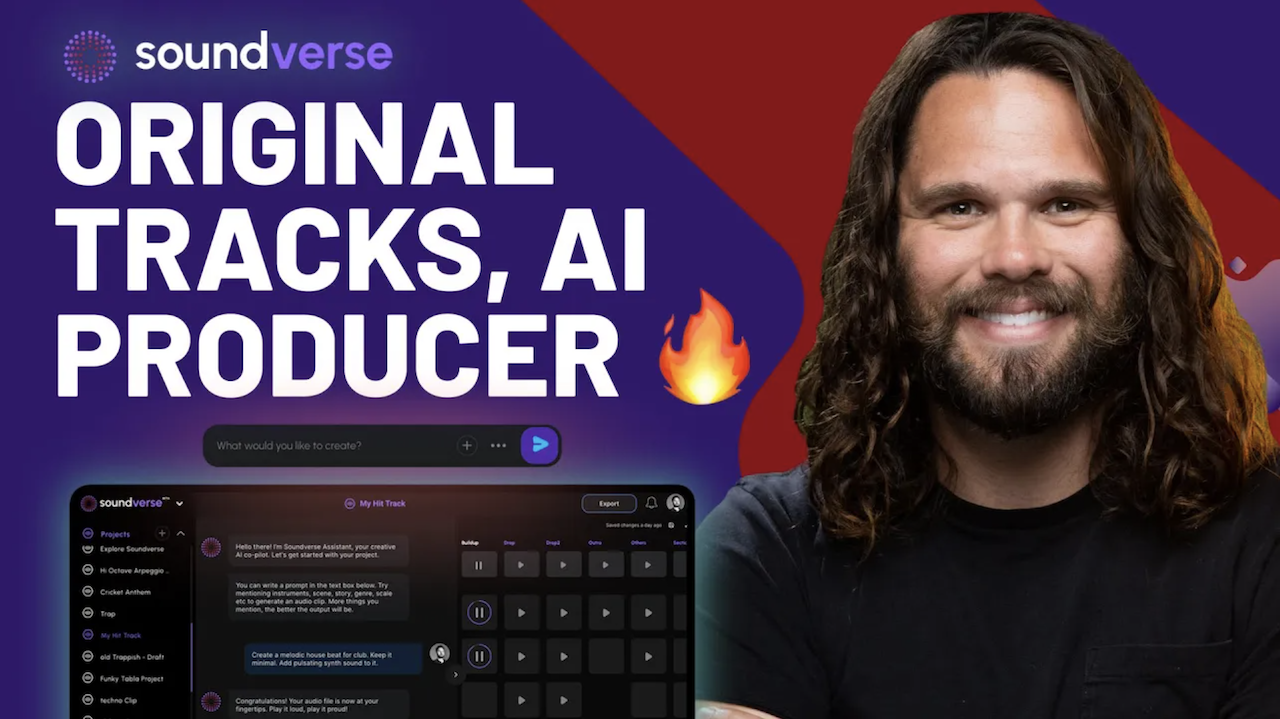
Here’s another long walkthrough of how to use Soundverse AI.
Text Guide
- To know more about AI Magic Tools, check here.
- To know more about Soundverse Assistant, check here.
- To know more about Arrangement Studio, check here.
Soundverse is an AI Assistant that allows content creators and music makers to create original content in a flash using Generative AI. With the help of Soundverse Assistant and AI Magic Tools, our users get an unfair advantage over other creators to create audio and music content quickly, easily and cheaply. Soundverse Assistant is your ultimate music companion. You simply speak to the assistant to get your stuff done. The more you speak to it, the more it starts understanding you and your goals. AI Magic Tools help convert your creative dreams into tangible music and audio. Use AI Magic Tools such as text to music, stem separation, or lyrics generation to realise your content dreams faster. Soundverse is here to take music production to the next level. We're not just a digital audio workstation (DAW) competing with Ableton or Logic, we're building a completely new paradigm of easy and conversational content creation.
TikTok: https://www.tiktok.com/@soundverse.ai Twitter: https://twitter.com/soundverse_ai Instagram: https://www.instagram.com/soundverse.ai LinkedIn: https://www.linkedin.com/company/soundverseai Youtube: https://www.youtube.com/@SoundverseAI Facebook: https://www.facebook.com/profile.php?id=100095674445607
Join Soundverse for Free and make Viral AI Music

We are constantly building more product experiences. Keep checking our Blog to stay updated about them!
Image Steps: []