EU AI Act and the Future of Music Generation in 2026
Explore how the EU AI Act shapes AI-driven music generation, compliance, and ethical creation in 2026.
EU AI Act and the Future of Music Generation
The European Union’s Artificial Intelligence Act (EU AI Act) has become the defining legislative framework for AI governance across industries in 2026. With its full implementation taking effect this year, the music industry—one of the most creatively complex sectors—is facing both unprecedented challenges and new opportunities. The intersection of regulation and innovation has never been as delicate or significant. As AI music generators now play a central role in production and creative workflows, understanding how the EU AI Act influences music creation, copyright management, and ethical standards is essential for professionals across the field.
What is the EU AI Act and Why Does it Matter for Music Generation?
The EU AI Act establishes a comprehensive set of rules governing how artificial intelligence systems can be developed, deployed, and commercialized within the European Union. Its objective is to ensure safety, transparency, and human oversight in AI applications. For music generation platforms, this means compliance must go far beyond simple licensing—it must involve explainable algorithms, ethical data sourcing, and accountability for creative outputs.
Under the Act, AI systems are categorized by risk levels. Tools that generate creative content such as songs fall under the ‘limited risk’ classification but carry additional transparency obligations. Developers must disclose that compositions are AI-generated and ensure that human creators are not exploited or misrepresented. This shift forces companies to rethink how datasets are formed and how attribution functions are integrated into production pipelines.
How Does the EU AI Act Impact Music Producers and AI Developers?
For producers and developers, the new compliance landscape in 2026 necessitates a closer collaboration with legal and rights management experts. Algorithms cannot rely on scraped or unlicensed materials. Every step—from data ingestion to output—must respect copyright boundaries and ethical sourcing principles. This creates a vital accountability chain between artists and AI systems.
Developers must document their model’s decision-making processes, offering transparency when generating melodies or sound patterns derived from licensed data. For producers using AI tools like Soundverse, it ensures that every creative output remains safe for public distribution and commercial usage.
What Are the Key Challenges of AI Compliance in Music?
- Data Licensing: AI models require vast amounts of training data. Ensuring all datasets contain legally acquired material is one of the most significant compliance hurdles under the EU AI Act. Scraped data from songs or samples without permission is expressly prohibited.
- Attribution and Traceability: The law demands that anyone using AI-generated content must be able to trace its origin. Transparent metadata labeling and watermarking now represent industry standards.
- Ethical Integrity: Artists must consent before their voices, styles, or compositions are used in AI models. Platforms that integrate such consent-based approaches are setting new ethical precedents.
- Cross-Border Rights Management: Music generated through AI can easily cross geographic and jurisdictional boundaries, requiring multi-territory compliance protocols.
Many of these challenges are already being solved by AI tools implementing robust ethical architectures. One of the foremost solutions leading this evolution is Soundverse’s Ethical AI Music Framework.
What is Ethical AI Music Creation and Why Is It the Future?
In 2026, ethical AI music creation refers to systems that generate music while respecting intellectual property, artist rights, and fair monetization models. This approach moves beyond the ‘black-box’ behavior of older generative models. Instead, it prioritizes consent, transparency, and fairness.
Ethical music generation frameworks implement explainable inference, licensed data sourcing, watermarking, and recurring royalty mechanisms. These ensure that the outputs are compliant under the EU AI Act while empowering both creators and users to engage responsibly. Platforms that fail to meet these ethical standards risk penalties, legal exposure, and public backlash for digital rights violations.
For instance, music producers in 2026 expect AI systems to provide verifiable metadata showing where a melody originated, how it was influenced by datasets, and whether it carries active compensation rights for the source artists. This kind of traceable creation workflow ensures long-term sustainability for hybrid human-AI artistry.
For a deeper dive into creative applications, watch our guide on creating Deep House music or see the tutorial on exploring music generation interfaces.
How Does Copyright Apply to AI-Generated Songs Under the EU AI Act?
Copyright law continues to evolve alongside AI technology. The EU AI Act explicitly reinforces authorship transparency. AI-generated songs must disclose the role of the machine and human supervision involved. When AI acts as a tool under human direction, the human remains the primary rights holder. But when generation is fully automated, the output becomes a subject of shared or non-human authorship, requiring proper dataset attribution.
According to the latest compliance guidance, the AI Act came into force on August 1, 2024, with most provisions applying as of August 2, 2026. AI music tools must register their datasets and output identifiers to ensure accountability. Transparent watermarking helps track these identifiers across streaming platforms, marketing campaigns, or public performances. Compliance officers now use scanning systems similar to Soundverse Trace to verify if a given track was ethically generated and properly attributed.
To dive deeper into how AI-generated music transforms industries, explore related insights on how AI-generated music is transforming the music industry and royalty-free music practices.
How Do Regulations Strengthen Innovation in AI Music?
Regulation does not necessarily hinder creativity—it refines it. The EU AI Act propels developers toward higher standards that ultimately strengthen both consumer trust and artistic legitimacy. Companies now invest in ethical data partnerships rather than scraping. Artists collaborate willingly, knowing they will receive recurring compensation. Labels and publishers are forming equitable partnerships with AI companies under these new frameworks.
The long-term effect is a balanced ecosystem where technology assists rather than replaces creators. In fact, transparent regulation drives innovation in music personalization, sonic identity generation, and cross-media licensing.
Examples include collaborative projects where artists define AI ‘DNA’ profiles to generate consistent, copyright-safe tracks for advertisements or film soundtracks. You can learn more about this evolving partnership dynamic through related platforms such as Soundverse introduces stem separation AI magic tool and emerging tutorials like How to Create Jazz Music with Soundverse AI.
For more educational insights, see our tutorial on how to make music with Soundverse.
How to Make EU AI Act Compliant Music with Soundverse The Ethical AI Music Framework
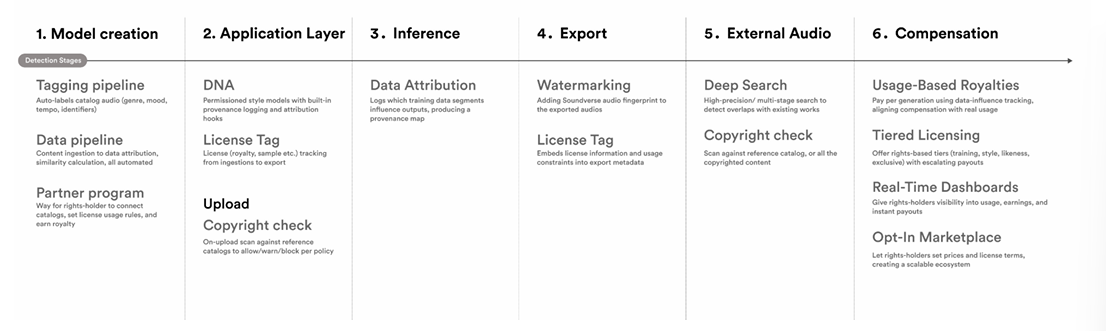
Now that you understand the EU AI Act’s principles and its effect on the music industry, here is how compliance can be achieved instantly using Soundverse.
The Ethical AI Music Framework serves as Soundverse’s foundational architecture for responsible creativity. It bridges innovation and artist integrity through its six-stage transparent pipeline:
- Stage 1: Licensed Data Sourcing – Soundverse eliminates scraping by using only fully licensed datasets and artist-contributed catalogs.
- Stage 2: Permissioned Models (DNA) – Artists define unique AI DNA profiles, allowing branded sonic identities through consent-based training.
- Stage 3: Explainable Inference (Attribution) – Every generated track carries a traceable explanation of its influences and data sources.
- Stage 4: Traceable Export (Watermarking) – Outputs include verified watermarks ensuring accountability and copyright security.
- Stage 5: Deep Search (External Scanning) – External scanning tools confirm that generated music does not conflict with existing copyrights.
- Stage 6: Recurring Compensation (Partner Program) – Rights-holders receive automated royalty payments whenever their licensed audio is utilized.
The Ethical AI Music Framework thus creates a new standard of transparency and fairness in AI music generation compliant with EU regulations. It offers enterprise users and creative professionals a safeguard ensuring legitimacy in every track produced.
Associated services such as Soundverse Trace, Soundverse DNA, and the Content Partner Program work cohesively to support compliance. These systems collectively transform AI music from a regulatory challenge into a structured, ethical creative environment, preparing developers and artists alike for sustainable growth under the EU AI Act.
Start Creating AI Music Responsibly with Soundverse
Explore how Soundverse empowers you to generate original, compliant, and high-quality music in line with global AI standards. Turn your ideas into sound effortlessly while staying ahead of EU AI Act guidelines.
Create Music with AI Now
Related Articles
- How AI-Generated Music Is Transforming the Music Industry — Discover how AI technologies like Soundverse are reshaping music creation across genres and professional workflows.
- AI Music Generator and Human Composers: A Future Together — Explore the evolving collaboration between AI music tools and human creativity shaping the next generation of sound.
- The Role of AI Music in Film and Television — Learn how AI-generated compositions are transforming soundtracks and scoring for visual media.
- AI Music in the USA — Understand how AI music tools are regulated and adopted across the United States compared to the EU landscape.
Here's how to make AI Music with Soundverse
Video Guide
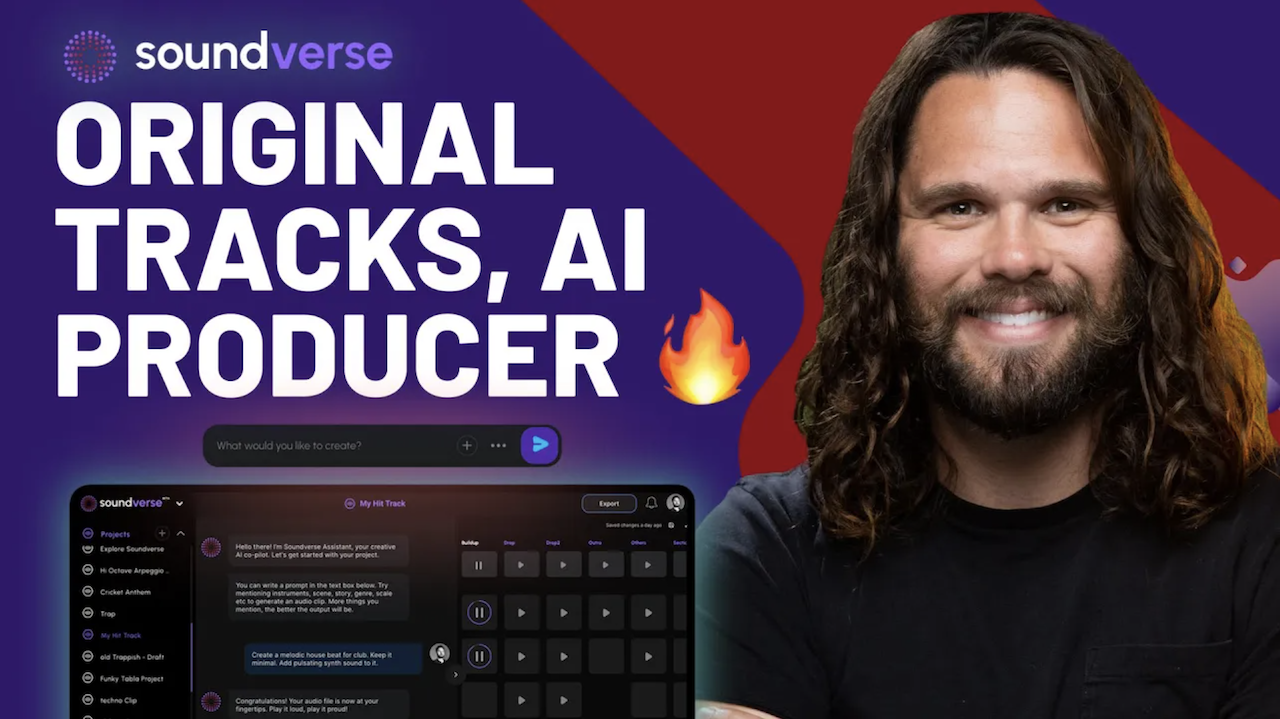
Here’s another long walkthrough of how to use Soundverse AI.
Text Guide
- To know more about AI Magic Tools, check here.
- To know more about Soundverse Assistant, check here.
- To know more about Arrangement Studio, check here.
Soundverse is an AI Assistant that allows content creators and music makers to create original content in a flash using Generative AI. With the help of Soundverse Assistant and AI Magic Tools, our users get an unfair advantage over other creators to create audio and music content quickly, easily and cheaply. Soundverse Assistant is your ultimate music companion. You simply speak to the assistant to get your stuff done. The more you speak to it, the more it starts understanding you and your goals. AI Magic Tools help convert your creative dreams into tangible music and audio. Use AI Magic Tools such as text to music, stem separation, or lyrics generation to realise your content dreams faster. Soundverse is here to take music production to the next level. We're not just a digital audio workstation (DAW) competing with Ableton or Logic, we're building a completely new paradigm of easy and conversational content creation.
TikTok: https://www.tiktok.com/@soundverse.ai
Twitter: https://twitter.com/soundverse_ai
Instagram: https://www.instagram.com/soundverse.ai
LinkedIn: https://www.linkedin.com/company/soundverseai
Youtube: https://www.youtube.com/@SoundverseAI
Facebook: https://www.facebook.com/profile.php?id=100095674445607
Join Soundverse for Free and make Viral AI Music

We are constantly building more product experiences. Keep checking our Blog to stay updated about them!