AI Music Quizzes & Tutors: How Smart Tools Are Shaping Music Education in 2026
Explore 2026's top AI music learning tools reshaping education and creativity for musicians.
AI Music Quizzes & Tutors
Artificial intelligence has completely transformed the way we learn and teach music. In 2026, AI music learning tools have evolved from simple note-recognition apps into comprehensive platforms offering interactive music theory quizzes, intelligent tutoring systems, and creative composition assistants. Musicians, teachers, and students are now embracing this digital shift where understanding chord progressions, rhythm exercises, and song structures can be done through AI-powered interactions that feel intuitive and personalized.
What are AI Music Quizzes and Tutors?
AI music quizzes and tutors are interactive platforms that use artificial intelligence to teach music concepts, assess learning, and offer personalized feedback. Unlike traditional education systems, these AI-driven tools adapt in real time to a learner’s skill level — ensuring that no two learning sessions are alike.
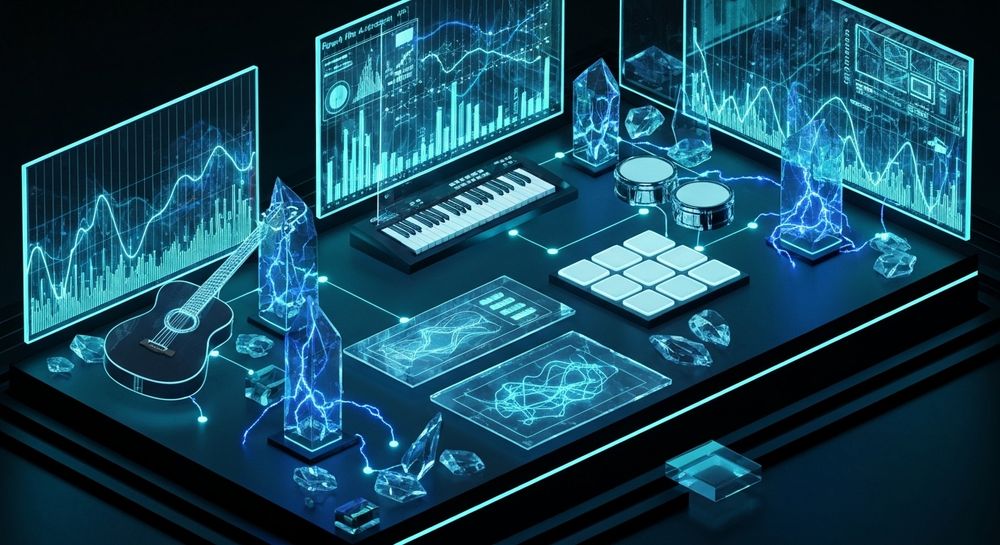
Music quiz apps evaluate theory and ear training through dynamic questioning. AI tracks a user’s answers, identifies patterns in their mistakes, and adjusts difficulty accordingly. AI music tutors go a step further, providing feedback on pitch accuracy, rhythm consistency, and even stylistic choices during practice sessions. Together, these tools make music learning accessible, engaging, and data-rich.
Why Are AI Music Learning Tools Rising in 2026?
Several factors contribute to the increased adoption of AI music education tools:
- Personalization: Musicians now expect individualized learning paths, where software understands their weaknesses and strengths.
- Accessibility: Students anywhere in the world can receive guided instruction without needing physical instruments or classrooms.
- Gamification: Music learning feels more like playing than studying, thanks to interactive modes and instant scoring.
- Integration with Composition Tools: Platforms like Soundverse and similar apps allow seamless transition from learning to creating.
- Remote Collaboration: Educators leverage AI analytics to track student progress in online lessons.
In 2026, smart music learning platforms combine analytics, feedback, and creative play. They help users not only understand theory but also apply it in real-time composition or performance.
What Makes Interactive Music AI Different?
Interactive music AI doesn’t simply give static lessons. It engages learners as if in a dialogue. When you ask it, “How do seventh chords work in jazz?”, the system analyzes your prior responses and builds a progression-based exercise personalized to your level. This two-way exchange resembles talking to a human tutor but powered by algorithmic precision.
For instance, music quiz apps today employ adaptive testing. If a student consistently answers rhythm questions correctly but struggles with scales, the app increases focus on tonal structure training. This modular approach boosts retention rates compared to conventional linear curricula. For a deeper dive, watch our guide on creating Deep House music and tutorial on music creation steps.
How Do AI Music Tutors Enhance Learning Efficiency?
The role of AI music tutors in music education is pivotal. They replicate many aspects of mentorship traditionally provided by human instructors but scale them for global accessibility. Here’s how they augment music training:
- Instant Feedback: AI can detect pitch accuracy or timing deviations from uploaded practice recordings.
- Goal-Driven Learning: Tutors design micro-lessons based on a student’s goals — from mastering blues improvisation to songwriting.
- Performance Metrics: AI tracks progress through data visualization, helping learners see tangible improvement.
- Style Adaptation: The tutor can offer suggestions aligned with specific genres, linking to guides like How to Create Jazz Music with Soundverse AI.
- Continuous Engagement: Gamified systems reward progress milestones, encouraging consistency.
Many educators in 2026 integrate AI tutors as co-teachers — combining technology’s constant evaluation with the human emotional touch necessary for artistic growth.
Which AI Music Education Tools Are Popular in 2026?
Artificial intelligence dominates the learning landscape in 2026. Here are popular examples reshaping digital instruction:
- Yousician – A staple in music education that uses AI for real-time feedback through microphone input to guide students on guitar and piano.
- Soundverse Agent – A conversational music assistant with multi-step reasoning, cross-tool automation, and voice input. Perfect for learners transitioning from theory to composition.
- Melod.ai – Focused on ear training and aural recognition, helping students develop improvisational DNA.
- Tonara – A teaching platform allowing instructors to assign tasks and receive AI-generated performance analytics.
- MusicTheory.net – Classic teaching modules now upgraded with AI-driven adaptive progression.
These examples demonstrate how smart music learning has become more relational, predictive, and creative.
How Do Music Quiz Apps Encourage Creative Thinking?
Learning theory is only half of music mastery. The other half is creativity. Music quiz apps in 2026 use AI pattern recognition to link theoretical understanding with compositional application. After completing a chord progression quiz, for example, the system might generate a short backing track showing that chord set in practice.
Moreover, educators use these apps to make assessment fun. Instead of written exams, students complete dynamic quizzes that visualize concepts through audio snippets, rhythmic exercises, or melodic recognition. Apps like Soundverse combine such quizzes with creative challenges, letting learners remix or extend AI-generated music instantly after passing an exercise.
For creative professionals, this not only solidifies understanding but injects inspiration directly into production workflows.
How to Make AI Music Learning Easy with Soundverse Agent
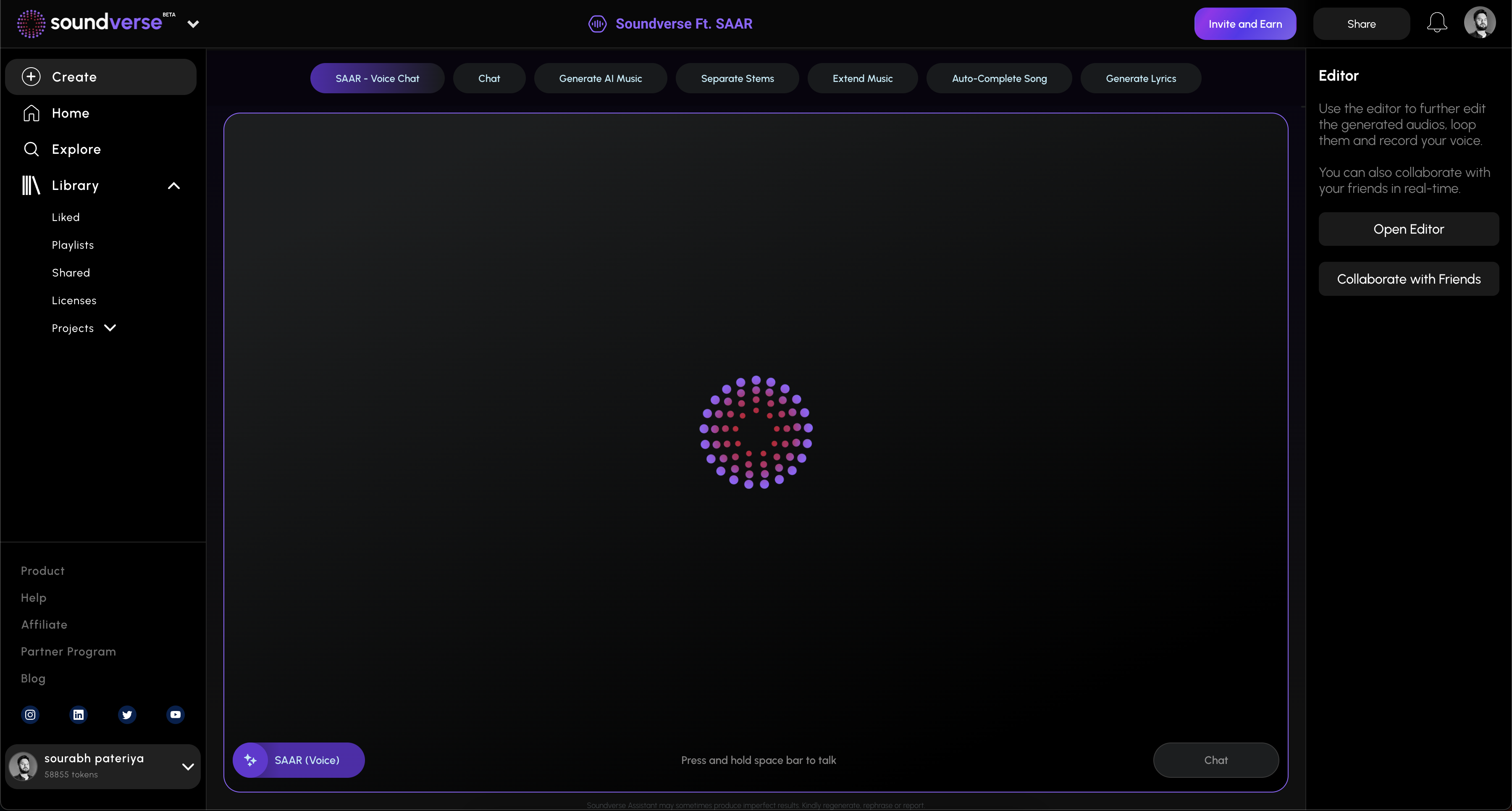
Now that you understand what AI music learning tools can achieve, here’s how you can leverage Soundverse Agent to make AI tutoring and quizzes effortless.
Soundverse’s Agent is a conversational AI assistant designed to control all platform tools seamlessly. It interprets natural language commands and orchestrates complex actions like “Create a pop song, then remove the drums.” Through multi-step reasoning and contextual memory, Agent remembers your previous requests, enabling fluid conversations around music theory, song structure, or practice sessions.
Step 1: Overview
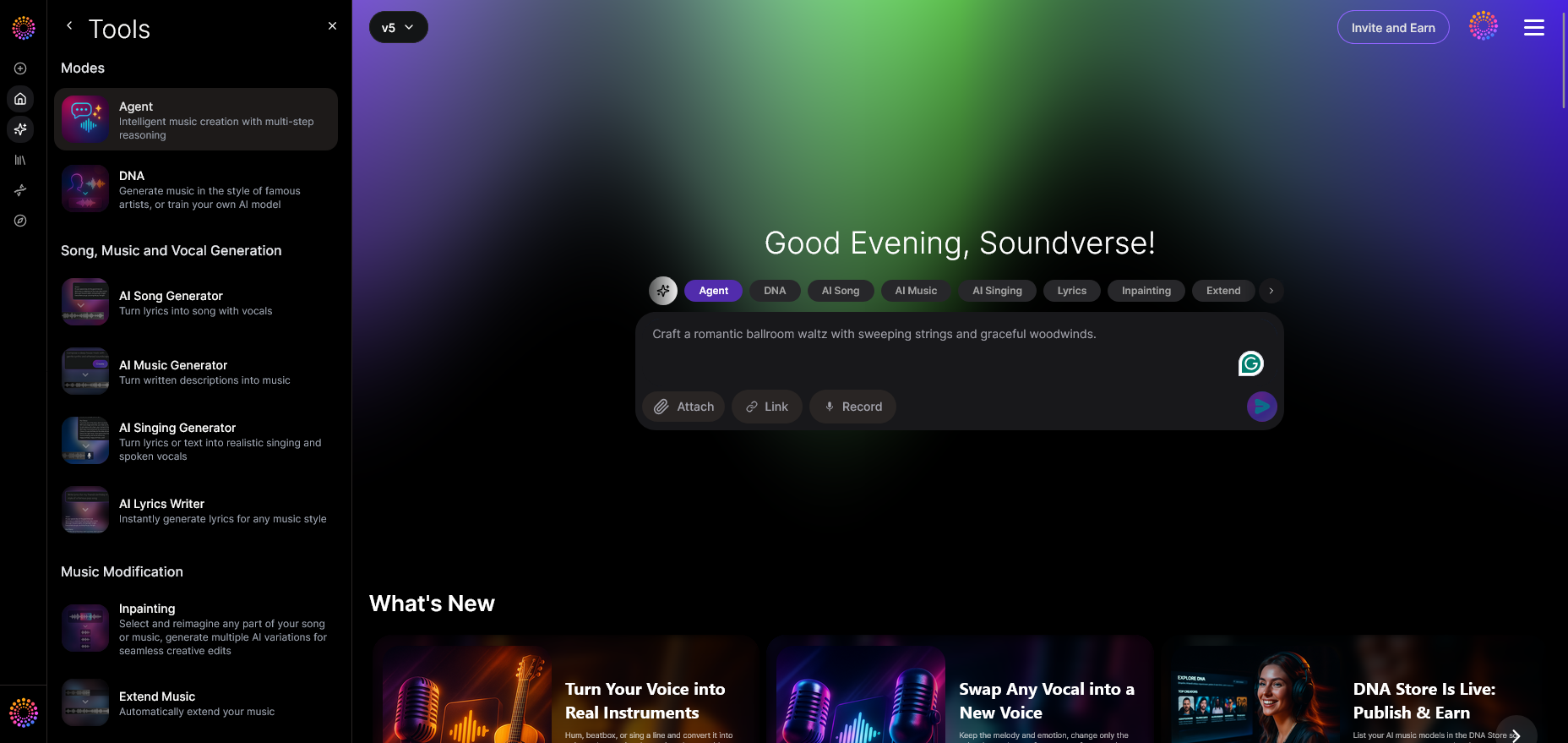
Begin at the main Agent interface, where you can activate conversation and define your learning goals — such as practicing chord transitions or analyzing song sections.
Step 2: Reference Audio
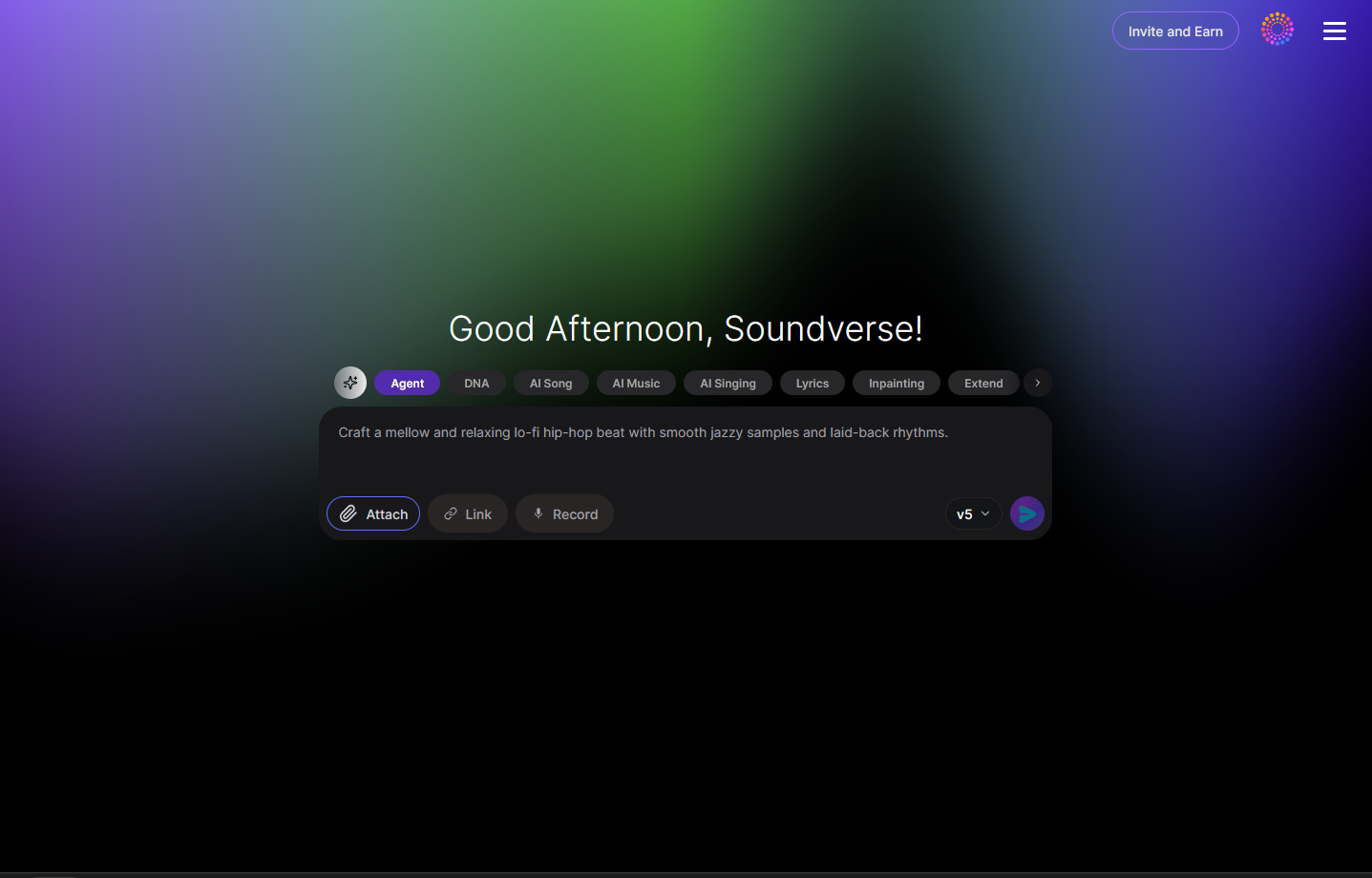
Attach reference music clips to illustrate a concept. For example, upload a short melody to ask the Agent, “What scale fits this recording?”
Step 3: Attach Button
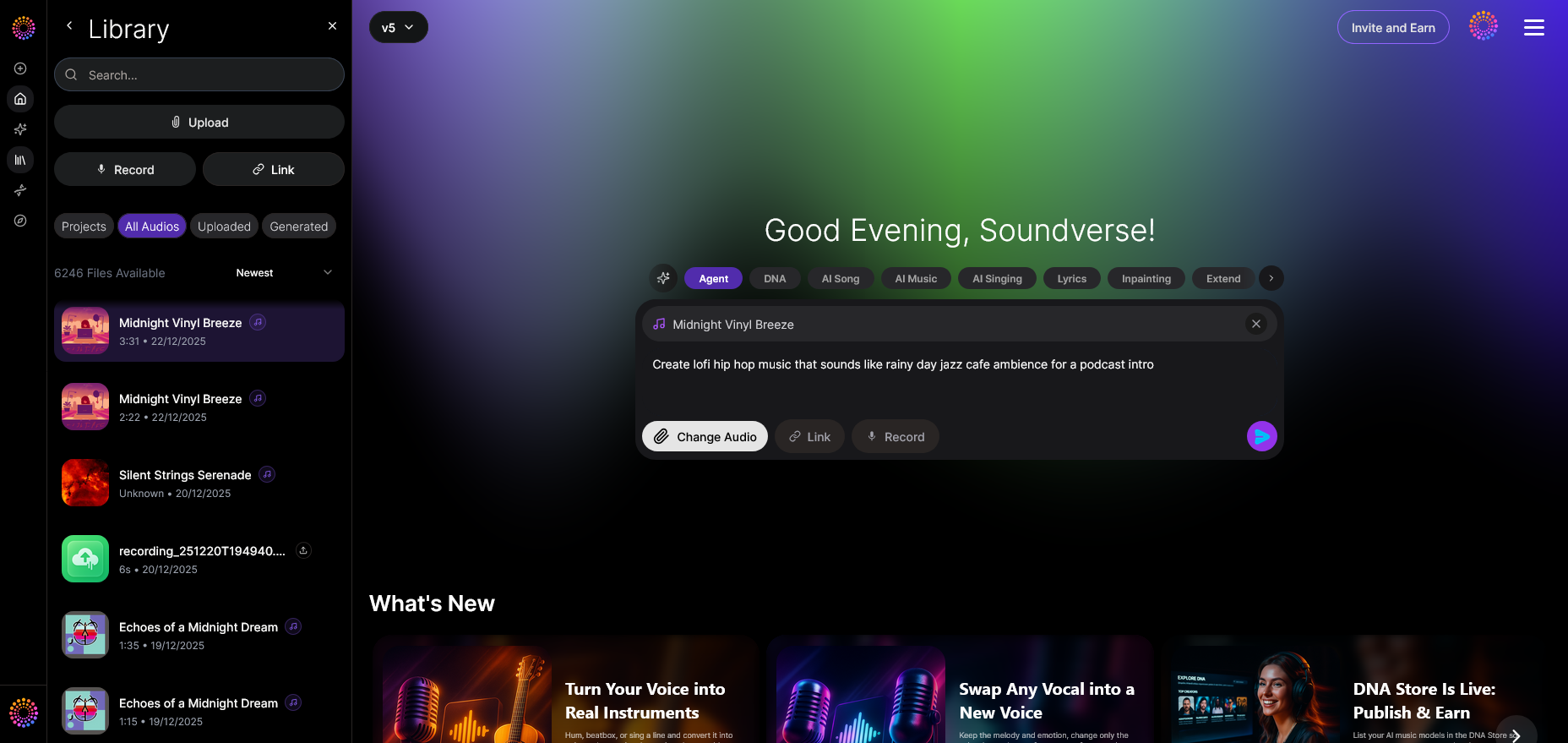
Use the file attachment dialog to include instrument samples or practice recordings. This helps Agent evaluate your progress or build exercises around those files.
Step 4: Submit Request
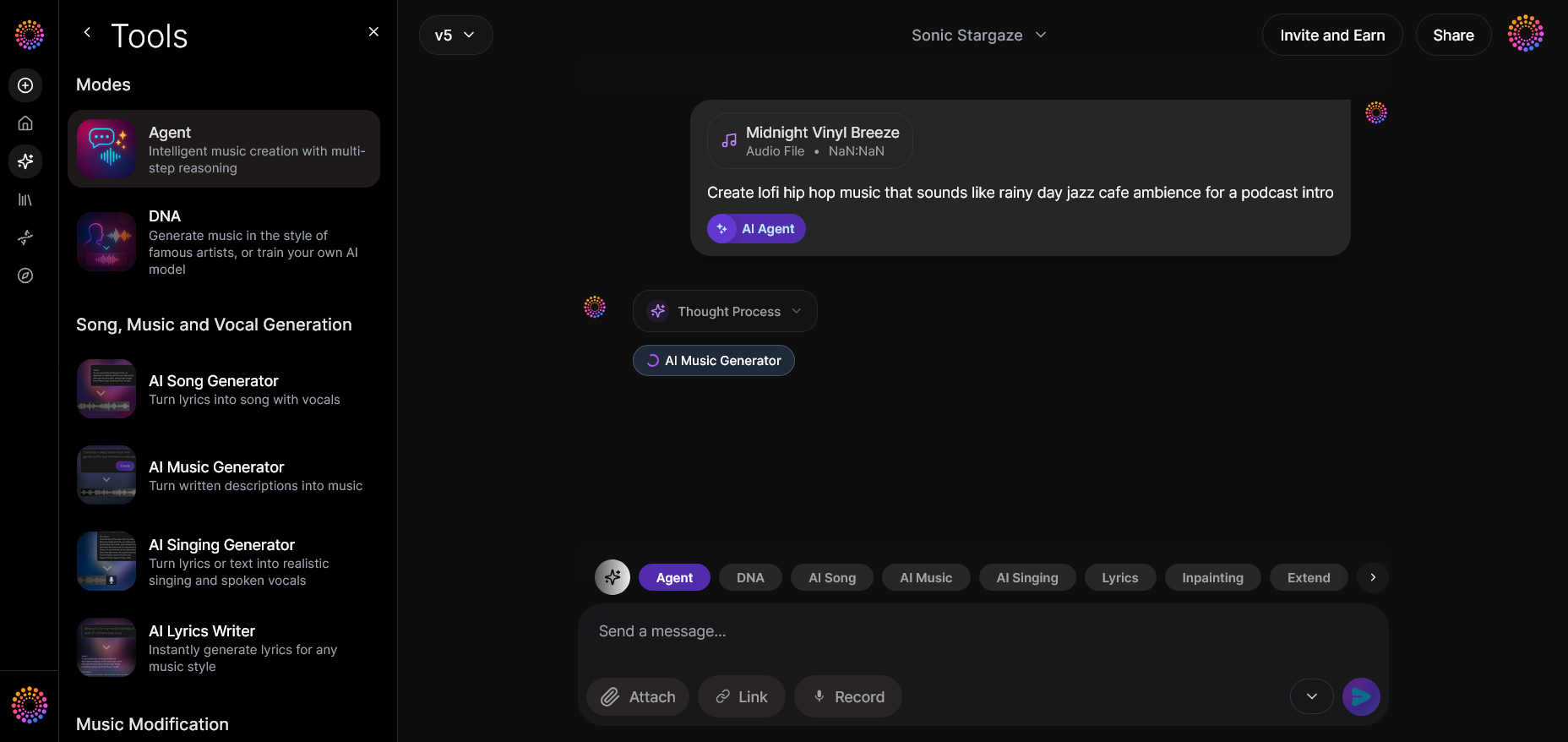
Click the send button to launch your query. Whether requesting “generate a rhythm quiz” or “explain intervals,” Soundverse processes the prompt asynchronously.
Step 5: Review Output
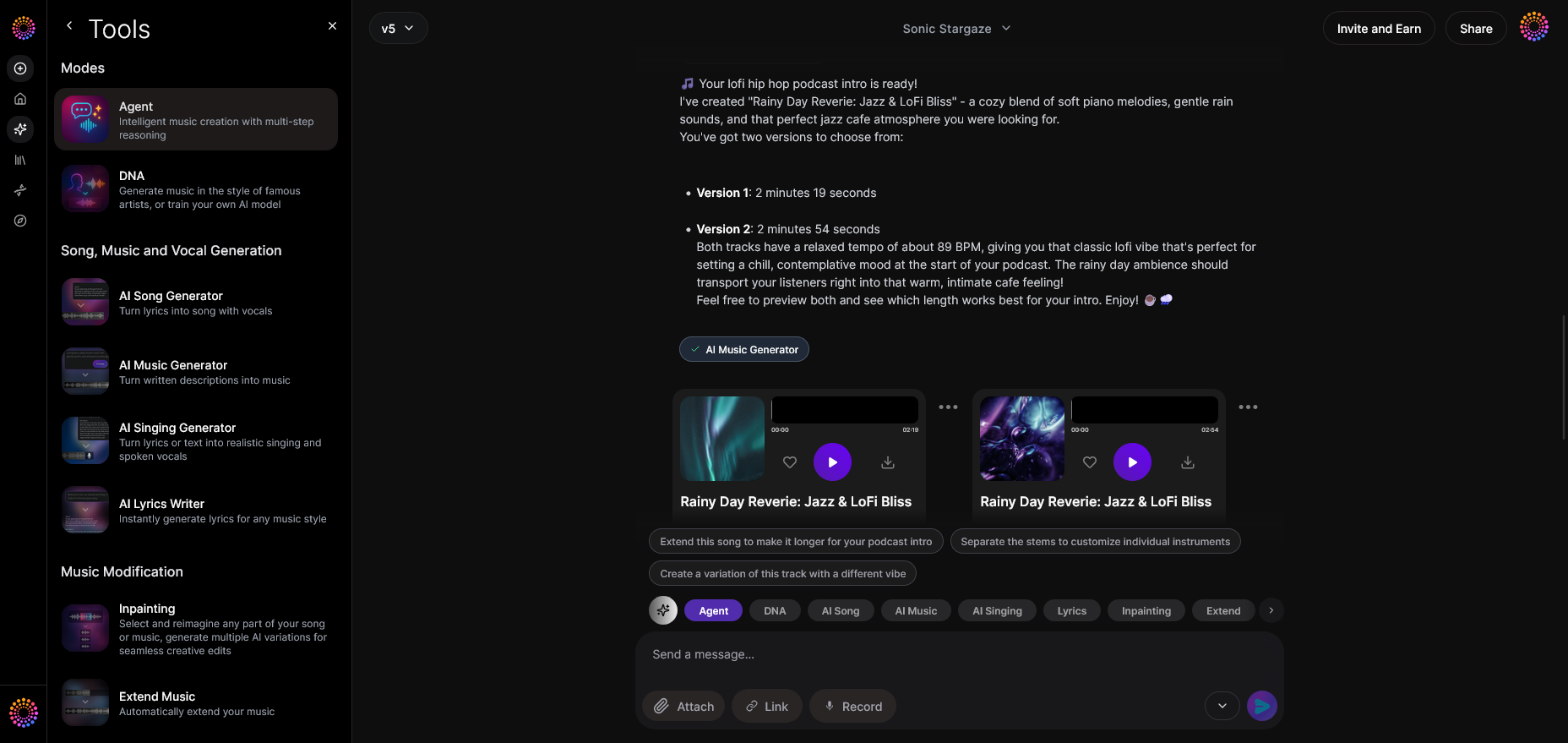
Once the AI returns your interactive exercise or analyzed results, examine musical elements like structure, tempo, and recommended improvements.
Step 6: Refine Conversation
Continue your dialogue. Agent remembers your previous lessons, meaning you can say, “Let’s focus on minor scales this time,” and it adjusts instantly.
Step 7: Advanced Controls
Here, you can select cross-tool workflows — such as connecting with Section Analysis to study song arrangement or the AI Lyrics Writer for lyric-based learning.
Step 8: Export Options
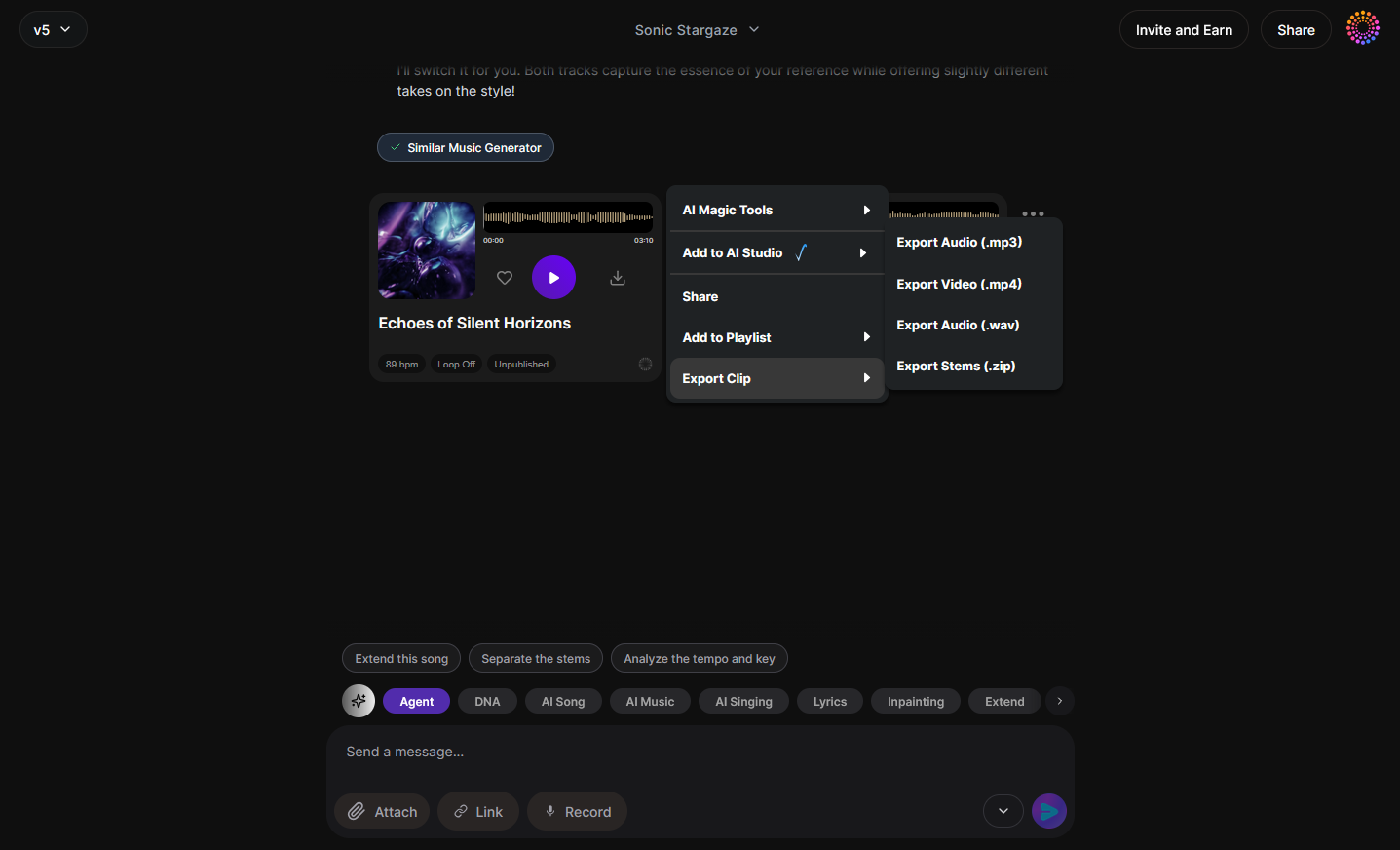
When done, export exercises or generated compositions in various formats for teaching portfolios or personal practice libraries.
Step 9: New Conversation
Start fresh whenever you wish to explore another topic or genre, such as rhythmic complexity or harmonic layering.
Through this streamlined setup, Soundverse Agent empowers learners to practice theory, analyze compositions, and explore creativity in one adaptive interface.
The Future of AI Music Education Beyond 2026
By 2026, AI-based tutoring has transitioned from novelty to necessity. As neural models continue improving context comprehension, we expect systems to simulate detailed conversations around melody crafting, songwriting psychology, and performance analysis. Education will increasingly rely on interactive music AI not simply as a supplementary tool, but as a cornerstone of modern creative curricula.
For learners, the benefits are evident: faster understanding, consistent practice, and personalized knowledge maps. For educators, AI music platforms provide real-time progress tracking and resource sharing, reducing the manual workload typical in classroom teaching. The convergence of data-driven structure and artistic liberty ensures that musicians grow intelligently while expressing freely.
If you are exploring cutting-edge AI music experiences, you can also read resources like How AI-Generated Music Is Transforming the Music Industry or Soundverse AI Revolutionizing Music Creation for New Age Content Creators to understand how automation and creativity go hand in hand.
Unlock Your Music Knowledge with AI-Powered Learning Tools
Experience quizzes, tutors, and intelligent feedback that make mastering music faster and more interactive. Turn learning into creativity with Soundverse’s AI music learning tools.
Related Articles
- Soundverse Assistant: Your AI Music Co-Producer — Discover how Soundverse Assistant helps streamline music creation and supports your artistic workflow using advanced AI tools.
- How an AI Music Generator Inspires Creative Fusion — Learn how AI-generated music fosters creativity and collaboration across genres and artistic disciplines.
- The Benefits of Composing with an AI Music Generator — Explore the advantages of using AI music tools to speed up composition, refine melodies, and boost creativity.
- AI Music Generator and Human Composers: A Future Together — See how AI technology complements human creativity to build the future of music production and learning.
Here's how to make AI Music with Soundverse
Video Guide
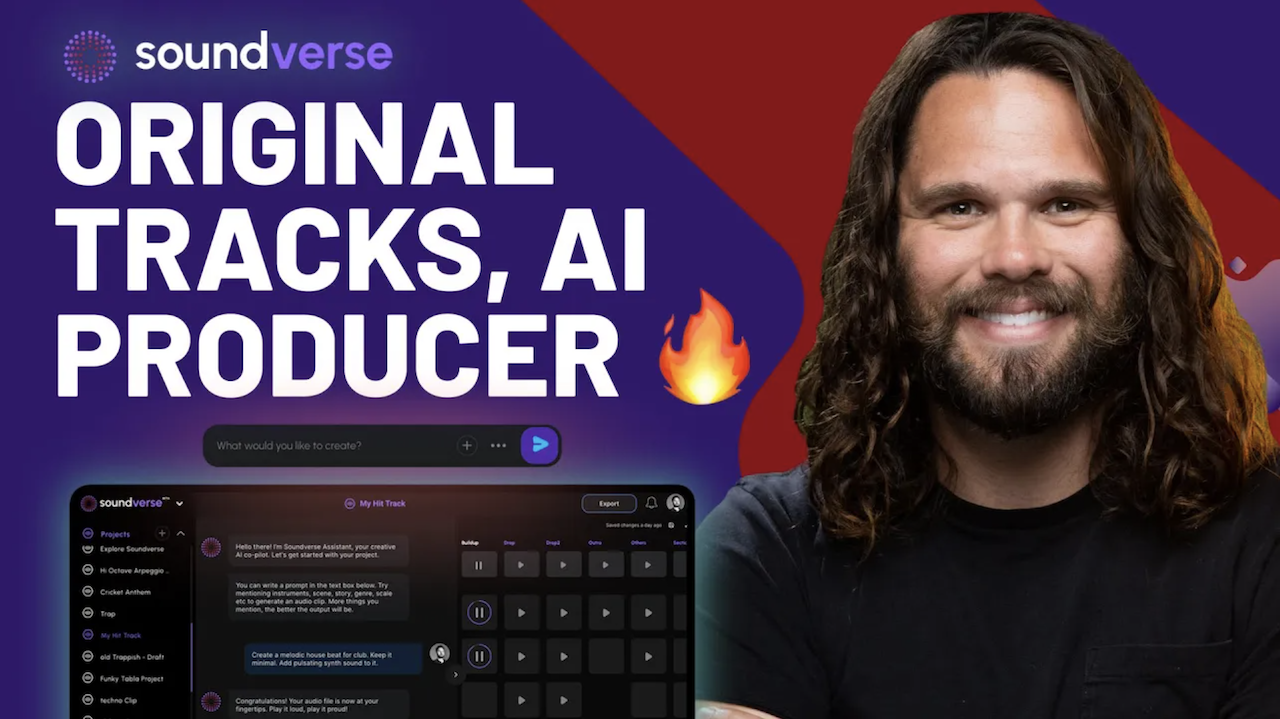
Here’s another long walkthrough of how to use Soundverse AI.
Text Guide
- To know more about AI Magic Tools, check here.
- To know more about Soundverse Assistant, check here.
- To know more about Arrangement Studio, check here.
Soundverse is an AI Assistant that allows content creators and music makers to create original content in a flash using Generative AI.
With the help of Soundverse Assistant and AI Magic Tools, our users get an unfair advantage over other creators to create audio and music content quickly, easily and cheaply.
Soundverse Assistant is your ultimate music companion. You simply speak to the assistant to get your stuff done. The more you speak to it, the more it starts understanding you and your goals.
AI Magic Tools help convert your creative dreams into tangible music and audio. Use AI Magic Tools such as text to music, stem separation, or lyrics generation to realise your content dreams faster.
Soundverse is here to take music production to the next level. We're not just a digital audio workstation (DAW) competing with Ableton or Logic, we're building a completely new paradigm of easy and conversational content creation.
TikTok: https://www.tiktok.com/@soundverse.ai
Twitter: https://twitter.com/soundverse_ai
Instagram: https://www.instagram.com/soundverse.ai
LinkedIn: https://www.linkedin.com/company/soundverseai
YouTube: https://www.youtube.com/@SoundverseAI
Facebook: https://www.facebook.com/profile.php?id=100095674445607
Join Soundverse for Free and make Viral AI Music
We are constantly building more product experiences. Keep checking our Blog to stay updated about them!