AI Music Videos for Experimental and Abstract Visuals: The 2026 Evolution of Generative Art
Explore how AI music videos are redefining abstract visuals in 2026 with generative art and experimental music visuals powered by Soundverse.
AI Music Videos for Experimental and Abstract Visuals
Introduction
AI music videos have become the cutting-edge intersection of technology, art, and sound in 2026. These digital creations use artificial intelligence to merge generative soundscapes with evolving visual patterns, producing immersive experiences that redefine what a music video can be. For digital artists, directors, and AI enthusiasts, this phenomenon has become the perfect vehicle for abstract expression and experimental design.
In the early 2020s, AI was primarily used to assist human artists. But by 2026, AI has become a collaborative partner. With tools that generate music, animation, and even conceptual prompts, creators are now designing entire visual and auditory narratives with algorithms as their co-producers. In this article, we’ll explore how AI music videos are pushing creative boundaries, the rise of abstract visuals AI techniques, and how tools like Soundverse enable seamless production of generative art videos.
What are AI Music Videos and Why Are They So Popular in 2026?
An AI music video is a digital production where both the music and visuals are generated, assisted, or enhanced by artificial intelligence. Instead of manually animating sequences or composing songs, creators provide text prompts and stylistic cues to train or instruct AI systems to create synchronized works.
By 2026, the trend has grown because of three main factors:
- Accessibility: Tools like Soundverse, Runway, and Kaiber have made AI-driven creativity accessible to both amateurs and professionals.
- Creative Freedom: Artists can express surreal, abstract, and nonhuman aesthetics without traditional technical limitations.
- Integration with generative music: With text-to-music generation reaching professional-grade fidelity, experimental music videos can now evolve organically with AI animations.
These AI music videos often explore conceptual themes like emotion through color, the physics of sound visualized, or even the merging of human and machine consciousness. For instance, generative art videos built with reinforcement learning can produce infinite variations of an artwork that pulse and shift with rhythm. You can also explore step-by-step tutorials like "AI Music Video Hack 2026: Beginner to PRO" for practical creative insights.
How Has AI Transformed Abstract and Experimental Visuals?
Abstract visual art has always been about exploring beyond recognizable forms. AI has supercharged that pursuit by introducing machine-generated randomness that feels both alien and beautiful. With abstract visuals AI, algorithms trained on millions of visuals learn how to interpret rhythm, tone, and mood into dynamic geometry or fluid animations.
Generative models in 2026 are capable of:
- Mapping sound frequencies to shapes, colors, and movements.
- Evolving imagery in response to perceived mood in audio.
- Building complex visual languages from non-linguistic cues.
As a result, the barrier between sound and vision has blurred. The AI listens and imagines simultaneously. Visual designers now “compose” imagery the same way musicians compose melodies. This leads to stunning output—AI animation where soundscapes breathe, pulse, and morph in sync with intricate digital textures. For a deeper dive, watch our guide on creating Deep House music or Soundverse Tutorial - How to Make Music.
What Are the Core Elements of an AI-Driven Experimental Music Visual?
When building a successful AI music video with experimental or abstract themes, creators often consider four main layers:
- The Sonic Foundation: The instrumental base usually generated through AI tools like Soundverse’s AI Music Generator, capable of creating text-prompt-based beats, soundscapes, and ambient loops.
- Visual Composition: AI models interpret the emotional data from the music into color palettes or visual motion parameters.
- Narrative Abstraction: Rather than a storytelling arc, the focus lies in the sensation or thematic energy—how it feels rather than what it tells.
- Synchrony: The interplay between sound and image, crucial for maintaining immersion.
This formula is enabling artists to build dynamic environments that defy physical and conceptual boundaries. For example, a piece generated around a "desert wind drone" prompt might yield shifting dunes of glass or solar reflections in sync with the audio frequencies—an aesthetic very much explored in 2026’s experimental video art scene. (For related inspiration, see How to Create Music Evoking the Desert).
What Technologies Power Generative Art Videos in 2026?
Generative art videos combine multiple branches of machine learning:
- Text-to-Music AI: Converts descriptive language into instrumentally layered soundscapes.
- Diffusion and GAN-based Video AI: Generates or morphs frames for fluid animated patterns.
- Motion and Audio Reactivity Models: Analyze beats, pitch, and dynamics to drive visual changes.
The rise of multimodal AI systems has fostered synergy between these elements. In 2026, we see hybrid workflows where text-prompted music is passed to video diffusion models that interpret its spectrum data as visual instructions.
Some creators even integrate AI voice synthesis using technologies like Soundverse’s AI Singing Generator to add surreal vocal texture layers. You can read how such integrations transform creator workflows in Soundverse AI Magic Tools Create Content Quickly with AI.
What Are the Benefits of Using AI Animation for Abstract Music Visuals?
AI-driven animation has unlocked multiple benefits for experimental creators:
- Efficiency: What once took weeks of production can now be achieved within hours.
- Infinite Variation: The same music can trigger countless evolving visual outputs.
- Emotional Depth: AI responds to subtle sonic details that humans might overlook, translating them into unexpected visual poetry.
- Creative Accessibility: Non-coders and musicians without animation experience can produce professional-grade visuals.
The biggest evolution in 2026 is not merely speed, but depth—AI animation introduces genuine surprise and serendipity. The artist’s role shifts from executing to curating, selecting from AI’s imaginative possibilities.
How to Make AI Music Videos with Soundverse AI Music Generator
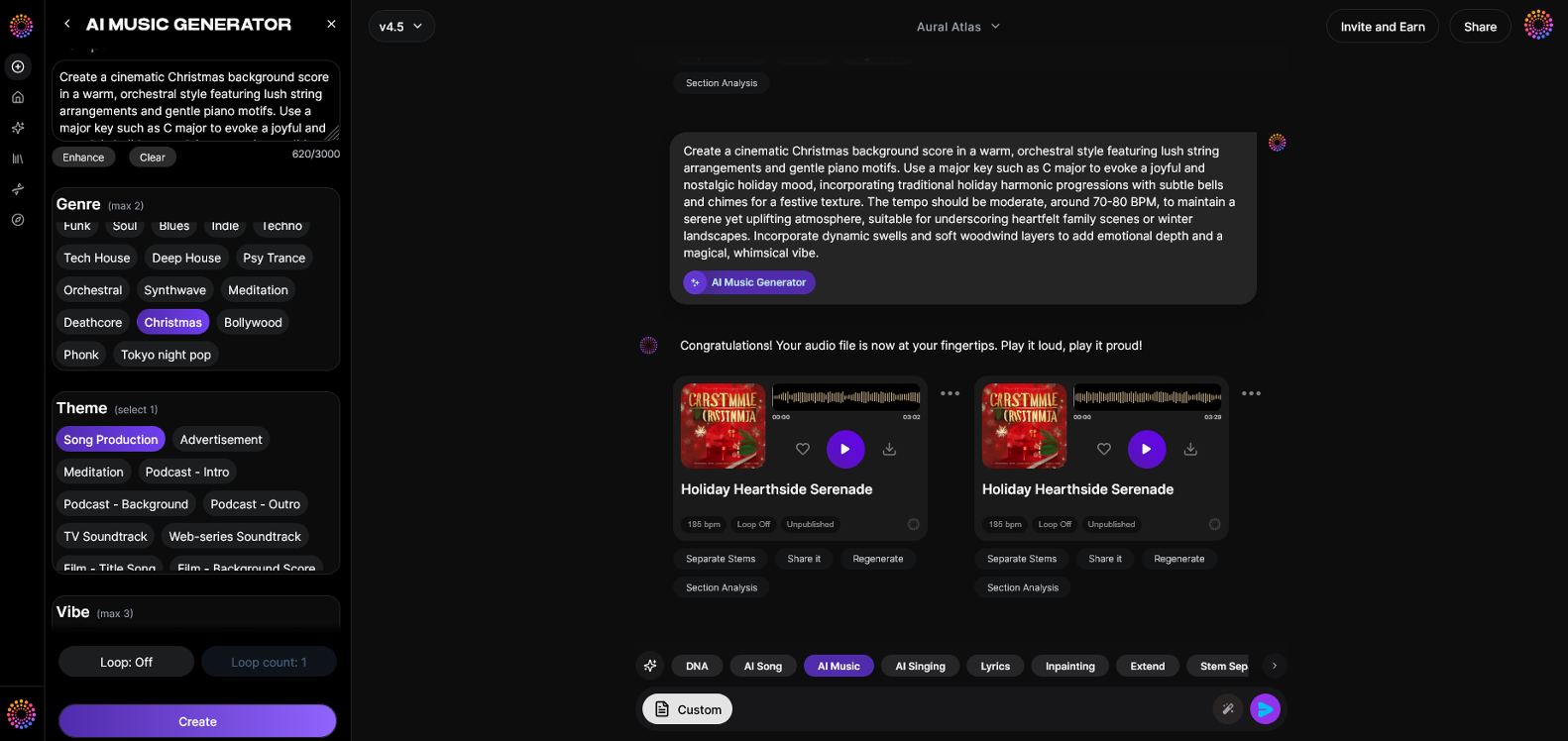
Soundverse’s AI Music Generator is at the heart of creating cohesive and versatile sound backdrops for experimental and abstract visuals. Designed for creators who need high-quality instrumentals without vocals, the AI Music Generator lets users craft cinematic loops, ambient layers, or rhythmic pulses directly from text prompts.
Core Capabilities
- Text-to-Music: Describe the mood or genre—for example, “glitchy ambient sound with metallic echoes”—and the AI composes instantly.
- Loop Mode: Generate seamless looping tracks ideal for generative or continuously evolving visuals.
- Genre, Mood & Instrument Control: Choose precise combinations for ambience, rhythm, or emotional tone.
- Model Options (V4/V5): Select between models optimized for fidelity or experimental range.
Primary Use Cases
Soundverse’s AI Music Generator powers music creation for:
- Video Backgrounds: Abstract visual loops for installations or YouTube art channels.
- Game Soundtracks: Ambient scores that adapt to evolving visual gameplay.
- Meditation & Experimental Art: Generative environments where music drives both visual and emotional flow.
- Advertising/Commercial Work: Non-vocal transcendent backgrounds that enhance brand narratives.
By combining this audio backbone with generative visual tools, creators can craft entire experimental music videos that feel alive and self-generating. Explore AI Music Video Generator | Professional 4K Visuals and Best AI Music Video Tools for Budget Artists 2026 for complementary solutions.
How Do Artists Integrate Soundverse with Other AI Creative Tools?
For full-spectrum creativity, Soundverse integrates conceptually with several other AI music features:
- AI Singing Generator: Adds surreal acapella effects from text or lyrics, from whisper tones to robotic meows—perfect for avant-garde projects.
- Voice to Instrument: Converts vocal improvisations into instrumentals, letting voice-driven sketches become part of experimental compositions.
- Similar Music Generator: Matches aesthetic or tempo from reference visuals, generating music akin to director-approved temp scores.
When paired, these AI creative tools provide a powerful ecosystem where sound, rhythm, and abstract visuals evolve cohesively. If you’re exploring ambient music workflows, check Generate AI Music with Soundverse Text-to-Music for inspiration.
What Does the Future of AI-Generated Experimental Video Look Like?
By 2026, the future of AI art lies in co-creation ecosystems—where multiple AI models communicate, producing interlinked audiovisual experiences. These systems analyze user intent, cross-reference generative feedback loops, and deliver unified pieces that feel both algorithmic and emotional.
The next wave will see:
- Real-time adaptive visuals responding to live AI music outputs.
- Collaborative networks of artists sharing AI prompt recipes.
- Immersive exhibitions where each viewing generates subtly unique forms.
As creators lean into this hybrid artistry, platforms like Soundverse become the central hub for generating, managing, and refining the sound design aspect of these digital experiences. For more on how AI is evolving broader creative industries, explore How AI-Generated Music Is Transforming the Music Industry.
Create Your Own AI Music Video Today
Transform your abstract visual concepts into mesmerizing AI music videos. Generate original soundtracks, sync them perfectly with your visuals, and unleash true experimental artistry with Soundverse’s AI tools.
Start Creating with Soundverse
Related Articles
- The Role of AI Music in Film and Television: Discover how AI-generated compositions are reshaping the soundscapes of movies and TV shows.
- Enhancing YouTube Content with Royalty-Free and Copyright-Free Music Using Soundverse AI: Learn how to elevate your YouTube videos using AI-generated, copyright-safe music tailored to your style.
- Soundverse AI Revolutionizing Music Creation for New Age Content Creators: Find out how Soundverse empowers creators to push boundaries with cutting-edge AI music generation.
- Generate AI Music with Soundverse Text-to-Music: Explore how easy it is to turn your ideas into music using Soundverse’s text-to-music technology.
Here's how to make AI Music with Soundverse
Video Guide
Here’s another long walkthrough of how to use Soundverse AI.
Text Guide
- To know more about AI Magic Tools, check here.
- To know more about Soundverse Assistant, check here.
- To know more about Arrangement Studio, check here.
Soundverse is an AI Assistant that allows content creators and music makers to create original content in a flash using Generative AI.
With the help of Soundverse Assistant and AI Magic Tools, our users get an unfair advantage over other creators to create audio and music content quickly, easily and cheaply.
Soundverse Assistant is your ultimate music companion. You simply speak to the assistant to get your stuff done. The more you speak to it, the more it starts understanding you and your goals.
AI Magic Tools help convert your creative dreams into tangible music and audio. Use AI Magic Tools such as text to music, stem separation, or lyrics generation to realise your content dreams faster.
Soundverse is here to take music production to the next level. We're not just a digital audio workstation (DAW) competing with Ableton or Logic, we're building a completely new paradigm of easy and conversational content creation.
TikTok: https://www.tiktok.com/@soundverse.ai
Twitter: https://twitter.com/soundverse_ai
Instagram: https://www.instagram.com/soundverse.ai
LinkedIn: https://www.linkedin.com/company/soundverseai
Youtube: https://www.youtube.com/@SoundverseAI
Facebook: https://www.facebook.com/profile.php?id=100095674445607
Join Soundverse for Free and make Viral AI Music

We are constantly building more product experiences. Keep checking our Blog to stay updated about them!